

Table of Contents
- A Groundbreaking Policy Built on Years of Advocacy
- What the Period Products Act Actually Requires
- Dignity, Equality and Public Health
- Funding, Implementation and Practical Reach
- Experiences From Daily Life Under the Law
- Addressing Period Poverty and Social Inequality
- Challenges and Ongoing Debates
- Inspiring Other Nations and the Global Context
- Final Reflection: A Legal and Ethical Milestone for Period Rights
A Groundbreaking Policy Built on Years of Advocacy
The roots of Scotland’s policy can be traced to persistent grassroots advocacy and political leadership. Menstrual products have long been costly for individuals who menstruate, especially those on low incomes — a situation referred to as “period poverty,” where financial constraints limit access to tampons, pads and other essentials. This inequity has real consequences: people may skip school, work or social activities during their periods, affecting education, employment and community participation.
In response, Scotland’s Parliament introduced the Period Products (Free Provision) Bill, led by health and social justice proponents who saw access to menstrual products as a basic necessity rather than a luxury. After years of debate and widespread public support, the bill was passed unanimously, reflecting a strong political consensus around menstrual dignity.
The law received Royal Assent on January 12, 2021, and its provisions came into force on August 15, 2022, making Scotland officially the first country in the world to place legal obligations on public bodies to provide free period products to anyone who needs them.
What the Period Products Act Actually Requires

At its core, the Period Products (Free Provision) Act requires that period products be easily obtainable free of charge for anyone who needs them in public settings across Scotland. The law places a statutory duty on local authorities and education providers to ensure that menstrual products — including tampons, sanitary pads and other items like reusable products — are accessible in a range of public venues.
This is not limited to targeted or means‑tested provision. Rather, anyone who needs menstrual products — regardless of income, age, nationality or location within Scotland — can access them at no cost. Products are expected to be made available in schools, colleges, universities, community centres, libraries and other public facilities in a way that ensures reasonable ease of access and respect for human dignity.
To support implementation, the Scottish Government also provides tools like the PickupMyPeriod mobile app and the MyPeriod website, which help users locate nearby distribution points and understand where free products are available.
Dignity, Equality and Public Health
For many people who menstruate, the cost of tampons and pads can be a recurring and sometimes unexpected expense. Period products are not optional; they are a basic hygiene necessity — more akin to toilet paper or soap than to discretionary consumer goods. Making these products free at the point of need removes a financial barrier that can disproportionately affect low‑income individuals, students and others with limited resources.
Beyond economics, the law reflects a broader shift in public attitudes about menstrual health. Historically, menstruation has been shrouded in stigma and silence, with people often reluctant to discuss it openly. Scotland’s policy reframes periods as a normal and visible aspect of life that deserves public support, helping to reduce stigma and affirm that period care is a matter of dignity and equity.
Supporters of the law argue that such universal access can also have tangible public health benefits. When people can manage their periods safely and hygienically, they are more likely to attend school and work consistently, participate fully in society and avoid the health risks associated with improvised or inadequate menstrual care.
Funding, Implementation and Practical Reach
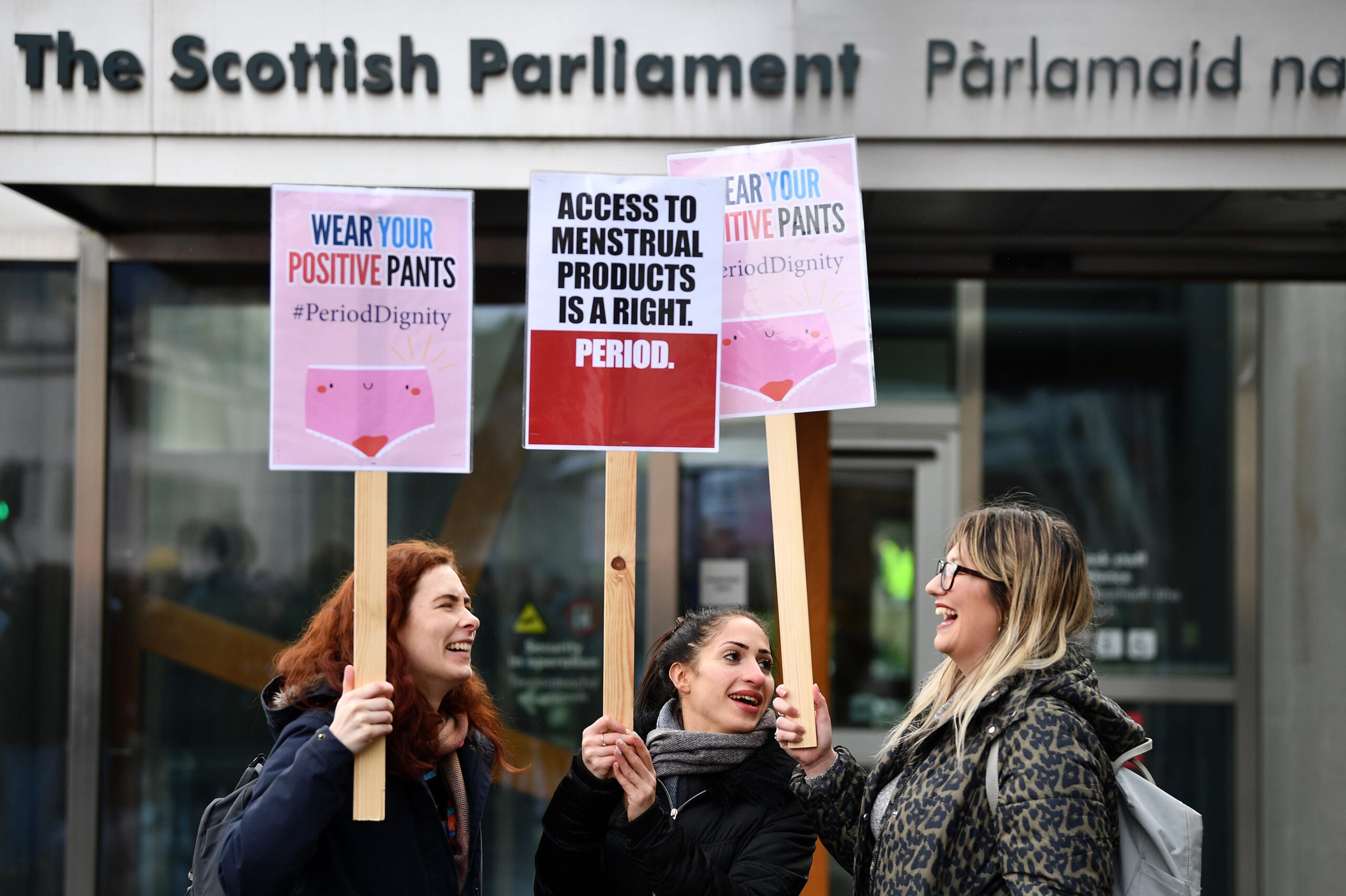
Implementing a law of this scale requires both logistical planning and financial support. Since 2018, well before the national duty came into force, the Scottish Government had already invested more than £50 million in initiatives to provide free period products in schools, colleges, universities and community settings. These early efforts helped build infrastructure and distribution networks that eased the transition to a full legal duty under the Act.
With the law in effect, Scotland has continued to support local authorities through funding and guidance so that free period products can be distributed in public buildings, education campuses, and community hubs. The underlying intent is to make access as seamless and dignified as possible.
The legal duty also obliges institutions to consider factors such as ease of access, range of products and respect for user dignity when determining how to provide free products at different sites, ensuring that the policy is not merely symbolic but actually improves practical availability.
Experiences From Daily Life Under the Law
Since the Period Products Act came into force, many people in Scotland have reported that access to free tampons and pads in public locations has made a real difference, particularly for students and low‑income individuals. In schools and colleges, for instance, products are often available in restrooms or pickup locations where students can obtain them discreetly and without barrier.
Even outside education settings, public venues like libraries, community centres and leisure facilities offer free menstrual products, which helps normalize their presence and supports people in managing their periods with greater autonomy and confidence.
Advocates also point to cultural change — a reduction in embarrassment and taboo surrounding menstruation — as an important outcome of making these products widely accessible. By positioning menstrual care as a public responsibility, Scotland’s policy contributes to broader efforts to address gender disparities and support bodily autonomy.
Addressing Period Poverty and Social Inequality

One of the central goals of the Act was to help eradicate “period poverty,” where individuals cannot afford adequate menstrual products. Research prior to the law indicated that a significant proportion of women and girls sometimes struggle to afford sufficient supplies, which can negatively affect attendance at school and participation in daily life.
By making products universally accessible, Scotland has taken a bold step toward reducing inequality related to menstrual health — a reform that places the country at the forefront of global efforts to rethink how basic human needs are met within social policy.
Challenges and Ongoing Debates
Despite Scotland’s pioneering law, some challenges remain. Implementing period product provision consistently across diverse regions and institutions requires ongoing coordination and adequate funding. Ensuring that products are stocked and accessible everywhere they are needed — from rural community centres to large urban campuses — remains an ongoing task for local authorities.
There are also broader discussions about what “reasonable ease of access” looks like in practice and how to ensure the law continues to serve those most in need without creating unintended gaps. These logistical debates underscore the complexity of translating a groundbreaking legal right into day‑to‑day reality.
Inspiring Other Nations and the Global Context

Scotland’s example has already influenced conversations beyond its borders. While other countries and local governments have introduced policies to reduce taxes on period products or provide them for free in some settings, Scotland’s law stands out for making free access a legal right for all who need it, unconnected to income or circumstance.
Northern Ireland, for example, passed its own Period Products (Free Provision) Act in 2022, following Scotland’s lead in requiring free access to menstrual products from public bodies.
Global advocates see Scotland’s approach as a beacon of progress — a model for how governments can recognise menstrual care as essential, not optional, and craft policies that embed dignity and equality into public health frameworks.
Final Reflection: A Legal and Ethical Milestone for Period Rights
Scotland’s decision to become the first country in the world to make tampons, sanitary pads and other period products free for everyone who needs them marks a transformative shift in public policy and social norms. By establishing this right in law, Scotland has recognized that menstrual care is a basic human need tied to dignity, equality and public health — not a luxury that should depend on personal wealth or circumstance.
As countries around the world continue to grapple with issues of access, stigma and inequality related to menstrual health, Scotland’s bold move offers a powerful example of how legislative action can promote inclusion, reduce barriers and affirm that no one should have to choose between essential care and financial constraint.