
Table of Contents
- When a Shoplifting Call Turned Into a Fatal Police Shooting
- The Initial Theft Allegation and Police Response
- Movement Toward the Second Location and Escalation
- The Moment of the Shooting Captured on Body Camera
- Official Response and Termination of the Officer
- The Suspect’s Criminal History and Public Perception
- Body Camera Evidence and Public Reaction
- Legal Investigation and Accountability Questions
- Broader Debate on Police Use of Force in the United States
- A Case That Continues to Shape Public Discourse
When a Shoplifting Call Turned Into a Fatal Police Shooting
When news broke that a wheelchair using suspect had been shot multiple times by a police officer inside a retail parking lot in Tucson, Arizona, the incident immediately drew national attention and intense public scrutiny. The confrontation, which began as a routine shoplifting response, escalated within minutes into a fatal use of force situation that has since become a focal point in ongoing debates about policing standards, escalation protocols, and accountability in the United States.
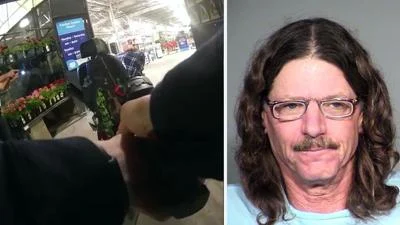
The case involved Richard Lee Richards, a 61 year old man with a long criminal history and severe physical limitations, who was accused of stealing a toolbox from a Walmart store. What followed was a chain of events involving multiple officers, a knife, and a decision to use lethal force that would later be described by officials as deeply troubling.
At the center of the incident was former Tucson police officer Ryan Remington, who discharged his weapon nine times, striking Richards from behind as the suspect attempted to enter a nearby store in his motorized wheelchair. The shooting was captured on body camera and security footage, intensifying public reaction once it was released.
What follows is a detailed reconstruction of the incident, the legal aftermath, and the broader implications for policing policy in the United States.
The Initial Theft Allegation and Police Response
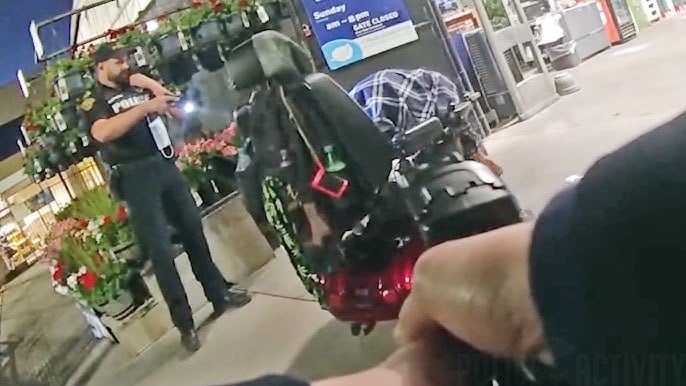
The incident began when store employees reported that Richards may have stolen a toolbox from a Walmart location in Tucson. An employee confronted him in the parking lot and requested a receipt, according to police accounts. Instead of complying, Richards allegedly displayed a knife and made a provocative statement, escalating the encounter from a theft investigation into a potential armed threat situation.
Officer Remington, who was working a special duty assignment at the time, was alerted and began following Richards as he moved through the parking area in his motorized wheelchair. Surveillance footage showed the officer trailing behind at a cautious distance while communicating with dispatch about the unfolding situation.
Authorities later stated that Richards had a prior criminal record, including convictions for serious offenses such as attempted murder and other violent crimes. However, at the time of the encounter, the situation in real time was far more fluid and uncertain, with officers attempting to assess whether the suspect posed an immediate lethal threat.
Movement Toward the Second Location and Escalation
As Richards crossed the street from Walmart toward a nearby Lowe’s store, the situation escalated further. Officers reported that he continued holding a knife while maneuvering his wheelchair into the garden center area of the store.
The arrival of additional officers marked a critical turning point. Officer Stephanie Taylor joined Remington on scene, and both attempted verbal commands ordering Richards to stop and drop the weapon.
Body camera footage captured officers repeatedly instructing the suspect to halt. Despite these commands, Richards continued moving forward toward the store entrance, creating a tense and rapidly evolving confrontation near a public retail space.
It was at this moment that the encounter shifted from surveillance and verbal commands to the use of deadly force.
The Moment of the Shooting Captured on Body Camera
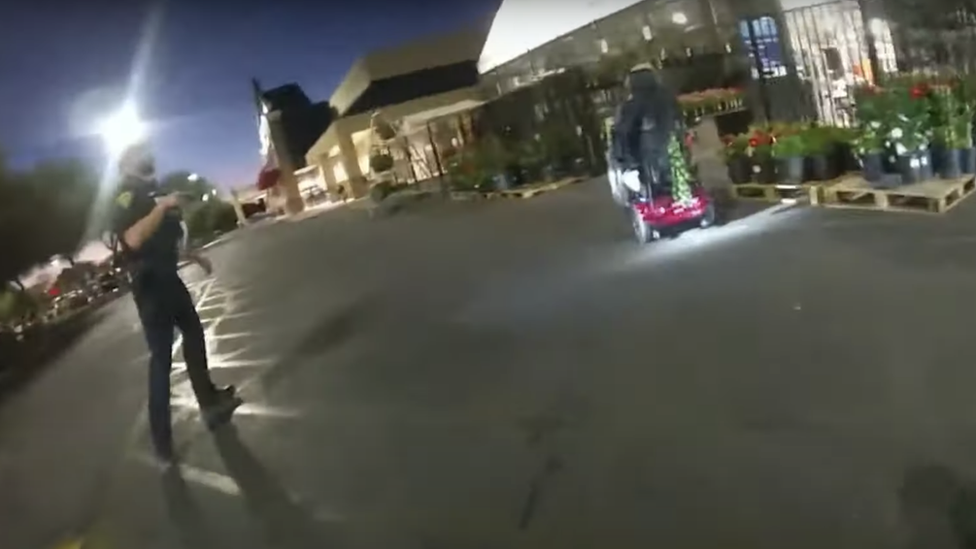
Body worn camera footage shows the final seconds of the confrontation in stark detail. Richards, still seated in his motorized wheelchair, moved toward the store entrance while holding a knife. Officer Remington, positioned several feet behind him, drew his firearm.
Seconds later, gunfire erupted. Remington fired multiple rounds in rapid succession, paused briefly, and then fired again. Richards collapsed forward in his wheelchair, struck by multiple bullets as shell casings scattered across the pavement.
The footage shows officers immediately attempting to secure the scene. Richards fell from his wheelchair onto the concrete surface, where he was later pronounced dead despite emergency response efforts.
The video, later released by authorities, became a central piece of evidence in public discussions about proportionality, threat assessment, and police decision making under pressure.
Official Response and Termination of the Officer
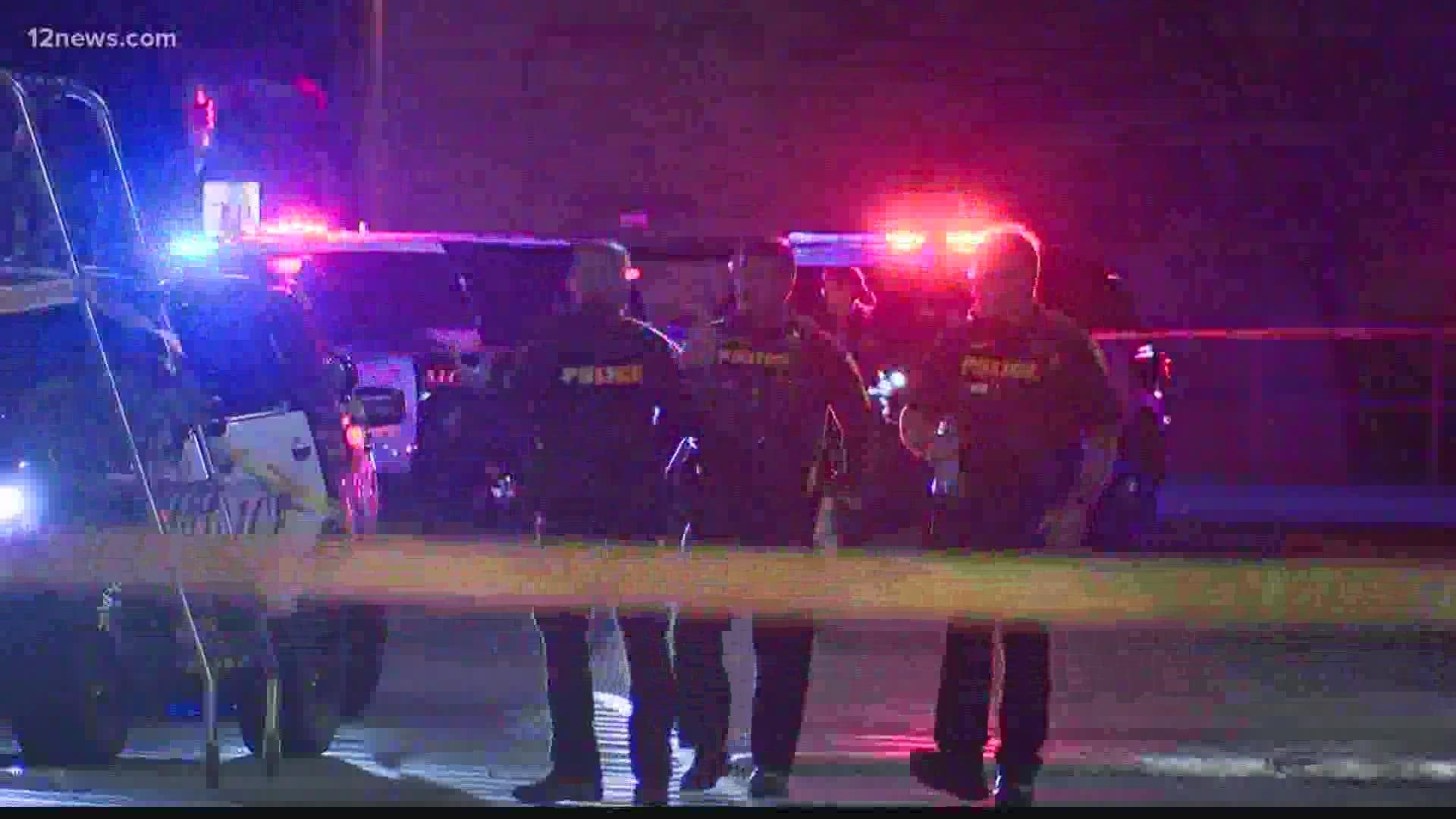
Following the incident, the Tucson Police Department initiated an internal review of the shooting. Police leadership publicly expressed concern over the officer’s actions, stating that the use of deadly force appeared inconsistent with department policy and training standards.
The department subsequently terminated Ryan Remington from his position. Officials also confirmed that the case was referred to the Pima County Attorney’s Office for criminal investigation.
Police Chief Chris Magnus described the incident as deeply disturbing, noting that the circumstances raised serious questions about whether alternative tactics could have been used before resorting to lethal force.
At the same time, Remington’s legal representation argued that the officer had limited non lethal options available, citing the physical positioning of the suspect and the presence of a knife as critical factors influencing the decision to fire.
The Suspect’s Criminal History and Public Perception
Following the shooting, authorities released information about Richards’ extensive criminal background. Records showed prior convictions dating back decades, including burglary, assault related offenses, and a previous attempted murder case.
In addition, federal records indicated that Richards had been involved in immigration related offenses in recent years and had served multiple prison sentences. His attorney had previously described his physical condition as severely impaired following medical complications that limited his mobility and required the use of a wheelchair.
These details complicated public perception of the case. While some viewed the incident as a necessary response to an armed threat, others argued that the level of force used raised serious ethical and procedural concerns, especially given Richards’ physical condition and the final moments of the encounter.
Body Camera Evidence and Public Reaction
The release of body camera and security footage played a major role in shaping national reaction. The visual record showed the suspect being followed across multiple locations, the presence of a visible knife, and the rapid escalation that led to gunfire.
For many viewers, the footage raised difficult questions about timing, distance, and whether de escalation tactics were adequately exhausted. Critics argued that firing multiple rounds at a suspect in a wheelchair raised serious concerns about proportionality and necessity.
Supporters of the officer’s actions emphasized the perceived immediacy of the threat and the suspect’s refusal to comply with repeated commands to drop the weapon.
The polarized interpretations highlighted the broader challenge faced by law enforcement agencies when incidents unfold in unpredictable and high risk environments.
Legal Investigation and Accountability Questions
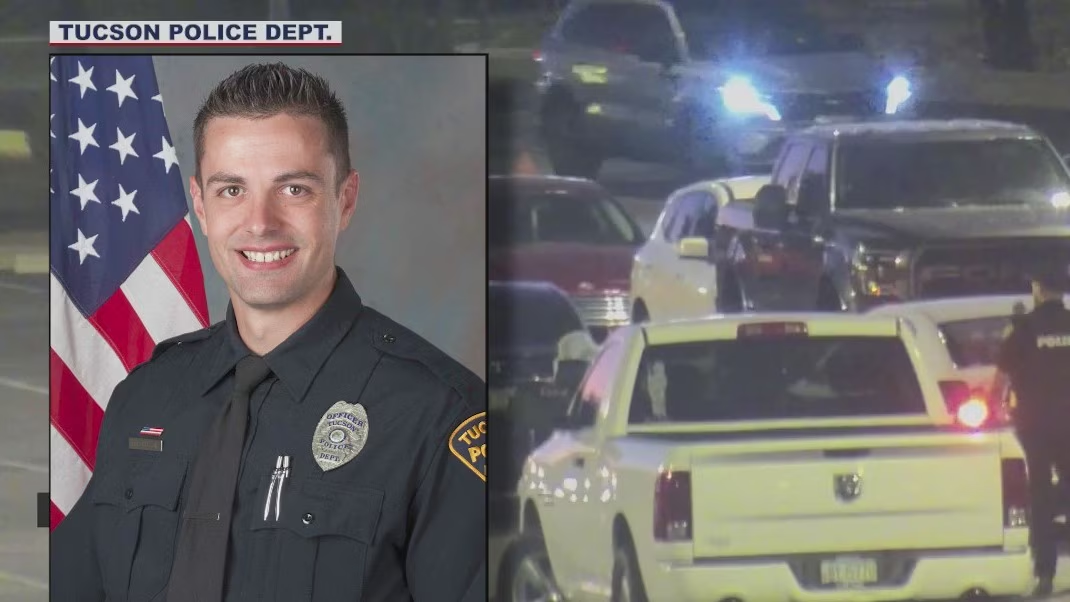
At the time of reporting, the Pima County Attorney’s Office had opened a criminal investigation into the shooting. The review focused on whether the officer’s actions met legal standards for justified use of force under Arizona law.
Key questions included whether Richards posed an imminent threat, whether non lethal alternatives were viable, and whether the number of shots fired was proportionate to the situation as it unfolded.
The case also raised broader policy questions about training standards, especially in scenarios involving mobility impaired suspects and edged weapons.
Broader Debate on Police Use of Force in the United States
The incident quickly became part of a larger national conversation about policing practices in the United States. Advocacy groups and civil rights organizations pointed to the case as an example of how quickly encounters can escalate into deadly outcomes.
Law enforcement defenders, however, emphasized the unpredictability of armed encounters and the legal authority officers have when confronted with perceived lethal threats.
The debate reflects a wider tension in American policing policy, where officers must make split second decisions while under legal, ethical, and public scrutiny.
A Case That Continues to Shape Public Discourse
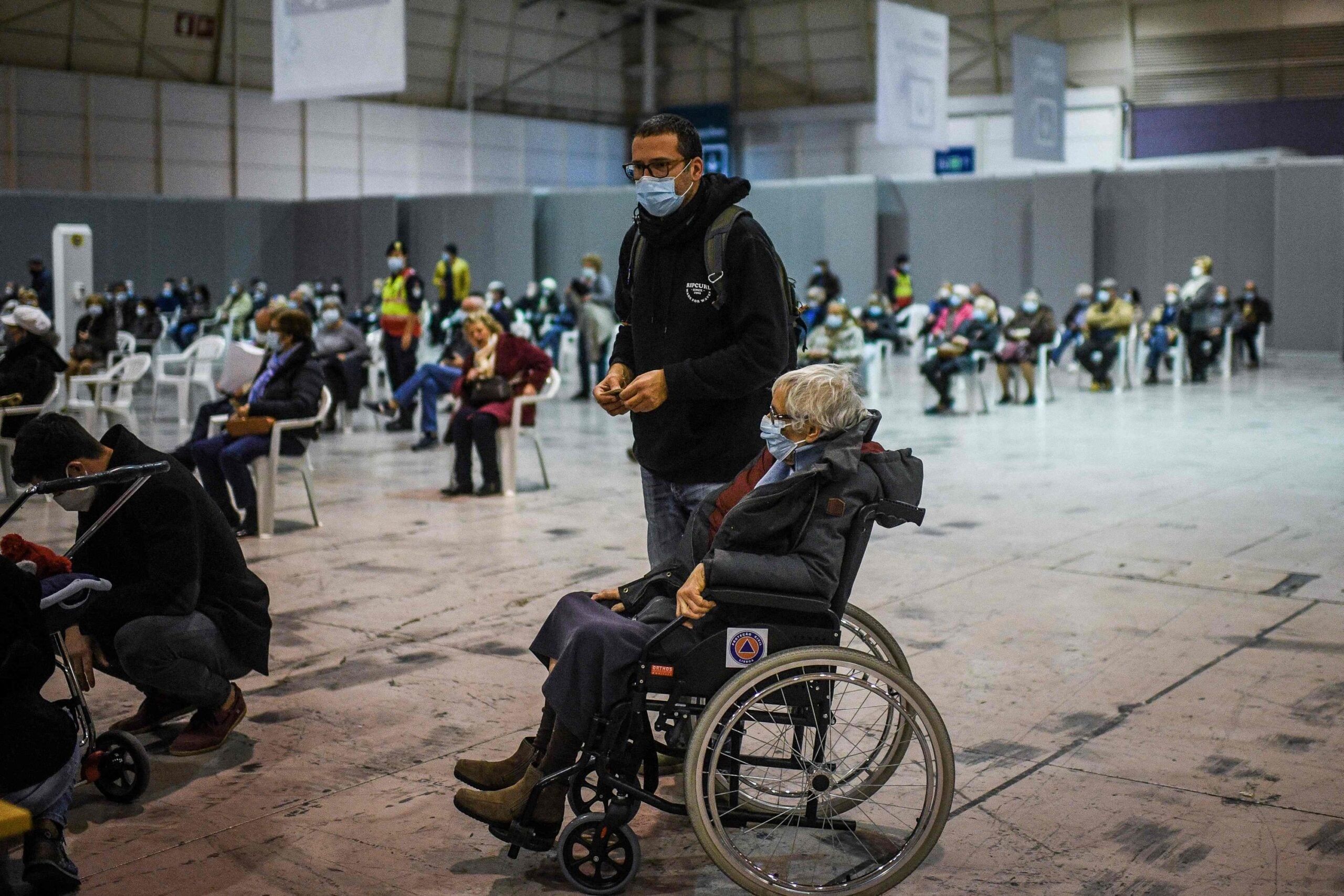
The shooting of Richard Lee Richards remains a highly contested and emotionally charged incident that continues to influence discussions on police accountability and use of force standards.
While official investigations continue to assess the legality and justification of the officer’s actions, the case has already become a reference point in debates over how law enforcement should respond to armed suspects with disabilities, and how quickly force should be escalated in uncertain situations.
Ultimately, the incident underscores a broader reality in modern policing: every decision made in seconds can have consequences that extend far beyond the immediate moment, shaping public trust, legal precedent, and the future direction of law enforcement policy in the United States.