
Table of Contents
- The Psychedelic Revolution: A New Frontier in Longevity Research
- Psilocybin’s Effects on Human Cells
- Extending the Lifespan of Mice: Psilocybin’s Potential in Living Organisms
- The Implications for Human Aging and Longevity Research
- Understanding the Mechanisms Behind Psilocybin’s Effects
- The Future of Psilocybin in Medicine
- The Ethical and Social Implications of Psilocybin Research
- A New Age of Psilocybin Research
The Psychedelic Revolution: A New Frontier in Longevity Research
Psilocybin, often associated with the psychedelic movement, has long been researched for its potential to treat mental health disorders. Studies have shown that psilocybin can alter brain activity, offering profound therapeutic effects for patients suffering from various neurological conditions. However, despite the growing interest in its mental health benefits, there has been little direct research on the impact psilocybin may have on physical aging. The latest findings, however, suggest that the compound could have much more far-reaching implications, particularly in how we understand the biology of aging.
The study, published in the journal npj Aging, marks a significant breakthrough by suggesting that psilocybin could contribute to healthier aging, not just a longer lifespan but a higher quality of life in later years. Researchers tested the effects of psilocybin on human cells in a laboratory setting and also observed its impact on live mice. Both experiments showed that the compound had a significant effect on extending the lifespan of cells and even had potential anti-aging effects in mammals. These findings are the first experimental evidence that psilocybin might offer more than just psychological relief—it could also promote physical longevity.
Psilocybin’s Effects on Human Cells
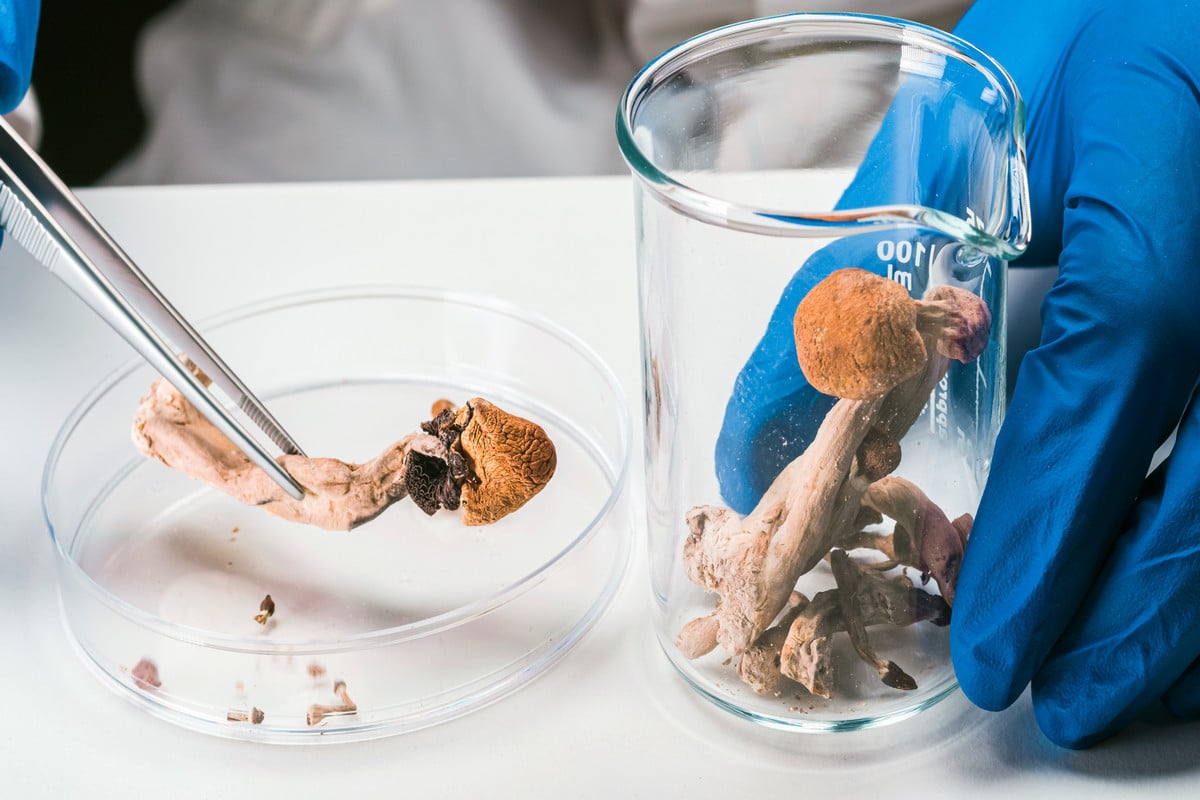
The study’s first phase involved treating human skin and fetal lung fibroblasts—cells that are typically used in laboratory research—with psilocybin’s active metabolite, psilocin. After being treated with psilocin, the cells were observed until they reached senescence, a state where they can no longer divide and eventually die. Remarkably, the treated cells lived 50-57% longer than untreated cells, signaling that psilocybin might play a role in delaying cellular aging. The study specifically tested the effects of psilocybin at concentrations of 100 micromoles, which led to the extended lifespans of both the lung and skin cells.
The implications of this finding are significant. Cellular aging is one of the primary factors in overall biological aging, and the ability to delay this process could have profound effects on human health. The fact that psilocybin could extend the life of human cells raises the exciting possibility that similar results might be seen in human tissues and organs over a longer time period.
Extending the Lifespan of Mice: Psilocybin’s Potential in Living Organisms
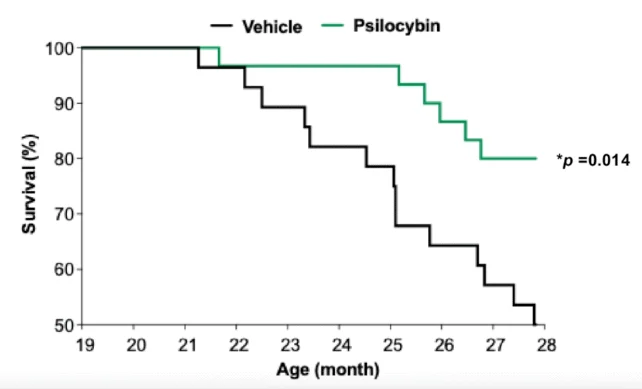
The second phase of the study tested psilocybin’s effects on live animals, particularly mice. For the experiment, female mice aged 19 months—roughly the equivalent of 60-65 years in human terms—were given monthly doses of psilocybin. After a 10-month treatment period, the results were striking: 80% of the mice that received psilocybin were still alive, compared to only 50% of the control group. The treated mice also showed fewer signs of aging, such as better fur quality and fewer white hairs, though aging signs were not studied in-depth.
This is one of the most exciting aspects of the study: psilocybin didn’t just extend the lifespan of the mice—it also seemed to slow the physical manifestations of aging. While the study didn’t focus on detailed aging markers, the visible improvements in the health of the treated mice suggest that psilocybin may not only increase the quantity of life but also improve its quality.
The results of the mouse study provide strong preclinical evidence that psilocybin may have potential as an anti-aging agent. However, researchers caution that more studies are necessary to fully understand the effects of psilocybin on aging in humans and to determine the most effective protocols for using the compound.
The Implications for Human Aging and Longevity Research
Psilocybin’s potential as an anti-aging compound could have far-reaching implications for how we approach aging and longevity. Traditional research into aging has largely focused on caloric restriction, genetic modification, and pharmaceutical interventions to slow the process. Psilocybin adds a new layer to this research, suggesting that psychedelics could play a role in promoting longevity. If further studies confirm these results, psilocybin could become a critical tool in the fight against age-related diseases such as Alzheimer’s, Parkinson’s, and cardiovascular diseases.
Moreover, the idea that psychedelics like psilocybin could improve the quality of life in older adults is particularly compelling. As more people live longer lives, ensuring that those years are healthy and active is increasingly important. Psilocybin could help maintain cognitive function, reduce the effects of physical aging, and possibly extend the number of years individuals can live without debilitating diseases.
Understanding the Mechanisms Behind Psilocybin’s Effects
While the results of this study are promising, understanding how psilocybin exerts its effects on cellular aging is still a mystery. The compound works primarily by affecting serotonin receptors in the brain, leading to alterations in mood, perception, and cognition. However, its effects on cellular processes are not fully understood. Researchers believe that psilocybin may work through mechanisms that involve mitochondrial function, oxidative stress, or the regulation of cell cycle pathways, all of which play key roles in aging.
Future studies will need to explore these potential mechanisms in more depth to determine exactly how psilocybin promotes longevity and what doses are most effective. Understanding these pathways could unlock new treatments for age-related diseases and conditions, offering hope to those affected by the aging process.
The Future of Psilocybin in Medicine
While the results of this study are exciting, they are only the beginning of what could be a long road of research into psilocybin’s effects on aging. Researchers have already highlighted the need for further studies to identify optimal treatment protocols, including dosage, frequency, and timing of treatments. Additionally, studies on human subjects will be necessary to confirm the effects seen in mice and cell cultures.
One area of focus for future research could be the therapeutic potential of psilocybin in combination with other treatments. For example, combining psilocybin with other anti-aging compounds or therapies might produce even more significant results. As psilocybin becomes more accepted in medical research and clinical applications, it could play a role in both mental and physical health, opening up new avenues for the treatment of age-related diseases.
The Ethical and Social Implications of Psilocybin Research
As with any breakthrough in medical research, the use of psilocybin for aging and longevity raises ethical questions. Psychedelics are still a highly regulated substance, and widespread use of psilocybin for aging-related treatments could bring about debates regarding accessibility, safety, and regulation. The potential benefits of psilocybin could be immense, but they also come with risks that need to be carefully considered.
Researchers, ethicists, and policymakers will need to carefully navigate the implementation of psilocybin-based treatments, ensuring that they are safe, effective, and accessible to those who could benefit most. The regulation of psychedelics for medical use is still in its infancy, but studies like this one show that psilocybin has the potential to be a game-changer in the field of longevity.
A New Age of Psilocybin Research
Psilocybin’s effects on aging represent a major breakthrough in both the field of psychedelics and the study of longevity. While it is still early in the research, the results from this study suggest that psychedelics may have a role to play in promoting healthy aging and extending human lifespan. As further studies are conducted and the mechanisms behind psilocybin’s effects are uncovered, the compound could become a powerful tool in combating the effects of aging and improving quality of life for older adults.
With the growing interest in psychedelic research and the positive results from studies like this, the future of psilocybin in medicine looks increasingly promising. If future trials confirm its benefits, psilocybin could be a key piece of the puzzle in the quest for longer, healthier lives.