
Table of Contents
- A Strange Behavior That Refuses to Be Forgotten
- The 1987 Origin Story Still Shapes Everything
- Why Scientists Are Intrigued but Careful
- The Most Likely Explanations Are Surprisingly Practical
- Play May Also Be Part of the Story
- This Story Is Also About Endangered Whales and Food Stress
- The Technology to Solve the Mystery Is Better Now
- Why People Care So Much About Something So Strange
A Strange Behavior That Refuses to Be Forgotten
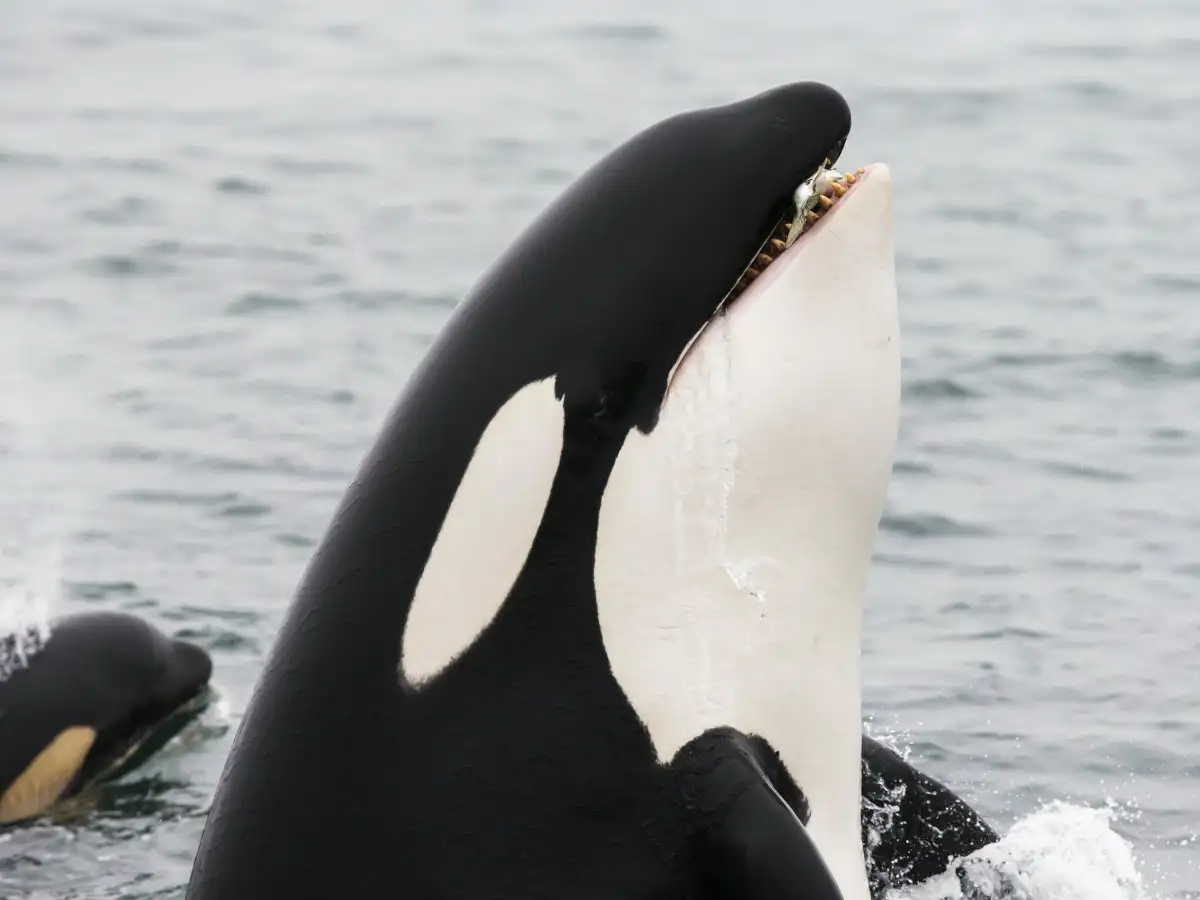
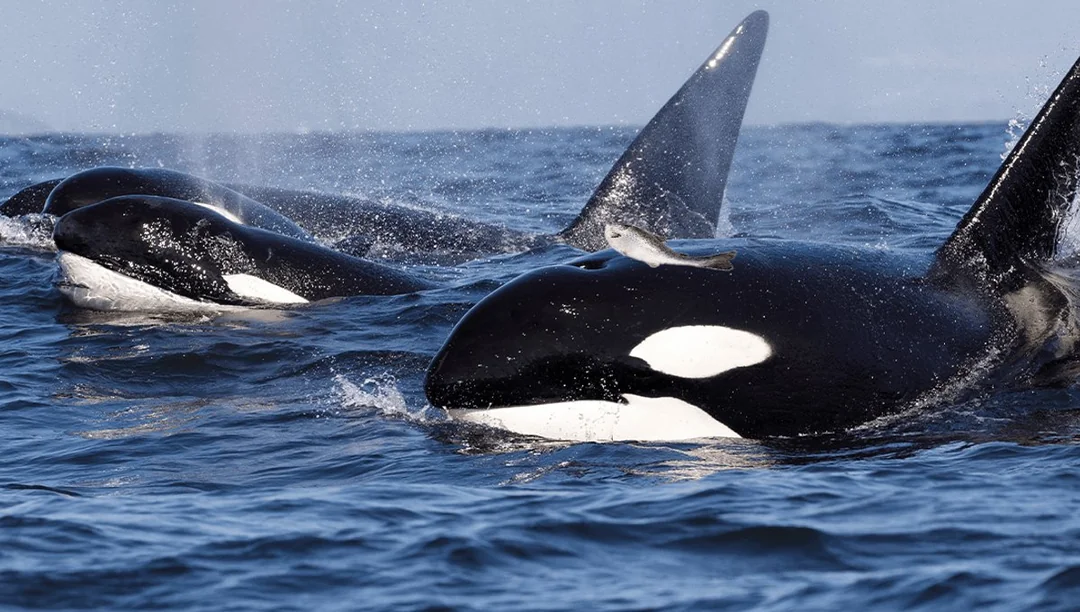
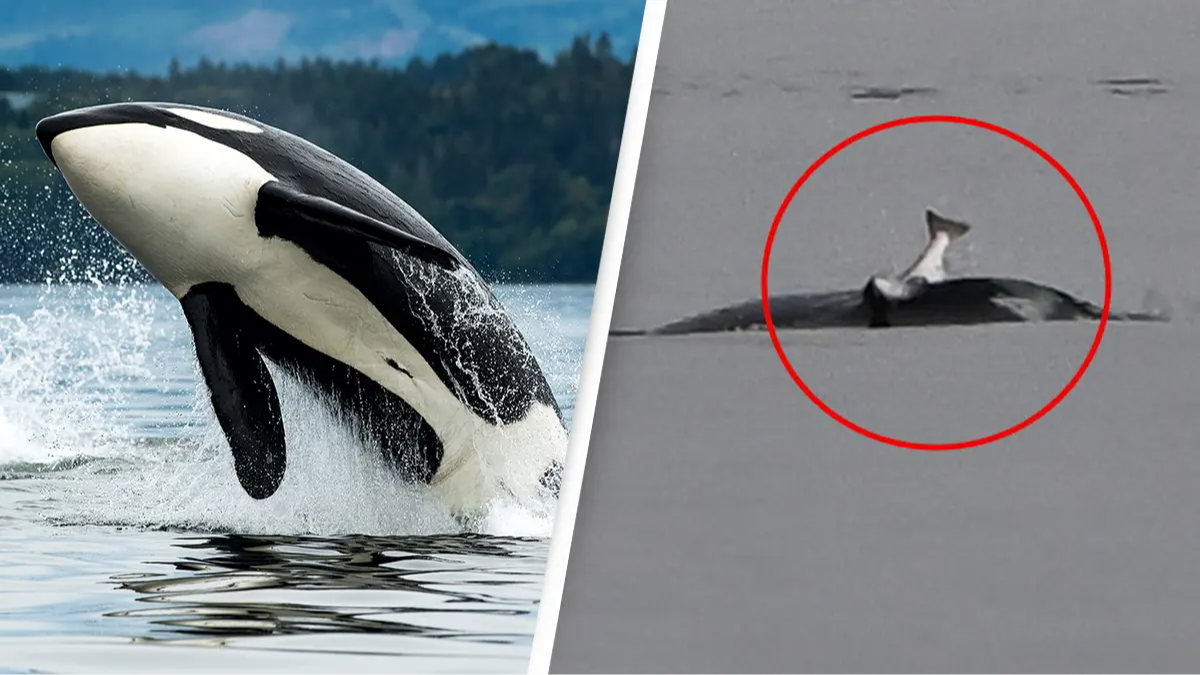
The behavior at the center of the story is exactly what it sounds like. An orca comes to the surface with a salmon laid across the top of its head, sometimes balanced over the forehead or just behind the blowhole. Researchers say this is not ordinary feeding posture, nor is it something seen routinely across all orca populations. Deborah Giles, a longtime biologist who studies Southern Resident killer whales, described it to KUOW as a whale hovering near the surface with a fish draped over its head, a behavior she has seen only a handful of times over many years in the field. That rarity is one reason the sightings caught so much attention. This is not an everyday part of orca life. It is unusual enough that even experienced observers still do a double take when they see it.
The recent sightings were reported in South Puget Sound and near Point No Point in Washington State. Scientific American, summarizing the original reporting, said whale watchers and researchers saw orcas swimming with dead fish on their heads in late 2024. National Geographic traced the most famous recent image to October 25, 2024, when photographer Jim Pasola captured J27 Blackberry with a fish laid across his head. That photograph helped turn an obscure field observation into a global curiosity. It gave the public a vivid visual anchor for a behavior that otherwise might have stayed inside scientific and whale-watching circles.
The 1987 Origin Story Still Shapes Everything
Part of the fascination comes from the historical echo. National Geographic reported that the behavior was first documented in 1987 among the Southern Residents in Puget Sound, apparently beginning with a female in K-Pod before spreading to members of J-Pod and L-Pod. Scientific American similarly described the 1987 episode as a brief fad that spread through the population before vanishing by 1988. That timeline is important because it makes the modern sightings feel less like random play and more like a possible cultural reappearance. If one whale did it once, that might be a curiosity. If it spread socially before, disappeared, and then resurfaced decades later, it starts to look more like a tradition, a memory, or at the very least a behavior with social meaning.
Yet even here, the picture is not entirely simple. Giles told National Geographic and KUOW that while the 1980s episode became famous, it is possible humans merely noticed the behavior then, rather than discovering its true beginning. She suggested it could have been part of the whales’ behavioral repertoire long before people labeled it a fad. That possibility matters because it changes the frame. Rather than imagining a lost fashion trend that suddenly reappeared, scientists may need to consider that these whales have always engaged in odd, low-frequency behaviors that only become “phenomena” when people happen to witness them clearly enough to tell the story.
Why Scientists Are Intrigued but Careful
The viral version of the story often says the orcas “brought back” the salmon hat trend after 37 years. Some researchers are comfortable with that phrasing, or at least open to it. Scientific American quoted evolutionary ecologist Andrew Foote saying it seemed possible that individuals who experienced the behavior the first time around may have started it again. Since some whales alive in 1987 are still alive now, that idea is not impossible. Orcas are long-lived, highly social, and known for passing behaviors across generations. So the notion of a behavioral revival is not far-fetched in principle.
But other experts have pushed back against the certainty of the comeback narrative. National Geographic quoted Monika Wieland Shields of the Orca Behavior Institute saying it is a stretch to declare the fad back on the basis of a single well-known photograph. Smithsonian Magazine went even further, noting that despite the viral framing, recent documentation was limited and some scientists were trying to “put the brakes” on describing the behavior as a full revival. Smithsonian reported that there had been at least two sightings, and that Deborah Giles had also seen a whale with a salmon on its head, but researchers still lacked evidence of a population-wide wave resembling the 1987 episode. That tension between excitement and restraint is one of the most interesting parts of the story. The behavior is real. The interpretation remains unsettled.
The Most Likely Explanations Are Surprisingly Practical
People naturally want a dramatic explanation for an odd behavior like this. Maybe it is ritual. Maybe it is performance. Maybe it is pure marine absurdity. In reality, the leading theories are more grounded. Scientific American reported that one hypothesis links salmon hats to food abundance. South Puget Sound had an unusual concentration of chum salmon in fall 2024, and with plenty of fish available, whales may have had the luxury to catch more than they wanted to eat immediately. Giles suggested to multiple outlets that carrying a fish on the head could simply be a way to stash it temporarily until the whale is ready to eat or share it. Since mammal-eating killer whales have been seen carrying larger food items tucked under their pectoral fins, the top of the head may just be the best available storage spot for a smaller fish like a salmon.
KUOW’s interview with Giles adds more texture to that idea. She said the times she has seen the behavior were moments when whales were foraging successfully and appeared to have enough to eat already. In that context, a fish draped over the head might mean a whale caught another salmon but was not ready to consume it yet. Orcas are cooperative hunters and often share food, so this could be a temporary holding behavior rather than ornamentation in any human sense. That explanation is less funny than the internet’s version, but it fits what researchers know about the Southern Residents’ foraging ecology and social life.
Play May Also Be Part of the Story
Even if the behavior has a practical side, that does not rule out play. In fact, researchers often describe orca fads as a blend of functionality and social experimentation. National Geographic noted that these whales engage in other temporary trends, including draping dead salmon over fins and playing with kelp by pulling it underwater and letting it spring back to the surface. Smithsonian added that killer whales do show fads, with behaviors becoming common in certain age or sex classes before disappearing again. In other words, the “salmon hat” may not have a single fixed purpose. It could be a useful way to carry food, a tactile experience, a sign of leisure when prey is abundant, or a behavior that spreads simply because other whales copy it.
That possibility matters because it highlights something profound about orcas. These are not purely instinct-driven animals reacting mechanically to prey and predators. They are social learners with room for novelty, imitation, and perhaps even trend-like behavior. The fact that scientists can reasonably use words like “fad” in describing orca life tells us something extraordinary about their minds. Human culture may be far more elaborate, but orcas clearly do not live in a flat world of repetitive necessity. Their societies contain habits, specialties, and quirks that can spread and fade over time.
This Story Is Also About Endangered Whales and Food Stress
One reason scientists have been careful not to romanticize the salmon hat story is that the Southern Residents are in trouble. National Geographic noted that this population is endangered and depends exclusively on salmon. KUOW reported that there were 73 Southern Resident killer whales at the time of its December 2024 story, and Giles stressed that the population was not on a recovery trajectory. She explained that when food is scarce, whales spend more time foraging and less time resting, socializing, or engaging in what look like playful behaviors. That means a brief period of fish abundance might make salmon hats more visible, but it does not erase the broader crisis facing these animals.
In fact, this is where the story becomes more poignant than bizarre. Giles told KUOW that the high numbers of chum salmon in South Sound during fall 2024 were unusual compared with recent years, and that if the whales were carrying fish on their heads because they finally had enough to eat, then that should be seen as a reminder of what they need more often, not just a charming wildlife moment. In her framing, the salmon hat is not merely a marine oddity. It could be a clue that well-fed whales have more time for leisure, play, and social expression. That makes the behavior feel less frivolous and more revealing. It may be telling researchers something about the conditions under which a stressed population begins to behave more freely.
The Technology to Solve the Mystery Is Better Now
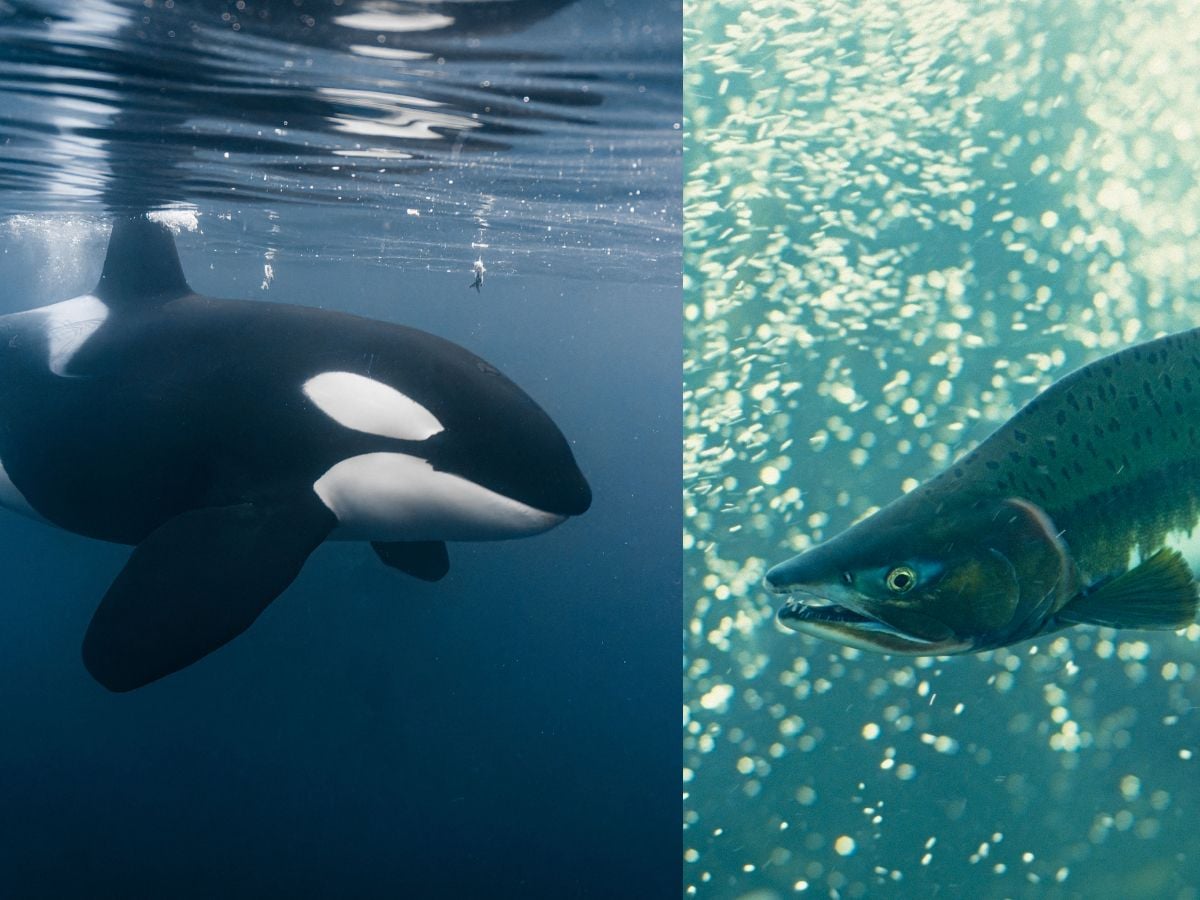
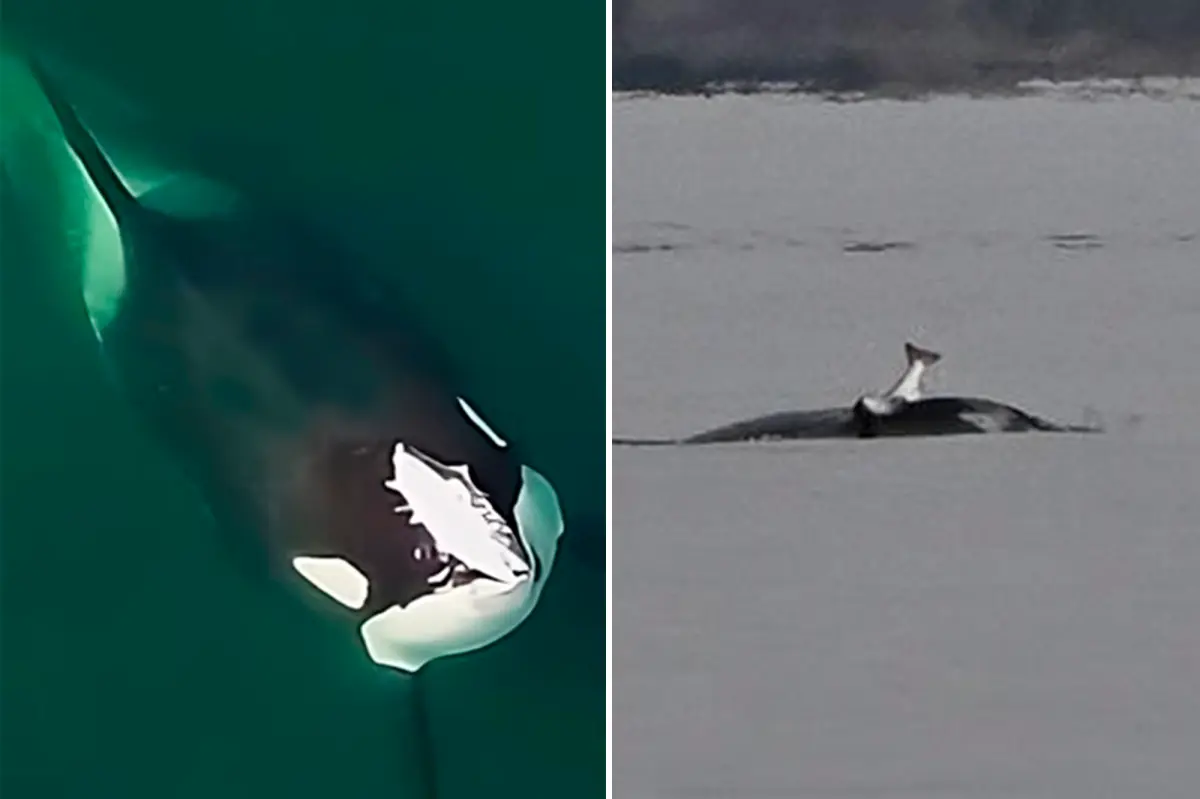
One major difference between 1987 and today is the quality of observation. Scientific American pointed out that drones and modern documentation tools could help researchers follow the behavior more carefully now than they could decades ago. If enough footage is captured, scientists may be able to see whether whales keep the fish for minutes or longer, whether they eventually eat it, whether it is passed to other whales, and whether some individuals are especially likely to do it. That kind of evidence could turn a long-running wildlife mystery into something more precise.
Yet the scarcity of images cuts both ways. Smithsonian noted that if the behavior had really exploded into a major fad again, observers in Puget Sound likely would have documented it much more extensively, because the Southern Residents are watched closely whenever they enter inland waters. That means the lack of a huge image archive may suggest the behavior remains rare, sporadic, or subtle rather than truly sweeping. For scientists, that uncertainty is frustrating. For the public, it is part of what keeps the story so magnetic. The whales have offered just enough evidence to spark a mystery, but not enough to resolve it.
Why People Care So Much About Something So Strange
At one level, the answer is obvious. Orcas wearing salmon “hats” is weird, visual, and irresistibly shareable. But at a deeper level, people respond to stories like this because they hint at an inner life in animals that feels almost familiar without being fully explainable. The salmon hat behavior suggests memory, imitation, preference, timing, and perhaps even whim. It invites people to imagine that these whales are not only intelligent, but culturally alive in ways that challenge our assumptions about the boundary between human and animal worlds.
At the same time, the best scientists in this story have resisted turning that fascination into certainty. Giles has been clear that researchers do not know exactly why the whales do this. Shields has been careful not to overstate the evidence. Smithsonian’s reporting underscores how easily one vivid image can become a grand narrative. That caution is part of what makes the story trustworthy. The mystery remains a mystery. The behavior is real, the interpretations are plausible, and the conclusion is still open.
In the end, the salmon hat story endures because it captures two truths at once. Orcas are intelligent enough to surprise us with behavior that looks almost cultural, and the ocean is still full of animal lives we only partly understand. Maybe the whales are stashing food. Maybe they are playing. Maybe they are reviving a half-forgotten group habit. Maybe they are doing all of those things at different times. What is certain is that a few sightings in Puget Sound reopened a mystery first noticed in the 1980s and reminded people that even among the most studied marine mammals on Earth, the next astonishing behavior may always be just one surfacing away.