
Table of Contents
- A Journey That Began With Two Ruthless Rules
- A Former Paratrooper Searching for More Than Distance
- The Terrain Has Been Almost Mythic in Difficulty
- The Hardest Obstacles Were Not Always Natural
- He Has Crossed the World at Human Speed
- Solitude Has Been One of the True Costs
- Yet the Journey Also Restored His Faith in People
- Europe Means the Dream Is Finally Becoming Real
- Why His Story Hits So Hard Now
A Journey That Began With Two Ruthless Rules
What makes Karl Bushby’s story so compelling is not just the mileage. It is the discipline of the rules he chose from the beginning. Bushby’s expedition was never meant to be a conventional round-the-world trip. He set strict conditions for himself: no vehicles to move the journey forward, and no returning home until he had reached it on foot. Those rules transformed the walk from an act of travel into an act of commitment. The road could change him, delay him, break him down, and force him to adapt, but it could not tempt him into compromise. That is why his expedition has endured in public imagination. It is not a vacation stretched across years. It is a vow stretched across continents.
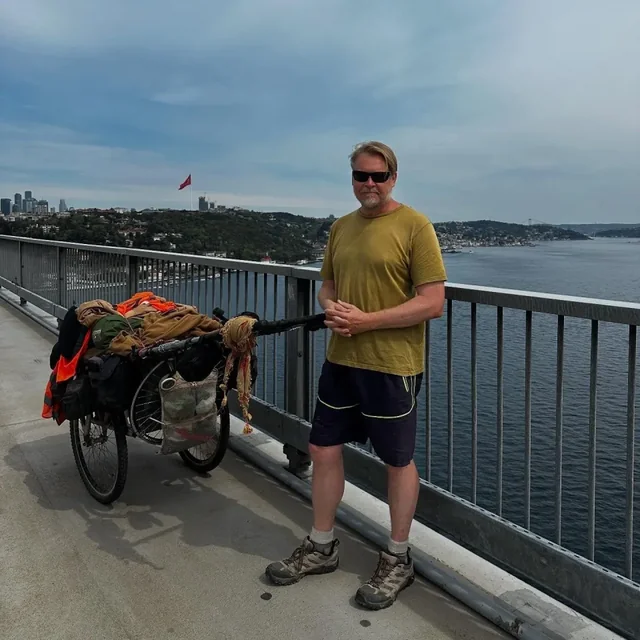
Bushby started in Punta Arenas, Chile, on November 1, 1998, after leaving Hull weeks earlier and heading to South America to begin at one of the farthest practical points from home. He originally thought the journey might take around a decade. Instead, political barriers, visa problems, financial strain, injuries, global crises, and sheer geography turned it into one of the longest continuous walks ever attempted. By late 2025, reporting placed him in Central Europe and still headed toward England, with roughly months rather than years left if the final border and transit obstacles can be solved.
A Former Paratrooper Searching for More Than Distance
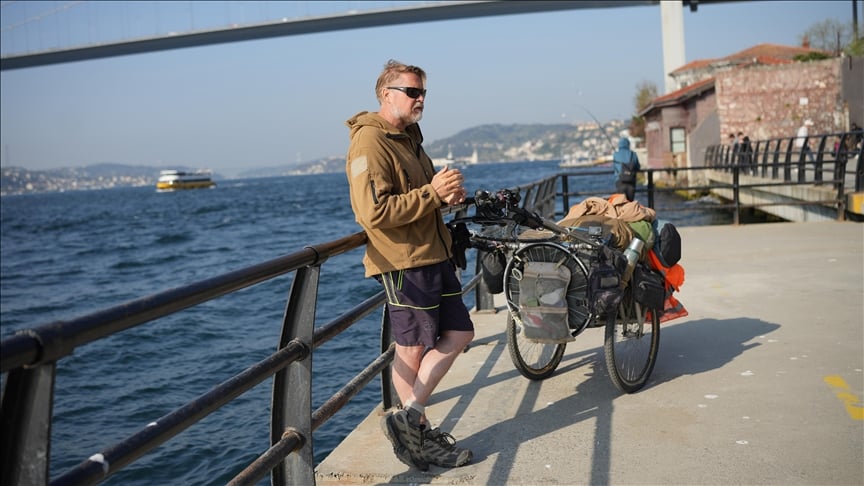
Bushby’s background helps explain why he would attempt something this severe. He served as a British paratrooper before beginning the Goliath Expedition, and multiple profiles describe him as someone shaped by the culture of endurance, pain tolerance, and stubbornness that came with military life. Reuters described him as an ex-paratrooper whose expedition became a defining test of will rather than a polished media project from the start. He was not backed by a giant operation, nor did he leave as a celebrity adventurer. He began as a man trying to prove something difficult and absolute to himself.
That internal drive seems to matter as much as the physical feat. The walk is often framed publicly as a world journey, but Bushby has consistently described it more like a mission of completion. The point was not only to see the world. It was to finish what he started without backing away from the rules that gave it meaning. That mentality helps explain how the expedition survived setbacks that would have ended almost any other ultra-long journey.
The Terrain Has Been Almost Mythic in Difficulty
It is hard to overstate what the Goliath Expedition has required physically. Bushby has crossed deserts, jungles, frozen seas, mountain regions, and remote stretches of tundra. He forced his way through the Darién Gap between Colombia and Panama, one of the most dangerous and inhospitable overland corridors in the world. He later crossed the Bering Strait on foot over sea ice in 2006, a feat that alone would define most adventure careers. Reuters and other coverage also note that he swam across the Caspian Sea in 2024 to maintain the continuity of the route when geopolitics blocked his land options.
Each of those sections could have ended the entire project. The Darién Gap is notorious for lawlessness, heat, insects, and terrain that seems designed to defeat movement itself. The Bering Strait introduced the opposite kind of threat: drifting sea ice, freezing exposure, and the possibility of vanishing into Arctic conditions. The Caspian crossing, completed in 2024 with support swimmers and boats, covered roughly 288 kilometers over 31 days, making it one of the strangest and most dramatic adaptations of his no-transport rule. Bushby was no lifelong endurance swimmer, which only made the decision more startling.
The Hardest Obstacles Were Not Always Natural
If the weather, ice, jungle, and distance sound brutal, the bureaucracy may have been even more punishing. Bushby’s expedition has repeatedly been slowed by border controls, visa windows, deportation issues, and geopolitical tensions. Russia became one of the most painful bottlenecks in the entire route. After entering from Alaska over the Bering Strait, he ran into repeated visa restrictions, eventually drawing a five-year entry ban that delayed the expedition significantly. Coverage from Reuters and other sources makes clear that many of the longest interruptions in the walk were not caused by terrain at all, but by states, policies, and paperwork.
That matters because it changes the nature of endurance. It is one thing to battle exhaustion while moving. It is another to hold onto purpose while being forced to stop. Long expeditions often rely on momentum as much as fitness. Bushby has had to survive years in which movement was limited or impossible, while still keeping the central promise of the expedition alive. The COVID-19 pandemic added yet another long interruption, freezing border movement and extending a project that had already been delayed many times.
He Has Crossed the World at Human Speed
Part of what makes Bushby’s story feel so unusual in the modern era is that he has experienced the world without the shortcuts most people take for granted. He did not leap over borders by plane or compress continents into overnight flights. He crossed them at walking pace. That means he absorbed distance in the way humans once did, through days, weather, fatigue, hospitality, boredom, and repetition. Reuters noted that when he finally returns, he will be coming back to a world transformed by technology and social media, much of which barely existed when he began in 1998.
There is something almost prehistoric about the scale of that contrast. Bushby left England when Tony Blair had just become prime minister, smartphones did not shape daily life, and the internet was still far from dominating human experience. He is returning in an age of algorithmic attention, instant updates, and constant movement, having spent much of the intervening time progressing at three miles an hour. That disconnect gives the expedition emotional weight. He has not only crossed geography. He has crossed eras.
Solitude Has Been One of the True Costs
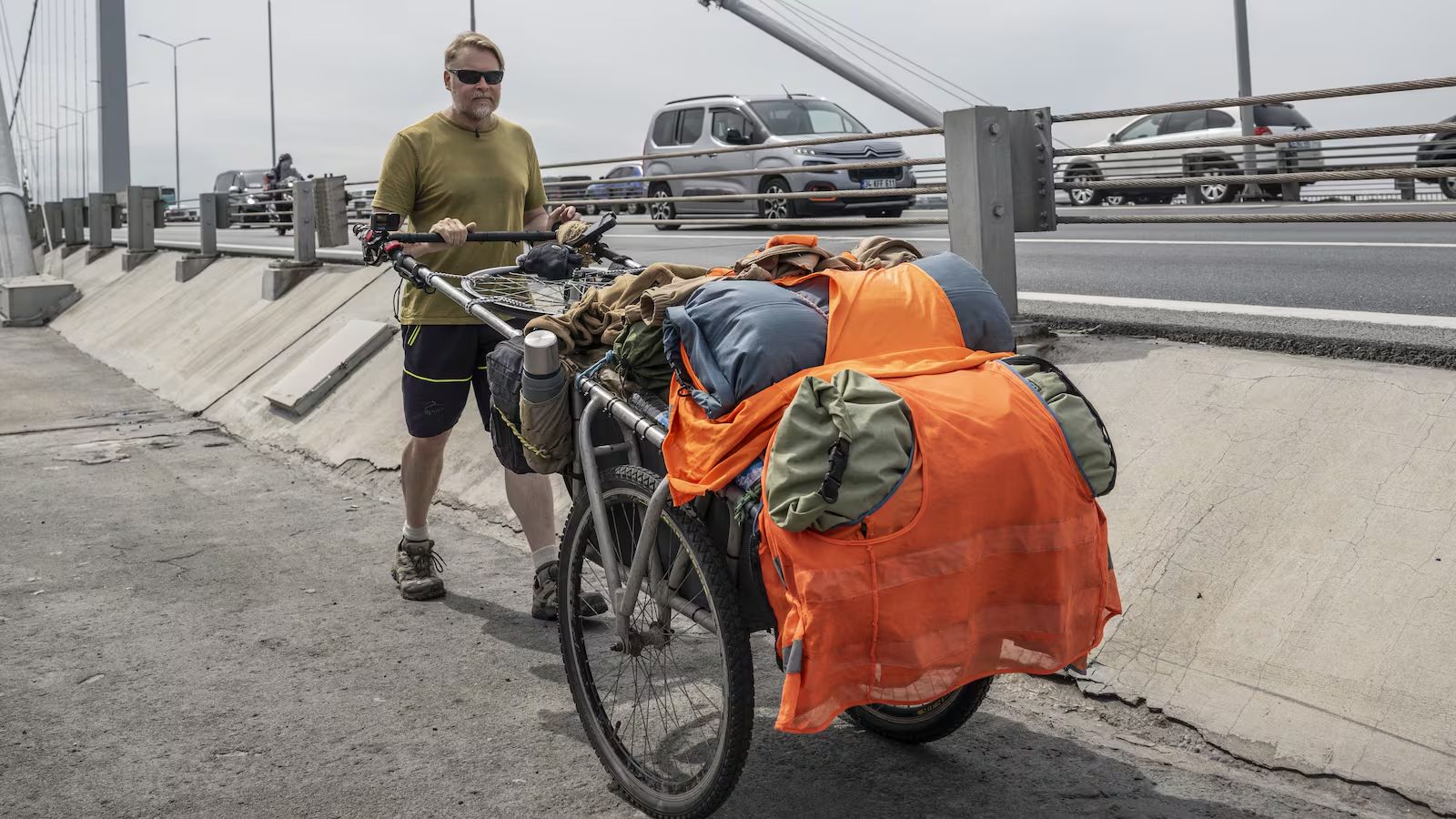
Human-interest profiles of Bushby consistently return to the personal cost of this quest. Decades on the road mean decades of absence from ordinary life. Reuters reported that he has spoken openly about the mental strain of the expedition, especially long isolated stretches and the challenge of imagining what life looks like after the finish. This is one of the most quietly powerful parts of the story. A mission like this can become not only a goal but an identity. If someone has structured his adult life around a single act of forward motion, what happens when forward motion ends?
That question gives the story depth beyond spectacle. Bushby is not just a man enduring hardship. He is also a man approaching the end of the thing that has defined him for almost half his life. Even as the finish line draws closer, the uncertainty grows. Returning home is the point of the expedition, but it is also the beginning of a life he has barely inhabited for nearly 30 years.
Yet the Journey Also Restored His Faith in People
For all the loneliness and strain, Bushby’s story is not a dark one. Reporting on the final stages of the walk emphasizes how strongly he speaks about the kindness of strangers. Again and again, people housed him, guided him, helped him, fed him, or simply treated him with generosity in places where fear-based stereotypes might have suggested otherwise. Reuters noted that one of the clearest lessons he draws from the expedition is that ordinary people across vastly different societies are often far kinder than headlines suggest.
That may be one of the deepest reasons people connect to his story. It is easy to hear about a 28-year walk and focus on the extremity of the challenge. But beneath the endurance angle is another narrative, one about the world as encountered face to face. Bushby has moved through dozens of cultures not as a distant tourist but as a vulnerable traveler dependent on the goodwill of the people around him. Over time, that seems to have become one of the expedition’s central truths.
Europe Means the Dream Is Finally Becoming Real
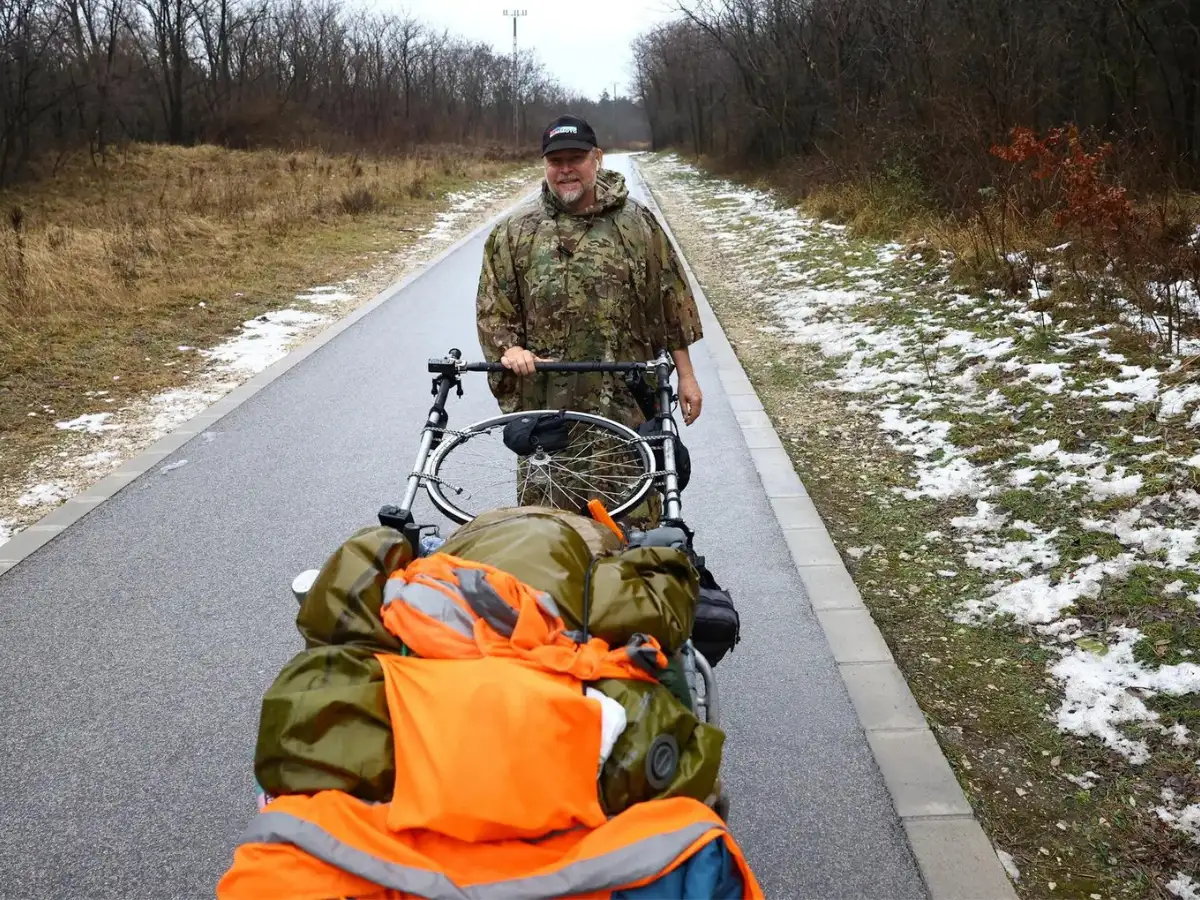
By 2025, Bushby had reached Turkey and then crossed into Europe, moving through Bulgaria, Romania, Hungary, Slovakia, and onward as he approached the final major leg home. Reuters reported in November 2025 that he was then walking through Hungary and aiming to finish in late 2026. Other reporting placed him in the Schengen zone and steadily reducing the remaining distance to Britain. After so many years in the Americas, Siberia, Central Asia, and the Caucasus region, Europe marked something emotionally different. It was not just another continent. It was the beginning of the last chapter.
That does not mean the finish is simple. One of the final technical obstacles is how to cross from continental Europe to England while honoring his no-transport rule. Coverage has repeatedly noted the Channel Tunnel as a possible issue because it is not open for pedestrians in any ordinary sense. That means even after 28 years, a bureaucratic obstacle near the end could still complicate the final miles. The idea feels almost absurd, but it fits the logic of the expedition perfectly: the closer Bushby gets to home, the more every remaining step matters.
Why His Story Hits So Hard Now
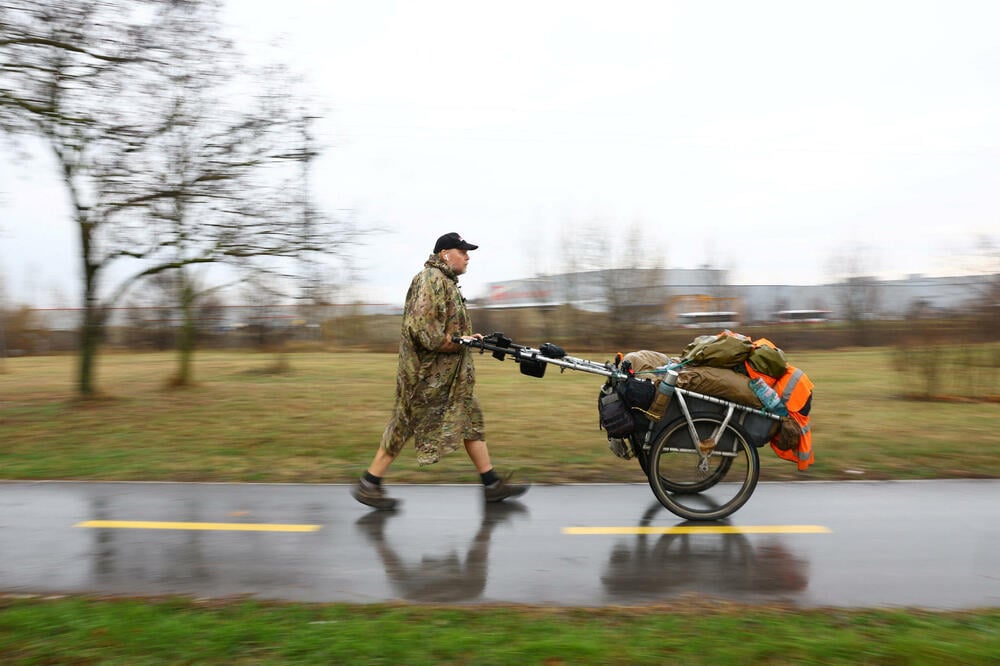
There is a reason Karl Bushby’s story keeps resurfacing. In an age obsessed with speed, optimization, and shortcuts, his expedition stands as a kind of rebellion. He chose the long way on purpose. He did not scale the challenge down to make it manageable or marketable. He made it harder because difficulty was part of the meaning. That is what gives the story its unusual emotional force. Bushby is not merely finishing an endurance project. He is honoring a promise that has survived nearly three decades of obstacles.
And there is something else too. His journey reminds people that persistence still matters, even when it looks irrational to the outside world. Most lives are not transformed by one giant act of heroism. They are shaped by continuing after delay, rejection, boredom, grief, and uncertainty. Bushby just made that truth literal, mile after mile, across the physical world.
In the end, Karl Bushby’s walk is not only a story about one man going home. It is a story about what happens when a person binds himself to a purpose and refuses to let time, politics, fatigue, or fear dissolve it. He left in 1998 as a former soldier with an impossible idea. He is returning in 2026, if all goes to plan, as the man who proved that impossible ideas can survive almost anything if the person carrying them keeps putting one foot in front of the other.