
Table of Contents
- A Disturbing Discovery in Monterey County
- Why the Flesh Turned Blue
- The Health Warning Is About More Than Appearance
- The Most Frightening Part Is What You Cannot See
- How the Pigs Were Likely Exposed
- A Local Warning With Broader Ecological Consequences
- California’s Regulatory Tension
- What Hunters and Landowners Are Being Told to Do
- Why This Story Hit Such a Nerve
- A Warning Sign That Should Not Be Ignored
A Disturbing Discovery in Monterey County
The story began gaining traction after reports surfaced from Monterey County in March 2025. According to the California Department of Fish and Wildlife, a wildlife trapper reported multiple wild pigs showing blue muscle or fat during field dressing. One of the people who helped bring public attention to the issue was Dan Burton, a wildlife control specialist, who described the tissue color in striking terms, saying it was not a little blue but “neon blue” and “blueberry blue.” That description quickly spread because it captured how unnatural the meat looked to experienced people who handle wild pigs regularly.
What made the situation more serious was that this was not an isolated curiosity with no known cause. State officials investigated samples from the affected animals and found diphacinone in the stomach and liver contents of a recovered pig with blue tissues. The California Department of Fish and Wildlife said its Wildlife Health Lab worked with the California Animal Health and Food Safety Laboratory in Davis to confirm the toxic exposure. In other words, the strange color was not a harmless oddity. It was evidence of poisoning.
Why the Flesh Turned Blue
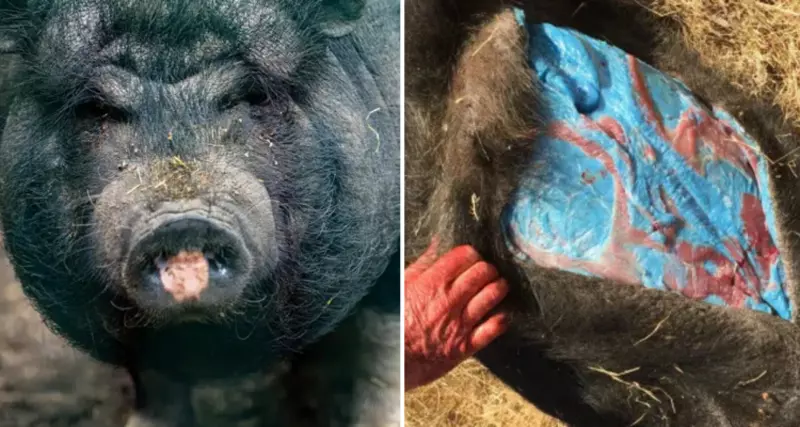
The bright color has a simple but unsettling explanation. Diphacinone bait is dyed blue so applicators can distinguish the poison from ordinary feed or food products. When wildlife consumes that bait directly, or possibly eats contaminated prey or material associated with it, the dye can show up in internal tissues. In these pigs, the result was blue-stained fat and muscle that alarmed hunters and landowners. National Geographic’s reporting on the case said the blue coloration pointed to a partially banned rodenticide, and California officials specifically identified diphacinone as the culprit in the Monterey County incidents.
That explanation is important because it shifts the story away from internet speculation. This is not a mutation, a disease that naturally turns tissue blue, or a visual trick caused by lighting. It is the physical trace of a chemical product entering an animal’s body. That makes the story less bizarre in one sense, but much more alarming in another. If poison meant for rodent control is reaching feral pigs, then the problem is not limited to what one hunter sees on one afternoon. It is evidence of a wider pathway through which toxic substances can move into the food chain.
The Health Warning Is About More Than Appearance
The central public health message from California officials is blunt. Hunters should not eat wild pig meat that shows blue discoloration, because rodenticide exposure may be present. The California Department of Fish and Wildlife also warned more broadly that game animals such as wild pig, deer, bear, and geese may be contaminated if they have been exposed to rodenticides. The agency’s pesticide investigations coordinator, Dr. Ryan Bourbour, said rodenticide exposure can be a concern for non-target wildlife in areas where applications occur near wildlife habitat.
That warning matters because cooking does not solve this problem. A toxin embedded in tissues is not made safe simply because meat is fried, smoked, or thoroughly heated. The issue is not bacteria that can be neutralized by proper cooking temperature. It is chemical contamination. The visual shock of blue flesh may make the danger obvious in some cases, but toxic exposure is the real problem, and once officials confirmed diphacinone in the affected pigs, the story shifted from curiosity to health advisory.
The Most Frightening Part Is What You Cannot See
Perhaps the most important detail in this entire story is that visible blue tissue is not a reliable screening method for safety. The California Department of Fish and Wildlife pointed directly to a 2018 study of anticoagulant rodenticide exposure in California game animals, noting that residues were found in 10 out of 120 wild pig tissue samples, or 8.3 percent, and in 10 out of 12 bear tissue samples, or 83 percent. Those animals were largely collected from agricultural or residential areas where rodenticides are commonly used. The agency highlighted this study as evidence that contamination can exist even when the dramatic blue tissue is absent.
That point changes the story completely. It means the blue pigs in Monterey County are not just shocking because of how they look. They are shocking because they reveal a problem that may often remain invisible. A hunter who sees fluorescent blue fat knows something is wrong. But a hunter who sees ordinary-looking meat may not realize the animal was exposed at all. This is why officials have stressed caution and reporting. The visible cases may simply be the most dramatic examples of a broader contamination issue affecting wildlife in landscapes where toxic bait is present.
How the Pigs Were Likely Exposed
California wildlife officials said the most plausible explanation is that the pigs accessed pesticide bait directly. Wild pigs are opportunistic omnivores, powerful enough to break into or disturb bait stations, especially in agricultural areas where food scents and soil disturbance already attract them. Reporting on the case noted that the pigs in Monterey County likely ingested bait pellets containing diphacinone, either directly from rodent-control setups or through related contamination pathways. Dan Burton and others familiar with the area reportedly observed hogs breaking into bait stations, which fits with the behavioral pattern of a highly adaptable and destructive invasive species.
This makes Monterey County an especially relevant setting. It is a region where agriculture, wildlife habitat, and pest control practices overlap. That overlap creates a perfect storm for accidental poisoning of non-target animals. When chemicals are deployed to solve one land management problem, they can spill into another system entirely. Pigs do not know the difference between bait set out for rodents and another edible source on the landscape. Once they consume it, the damage ripples outward.
A Local Warning With Broader Ecological Consequences
The blue pigs story may sound highly localized, but the ecological implications extend beyond one county. The 2018 California game animal study found widespread anticoagulant rodenticide exposure among not just pigs but bears as well. The highest prevalence in that study was in bears, with 83 percent of tested livers containing residues. That finding suggests these chemicals move through ecosystems much more broadly than many members of the public realize.
Wild pigs themselves can already alter ecosystems through rooting, crop damage, water contamination, and competition with native species. Add poison exposure to that picture, and the risks increase. Predators and scavengers that feed on contaminated animals may also be exposed. The issue then stops being just a hunting warning and becomes a wildlife management problem with cascading ecological consequences. California officials emphasized that rodenticides used close to wildlife habitat can expose non-target species, and the study they cited underscores how real that risk is.
California’s Regulatory Tension
Part of the concern surrounding this story comes from the gap between restrictions and exemptions. Reporting on the Monterey County cases noted that California tightened rules on diphacinone beginning in 2024, but agricultural uses still retained important exemptions. SFGATE’s coverage described this as a paradox. The state moved to limit the poison more broadly, yet agricultural operations could still use it for pest control, leaving room for wildlife exposure in farming-heavy regions like the Central Coast.
That tension helps explain why the blue pigs story provoked such strong reaction online. Many people assume that if a chemical is known to affect wildlife, then regulation would fully prevent accidental exposure. In practice, land use, pest pressure, economic incentives, and regulatory carve-outs create a more complicated reality. What happened in Monterey County is therefore not just about one poison or one species. It is about how difficult it can be to contain toxic substances once they are introduced into working landscapes shared by crops, pests, wildlife, and people.
What Hunters and Landowners Are Being Told to Do
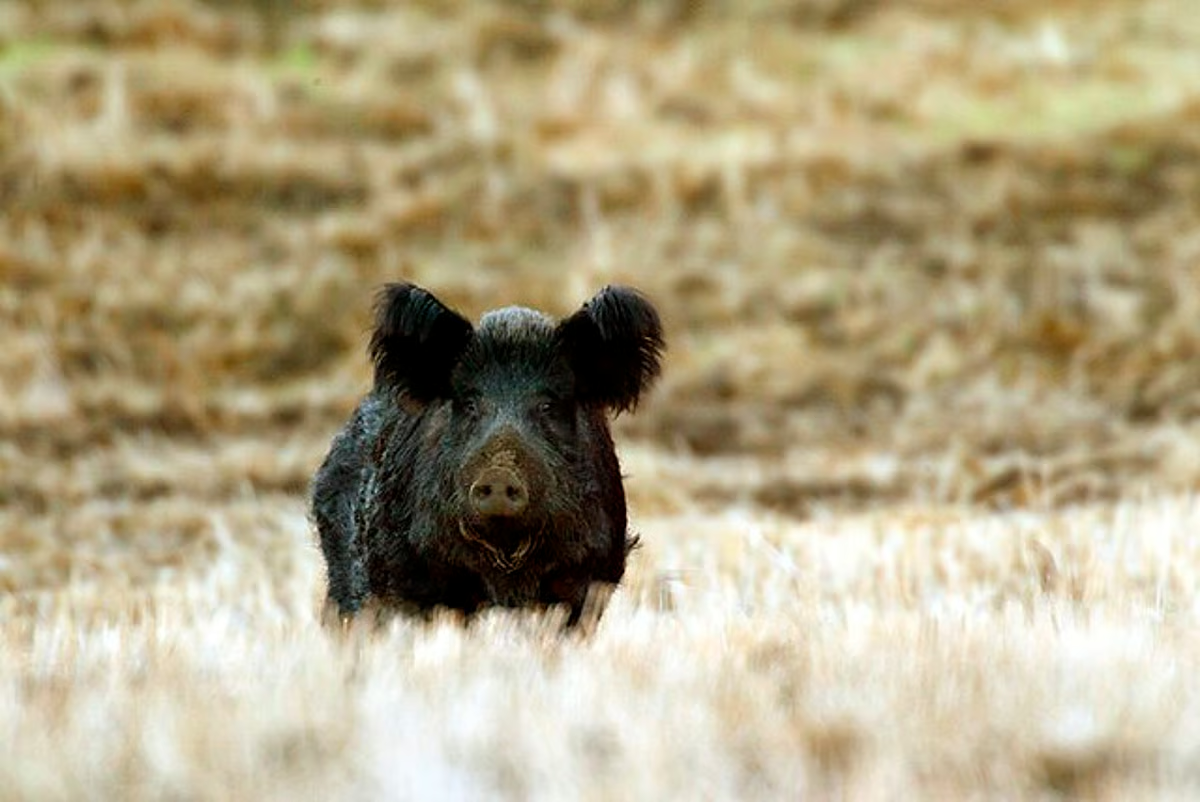
California officials have urged anyone who encounters blue tissue in a wild pig to report it to the California Department of Fish and Wildlife’s Wildlife Health Lab. The agency’s July 2025 notice explicitly framed the issue as one requiring reporting and caution, not casual disposal and silence. That guidance matters because every reported case helps officials understand where contamination is happening and whether the problem is expanding.
Landowners and trappers in affected areas have also begun changing behavior. Some have reportedly removed bait stations after realizing pigs were getting into them. Others warn anyone receiving pig carcasses or meat donations to watch for unusual tissue coloration and dispose of suspicious remains rather than letting them enter the food chain. Those are practical responses, but they also reveal a deeper truth. Once a problem like this becomes visible, communities closest to it often move faster than the broader public. They know the issue is no longer theoretical.
Why This Story Hit Such a Nerve
Part of what made these pigs such a viral story is the image itself. Neon blue flesh inside a wild animal feels apocalyptic, as if nature has been chemically altered in a way too dramatic to ignore. But the emotional power of the story comes from more than the visuals. It comes from what those visuals suggest. The pigs are not glowing because of a fantasy-like transformation. They are glowing because a poison designed for one target crossed species lines and left a vivid signature in meat that people might otherwise consume.
That is why the public reaction was so intense. The images are memorable, but the real fear is about hidden contamination, unintended exposure, and the possibility that toxins can travel farther through land and food systems than most people assume. In that sense, the blue pigs are not just shocking. They are clarifying. They make visible what is often invisible.
A Warning Sign That Should Not Be Ignored
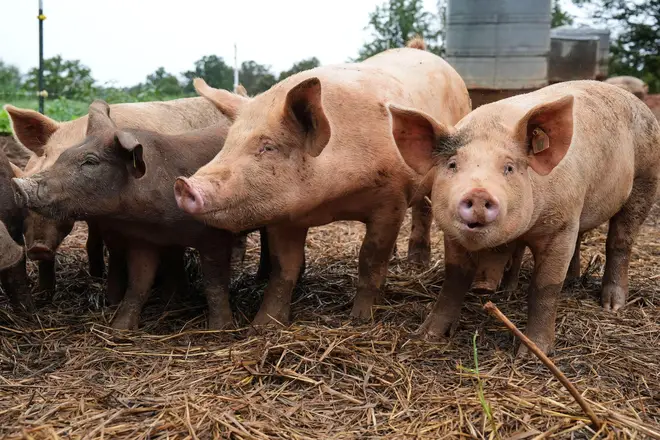
In the end, the neon blue pigs of Monterey County are not a bizarre wildlife footnote. They are a warning. California wildlife officials confirmed that these animals were exposed to diphacinone, and the state’s own cited research shows rodenticide residues can be present in game animals even without visible discoloration. That combination makes this story more than a curiosity and more than a social media spectacle. It is a reminder that toxic chemicals can move through ecosystems in ways that are easy to miss until something startling forces everyone to look.
For hunters, the lesson is immediate: unusual tissue color should be treated as a red flag, and even normal-looking meat from high-risk areas may not guarantee safety. For landowners and regulators, the lesson is broader: pest control practices can create consequences far beyond their intended target. And for the public, the image of a pig with blueberry-blue flesh should linger for one reason above all others. It is a visible sign of an invisible problem, one that reaches from bait stations to wildlife to the food chain itself.