
Table of Contents
- What Quantum Physics Says About Reality
- The Many Worlds Interpretation
- Quantum Consciousness
- The Role of ObservatioN
- The Implications for Spirituality and Consciousness
- Life, Death, and the Illusion of Time
- Quantum Mechanics and the Afterlife
- The Scientific and Philosophical Debate
- The Future of Quantum Consciousness and Life Beyond Death
- Conclusion
What Quantum Physics Says About Reality
At the heart of quantum physics lies the idea that reality is not as fixed as it appears. Unlike classical physics, which sees the universe as a predictable and orderly system, quantum physics reveals a reality that is probabilistic and often baffling. At the quantum level, particles exist in multiple states simultaneously, a phenomenon known as superposition. This means that what we perceive as a singular, solid reality is actually a complex web of possibilities, only collapsing into a single state when observed.
The idea that reality is not fixed can also be applied to the concept of life and death. If the fundamental nature of the universe is fluid and changeable, then perhaps our understanding of death—something we think of as inevitable and final—could also be part of a larger illusion. In essence, the boundaries between life and death may not be as clear-cut as we believe.
The Many Worlds Interpretation
One of the most intriguing theories in quantum physics that challenges the conventional understanding of death is the Many Worlds Interpretation (MWI). Proposed by physicist Hugh Everett in 1957, the MWI suggests that all possible outcomes of a quantum event actually occur, each in a different “branch” of the universe. In other words, the universe is constantly splitting into multiple versions of itself, each one reflecting a different possibility.
In this framework, death might not represent an absolute end, but rather a transition into another branch of reality. According to MWI, when a person dies in one reality, they may continue to live in another version of the universe. This raises the fascinating possibility that death could be just one outcome in a multiverse of infinite possibilities, where consciousness never truly ceases.
Quantum Consciousness
Another quantum theory that challenges the conventional view of death is the idea of quantum consciousness. Researchers like physicist Roger Penrose and neuroscientist Stuart Hameroff have proposed that consciousness is not merely a product of the brain but is instead rooted in quantum processes. This theory, known as Orchestrated Objective Reduction (Orch-OR), suggests that consciousness arises from quantum events within the brain’s neurons.
If consciousness exists at the quantum level, it may not be bound by the physical death of the body. Quantum physics implies that consciousness could potentially survive beyond the brain, existing in a non-material form. In this view, death is not the end of consciousness; rather, it may simply represent a shift in the state of consciousness, much like how quantum particles transition between different states.
The Role of ObservatioN
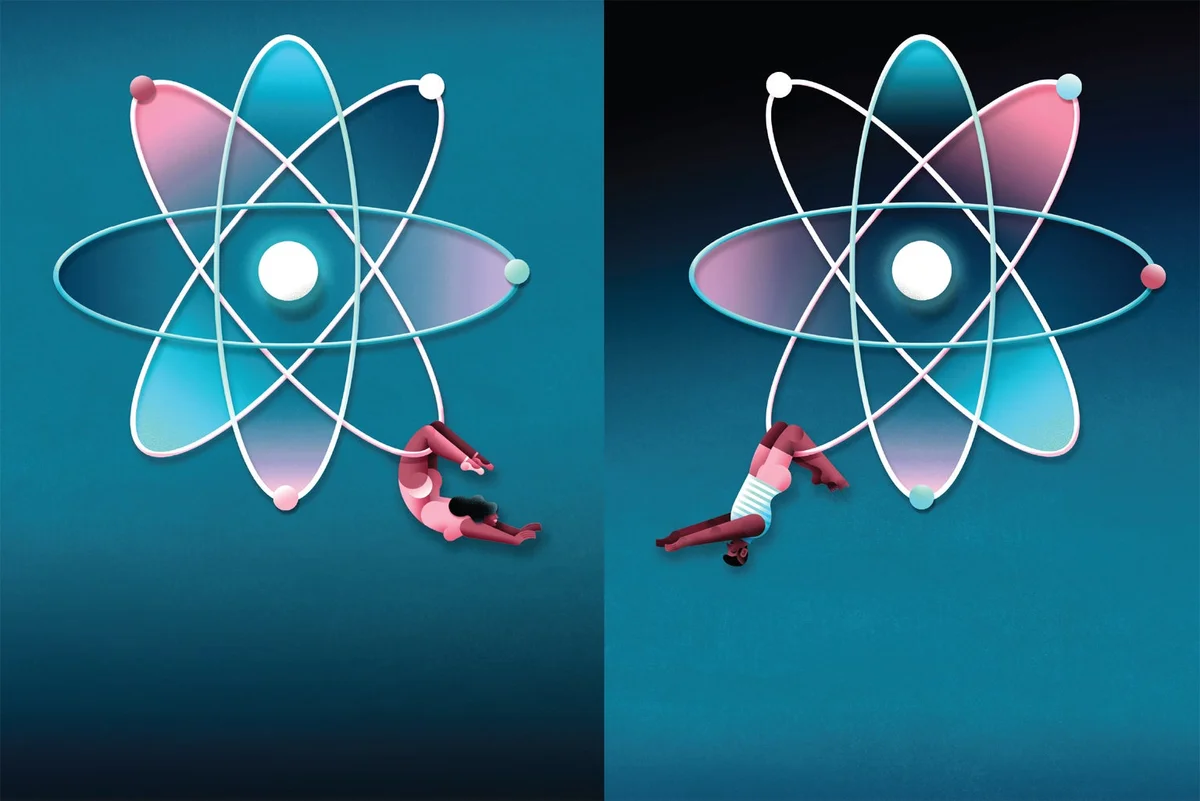
In quantum physics, the act of observation plays a crucial role in determining the state of a particle. This phenomenon is famously illustrated by the Schrödinger’s cat thought experiment, in which a cat in a box is both alive and dead until it is observed. The theory suggests that reality is not fixed until it is observed, and this observation causes the “collapse” of possibilities into a single outcome.
When applied to death, this idea raises the intriguing possibility that death, too, might be influenced by the observer. If the universe is a construct of probabilities and the observer’s consciousness plays a role in shaping reality, then perhaps our perception of death is a reflection of our beliefs and observations. Could it be that death exists only because we believe it does, and that in other quantum realities, it might not even be a concept?
The Implications for Spirituality and Consciousness
The idea that death is an illusion has profound implications not just for science, but also for spirituality. Many spiritual traditions, including Eastern philosophies like Buddhism and Hinduism, have long taught that death is not the end, but rather a transition or transformation of consciousness. Quantum physics seems to be aligning with these ancient teachings, suggesting that life and consciousness might exist beyond the physical body.
For those who hold spiritual beliefs about the afterlife or reincarnation, the quantum perspective provides a scientific framework for understanding life beyond death. If consciousness is a quantum phenomenon, it could theoretically exist independently of the physical brain, suggesting that what we think of as “death” might simply be a transition into a different state of existence.
Life, Death, and the Illusion of Time
One of the most perplexing aspects of quantum theory is its challenge to our understanding of time. In classical physics, time is linear: events unfold one after another in a predictable sequence. However, in the quantum realm, time can behave very differently. Some theories suggest that time itself may be an illusion, or at least not as fixed as we experience it.
If time is not linear, then the idea of death as a final event in time may be called into question. Could it be that death is not a point in time but a transition between different states of existence, occurring outside of our conventional understanding of time? If time itself is fluid, then death may not be the end, but rather a shift in the way we experience reality.
Quantum Mechanics and the Afterlife
The exploration of quantum mechanics has led some to speculate about the existence of an afterlife. If consciousness is a quantum phenomenon, it could potentially persist beyond the body, moving into different states or realities. Quantum mechanics does not rule out the possibility of consciousness continuing after physical death, and some interpretations of quantum physics suggest that consciousness could exist in alternate universes, waiting to be experienced.
This view offers an intriguing perspective on the afterlife, one that is not based on traditional religious beliefs but rather on scientific theory. While the idea remains speculative, it raises important questions about the nature of consciousness and its potential to exist beyond the death of the physical body.
The Scientific and Philosophical Debate
The debate over whether death is real or merely an illusion is far from settled. While quantum physics offers fascinating possibilities, it is important to remember that these theories are still in the realm of speculation. Many scientists remain skeptical of claims that quantum physics can explain life beyond death, and much more research is needed to understand the true relationship between consciousness, quantum mechanics, and the nature of existence.
However, the very fact that quantum physics opens the door to such possibilities is a testament to the growing intersection between science and spirituality. As our understanding of the universe expands, so too does our understanding of life, death, and consciousness. Whether or not death is truly an illusion, these quantum perspectives are reshaping how we think about existence itself.
The Future of Quantum Consciousness and Life Beyond Death
As quantum physics continues to evolve, it may eventually provide concrete answers to questions that have puzzled humanity for centuries. Is death truly an end, or is it simply a transition? If consciousness exists beyond the physical body, can we ever truly understand its nature? These questions, once the domain of philosophy and religion, are now being explored through the lens of cutting-edge science.
The future of quantum consciousness and life beyond death may hold unimaginable discoveries. While we are far from fully understanding the relationship between consciousness and quantum mechanics, the possibility of death being an illusion raises new hopes for how we view life, the afterlife, and the limits of human understanding. As we continue to push the boundaries of science, we may one day uncover truths that transcend the very concept of death.
Conclusion
Quantum physics challenges many of our most fundamental beliefs about life, death, and existence. By proposing that consciousness may not be bound by the physical body, quantum theories offer new possibilities for understanding life beyond death. Whether death is truly an illusion or simply a transition into another form of existence, the implications for both science and spirituality are profound. As research continues and our understanding of quantum mechanics deepens, we may find ourselves rethinking what it means to live—and what it means to die.