

Imagine losing your sight with little hope of getting it back. Now imagine that same eyesight being restored—not with surgery, not with medication, but with lab-grown stem cells.
That futuristic scenario just became real.
Japan has officially made history as the first country to use stem cells from another person to restore vision in a human patient. The groundbreaking procedure could be the beginning of a new era in regenerative medicine—one where blindness is no longer irreversible.
Let’s break down what happened, how it works, and why this could change millions of lives around the world.
Table of Contents
👁️ A Blindness-Causing Disease, and a Bold Cure
The patient was an elderly Japanese woman suffering from age-related macular degeneration (AMD), a leading cause of blindness among people over 50. In AMD, cells in the retina—the light-sensitive tissue at the back of the eye—begin to die off, leading to blurry vision and eventual blindness.
Until now, treatments could slow the progression of AMD, but couldn’t reverse the damage.
That changed when a team of doctors from the RIKEN research institute and the Kobe City Medical Center General Hospital did something never done before: they implanted a sheet of retinal cells derived from stem cells into the patient’s eye.
These weren’t just any stem cells—they were induced pluripotent stem cells (iPSCs), a type of cell that can be programmed to become virtually any other cell in the body.
🔬 What Are iPS Cells—and Why Are They Revolutionary?

Induced pluripotent stem cells are lab-created cells that behave like embryonic stem cells. But unlike embryonic cells, they’re made by reprogramming adult cells—like skin or blood cells—into a blank-slate state. From there, scientists can guide them to become heart cells, nerve cells, or—in this case—retinal pigment epithelial cells.
These cells play a critical role in keeping photoreceptors healthy, which are essential for vision.
The major breakthrough? These iPS cells came from a donor, not the patient. In previous trials, stem cells were taken from the patient’s own body, a process that takes months. But with donor-derived iPSCs, scientists can create a cell bank—an off-the-shelf treatment option available much faster and at a lower cost.
💉 The Surgery That Could Rewrite Medical History
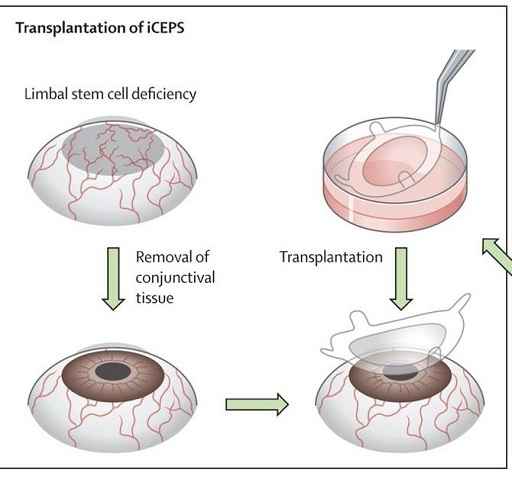
During the landmark procedure, surgeons carefully implanted a thin sheet of the new retinal cells under the patient’s damaged retina. The goal was to replace the deteriorated cells that cause vision loss in AMD.
According to the medical team, the patient recovered well, with no signs of rejection or complications. If the cells continue to survive and function as expected, it could mean partial or even full restoration of sight.
It’s still early days, but even partial success in regenerating vision would be nothing short of miraculous.
🛡️ Safety First: Why Japan Took a Calculated Risk
Stem cell therapies—especially ones using donor cells—carry risks, particularly around immune rejection and tumor formation. That’s why the Japanese team conducted rigorous safety checks, including preclinical animal testing and multiple screenings for abnormalities in the stem cell lines.
They also used immunosuppressive drugs to help prevent the patient’s body from attacking the new cells. So far, the results are promising, and the patient’s progress is being closely monitored.
🧠 The Man Behind the Mission
The project was led by Dr. Masayo Takahashi, a globally respected ophthalmologist and regenerative medicine pioneer. She was also behind the world’s first transplant of iPSC-derived cells back in 2014, which used the patient’s own stem cells.
Now, by moving to donor cells, her team has opened the door to making retinal regeneration faster, more affordable, and scalable.
Her goal is clear: “To take this from a trial into mainstream medicine that people around the world can access.”
🌍 Why This Matters for the World
There are over 196 million people worldwide suffering from AMD—and the number is growing as populations age. If Japan’s breakthrough can be replicated and scaled, we could be looking at the first true treatment for irreversible vision loss.
But it goes beyond eyes.
This success story isn’t just about curing blindness—it’s about proving that donor-derived stem cells can be safely transplanted into human bodies without rejection. That opens the floodgates for future treatments targeting:
- Parkinson’s disease
- Spinal cord injuries
- Heart failure
- Diabetes
In short, this one eye surgery could help unlock a whole new chapter in medicine.
🧬 What’s Next?

Japan plans to continue the trial with additional patients, using cells from a stem cell bank that matches patients’ immune profiles. If further surgeries show consistent results, the therapy could become available for wider use in just a few years.
Meanwhile, researchers in the U.S., U.K., and South Korea are closely watching—and preparing to follow suit.
For now, Japan stands alone at the forefront of regenerative ophthalmology.
🚀 A Future We Can See
It wasn’t long ago that stem cell therapy felt like science fiction. Now, it’s reality—and it’s happening in operating rooms, not just labs.
The patient who received the world’s first iPSC transplant from another person may have had her vision restored—but she’s also helping the world see a new future.
One where blindness may no longer be a life sentence.