

Table of Contents
- The Toxic Secret Under San Francisco
- The Hidden History of a Military Powerhouse
- A Toxic Legacy Unearthed
- How Plutonium Works—And Why It’s So Dangerous
- The Navy’s Denial—and the Growing Public Outcry
- What Happens When You Build on Contaminated Land
- The Environmental Domino Effect
- Why This Matters Beyond California
- The Fight for Justice
- Can the Damage Be Reversed?
- Lessons from the Fallout
- The Unseen Glow of History
The Toxic Secret Under San Francisco
Beneath the sunny skyline and iconic bridges of San Francisco lies a dark secret—a toxic legacy of plutonium radiation left behind by decades of military operations.
For years, residents living near the Hunters Point Naval Shipyard believed their neighborhood was safe. But new revelations have unearthed something terrifying: radioactive contamination so severe it could alter the city’s environmental future.
What began as a proud center of naval innovation has turned into one of the most toxic cleanup sites in America—and the truth is only now coming to light.
The Hidden History of a Military Powerhouse
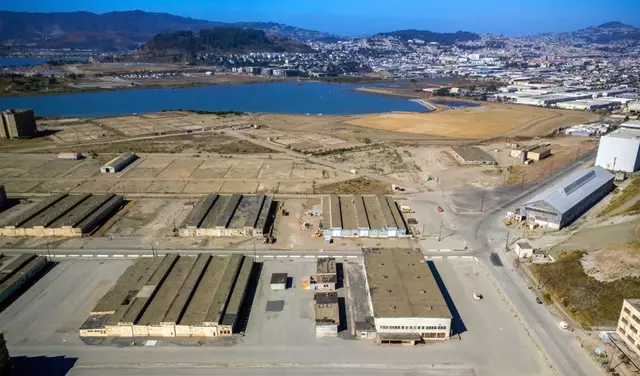
The Hunters Point Naval Shipyard was once a symbol of American strength. During World War II, it built and repaired the Navy’s most powerful ships. Later, during the Cold War, it became a hub for nuclear research.
That research included testing and cleaning radioactive materials, particularly plutonium—a substance so toxic that just one microgram can cause cancer if inhaled.
For decades, waste from these experiments was dumped, buried, or burned right on-site. When the Navy closed the base in 1994, officials promised to clean it up for redevelopment.
But as new evidence shows, they didn’t clean it all.
A Toxic Legacy Unearthed
Investigators recently discovered plutonium “hot spots”—areas where radiation levels are thousands of times higher than what’s considered safe—around the old base.
These radioactive remnants were found not only in soil but also in storm drains and along the nearby Bay shoreline, suggesting that contamination may have spread far beyond the base’s boundaries.
For the people who live nearby, it’s not just an environmental issue—it’s personal. Many residents report unusual rates of cancer, birth defects, and respiratory illness, yet have struggled for years to get answers.
“We were told the land was clean. Now they’re saying it’s radioactive?” one local resident said. “How do you trust anyone after that?”
How Plutonium Works—And Why It’s So Dangerous
Plutonium is one of the most lethal substances on Earth. Used in nuclear weapons and reactors, it emits alpha radiation—a type that can’t penetrate skin but is deadly if ingested or inhaled.
Once inside the body, plutonium lodges in the lungs, liver, and bones, where it can remain radioactive for thousands of years.
The U.S. Environmental Protection Agency (EPA) classifies plutonium exposure as a severe carcinogenic risk. Even small amounts can cause genetic mutations, increase cancer risk, and contaminate the surrounding ecosystem for generations.
And in San Francisco, that’s exactly what officials now fear.
For years, the U.S. Navy maintained that the contamination was under control. But whistleblowers and independent scientists have repeatedly accused the cleanup contractors of falsifying safety data.
In 2018, two employees of the firm responsible for radiation testing were convicted of covering up contaminated soil samples to make the area appear safe for redevelopment.
Now, with new findings of plutonium traces, public anger is boiling over.
“They told us this land was safe for families,” said environmental advocate Michelle Pierce. “But the truth is—it’s poisoned.”
The discovery has reignited calls for a full-scale federal investigation, not just into the contamination itself, but into the decades-long system of denial and negligence that allowed it to happen.
What Happens When You Build on Contaminated Land
Parts of the Hunters Point site have already been redeveloped into new housing and commercial projects. Residents moved in with promises that their homes were safe.
But radiation doesn’t disappear—it migrates.
Wind, water, and soil movement can spread radioactive particles miles away from their origin. That means the contamination found at the naval base could be slowly leaking into residential zones, playgrounds, and even San Francisco Bay.
Environmental experts warn that without an immediate and transparent cleanup, the city risks long-term health and economic consequences.
After all, who wants to live—or invest—in a neighborhood built on radioactive soil?
The Environmental Domino Effect
The danger isn’t confined to humans. Local wildlife—including fish, birds, and marine life—may already be absorbing radioactive particles.
That poses a broader ecological threat to San Francisco Bay’s fragile ecosystem, one of the most biodiverse estuaries in North America.
And here’s the scary part: once radiation enters the food chain, it doesn’t stop. It moves upward—from small organisms to larger predators, eventually reaching humans through seafood and water sources.
Scientists call this bioaccumulation, and it’s how even trace amounts of contamination can become catastrophic over time.
Why This Matters Beyond California
Hunters Point isn’t an isolated incident. Across the U.S., there are more than 400 former military sites with confirmed or suspected contamination from radioactive or chemical waste.
From Washington’s Hanford nuclear site to New Mexico’s Los Alamos labs, these places carry the same warning: what we bury, we eventually breathe.
The San Francisco case is a stark reminder that the environmental cost of military progress doesn’t vanish with time—it compounds.
And with rising sea levels threatening to flood old waste sites, the problem could soon resurface in terrifying ways.
The Fight for Justice
Residents of the Hunters Point area have formed grassroots organizations demanding answers, accountability, and relocation support.
They’ve called for a complete moratorium on development until independent experts confirm the land is safe.
Legal teams are also preparing lawsuits, arguing that the government knowingly endangered public health by concealing contamination reports.
Their message is simple but powerful:
“We are not expendable. Clean up your mess.”
Meanwhile, state officials have pledged new rounds of testing—but trust is hard to rebuild once it’s been radioactive for decades.
Can the Damage Be Reversed?
Cleaning up plutonium contamination isn’t like picking up trash. It requires specialized teams, advanced containment systems, and decades of monitoring.
Even after soil removal, radioactive isotopes can linger in groundwater and sediment for centuries.
Experts estimate that a full decontamination of Hunters Point could cost over $10 billion—a staggering sum that raises its own moral question:
Should profit-driven redevelopment ever come before public safety?
For many in San Francisco, that question has already been answered with heartbreak.
Lessons from the Fallout
If there’s a silver lining to this radioactive cloud, it’s awareness.
The Hunters Point scandal has sparked new discussions about environmental transparency, corporate accountability, and the long-term cost of progress.
It’s forcing cities everywhere to ask uncomfortable questions:
- Are we testing our land and water often enough?
- Are private contractors being held accountable for cleanup accuracy?
- And most importantly—how much are we willing to risk for convenience?
The Unseen Glow of History

Plutonium doesn’t shine, but its legacy does—in the most haunting way possible.
It glows through the cancer diagnoses, the soil samples, and the shattered trust of communities who believed in a promise of safety.
San Francisco’s beauty hides a wound—a reminder that even the most advanced societies can bury their darkest truths right underfoot.
And as scientists and citizens push for justice, one question lingers like fallout:
Will the city clean its soil—or just its conscience?