
Table of Contents
- They Called It a War — But Some Treated It Like a Safari
- A Siege Like No Other — And the Rumors That Haunted It
- What “Sniper Tourism” Allegedly Was
- War Tourism or Atrocity? The Line Between Them
- The Investigation That Shook a City’s Memory
- Inside the Documentary That Sparked Renewed Action
- Voices from Sarajevo: Survivors Speak Out
- Who Were These Alleged “War Tourists”?
- War Crime or Myth? The Debate Over Evidence
- The Ethics of War Tourism — Then and Now
- What This Means for Journalism, Memory, and Justice
- Open Loop: Where Does Accountability Begin and End?
They Called It a War — But Some Treated It Like a Safari
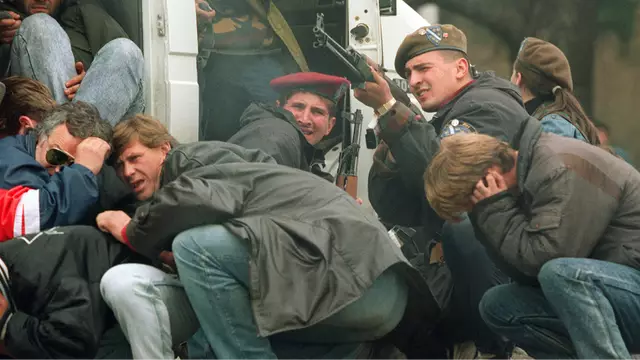
It was the longest siege of a capital city in modern history — Sarajevo, surrounded by sniper posts and under constant attack for nearly four years. Children ran zigzag across streets to avoid being shot. Pregnant women and the elderly risked every step just for water. Civilians became targets in everyday life.
Yet now, more than three decades later, something even more chilling is coming to light:
wealthy foreigners allegedly paid to participate in “sniper tourism” — hiring themselves out to shoot defenseless civilians for sport.
If this happened to you, to your family or town — would you even believe it? Or would you demand justice?
This isn’t just a horrific war story. It’s a reemerging historical controversy that is reopening legal and moral debates around war, entertainment, and human decency.
A Siege Like No Other — And the Rumors That Haunted It
Between 1992 and 1996, Sarajevo endured one of the darkest periods of the Balkan Wars.
Soldiers surrounded the city. Civilians had to navigate what became known as “Sniper Alley”, where moving even a few meters could mean death.
Snipers weren’t targeting only combatants — they were watching anyone who moved.
Civilians were wounded in their homes, at bus stops, and on their way to fetch food.
So when allegations first surfaced — suggesting that foreigners paid to join these combat positions as snipers — the idea seemed too brutal to be true.
But now, after years of whispers and speculation, these claims are being seriously investigated by authorities — exposing one of the most disturbing alleged practices of the 1990s Balkan conflict.
What “Sniper Tourism” Allegedly Was
According to investigative reports and court filings:
👉 Wealthy individuals — from Italy and other Western countries (including reports of Americans, Russians, and others) — allegedly paid tens of thousands of dollars to take part in what’s been described as “sniper safaris” surrounding Sarajevo.
Reports say:
- Participants reportedly paid up to €80,000–€100,000 (roughly $90,000–$115,000) for the experience.
- They were allegedly transported to sniper positions on hills controlled by Bosnian Serb forces.
- Some witnesses claim there was a gruesome “price list” attached to targets — with higher fees for shooting children.
These details come from investigative journalist Ezio Gavazzeni, who filed a 17‑page report with Milan prosecutors — and from accounts documented in the 2022 documentary Sarajevo Safari.
If these allegations — still unproven in court — are true, what does that say about our relationship with war as entertainment?
War Tourism or Atrocity? The Line Between Them
Travel trends have shifted dramatically over the decades — from adventure travel in the 1960s to today’s immersive tourism experiences.
But war tourism sits in a deeply uncomfortable space between education and exploitation.
People already travel to:
- visit historical battlefields,
- see memorials like Auschwitz or Normandy,
- walk the trenches of World War I.
Those travels often aim to honor the fallen, learn history, or promote peace.
However, the sniper tourism alleged in Sarajevo isn’t about reflection. It’s alleged to be about thrill, wealth, and the commodification of violence.
At its worst, the claim suggests that some participants weren’t just witnesses — they were active participants in taking innocent lives.
And that’s a different, darker concept entirely.
The Investigation That Shook a City’s Memory
In late 2025, prosecutors in Milan, Italy, officially opened an investigation based on Gavazzeni’s complaint alleging participation by Italian nationals in sniper tourism during the siege.
Officials are examining whether these acts — which allegedly took place in the early 1990s — involve crimes such as:
- voluntary homicide
- aggravated murder
- inhumane actions against civilians
Bosnian leaders, including former Sarajevo mayor Benjamina Karic, have publicly supported the push for accountability, hoping it will finally shed light on a long‑buried chapter of history.
Even U.S. policymakers have weighed in. A member of Congress vowed to investigate whether Americans took part in such “human safari” trips — suggesting that these are not just old rumors, but matters still resonating worldwide.
But why reopen wounds from a war that ended decades ago?
Because history doesn’t heal when it’s ignored.
Inside the Documentary That Sparked Renewed Action
In 2022, Slovene director Miran Zupanič released Sarajevo Safari — a documentary exploring claims of sniper tourism during the siege.
Featuring interviews with witnesses and insiders, the film shocked audiences by asserting that:
➡ Foreign visitors came to Sarajevo with intent
➡ Bosnia’s intelligence services knew of it
➡ Organized transport and arrangements were involved
Some critics called the film sensational, while others called it a catalyst for uncovering deeper truths.
The evidence presented — including testimonies not previously aired and archived interviews — helped spark official complaints to prosecutors in Bosnia and, later, Italy.
But documentaries raise questions:
How much is truth, and how much is interpretation?
As prosecutors dig deeper, the answers may reshape how we view not only this conflict — but how civilians and war zones interact.
Voices from Sarajevo: Survivors Speak Out
For survivors of the siege, the allegations strike a personal chord.
Bosnians remember a city where:
- schools were shelled
- families stayed without electricity or water
- markets were shot at randomly
- children ran zigzag to survive sniper lines
Even without sniper tourism allegations, the human cost was immense.
Over 11,500 civilians were killed across Sarajevo during the conflict — many from sniper fire alone.
Now imagine discovering that, amid that horror, outsiders may have been there for pleasure.
Survivors have said the claims are painful but not entirely surprising given the intensity of wartime chaos. Some who were young children during the siege have described how weekends were especially dangerous — with heavier sniper fire than usual.
These voices raise a stark question:
Does justice have a time limit — or are some crimes too big to be forgotten?
Who Were These Alleged “War Tourists”?
While no one has yet been charged, investigators believe that:
🔹 Many alleged participants came from Italy, especially from the city of Trieste, where some groups gathered before traveling to Bosnia.
🔹 Participants were wealthy individuals with a passion for guns and thrill‑seeking behavior.
🔹 Some accounts suggest people from the U.S., Russia, Canada, and Europe took part.
One chilling aspect of the allegations is the reported pricing structure — where different demographics of civilians were assigned different “fees” for being targeted.
If true, this would represent not just murder — but the commodification of human life in the most grotesque way imaginable.
Yet, despite the horror of these claims, no one has been convicted — and decades have passed without legal closure.
War Crime or Myth? The Debate Over Evidence
Not everyone accepts the sniper tourism allegations as fact.
Organizations aligned with Bosnian Serb veterans have dismissed the claims, calling them propaganda.
War crimes cases are notoriously difficult to prosecute decades later — especially when evidence fragments, witnesses pass away, and memories fade.
That’s why investigators in Milan and Bosnia are determined to uncover:
📌 Testimonies from survivors and military personnel
📌 Intelligence files from the 1990s
📌 Documentary evidence and archival footage
📌 Any travel or payment records connected to alleged participants
But here’s the open loop:
Can justice ever catch up with history — especially in cases where the crime was thought to be chaos, not choice?
The Ethics of War Tourism — Then and Now
Even without proving these specific allegations, the very idea of war tourism demands moral scrutiny.
Today people travel for:
💼 Business
🛫 Leisure
⚔ Historical study
📸 Cultural experiences
But when does observation cross the line into participation?
Major conflicts around the world attract tourists — from WWII sites in Europe to battlefields in Southeast Asia — usually with intentions of remembrance and learning.
But the alleged sniper safaris in Sarajevo blur the lines between:
✔ Seeking history
✖ Exploiting suffering
It forces us to confront a sobering truth:
When entertainment intersects with human pain, where do we draw the line?
What This Means for Journalism, Memory, and Justice
The revival of interest in these allegations underscores how powerful storytelling — from journalists like Ezio Gavazzeni to filmmakers like Miran Zupanič — can influence public opinion and legal action years later.
It also invites reflection on:
- The responsibility of media in war reporting
- How historical trauma is archived and told
- Whether legal systems can account for atrocity decades after the fact
- The importance of survivor voices in shaping history
Because songs and movies can immortalize war, but the facts of what really happened must stand on evidence — not speculation.
And that’s why this investigation matters — even before any indictments or trials.
Open Loop: Where Does Accountability Begin and End?
The sniper tourism allegations in Sarajevo confront us with deep philosophical, legal, and emotional questions:
Can individuals be held accountable for violence committed decades ago?
Is justice possible after the fog of war and time has obscured evidence?
What does it say about humanity if people could ever find entertainment in others’ suffering?
As investigators in Milan dig into decades‑old claims, one thing is certain:
History isn’t closed simply because the war ended — the search for truth continues.
And whether the allegations are proven or disproven, the questions they raise will linger — about war, cruelty, privilege, and the cost of human life.