

Table of Contents
- Saudi Arabia’s Shift Toward Metal Mining: The Economic Reboot
- Why Metals Matter: The Role of Copper, Gold, and Rare Earths
- The Trillion-Dollar Investment: Ambitious Plans and Challenges
- Building the Infrastructure: From Mines to Markets
- The Global Impact: Shaping the Future of Energy Transition
- The Environmental Considerations: Sustainable Mining Practices
- Conclusion: A New Era for Saudi Arabia’s Economy
Saudi Arabia’s Shift Toward Metal Mining: The Economic Reboot
Saudi Arabia’s economy has long been tethered to oil exports, but the kingdom is increasingly looking to break free from this dependency. The announcement of a trillion-dollar plan to ramp up the metal mining industry signals a radical shift in the country’s economic trajectory. By focusing on the extraction and processing of key metals—copper, gold, and rare earth minerals—Saudi Arabia is positioning itself as a major player in the global mining market.
This strategic pivot aligns with the Vision 2030 program, an ambitious blueprint for the country’s economic diversification. The goal is to reduce the country’s reliance on oil and create a more sustainable, balanced economy. Metal mining, with its potential to drive economic growth and provide critical resources for green technologies, presents an attractive alternative for a country seeking to redefine its role on the global stage.
Why Metals Matter: The Role of Copper, Gold, and Rare Earths
The push for a robust metal mining industry is driven by global demand for metals that are vital for technological innovation, energy transition, and infrastructure development. Copper, for instance, is essential for electrical wiring, renewable energy systems, and electric vehicle production. As the world moves towards cleaner energy solutions, the demand for copper and other metals is expected to soar. Saudi Arabia’s focus on these metals places it in a prime position to cater to these growing global markets.
Gold, traditionally a store of value, also plays a significant role in the country’s mining strategy. With global economic uncertainties and inflationary pressures, Saudi Arabia’s gold reserves offer both economic security and the potential for investment. Rare earth metals, which are crucial for the production of high-tech electronics, batteries, and renewable energy technologies, are another key focus of the kingdom’s mining expansion.
By diversifying into these high-demand metals, Saudi Arabia not only aims to boost its non-oil revenues but also ensures its place at the center of the global supply chain for critical materials.
The Trillion-Dollar Investment: Ambitious Plans and Challenges

Saudi Arabia’s trillion-dollar ambition to develop a thriving metal mining industry is not without its challenges. The kingdom plans to invest heavily in exploration, infrastructure, and technology to unlock its untapped mineral wealth. These investments are necessary to transform Saudi Arabia into a major global supplier of critical minerals.
However, building a sustainable and competitive mining sector will require overcoming several obstacles. Saudi Arabia must invest in modern mining techniques, skilled labor, and environmental management to ensure that mining activities are both profitable and environmentally responsible. Moreover, the country’s mining operations will need to comply with international environmental standards to attract global investors and stakeholders.
The government’s commitment to attracting foreign investment through partnerships with global mining companies will also play a critical role in the success of this venture. By leveraging its vast natural resources and the support of international partners, Saudi Arabia hopes to establish itself as a key player in the global mining industry.
Building the Infrastructure: From Mines to Markets
To support its growing mining sector, Saudi Arabia is focusing on building world-class infrastructure to facilitate the efficient extraction, processing, and distribution of metals. The kingdom plans to invest in transportation networks, such as roads, railways, and ports, to ensure that metals can be moved swiftly and cost-effectively from remote mining areas to international markets.
Additionally, Saudi Arabia’s plans include the construction of modern smelting and refining facilities to process raw metals locally. This will not only increase the value of the country’s mineral exports but also create jobs and stimulate local economies. By fostering an integrated mining and manufacturing ecosystem, Saudi Arabia aims to become a leader in both the extraction and processing of critical metals.
Furthermore, the kingdom’s focus on technological advancements in the mining sector—such as automation, robotics, and artificial intelligence—will help improve efficiency and safety, while minimizing the environmental impact of mining operations.
The Global Impact: Shaping the Future of Energy Transition
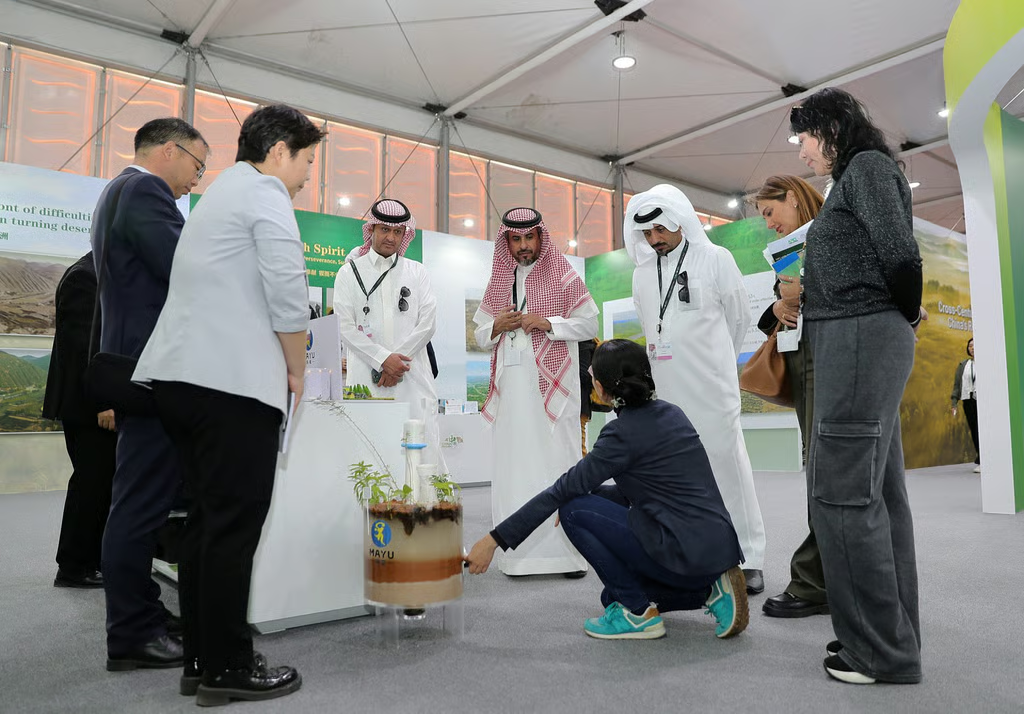
Saudi Arabia’s trillion-dollar mining push has significant implications for the global energy transition. As the world increasingly turns toward renewable energy, the demand for critical minerals like copper and rare earth metals is expected to surge. Saudi Arabia, with its rich deposits of these minerals, is well-positioned to become a major supplier of the resources needed for the energy revolution.
This move also places Saudi Arabia at the intersection of two global megatrends: the shift away from fossil fuels and the rise of clean energy technologies. By tapping into its mineral wealth, the kingdom is contributing to the development of a sustainable energy future while securing its own economic stability.
Additionally, Saudi Arabia’s mining expansion could create new opportunities for collaboration with countries and companies focused on green technologies. By forging partnerships in areas like renewable energy, electric vehicles, and battery production, the kingdom could become a key player in the global effort to reduce carbon emissions and combat climate change.
The Environmental Considerations: Sustainable Mining Practices

While Saudi Arabia’s metal mining plans are ambitious, they must also be carefully managed to ensure that environmental sustainability is prioritized. The extraction of metals can have significant ecological impacts, including deforestation, water pollution, and habitat destruction. To mitigate these risks, Saudi Arabia will need to implement cutting-edge technologies and sustainable mining practices that minimize the environmental footprint of its operations.
The kingdom has expressed its commitment to maintaining strict environmental standards and minimizing the impact of its mining activities on local ecosystems. As part of Vision 2030, Saudi Arabia has set ambitious goals for environmental conservation, and the mining sector will need to align with these objectives.
Investing in green technologies and environmentally-friendly mining methods will be crucial to ensuring that Saudi Arabia’s mining industry remains competitive while also protecting its natural resources for future generations.
Conclusion: A New Era for Saudi Arabia’s Economy
Saudi Arabia’s trillion-dollar ambition to develop a world-leading metal mining industry marks a bold step toward diversifying the kingdom’s economy and reducing its dependence on oil. With a focus on critical metals like copper, gold, and rare earths, the kingdom is positioning itself as a key player in the global supply chain for the resources needed to power the future.
The success of this venture will depend on Saudi Arabia’s ability to overcome the challenges of infrastructure development, environmental sustainability, and international competition. However, with its vast natural resources, strategic investments, and a commitment to innovation, Saudi Arabia is poised to reshape the future of its economy and the global mining industry.
As the world moves toward a greener, more sustainable future, Saudi Arabia’s mining sector could play a pivotal role in fueling the energy transition and ensuring the availability of critical resources. The kingdom’s investment in metal mining is not just about economic diversification—it’s about securing a place in the global market for years to come.