
Table of Contents
- The Heroes No One Expected
- A Mission Born from Tragedy and Hope
- Why Rats?
- How the Training Works
- Faster Than Technology, Lighter Than Dogs
- The Humans Behind the Heroes
- A Test Run in Turkey
- Small Animals, Massive Impact
- Overcoming the Stigma
- Why This Matters More Than Ever
- The Future of Search and Rescue
- What You Can Learn from a Rat
- Final Thoughts: When Science Meets Compassion
The Heroes No One Expected
When you think of heroes rushing into disaster zones, you probably picture firefighters, rescue dogs, or drones scanning rubble.
But in Tanzania, a team of unlikely rescuers is being trained — small, whiskered, and armed with extraordinary senses of smell.
They’re rats, and they’re learning to save human lives.
It sounds like a scene from a movie, but it’s happening right now. These “HeroRATs” are proving that size doesn’t determine bravery — and that even the smallest creatures can make a world of difference.
A Mission Born from Tragedy and Hope
In the aftermath of earthquakes, minutes can mean everything. Every delay in finding survivors buried under collapsed buildings can cost lives.
That’s where APOPO — a nonprofit organization based in Tanzania — stepped in. Known for using rats to detect landmines and tuberculosis, the organization asked a daring question:
“Could rats also find people trapped in disaster zones?”
The answer was yes — and the results have been extraordinary.
Through years of research and training, APOPO has developed a groundbreaking project that could revolutionize global disaster response.
Why Rats?
To most people, rats are pests. But to scientists, they’re natural-born problem solvers.
Rats are incredibly intelligent, agile, and adaptable. Their small bodies allow them to squeeze through cracks and tunnels that even trained dogs or robots can’t reach.
And their keen sense of smell makes them ideal for detecting scents of human life amid the chaos of debris.
Even better, rats can be trained to recognize specific odors — like human sweat — and signal their findings to rescuers.
They’re fast, fearless, and light enough not to trigger unstable rubble.
As one APOPO trainer put it:
“They don’t see danger. They see a challenge.”
How the Training Works
Each HeroRAT begins its journey at APOPO’s training facility in Morogoro, Tanzania.
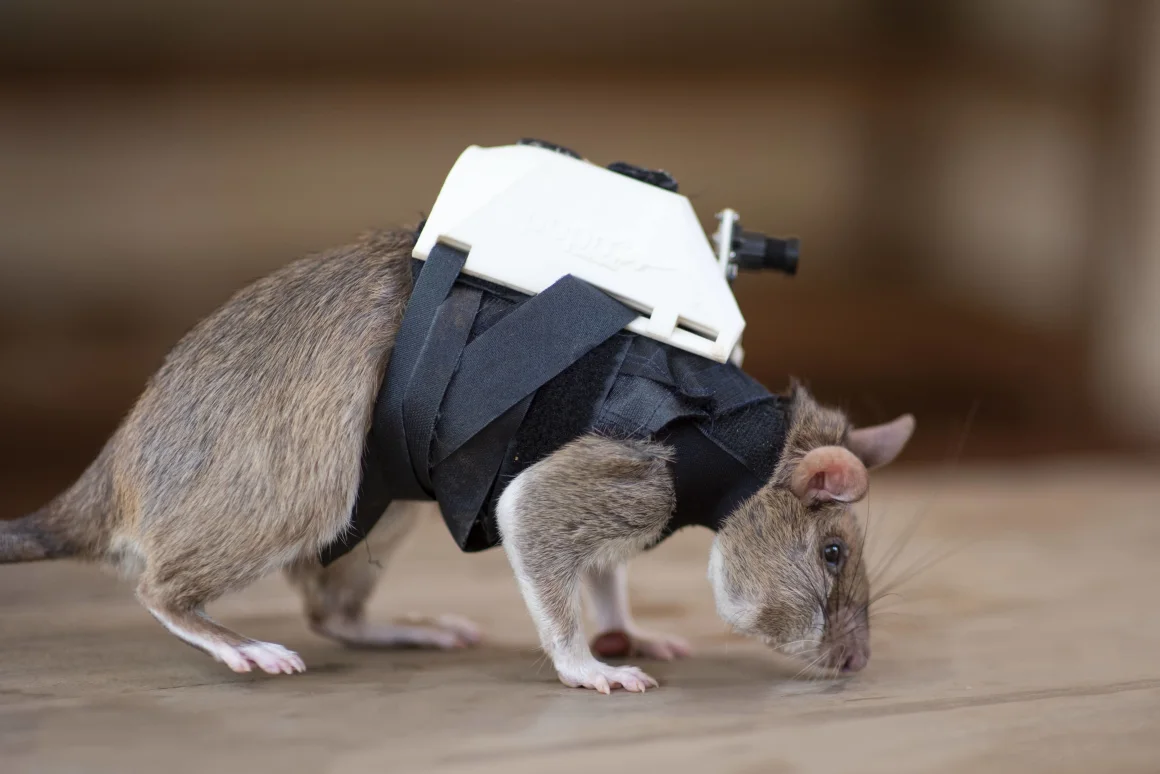
They’re fitted with tiny custom-made backpacks equipped with:
- Two-way microphones so rescuers can hear what’s happening.
- Miniature cameras for visual confirmation.
- Location trackers that transmit real-time GPS data.
Trainers use clicker-based conditioning — rewarding the rats with treats like bananas and peanuts every time they successfully locate a target.
Eventually, they learn to pull a small switch on their vest when they find a trapped person — sending a signal to the rescue team.
Within months, these rats can navigate complex mazes designed to mimic collapsed buildings, honing their instincts for real-world missions.
Faster Than Technology, Lighter Than Dogs

In disaster zones, every tool has its limitations. Drones can scan wide areas but struggle underground. Dogs are incredible sniffers but can’t always reach tight crevices.
Rats fill that gap perfectly.
A trained HeroRAT can cover an area in minutes that might take human rescuers hours. They can crawl through pipes, cracks, and debris fields without disturbing unstable structures.
And because they weigh less than a pound, they can move freely where machines — or even humans — would risk triggering collapse.
It’s technology meets biology, and the partnership is nothing short of miraculous.
The Humans Behind the Heroes
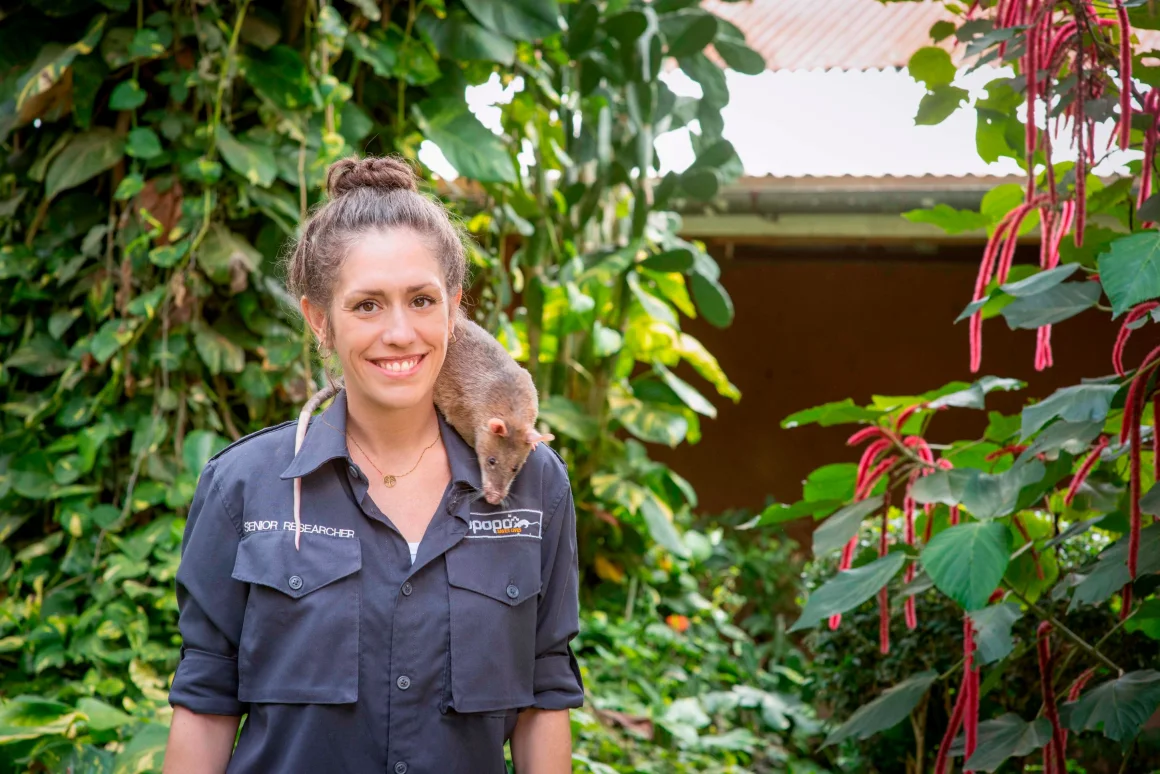
Behind every trained rat is a team of passionate handlers, engineers, and behavioral scientists working tirelessly to perfect the process.
APOPO’s head of innovation, Dr. Donna Kean, describes it as “a fusion of animal intelligence and human ingenuity.”
Kean and her team are developing tiny high-tech vests that allow real-time monitoring during missions. The ultimate goal? To create a seamless communication system between rats and rescue teams on the ground.
In her words:
“We’re not replacing humans or dogs — we’re adding a new ally.”
A Test Run in Turkey
To prepare for real-world deployment, APOPO’s HeroRATs underwent field testing in Turkey, one of the world’s most earthquake-prone regions.
Working alongside search and rescue teams, the rats performed simulated disaster drills — locating hidden volunteers in mock rubble scenarios.
The results stunned observers. The rats consistently found victims faster than traditional methods, proving that their potential was not just theoretical.
If these trials continue to succeed, HeroRATs could soon become standard members of international rescue operations.
Imagine future disaster zones where soldiers, drones, and rats all work together — a new kind of rescue squad, born from collaboration across species.
Small Animals, Massive Impact
To date, APOPO’s HeroRATs have already made global headlines for detecting over 150,000 landmines across Africa and Southeast Asia.
Their work has saved countless lives — allowing communities to reclaim safe land for farming and rebuilding.
Now, this next chapter — using rats for disaster rescue — could multiply that impact exponentially.
Think about it: a technology that costs a fraction of traditional rescue systems, yet saves lives in minutes instead of days.
It’s humanitarian efficiency at its purest form.
Overcoming the Stigma
Of course, the project hasn’t been without skepticism.
Many people recoil at the idea of rats — animals often associated with disease and urban filth — being called heroes.
But that perception is slowly changing.
When people see these small creatures wearing cameras and rescue gear, running toward danger instead of away from it, something clicks.
They stop seeing “pests” and start seeing partners.
As one trainer said with a smile:
“When people realize a rat just saved a life, they stop screaming and start clapping.”
Why This Matters More Than Ever
In an era of increasing natural disasters — from earthquakes to hurricanes — rescue infrastructure is under immense pressure.
According to the UN, over 350 million people worldwide are affected by disasters annually. The need for faster, smarter, and more cost-effective rescue solutions has never been greater.
HeroRATs represent exactly that: a scalable, low-cost innovation that can be deployed globally, especially in developing regions where expensive technology isn’t an option.
Sometimes, progress comes not from building new machines — but from reimagining what already exists in nature.
The Future of Search and Rescue
APOPO envisions a world where every major disaster response team includes HeroRATs as part of their toolkit.
Future versions of the program may use AI integration to analyze real-time data from the rats’ sensors, creating 3D heat maps of collapsed sites.
There’s even potential for cross-species collaboration — rats working alongside drones and robotic crawlers, each complementing the other’s abilities.
It’s a beautiful reminder that the future of technology isn’t just artificial — it’s biological.
What You Can Learn from a Rat
At the heart of this story lies a profound lesson about resilience, intelligence, and empathy.
Rats don’t care about fame, money, or recognition. They simply do what they’re trained to do — help save lives.
In a world obsessed with big inventions, it’s humbling to realize that one of the greatest breakthroughs in rescue technology comes from something so small.
If a rat can be a hero, maybe it’s time we start redefining what heroism really means.
Final Thoughts: When Science Meets Compassion
The HeroRAT project is more than an experiment — it’s a story of what happens when science meets compassion.
From the rubble of disaster zones to the quiet labs of Tanzania, these little creatures are proving that courage comes in all forms.
And perhaps, one day soon, when rescuers dig through the ruins of another earthquake, it won’t just be humans or dogs leading the way.
It’ll be a whiskered face, a twitching nose, and a small vest carrying the future of hope.
Because sometimes, the smallest heroes make the biggest difference.