
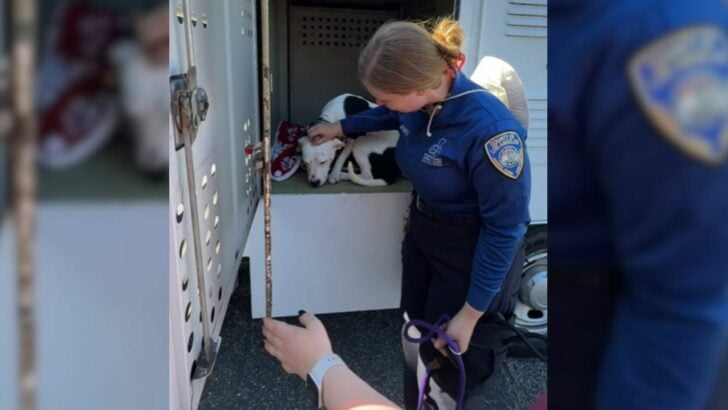
When news spread of a shelter dog who captivated an entire adoption event only to walk back to his kennel alone, the story struck a nerve far beyond animal lovers. Photos showed a dog calm, gentle, and visibly hopeful, standing among visitors who smiled, laughed, and knelt to pet him. For hours, he was the center of attention. Yet when the event ended, no leash was clipped to his collar. No car door opened for him. He turned, quietly, and returned to the space he had come from.
What unfolded that day was not unusual for shelters. But something about the image lingered. It wasn’t dramatic. There were no tears, no chaos. Just a dog doing what he had learned to do best—waiting, adapting, accepting. And in that quiet moment, the emotional reality of adoption days became impossible to ignore.
What follows is not just the story of one dog, but an exploration of why these moments happen, what they reveal about shelter life, and why the hardest part of rescue work is often invisible.
Table of Contents
- The Hope That Fills Adoption Days
- Why Being Loved Doesn’t Always Mean Being Chosen
- The Walk Back That Broke Hearts
- What Shelter Dogs Learn Without Words
- The Emotional Weight Volunteers Carry
- Why “Good Dogs” Are Sometimes Overlooked
- What These Stories Reveal About Adoption Culture
- The Quiet Resilience of Shelter Dogs
- Why These Moments Matter
- What Happened Next Is Often the Unseen Part
- Conclusion
The Hope That Fills Adoption Days
Adoption events are designed to feel optimistic. Shelters clean kennels, volunteers brush coats, and staff members rehearse stories about each dog’s personality. The goal is simple: create connection. For a few precious hours, dogs are removed from concrete runs and placed into open spaces where people can see them as companions rather than cases.
For many shelter dogs, these days represent something close to hope. They sense the change in routine. They smell new people. They feel hands reaching down not to check health tags or move them between enclosures, but to touch them gently. Even dogs who have learned to suppress excitement seem to lift their heads a little higher.
The dog at the center of this story did exactly that. He walked calmly beside volunteers, greeted strangers with patience, and allowed children and adults alike to approach without fear. Everything about him suggested readiness. He was friendly but not frantic, affectionate but not demanding. The kind of dog people describe as “perfect.”
Why Being Loved Doesn’t Always Mean Being Chosen
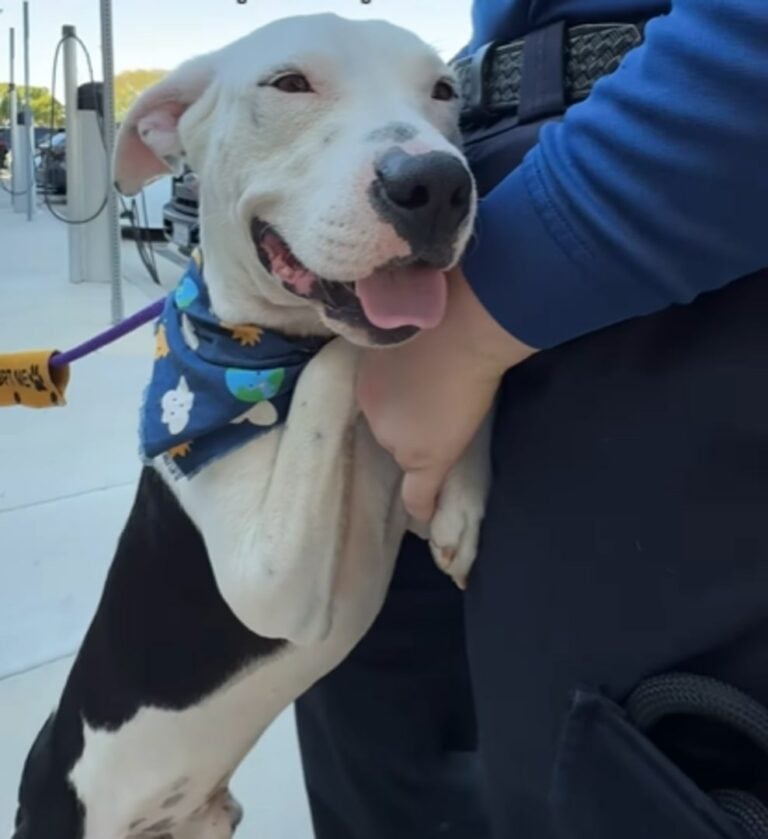
And yet, no one chose him.
This is the part of shelter life that rarely makes it into captions. Being admired is not the same as being adopted. Visitors often fall in love with multiple dogs in a single afternoon. They smile, they take photos, they promise to come back. But adoption is not an emotional impulse alone. It is a calculation layered over affection.
Potential adopters consider size, age, energy level, compatibility with other pets, rental agreements, travel plans, and future uncertainties. Sometimes, they love a dog deeply and still walk away because they believe they are being responsible.
From the dog’s perspective, however, all attention feels the same. A warm hand is a warm hand. A gentle voice is a gentle voice. And when that connection disappears without explanation, the dog simply adapts, because adaptation is what survival has taught him.
The Walk Back That Broke Hearts
When the event ended, volunteers began returning dogs to their kennels. Most dogs resist slightly, hoping the day isn’t over. Others walk back with practiced familiarity, their excitement already dimming.
This dog walked calmly.
He didn’t pull. He didn’t look back. He didn’t panic. He returned to his kennel, turned around, and sat down as if he understood this was the expected outcome. And for the people who witnessed it, that composure was devastating.
Because it wasn’t confusion that stood out. It was acceptance.
What Shelter Dogs Learn Without Words

Shelter dogs learn patterns quickly. They learn that doors open and close. That people come and go. That excitement is temporary. Over time, many dogs stop displaying extreme reactions because they have learned that nothing is guaranteed.
Behaviorists often note that dogs who appear “calm” in shelters are not always relaxed. Sometimes they are conserving energy. Sometimes they are protecting themselves emotionally. A dog who has been overlooked enough times learns not to hope too loudly.
This does not mean the dog has given up. It means he has learned how to survive uncertainty.
The Emotional Weight Volunteers Carry
For volunteers and staff, adoption days are emotionally complex. They celebrate every successful adoption, knowing each one frees space and resources. But they also carry the quiet weight of dogs who don’t get chosen.
Watching a dog shine all day only to return to confinement can feel like a personal failure, even when it isn’t. Volunteers bond with these dogs. They know their habits, their progress, their small victories. When the public sees only a few hours, volunteers see weeks or months.
That contrast can be heartbreaking.
Why “Good Dogs” Are Sometimes Overlooked

People often assume dogs are overlooked because of behavioral issues. In reality, many are passed over for reasons that have nothing to do with temperament. Age, size, color, breed stereotypes, and even kennel location can influence outcomes.
Dogs who are medium-sized, older, or less visually distinctive can be adored but not selected. They become everyone’s favorite and no one’s dog.
The dog in this story did everything right. And that, in some ways, makes the moment harder to accept.
What These Stories Reveal About Adoption Culture
Stories like this resonate because they reveal something uncomfortable. Adoption culture often celebrates the ending without acknowledging the waiting. We share photos of “gotcha days” but rarely the days that came before.
This creates a distorted narrative where adoption appears quick and inevitable. In reality, many dogs experience multiple adoption events before finding a home. Each one requires emotional energy they cannot articulate but undeniably feel.
The Quiet Resilience of Shelter Dogs
Despite everything, shelter dogs continue to greet new days with resilience. They wake up. They eat. They watch doors. They respond when called. They do not dwell on yesterday the way humans do.
That resilience is often mistaken for indifference. It is not. It is adaptation. And it is one of the most humbling qualities dogs possess.
The dog who walked back to his kennel did not lose his worth that day. He did not fail. He simply remained waiting.
Why These Moments Matter

Moments like this matter because they remind us that adoption is not just a transaction. It is a life-altering event for one side of the leash. Every interaction teaches a dog something about humans, whether we intend it or not.
When people pause to reflect on these stories, it shifts perspective. It encourages potential adopters to look beyond first impressions, to consider commitment over convenience, and to understand that choosing a dog is not about perfection but about presence.
What Happened Next Is Often the Unseen Part
Many stories do not end where the viral moment ends. Dogs like this one often remain in shelters longer, not because they lack love, but because timing hasn’t aligned. And sometimes, months later, the right person appears.
The beauty of rescue work is that outcomes are rarely immediate. They unfold slowly, shaped by patience and persistence.
Conclusion
The image of a dog walking back to his kennel alone stays with people because it mirrors something deeply human—the experience of being seen but not chosen. And yet, unlike humans, dogs do not turn that experience into bitterness. They continue to hope quietly.
This story is not meant to guilt. It is meant to illuminate. Behind every adoption success is a line of dogs still waiting, still trusting, still ready.
And sometimes, the ones who wait the longest become the greatest teachers—reminding us that love is not proven by attention alone, but by commitment that lasts beyond a single day.