
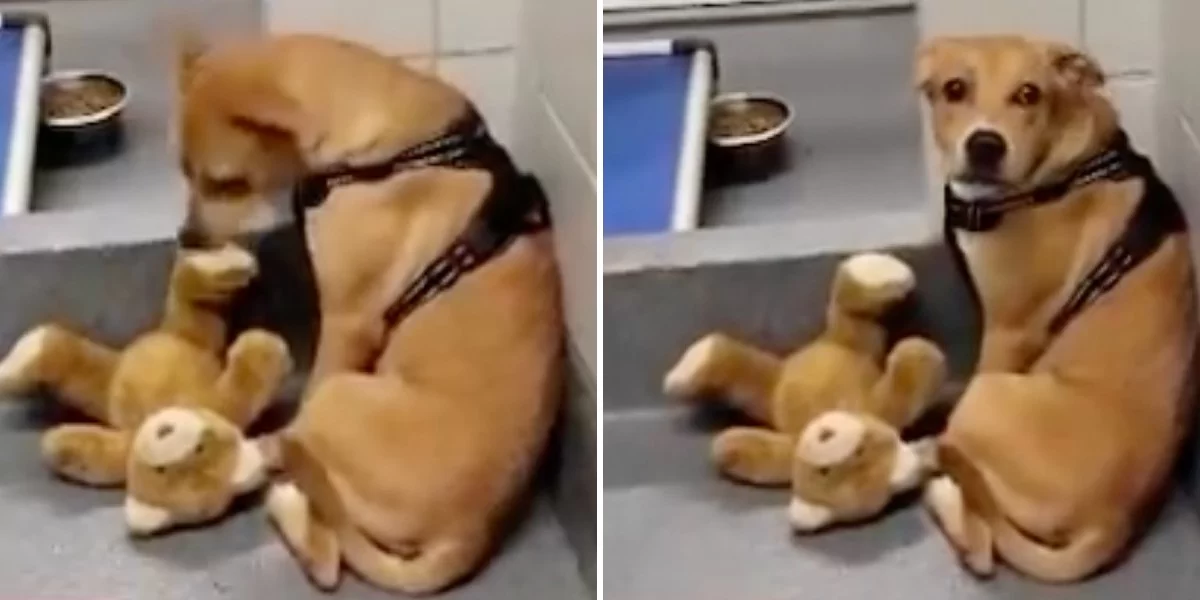
She sat in the kennel, eyes wide, body stiff, and one thing in her paws: a teddy bear, worn and small. For this dog—dubbed Luna—it wasn’t just a toy. It was everything she had left of home.
In that moment, the world seemed overwhelming: bright lights, strange smells, strangers asking questions. But the bear? It gave her comfort, familiarity.
If you were Luna in that moment, would you cling to something too? Would you trust someone walking toward you?
Table of Contents
- The Reason Behind the Bear: Why It Mattered
- From Surrender to Rescue: A Slow Journey of Trust
- Home Preparation: Adjustments for a Healing Heart
- The Emotional Cost of Rescue: More Than Just Physical Needs
- Financial Reality: Budgeting for More Than Just Supplies
- Adoption: Turning Trauma into Trust
- Home Safety for Vulnerable Pets: Special Considerations
- Community & Awareness: How One Story Inspires Many
- Final Thought: A Bear, A Dog, A Beloved Home
The Reason Behind the Bear: Why It Mattered
Luna’s shelter records revealed the teddy bear came from her previous home—an object of comfort, a scent of safety. As the shelter’s public-relations manager noted, it was “a reminder of what she used to have.”
For an animal surrendered and placed into unfamiliar territory, that bear did more than soothe—it served as a bridge between fear and possibility.
We often talk about pet care in terms of food and shelter—but what about emotional anchors? What keeps a dog’s spirit afloat when everything else changes?
From Surrender to Rescue: A Slow Journey of Trust
Luna was surrendered to San Antonio Animal Care Services. New surroundings, new routine, but one constant: the teddy bear.
The staff recognized three things:
- Luna’s playful puppy side was still there.
- The new environment stressed her.
- She needed a patient, loving home—someone who’d treat her with understanding.
This isn’t just a rescue—it’s a transition from survival to belonging.
If you adopted a rescued pet, would you allow the time and space for them to settle and trust?
Home Preparation: Adjustments for a Healing Heart
When adopting a dog like Luna—not a puppy fresh from breeder but a surrendered, shaken one—home preparation is paramount. Just like you’d plan a home improvement, you need to plan “pet improvement.”
Home-Upgrade Checklist for Luna:
- A quiet space away from high traffic where she can rest without stress.
- Soft bedding that still gives support for a dog with past trauma.
- Safe toys and familiar items (like that teddy bear) that serve emotional purpose.
- Training tools and routine, because consistency helps healing.
Adopting this dog meant more than bringing her home—it meant transforming the home into healing ground.
Would you alter your own environment for a pet’s emotional comfort if they needed it?
The Emotional Cost of Rescue: More Than Just Physical Needs
It’s easy to assume a surrendered dog needs food, vet visits, and maybe a kennel upgrade. But for Luna, the unseen wounds—fear, displacement, loss of home—required the most care.
Animals with disrupted pasts often show signs of stress: hiding, anxiety, detachment. For them, the teddy bear was more than comfort—it was a lifeline to identity.
In pet ownership, the emotional wellness of the animal must be as prioritized as the physical.
How often do we think: does my dog feel safe? Have comfort? Trust me?
Financial Reality: Budgeting for More Than Just Supplies
Adopting a rescued dog is not low cost. It’s an investment in love, time, and resources—similar to a major home project.
- Vet checkups + emotional rehabilitation = higher initial cost.
- Home modifications: quiet rooms, safe zones, better flooring.
- Ongoing emotional support: toys, bonds, routine.
Think of it like a home renovation with fur.
Would you consider pet care part of your home-improvement budget?
Adoption: Turning Trauma into Trust
When Luna found her foster home (with Vermont English Bulldog Rescue), the teddy bear traveled with her. The next step: a forever family who would honor her past and build her future.
Adoption wasn’t the end—it was the beginning of hope, stability, and mutual healing.
If you considered adoption, would you choose the dog with past wounds or the one without? What would you bring into your home unique to their story?
Home Safety for Vulnerable Pets: Special Considerations
Dogs like Luna benefit from additional protection in your home. Her story reminds us ordinary spaces may not suffice.
- Safe retreat zones: a room or corner where she isn’t startled.
- Low-stress design: minimize loud noises, sudden movements.
- Emotional anchors: like the teddy bear—keep one item constant.
Pets aren’t just part of a household—they deserve structure within a home tailored to their healing.
Would you audit your home’s stress zones (noisy appliances, busy halls) for a vulnerable pet?
Community & Awareness: How One Story Inspires Many
Luna’s tale didn’t end at her adoption. It became a story of awareness—about surrendered dogs, emotional support, humane adoption, and animal-wellness beyond puppies.
Stories like hers prompt:
- Encouraging surrendered dogs to be re-homed responsibly.
- Recognizing that emotional anchors (a teddy bear) matter.
- Realizing that community awareness saves lives.
What role will you play in that chain of awareness? If not you, then who?
Final Thought: A Bear, A Dog, A Beloved Home

Luna’s teddy bear wasn’t just a toy—it was hope. When she tucked it close, she reminded us that belonging is built on comfort, trust, and consistency. Her journey from abandon-ment to trust mirrors what every pet deserves: a home that sees them, loves them, and helps them heal.
Would you open your home to that challenge? To that gift?
In our next article, we’ll explore “How to Create an Emotional Sanctuary for Rescued Pets in Your Home”—practical tips, budget-friendly upgrades, and emotional tools for the pets who need them most. Stay tuned.