
Table of Contents
- The Technology Behind Zem: A Carbon-Eating Car
- Sustainable Construction: 3D Printing and Recycled Materials
- Challenges and Limitations: A Work in Progress
- The Growing Importance of Carbon Capture Technology
- Expanding the Concept: A Vision for the Future
- The Road Ahead: A US Tour and Global Impact
- The Potential of Zem: Changing the Future of Transport
The Technology Behind Zem: A Carbon-Eating Car
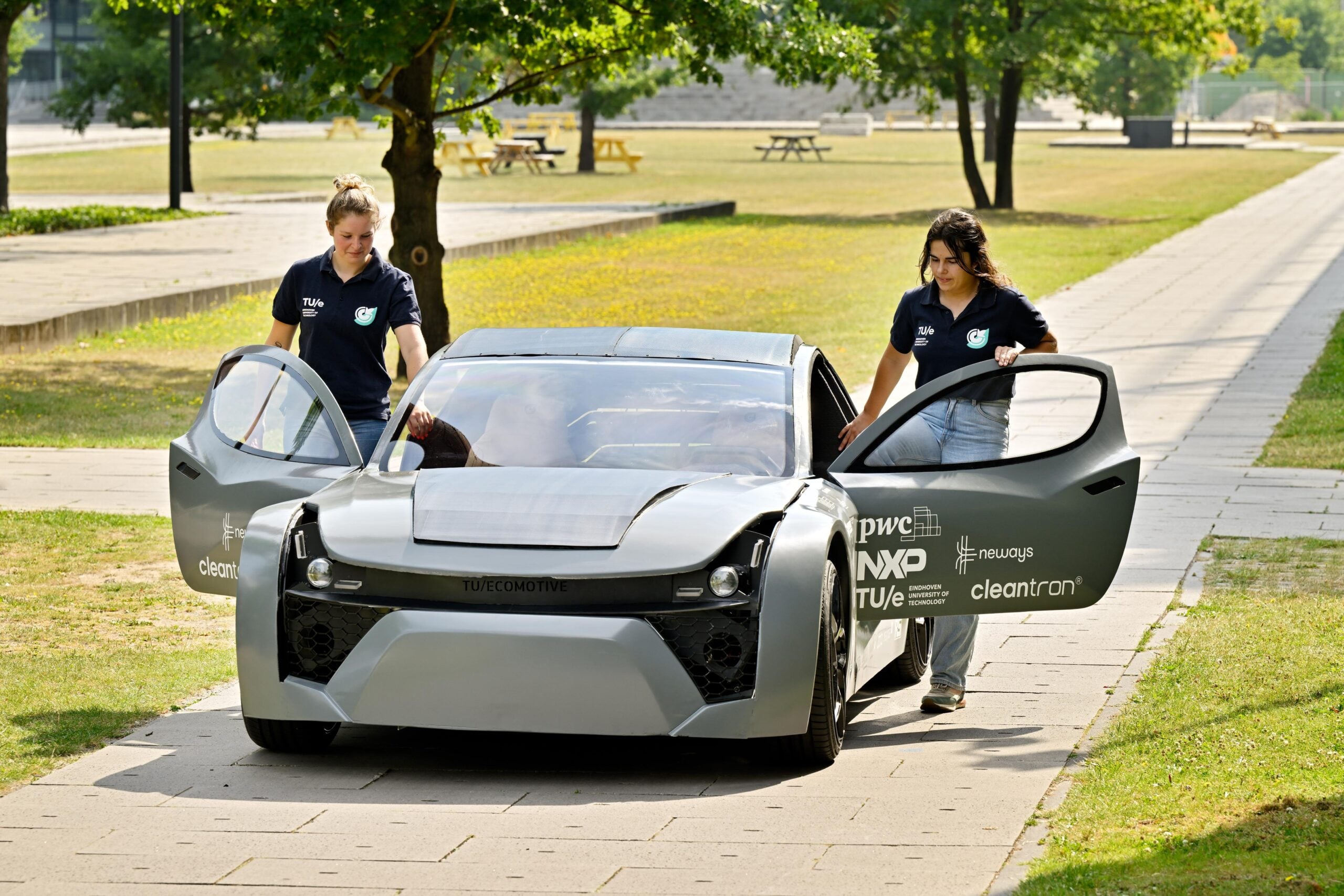
Zem is not just any electric vehicle. It is equipped with an advanced carbon capture device that stores more CO2 than it emits. This solar-powered vehicle features two filters positioned beneath the car, located next to each of the front wheels. As Zem drives, air passes through these filters, and carbon dioxide attaches to a special grain inside the filter. Every 200 miles, the filters need to be emptied, and the captured CO2 can then be extracted and reused. This process is crucial for reducing the car’s environmental impact, as the CO2 can later be stored underground or used in the production of clean fuels, such as hydrogen.
The technology is still in its early stages, but it holds great promise for the future of sustainable mobility. Zem’s carbon capture system is a proof of concept, showing that it is possible to remove CO2 from the air while simultaneously reducing a vehicle’s emissions. The team at Eindhoven University of Technology hopes that this innovation can be scaled up and retrofitted onto existing vehicles, making it possible for millions of cars around the world to become carbon neutral.
Sustainable Construction: 3D Printing and Recycled Materials
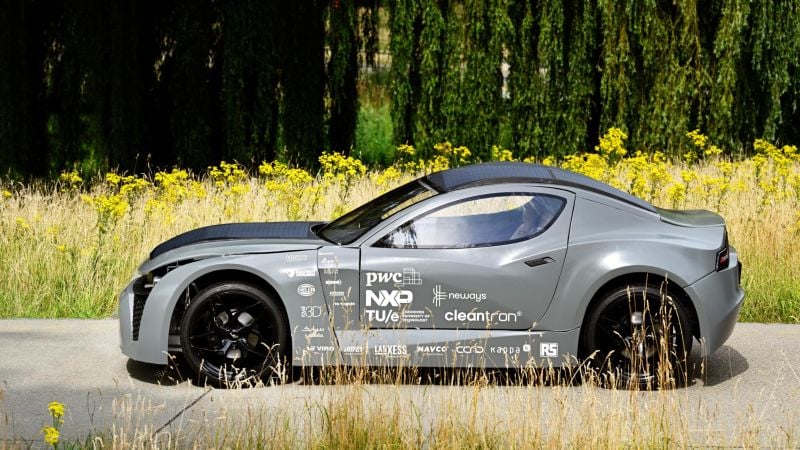
In addition to its carbon capture technology, Zem is made using sustainable materials. The car’s body and frame are 3D-printed using recycled plastic, which helps to reduce material waste and production emissions. The plastic is strengthened with glass or carbon fibers, providing a lightweight yet durable structure. The interior of Zem is also designed with sustainability in mind, featuring vegan leather made from pineapples. This commitment to using recycled and plant-based materials sets Zem apart from traditional vehicles, which often rely on materials that have a higher environmental impact.
By using 3D printing, the students at Eindhoven University of Technology were able to minimize waste during production, making Zem one of the most sustainable cars ever built. This process also allows for more efficient manufacturing, as parts can be created with greater precision and fewer resources. In the future, 3D printing and recycled materials could become standard features in the automotive industry, helping to reduce the carbon footprint of vehicle production.
Challenges and Limitations: A Work in Progress
While Zem’s carbon capture technology is groundbreaking, it is important to note that the system is still in its infancy. Currently, the filters capture only a small amount of CO2—about 2 kilograms (4.41 pounds) every 20,000 miles. This is less than a tenth of the CO2 that an average tree absorbs annually, and only 0.04% of a typical vehicle’s yearly emissions. However, this is just a starting point, and the team behind Zem is working hard to improve the technology.
The next step is to scale up the carbon capture system, making it more efficient and capable of capturing larger amounts of CO2. The students are also applying for a patent for their technology, with plans to continue developing it in a spin-off startup. As they work to refine the system, the hope is that Zem’s carbon capture technology can one day be applied to all vehicles, reducing the global carbon footprint of the transportation sector.
The Growing Importance of Carbon Capture Technology
Carbon capture technology has become increasingly important in the fight against climate change. In 2020, only 44 million tons of CO2 were captured globally, which is just 13% of the target set by the International Energy Agency. Despite this, there is growing interest in carbon capture innovation, with entrepreneurs like Elon Musk investing heavily in the field. The carbon capture and storage industry is projected to be worth $7 billion by 2028, with a significant portion of that investment going toward developing new technologies for capturing and reusing CO2.
Zem is part of this wave of innovation, showing that carbon capture can be integrated into everyday technologies like electric vehicles. By demonstrating that carbon capture can be implemented in a vehicle, the team at Eindhoven University of Technology has taken an important step toward addressing the global climate crisis. As technology continues to advance, it is likely that more vehicles will be developed with carbon capture systems, contributing to the reduction of greenhouse gas emissions.
Expanding the Concept: A Vision for the Future
The potential applications of Zem’s carbon capture technology extend far beyond passenger vehicles. If the technology can be scaled and refined, it could be used in a wide range of transportation modes, including buses, trucks, trains, and even airplanes. Additionally, the technology could be applied to stationary systems, such as carbon capture plants, helping to remove CO2 from the atmosphere on a much larger scale.
The team at Eindhoven University of Technology envisions a future where carbon capture is not just a feature of certain vehicles but a fundamental part of the global effort to combat climate change. If their technology can be implemented across a wide range of industries, it could play a significant role in reducing the amount of CO2 in the atmosphere and mitigating the effects of global warming.
The Road Ahead: A US Tour and Global Impact

In August 2022, the team behind Zem embarked on a tour across the United States to showcase their creation and promote the importance of sustainable transport. The US is the second-largest emitter of greenhouse gases in the world, and the team hoped that their road trip would inspire action and push the automotive industry to move closer to net-zero emissions.
While Zem is not yet road-legal, the team is working with road authorities to address the regulatory challenges that prevent the car from being driven on public roads. In the future, Zem could become a fully road-legal vehicle, and its carbon capture technology could be implemented in mass production vehicles. The goal is to demonstrate that sustainable, carbon-neutral transport is not just a dream but an achievable reality.
The Potential of Zem: Changing the Future of Transport
Zem represents a new era in the development of sustainable transport. By combining solar power with carbon capture technology, the students at Eindhoven University of Technology have created a vehicle that not only reduces emissions but also helps to reverse some of the damage caused by carbon pollution. While the technology is still in its early stages, the potential for carbon capture in the automotive industry is immense.
As the world continues to grapple with the effects of climate change, innovations like Zem will play a crucial role in creating a more sustainable future. By proving that carbon capture can be integrated into everyday technologies, Zem paves the way for a future where all vehicles contribute to the fight against global warming. As the technology evolves and becomes more widely adopted, it could help to drastically reduce the carbon footprint of the transportation sector, one car at a time.