

Table of Contents
- When a Simple Cube Sparked Global Fascination
- Why a Cube Is the Perfect Shape for Science
- Density: The Invisible Property You Can Feel
- Why Tungsten Feels Almost Unbelievable
- The Periodic Table, Transformed Into Objects
- Why Identical Shapes Can Feel So Different
- The Psychology of Weight and Expectation
- Why Engineers and Scientists Love Them
- A Minimalist Object in a Maximalist World
- From Desk Object to Educational Tool
- Why Heaviness Feels Meaningful
- Purity, Precision, and the Appeal of Exactness
- How Viral Curiosity Fueled the Trend
- A Reminder of the Physical World
- Why These Cubes Endure Beyond Novelty
- The Broader Meaning Hidden Inside a Small Object
- What These Cubes Ultimately Reveal About Us
When a Simple Cube Sparked Global Fascination
When images of solid metal element cubes began circulating online, many people were caught off guard by how strangely compelling they looked. At first glance, they appeared almost boring—perfectly shaped cubes made from raw metallic elements, sitting quietly on desks or held in the palm of a hand. But curiosity spread fast. Why did such minimal objects feel so heavy, so mesmerizing, and so intellectually satisfying?
What started as a niche curiosity among science enthusiasts and engineers soon became a viral phenomenon. Videos showed people lifting small cubes that felt impossibly heavy for their size. Others compared cubes made from different elements, marveling at how identical shapes could feel radically different. The appeal was not visual flair, but something deeper—a direct, tactile encounter with the physical laws that govern reality.
What follows is not simply a story about novelty objects. It is an exploration of how these cubes reveal fundamental truths about matter, density, and the human desire to understand the invisible forces shaping the world around us.
Why a Cube Is the Perfect Shape for Science

The cube may seem like an arbitrary choice, but scientists and designers agree it is one of the most meaningful shapes possible. A cube offers equal dimensions on all sides, making it ideal for comparisons. When every sample shares the same volume, differences in weight become immediately noticeable.
This uniformity removes distractions. There are no curves to mislead perception, no hollow spaces, no visual tricks. What remains is pure physical truth. Lift one cube, then another, and the laws of physics speak directly through your hands.
In a world increasingly dominated by digital abstractions, the cube restores something primal: an honest interaction with matter itself.
Density: The Invisible Property You Can Feel
The true magic of metal element cubes lies in density. Density measures how much mass exists within a given volume, and different elements pack their atoms together in profoundly different ways.
Two cubes may look identical, but one can feel dramatically heavier because its atoms are more tightly packed. This sensation often surprises people who expect size to correlate with weight. The experience becomes a lesson that bypasses textbooks entirely.
Suddenly, density is no longer an equation—it is a feeling. Physics becomes tangible.
Why Tungsten Feels Almost Unbelievable

Among the most talked-about metal cubes is tungsten. It is notorious for its extreme density, rivaling precious metals and surpassing many materials people assume to be heavier.
When someone lifts a tungsten cube for the first time, the reaction is often disbelief. The brain expects something lighter. The disconnect between expectation and reality creates a powerful cognitive moment, one that leaves a lasting impression.
This reaction highlights how poorly humans intuitively understand density. Tungsten exposes that gap instantly.
The Periodic Table, Transformed Into Objects
Metal element cubes act as physical ambassadors of the periodic table. Rather than abstract symbols printed on classroom walls, elements become solid, touchable realities.
Each cube represents a pure element, refined and shaped to reveal its most honest form. Holding one feels like holding a fragment of the universe’s blueprint. The atoms inside were forged in stars, shaped by cosmic forces long before humans existed.
This connection between the cosmic and the everyday adds emotional weight to what might otherwise seem like simple desk objects.
Why Identical Shapes Can Feel So Different
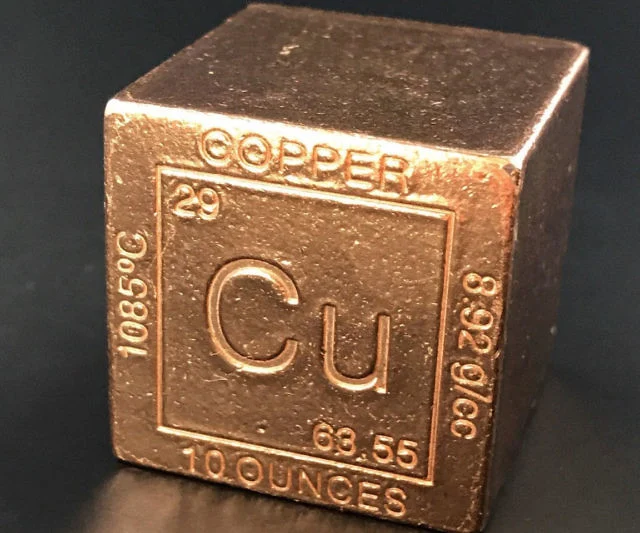
The most striking demonstration occurs when multiple cubes of equal size are compared side by side. Aluminum feels light and almost playful. Steel feels sturdy and familiar. Tungsten feels shockingly dense, as if gravity itself has intensified.
These differences underscore how atomic structure defines material behavior. Some atoms are larger but loosely packed. Others are smaller, heavier, and compressed into tighter arrangements.
The cubes make atomic theory intuitive without a single diagram.
The Psychology of Weight and Expectation
Human perception is deeply influenced by visual cues. When we see an object, our brain predicts how heavy it should be. Metal cubes challenge that prediction system.
This sensory contradiction activates curiosity and attention. The brain pauses, recalibrates, and reassesses assumptions. In this way, the cubes function as cognitive puzzles, not just physical objects.
They remind us that intuition is shaped by experience—and that experience can be updated.
Why Engineers and Scientists Love Them
In technical fields, metal element cubes serve both practical and symbolic purposes. Engineers appreciate them as reference objects, reminders of material properties they work with daily. Scientists value their purity and precision.
But beyond utility, the cubes represent clarity. In a complex world of simulations, equations, and models, a cube offers direct evidence. It does not explain—it demonstrates.
That simplicity carries authority.
A Minimalist Object in a Maximalist World
The popularity of metal cubes also reflects a cultural shift. As products become increasingly complex, digital, and abstract, there is growing appreciation for objects that are honest, minimal, and grounded in reality.
A metal cube does not pretend to be anything else. It has no moving parts, no screens, no instructions. Its value lies entirely in what it is.
This authenticity resonates deeply in an era of overload.
From Desk Object to Educational Tool
Educators have begun using metal cubes as teaching aids, especially in physics and material science. Students who struggle with abstract concepts suddenly understand them through touch.
Lessons about mass, density, and atomic structure become memorable experiences rather than memorized facts. The cube becomes a bridge between theory and intuition.
Learning, in this context, becomes experiential.
Why Heaviness Feels Meaningful
Psychological research suggests humans associate weight with importance. Heavier objects feel more serious, more valuable, more real. Metal element cubes tap directly into this bias.
Holding a dense cube creates a subconscious sense of significance. It feels like something that matters, even before the brain rationalizes why.
This emotional response amplifies the cube’s appeal beyond science alone.
Purity, Precision, and the Appeal of Exactness
Each cube is typically machined to exact dimensions, often representing a precise volume. This precision appeals to those who value order, measurement, and accuracy.
In a chaotic world, exact objects provide comfort. They embody control, predictability, and truth.
The cube does not lie. It weighs what it weighs.
How Viral Curiosity Fueled the Trend
Social media accelerated the popularity of metal cubes by capturing genuine reactions. Videos of people struggling to lift small cubes spread rapidly, inviting viewers to imagine the sensation for themselves.
Curiosity became contagious. The desire to feel the weight firsthand drove interest far beyond scientific circles.
What might have remained obscure instead became a shared global experience.
A Reminder of the Physical World
As daily life becomes more digital, many experiences grow detached from physical reality. Metal element cubes restore that connection.
They remind us that beneath screens and software lies a universe governed by mass, force, and matter. They ground abstract thinking in something solid.
In this way, they serve as quiet anchors to reality.
Why These Cubes Endure Beyond Novelty
Unlike many trends, metal element cubes do not lose relevance once the surprise fades. Their appeal deepens over time as users reflect on what they represent.
They are not jokes or gimmicks. They are demonstrations of truth that remain valid regardless of context.
Physics does not expire.
The Broader Meaning Hidden Inside a Small Object
At their core, metal element cubes symbolize humanity’s desire to understand the universe through touch and observation. They compress cosmic history, atomic structure, and physical law into something that fits in your hand.
They are humble, silent teachers.
And perhaps that is why they resonate so strongly.
What These Cubes Ultimately Reveal About Us
The fascination with metal element cubes says as much about human psychology as it does about material science. We are drawn to objects that challenge assumptions, reward curiosity, and reveal hidden layers of reality.
In lifting a cube, we lift more than metal. We lift a question, an insight, and a reminder that the universe is stranger—and more wonderful—than it first appears.
Sometimes, understanding begins not with explanation, but with weight.