
Table of Contents
- The Day Science Helped a Man Stand Again
- The Impossible Dream of Repairing the Human Spine
- The Science Behind the Miracle
- The Moment of Movement
- A Global First — and What Comes Next
- How Japan Became a Leader in Regenerative Medicine
- The Human Side of Science
- A Future Where Disability Meets Regeneration
- The Ethical Debate: How Far Should We Go?
- What This Means for Global Healthcare
- The Road Ahead
- The Human Spirit, Reborn
The Day Science Helped a Man Stand Again
For years, he could only dream of what standing felt like — of gravity pressing through his feet, of seeing the world from his own height again.
Then, one day in a Tokyo rehabilitation center, that dream became real.
A man who had been paralyzed from the chest down after a devastating spinal injury stood up on his own — not because of a miracle, but because of science.
Japan’s pioneering stem cell therapy had done what decades of medicine could not: helped restore mobility in a paralyzed patient.
This moment didn’t just change one life. It may have changed the future of medicine itself.
The Impossible Dream of Repairing the Human Spine
The human spinal cord is like a superhighway of information — a delicate bundle of nerves carrying millions of electrical signals from brain to body.
When that cord is damaged, it’s as if the road has been cut off entirely. Messages can’t travel. Muscles stop moving. Sensation disappears.
For decades, doctors told patients the same heartbreaking truth: “Once the spinal cord is severed, it can’t be repaired.”
But scientists in Japan refused to accept that answer.
What if the body could regrow what was lost? What if, instead of treating symptoms, medicine could rebuild nerves and restore movement?
That question became the foundation of a decades-long quest — one that led to this extraordinary breakthrough.
The Science Behind the Miracle
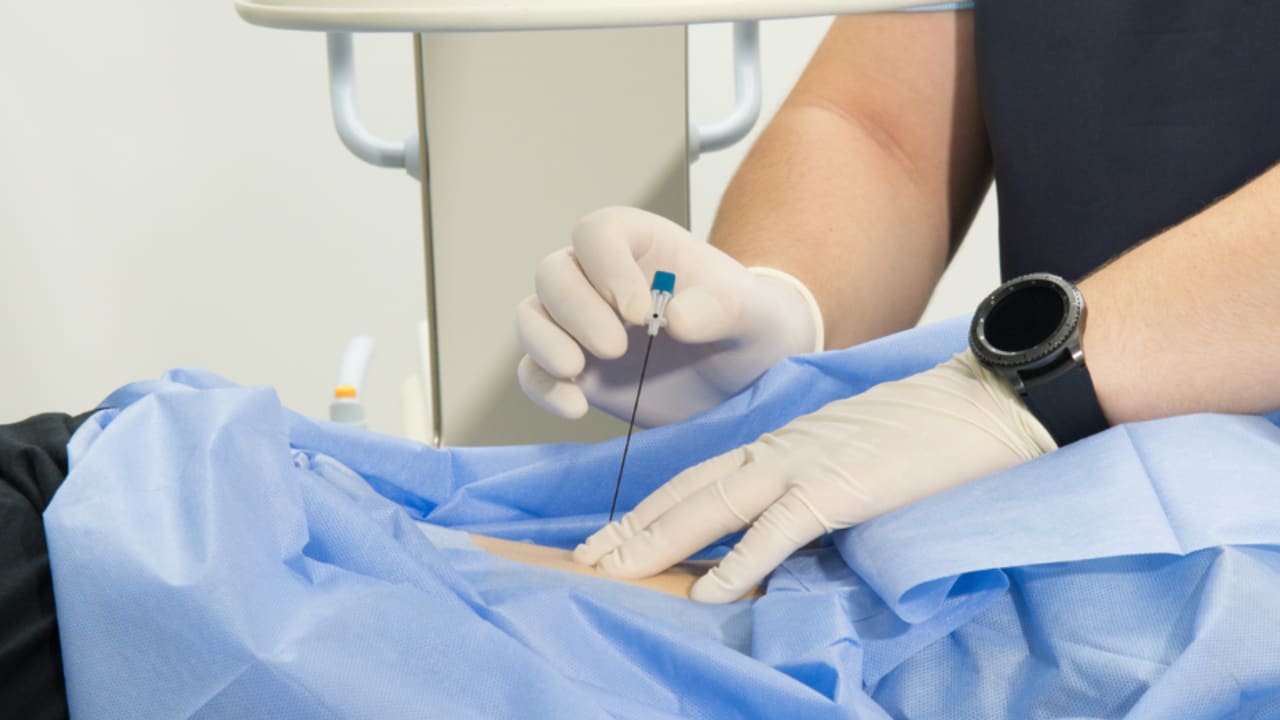
Researchers at Keio University in Tokyo developed an innovative treatment that uses stem cells derived from the patient’s own body.
These are not ordinary cells. Stem cells are biological chameleons — capable of transforming into nearly any type of tissue in the body.
In this case, scientists reprogrammed the patient’s skin cells into induced pluripotent stem cells (iPSCs) — a technology originally discovered by Nobel Prize-winning Japanese scientist Shinya Yamanaka.
These iPSCs were then converted into specialized neural progenitor cells, designed to repair damaged nerve tissue in the spinal cord.
The team carefully transplanted the cells into the injured area — and waited.
Months later, what they saw defied every expectation.
The Moment of Movement

At first, it was just a flicker — a faint response in muscles that had been silent for years.
Then came something bigger.
With the support of physiotherapists, the man stood up — not through machinery or robotics, but through the regeneration of his own nerves.
He could feel his body again. He could move.
Doctors, therapists, and researchers were stunned. Many had dedicated their entire careers to this moment.
“It’s not just movement,” one of the researchers said. “It’s hope — hope for every patient who’s ever been told recovery is impossible.”
A Global First — and What Comes Next
This treatment represents one of the first successful human applications of iPSC-based therapy for spinal cord injuries.
The project was part of a clinical trial approved by Japan’s health ministry, aiming to determine the safety and effectiveness of stem cell transplantation in paralyzed patients.
So far, early results have been remarkably positive — showing potential for nerve regeneration, improved motor function, and restored sensation.
But researchers caution that this is only the beginning.
Larger trials are needed to confirm the long-term safety of the procedure and understand how widely it can be applied.
Still, the implications are staggering: for spinal injury victims, stroke survivors, and even patients with neurodegenerative diseases like ALS or Parkinson’s.
If this continues to succeed, the age of regenerative medicine may have truly begun.
How Japan Became a Leader in Regenerative Medicine
Japan’s achievement didn’t come overnight.
Over the past two decades, the country has quietly built one of the most advanced regenerative medicine ecosystems in the world.
Following Yamanaka’s 2006 discovery of iPSCs, Japan poured billions into research, creating fast-track approval systems for promising stem cell therapies.
Hospitals, biotech firms, and universities formed powerful collaborations — transforming once-impossible ideas into clinical realities.
From regenerating eye tissue for the blind to repairing damaged hearts, Japan’s scientists have continually pushed the frontier of what the human body can heal.
And now, with this spinal breakthrough, they’ve brought the dream of walking again closer than ever before.
The Human Side of Science
Behind every medical headline is a human being — and this story is no exception.
For the man who stood after years of paralysis, the moment was emotional beyond words.
He described it as “feeling life flow through me again.”
His doctors wept. His family, who had once adjusted to wheelchairs and hospital rooms, watched him rise — shaky but determined.
For them, it wasn’t just a medical victory. It was a return of dignity, independence, and identity.
It’s easy to focus on the technology, but at its core, this story is about something profoundly human — the unbreakable will to move forward, even when science says you can’t.
A Future Where Disability Meets Regeneration
Imagine a world where paralysis is no longer permanent.
Where someone injured in an accident can recover not just partially — but fully.
That’s the world stem cell research is working toward.
Already, regenerative therapies are showing potential to:
- Repair damaged heart tissue after heart attacks.
- Regrow corneas to restore sight to the blind.
- Heal liver damage without the need for transplants.
- Reverse degenerative diseases through cell renewal.
And now, for the first time, reconnect broken nerves in the human spinal cord.
If this therapy can be refined and scaled, it could redefine rehabilitation — not as adaptation, but restoration.
The Ethical Debate: How Far Should We Go?
As with every powerful technology, stem cell therapy raises questions that go beyond science.
Who gets access to such treatments? How do we ensure safety? And what happens when the power to heal becomes the power to enhance?
Japan’s success has reignited global discussions about medical ethics, cost accessibility, and the fine line between healing and human engineering.
Still, most experts agree: the potential benefits far outweigh the risks.
Because for millions living with paralysis, the question isn’t philosophical — it’s deeply personal.
If you had the chance to walk again, would you take it?
What This Means for Global Healthcare
Beyond the emotional power of this story lies an economic revolution.
The global stem cell therapy market is projected to surpass $40 billion by 2030, driven by advances like this one.
Healthcare systems are already preparing for a paradigm shift — where regeneration replaces replacement, and chronic conditions become curable.
For investors, biotech innovators, and healthcare policymakers, Japan’s success signals a turning point: the move from theory to tangible results.
For patients, it offers something priceless — hope backed by evidence.
The Road Ahead
Japan’s researchers plan to expand the trials to more participants, collecting data on recovery rates, nerve function, and long-term safety.
If results continue to show improvement, we could see stem cell-based spinal treatments become standard care within a decade.
And as the technology spreads, it could change how we view medicine altogether — from fighting disease to regenerating life itself.
“The body has always had the blueprint to heal,” one scientist said. “Now we finally have the tools to unlock it.”
The Human Spirit, Reborn

When that paralyzed man stood for the first time, science crossed a threshold — but so did humanity.
It was proof that the human body, no matter how broken, holds potential waiting to be awakened.
And it was proof that the human spirit — the desire to rise — is unstoppable.
In the quiet halls of that Tokyo hospital, amid tears and astonished smiles, one truth became clear:
This wasn’t just the story of a man standing again.
It was the story of all of us — learning how to stand again, through science, courage, and the relentless pursuit of hope.