
Table of Contents
- The Quiet Giant That Suddenly Stirred
- Where the Volcano Lives — And Why It Has Always Been Hard to Study
- What Scientists Detected — And Why It Matters So Much
- Taftan Has Been Sleeping Since Humans Lived in Caves
- What Could Be Driving the Awakening?
- Signs the Volcano May Be More Active Than Previously Believed
- How Dangerous Could an Eruption Be?
- Who Would Be Affected If Taftan Erupted?
- Scientists Are Racing Against Time to Map Taftan’s Interior
- Is This a Warning Sign for Other ‘Ancient’ Volcanoes?
- Could Taftan Erupt in Our Lifetime?
- What Should People Living Near Taftan Do?
- The World Watches a Sleeping Giant Wake
The Quiet Giant That Suddenly Stirred
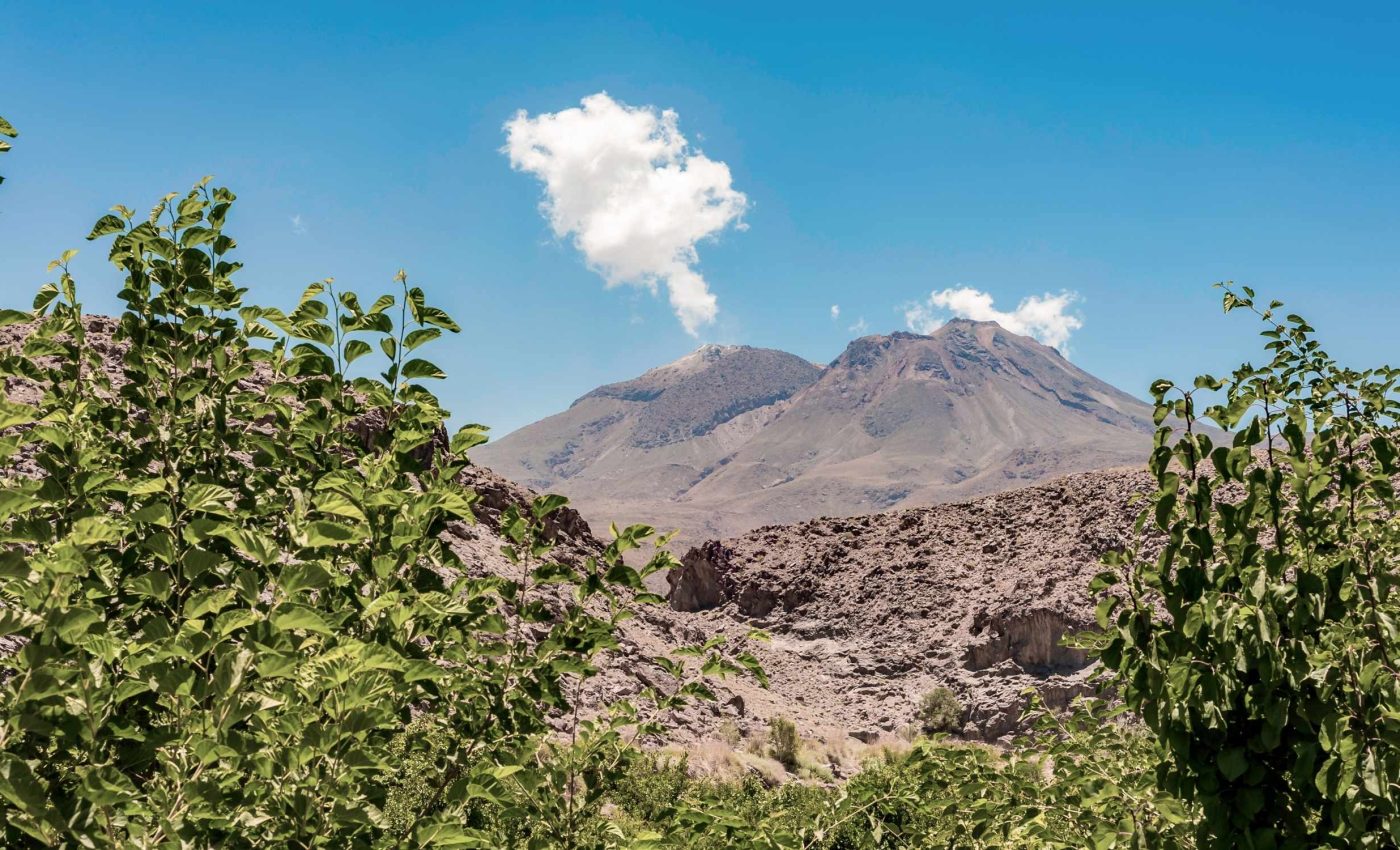
For nearly 700,000 years, the Taftan volcano sat silent in the remote deserts of southeastern Iran — a sleeping giant so old and still that most scientists assumed it was permanently retired from Earth’s fiery theater.
But then something happened.
Deep beneath the mountain, in chambers untouched for geological ages, fresh magma began to rise.
At first, the instruments twitched.
Barely.
A tiny seismic flutter, not enough to cause alarm.
But then the movement became clearer.
Sharper.
Undeniably volcanic.
And suddenly, a volcano older than human civilization appeared to be waking up.
Imagine a creature that slept before the dawn of agriculture… now beginning to breathe again.
This is the story of Taftan — and why its awakening matters more than most people realize.
Where the Volcano Lives — And Why It Has Always Been Hard to Study
Taftan is remote.
Not just “far from cities” remote — but one of the most isolated volcanoes in the Middle East, sitting in a rugged region of Iran known for deserts, jagged cliffs, and extreme temperature swings.
Because of this isolation:
- Few tourists ever see it
- Few research teams study it
- Few instruments closely monitor it
For decades, Taftan was considered dormant, possibly extinct.
But “dormant” and “extinct” are not the same — a truth science has been reminded of again and again.
Mount Pinatubo was considered harmless until it exploded in 1991.
Eyjafjallajökull barely registered in global awareness until it shut down European air travel in 2010.
Volcanoes don’t retire.
They wait.
And now, Taftan appears to be doing just that — waiting for its next move.
What Scientists Detected — And Why It Matters So Much
Researchers monitoring the region reported something that instantly caught the world’s attention:
fresh magma movement beneath Taftan.
That phrase may sound technical, but in volcanology, it’s the equivalent of hearing a heartbeat after centuries of silence.
When magma rises:
- Pressure increases
- Gas accumulates
- Rock fractures
- Heat intensifies
- Chemical signatures change
These early movements can precede activity ranging from mild fumaroles to catastrophic eruptions.
But one fact makes Taftan’s case even more intriguing:
There is no modern eruption record.
The volcano hasn’t erupted in the entire era of modern science.
Which means…
we don’t know how it behaves.
We don’t know how fast it could change.
We don’t know what type of eruption it might produce.
Does it erupt gently like Hawaii?
Explosively like Vesuvius?
Or ash-heavy like Iceland?
Right now, no one knows — and that uncertainty is what keeps scientists alert.
Taftan Has Been Sleeping Since Humans Lived in Caves
To understand how dramatic a 700,000-year silence is, imagine this:
When Taftan last erupted, humans hadn’t yet invented:
- Writing
- Clothing as we know it
- Boats
- Agriculture
- Tools beyond rocks and sticks
The continents were nearly the same shape, but the world’s civilizations didn’t exist.
Homo sapiens hadn’t even begun building shelters or communities.
Meaning:
Taftan predates everything we call human history.
And for it to stir now?
That’s like an ancient drumbeat rising just when the world least expects it.
It forces scientists to rethink the entire region’s volcanic timeline.
What Could Be Driving the Awakening?
Volcanoes don’t “wake up” randomly.
Usually, there are key triggers:
1. Plate Movement Beneath Iran
Iran sits on a collision zone between the Arabian and Eurasian tectonic plates — one of the most dynamic boundaries on the planet.
Stress builds over centuries, then suddenly shifts.
2. Deep Mantle Plumes
Earth’s mantle sometimes pushes hot material upward, rejuvenating old volcanic systems.
3. Gas Recharge
Over thousands of years, gases can accumulate in magma chambers, increasing pressure.
4. Climate Effects
Changing ice levels and extreme rainfall can affect volcanic pressure — a field of study gaining major attention.
Which one awakened Taftan?
That’s the million-dollar question researchers are now racing to answer.
Signs the Volcano May Be More Active Than Previously Believed
Over the last decade, expeditions noted:
- Fresh sulfur deposits
- Increased fumarole activity (steam vents)
- Warm groundwater surrounding the volcano
- Gas emissions inconsistent with a dead system
Locals often dismissed these as “normal mountain smells.”
But volcanologists see them as breadcrumbs — subtle hints left behind by a volcano preparing itself.
Fresh magma movement is the missing puzzle piece.
Now that it’s detected, new funding, new instruments, and new global attention are heading toward Taftan.
How Dangerous Could an Eruption Be?
Here’s where science must tread carefully.
We don’t know Taftan’s eruption pattern — so predictions must be broad.
Scenario 1: Small Steam-Based Eruption
This would be similar to minor explosions at White Island (New Zealand).
Localized, dangerous only near the summit.
Scenario 2: Moderate Ash Eruption
This could disrupt travel across the region, similar to Iceland’s 2010 eruption.
Scenario 3: Major Explosive Eruption
This is the worst-case scenario — pyroclastic flows, heavy ash fall, and widespread impact.
Could Taftan produce a catastrophic eruption?
Possibly — because volcanoes that sleep the longest often erupt the hardest.
Pressure builds.
Gas accumulates.
And without recent eruptions, there are no release valves.
Think about Yellowstone.
Think about Toba.
Think about Taupō.
Ancient systems can still produce modern chaos.
Who Would Be Affected If Taftan Erupted?
Local Communities
Villages near the mountain would face:
- Ashfall
- Water contamination
- Crop failure
- Evacuation needs
Travel & Aviation
Ash clouds can shut down airports within hours — we saw this in Europe in 2010.
Regional Economy
Mining, agriculture, and trade corridors could be disrupted.
Insurance claims could skyrocket.
Governments may need emergency funds.
Global Climate
Large eruptions inject sulfur into the atmosphere, cooling the planet temporarily.
The economic fallout alone could reach billions.
And world markets react to unpredictability — even a “maybe” causes volatility.
Scientists Are Racing Against Time to Map Taftan’s Interior
Studying a long-silent volcano is like opening a library where every book is missing pages.
But scientists are now using:
- Seismic tomography
- Satellite thermal imaging
- Magnetotellurics
- Ground deformation sensors
- Drone mapping
- Gas emission analysis
Each method reveals a tiny part of Taftan’s internal story.
Early results show something important:
The magma chamber is not completely solidified.
Which means Taftan is not an extinct mountain.
It’s a dormant volcano.
And dormancy is simply paused activity.
Volcanoes don’t die—they wait.
Is This a Warning Sign for Other ‘Ancient’ Volcanoes?
Taftan’s awakening raises a bigger, global question:
How many other “extinct” volcanoes are actually preparing to wake up?
Scientists have long suspected that many dormant volcanoes are merely inactive—resting, not dead.
If Taftan is awakening after 700,000 years…
What about other volcanic giants?
What about systems we assume are harmless simply because they’ve been quiet in human memory?
This is where the story gets globally relevant.
Insurance companies, risk modelers, and governments pay attention to patterns.
When one ancient volcano stirs, others often follow — a reminder that Earth is far more dynamic than we like to believe.
Could Taftan Erupt in Our Lifetime?
The honest answer:
Yes — but nobody knows how soon.
Fresh magma movement doesn’t mean an eruption tomorrow…
but it means the system is alive.
Volcanoes can rumble for decades before exploding.
They can also erupt unexpectedly after brief activity — like Mount Ontake did in 2014.
The key now is monitoring.
Funding.
Data.
Because the more we learn, the more we can protect.
And the more we protect, the less likely history becomes tragedy.
What Should People Living Near Taftan Do?
Preparedness matters — long before the first plume of smoke rises.
✔ Improve home ventilation
Volcanic gases like sulfur dioxide can travel miles.
✔ Review emergency evacuation plans
Knowing your route saves lives.
✔ Consider natural disaster insurance
Eruptions can damage homes, crops, and businesses.
✔ Keep masks and water storage ready
Ashfall contaminates air and water.
✔ Stay updated through geological agencies
Accurate information prevents panic.
Preparedness isn’t fear — it’s survival.
The World Watches a Sleeping Giant Wake
The awakening of Taftan is more than a geological event.
It is a reminder that Earth is still full of surprises — some beautiful, some dangerous, all powerful.
As fresh magma rises beneath a volcano that slept while humanity evolved, built civilizations, created technology, and reshaped continents…
We are witnessing something rare:
A returning heartbeat of the planet.
The next chapter?
Only time — and science — will tell.
But one thing is clear:
Taftan is no longer silent.
And the world is finally listening.