
Table of Contents
- A Normal Summer Day Turns Into a Life-or-Death Battle
- Dragged Underwater: The Death Roll Begins
- A 10-Year-Old’s Calmness That Stunned Experts
- The Move That Saved Her Life: Plugging Its Nostrils
- The Rescue: Blood, Panic, and a Race Against Time
- What Experts Say: “Most Adults Would Not Have Survived This”
- Why Florida’s Beautiful Waters Hide Hidden Dangers
- What People Don’t Know About Alligator Attacks
- What To Do If You Ever Encounter an Alligator
- The Alligator: Captured and Removed
- What Juliana’s Story Teaches Families, Travelers, and Homeowners
- A 10-Year-Old Hero — And an Entire State Inspired
- Final Reflection: What Would YOU Do?
A Normal Summer Day Turns Into a Life-or-Death Battle
It was supposed to be an ordinary afternoon.
Sunshine.
Warm Florida water.
A 10-year-old girl enjoying a swim just like thousands of kids do every single day.
But in seconds, everything changed.
Without warning, something massive surged upward from the murky lake.
Something powerful.
Something prehistoric.
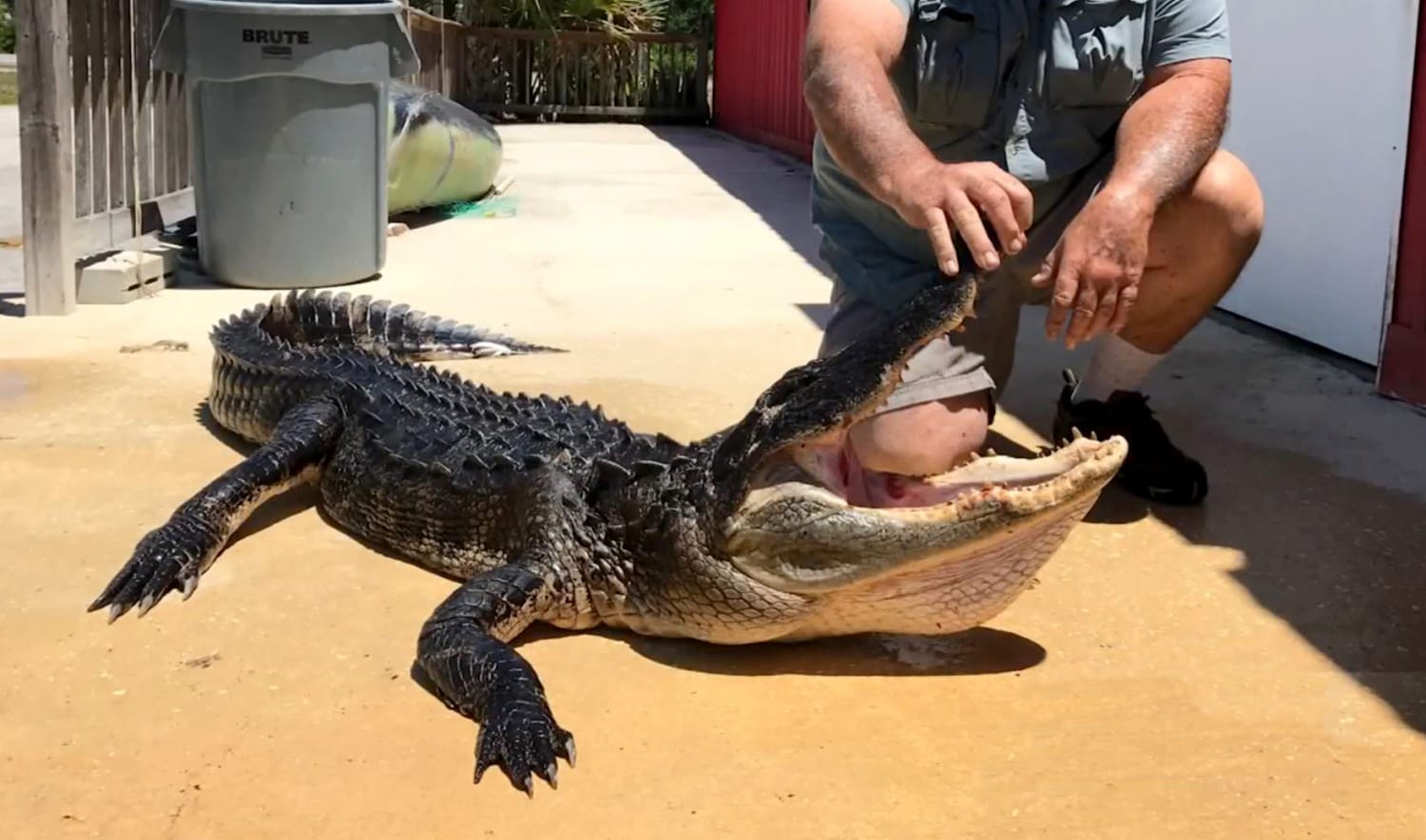
Before she could scream, a 9-foot alligator clamped down on Juliana Ossa’s leg, locking her inside jaws designed to crush bone with over 2,000 pounds of pressure.
For most people, this would be the end of the story.
But for Juliana, this was the beginning of an escape no one — not even wildlife professionals — expected.
Dragged Underwater: The Death Roll Begins
Alligators don’t just bite.
They drag.
They drown.
They twist their prey in a terrifying move known as the death roll, designed to tear limbs and disable victims instantly.
As Juliana was pulled underwater, the world became a swirl of bubbles, muddy water, and fear.
No oxygen.
No visibility.
No chance to call for help.
Just the crushing vise of a reptile that hasn’t changed since the age of dinosaurs.
But instead of giving up, she did something remarkable:
She started thinking.
A 10-Year-Old’s Calmness That Stunned Experts
Most adults — even trained swimmers — freeze when dragged underwater by a predator.
But Juliana stayed calm.
She remembered something she’d heard once, something about animals and instincts.
Not from survival training.
Not from a class.
But from the kind of curious, everyday learning kids absorb far more than we realize.
She reached toward the gator’s snout.
And then she did something wildlife officers later called “astonishing.”
The Move That Saved Her Life: Plugging Its Nostrils
Alligators can’t breathe underwater when their mouths are open — and Juliana knew they must close their nostrils tightly when submerged.
So she jammed her fingers into the alligator’s nostrils, forcing it to suffocate unless it released her.
It worked instantly.
The giant predator loosened its grip — the instinct to breathe overpowering the instinct to kill.
Juliana tore her leg free, kicked upward, and burst through the surface gasping for air.
Her scream told everyone on shore exactly what had happened.
And that scream likely saved her life a second time.
The Rescue: Blood, Panic, and a Race Against Time
Adults rushed into the water.
Children were pulled away.
Someone called 911.
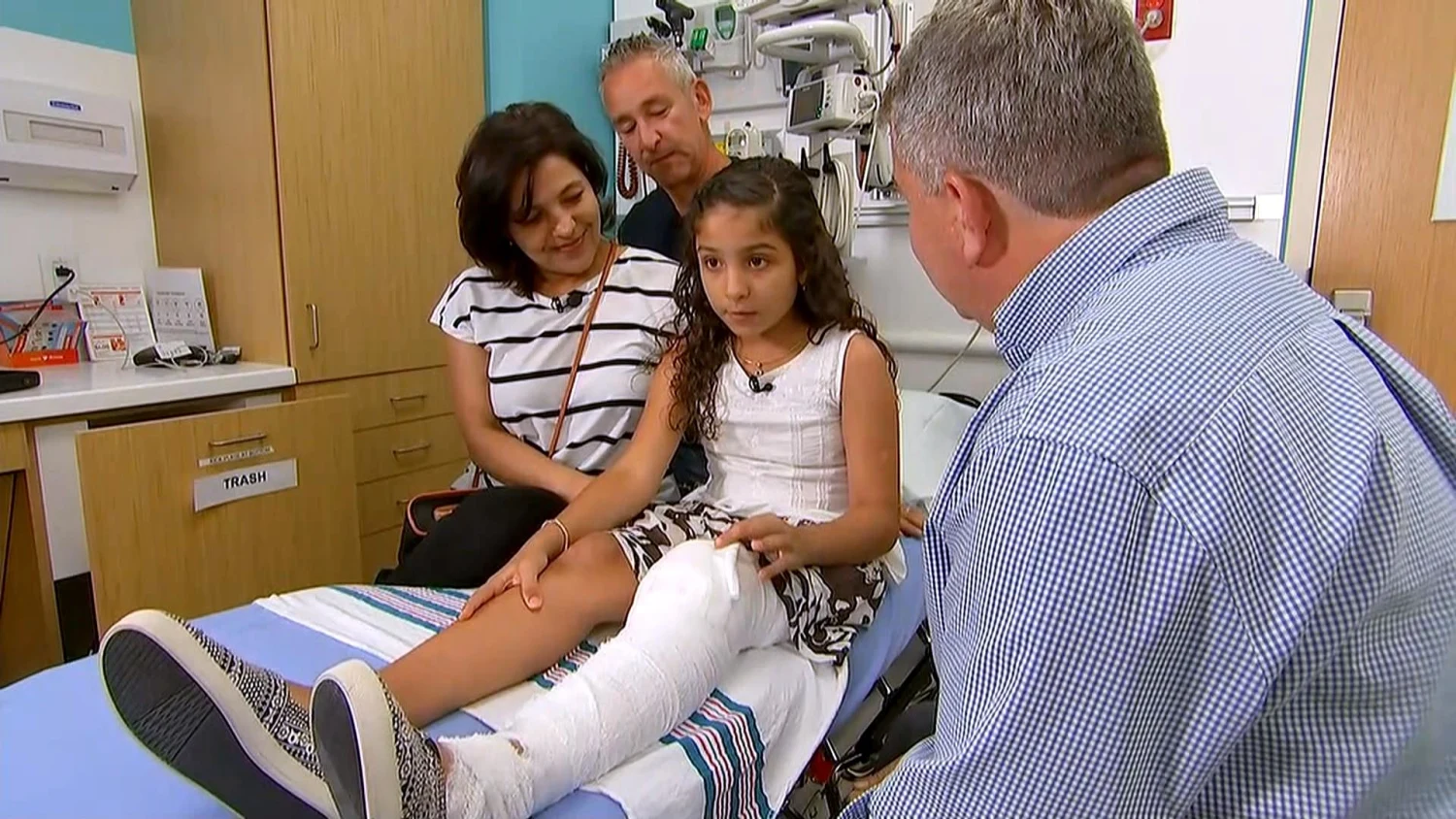
Juliana’s leg was punctured deeply — rows of teeth had torn into muscle.
Blood streaked through the water.
But she was conscious.
She was talking.
And she kept repeating the same sentence:
“I plugged its nose.”
Paramedics stabilized her and rushed her to the hospital.
Doctors later said she was extraordinarily lucky:
No broken bones.
No severed arteries.
No permanent damage.
Just a series of deep wounds and a story that would go on to inspire millions.
What Experts Say: “Most Adults Would Not Have Survived This”
Wildlife experts were stunned.
A 10-year-old outsmarted a 9-foot reptile using a survival tactic many adults have never heard of.
They explained why her move was so powerful:
✔ Alligators rely heavily on nostril breathing
When their jaws are clamped, they cannot breathe through the mouth.
✔ Blocking nostrils triggers instinctive release
Oxygen becomes the animal’s priority.
✔ The reaction is immediate
It buys precious seconds — enough for escape.
Experts called Juliana’s escape “one of the smartest instinctive reactions they had ever seen.”
Ask yourself:
Would you have thought of that underwater?
Would you have been calm enough to try?
Why Florida’s Beautiful Waters Hide Hidden Dangers
Florida is home to more than 1.3 million alligators.
They live in:
- Lakes
- Ponds
- Rivers
- Wetlands
- Drainage ditches
- Golf course water hazards
- Backyard ponds
In Florida, if there’s water, assume there’s a gator.
Most never attack — but when they do, it happens fast.
As neighborhoods expand into natural habitats, human-wildlife interactions rise.
And more kids than ever swim in waters that look harmless but hide camouflaged predators.
That’s why Juliana’s survival is not just heroic — it’s a wake-up call.
What People Don’t Know About Alligator Attacks
Most people misunderstand alligators.
They think:
“They only attack at night.”
“They don’t bother swimmers.”
“They stay deep underwater.”
“They avoid humans.”
Most of these beliefs are wrong.
Here’s the truth:
✔ Alligators attack in daylight — especially warm afternoons
Heat makes them more active.
✔ They are silent ambush predators
They attack without warning.
✔ They blend perfectly into shallow water
Most victims never see them coming.
✔ Children are at higher risk
They splash, move fast, and attract attention.
Which raises an important question:
Do families really understand the risks lurking in natural Florida waters?
What To Do If You Ever Encounter an Alligator
Juliana’s escape was extraordinary — but survival shouldn’t depend on luck or instinct.
Here are life-saving guidelines everyone needs to know:
1. Never swim in lakes or ponds in Florida unless in a designated safe zone
If there’s no sign saying it’s safe, don’t go in.
2. Stay away from water edges
Alligators ambush from the shoreline.
3. If attacked, fight the snout, eyes, or nostrils
These are the only weak points.
4. Don’t try to pry open the jaws
Alligator jaws close with tremendous strength — but open weakly.
5. Keep pets far from water
Many attacks are triggered when a gator targets a smaller animal.
6. Teach children wildlife safety early
Knowledge isn’t fear — it’s protection.
Juliana’s story proves that education is survival.
The Alligator: Captured and Removed
After the attack, wildlife officers tracked the gator, captured it, and removed it from the lake.
But they emphasized something important:
The alligator wasn’t acting unusually.
It wasn’t sick.
It wasn’t “rogue.”
It was simply behaving like an alligator — an apex predator surviving in its natural habitat.
The message is clear:
Humans must respect wildlife.
Water isn’t always safe.
And awareness is the first line of protection.
What Juliana’s Story Teaches Families, Travelers, and Homeowners
This story reaches far beyond Florida.
It teaches:
✔ Parenting Safety
Kids aren’t too young to learn emergency thinking.
✔ Travel Safety
Tourists often underestimate wildlife risks.
✔ Home Improvement & Backyard Safety
Homes near lakes or canals must upgrade fencing, lighting, and shoreline distance.
✔ Insurance Coverage
Medical emergencies from wildlife are real — check your policies.
✔ Emergency Response Preparedness
Knowing when and how to call for help saves lives.
Her story is a reminder:
Danger can appear in seconds.
Preparation lasts a lifetime.
A 10-Year-Old Hero — And an Entire State Inspired
Juliana recovered quickly.
Her wounds healed.
Her bravery became national news.
When asked if she was afraid, she simply said:
“I knew what to do.”
And that simple sentence reveals everything.
Courage is not the absence of fear.
It is the ability to think clearly when the world flips upside down.
Her bravery didn’t just save her life — it changed how millions understand wildlife, safety, and the power of staying calm under pressure.
Final Reflection: What Would YOU Do?
If this happened to you…
If something powerful grabbed your leg underwater…
Would you panic?
Freeze?
Give up?
Or would you think, like Juliana did?
Her story challenges all of us:
In the most terrifying moment of your life, will you lose control — or will you fight smart?
Because sometimes, survival is not about strength.
It’s about strategy.
It’s about breath.
It’s about courage.
And sometimes…
the bravest person in the room is a 10-year-old girl.