

Table of Contents
- A Soap That Could Save Lives
- The Spark of an Idea
- From Curiosity to Creation
- The Birth of a Revolutionary Soap
- Recognition From TIME and Beyond
- Why Soap Could Be the Next Frontier in Health
- The Power of Accessible Innovation
- The Heart Behind the Science
- From Soap to the Future of Medicine
- Lessons From a Young Innovator
- Hope in Every Bubble
- Beyond Awards: The Movement She Sparked
- The Future Looks Bright
A Soap That Could Save Lives
At just 14 years old, most kids are worrying about homework, social media, and weekend plans.
But one girl had something much bigger in mind—a way to fight cancer using soap.
Her name is Heman Bekele, and she was named TIME’s Kid of the Year after developing an innovative cancer-fighting soap that could one day make skincare part of the global fight against one of the world’s deadliest diseases.
In a world filled with billion-dollar pharmaceutical labs, Heman’s idea came from a bar of soap—and a belief that science can start in anyone’s hands, no matter their age.
The Spark of an Idea
It began when Heman, a student passionate about biology and chemistry, read about the challenges of treating skin cancer, especially in countries where healthcare access is limited.
She learned that millions of people around the world suffer from skin diseases caused by sun exposure and pollution—but many can’t afford expensive treatments or preventive care.
That’s when an idea took root:
“What if a simple, affordable soap could help prevent skin cancer?”
Most would have dismissed it as impossible. She decided to prove it wasn’t.
From Curiosity to Creation
Working after school, Heman began experimenting with natural ingredients known for their anti-cancer and skin-protective properties.
She blended plant-based oils, organic compounds, and herbal extracts, seeking the perfect formula that could cleanse, nourish, and protect the skin—while targeting precancerous cells.
Using her understanding of biochemical reactions, she created a soap that helps stimulate skin regeneration and may even block the harmful mutations that lead to cancer.
When tested in lab simulations, the results were astonishing.
While it’s not yet an approved medical treatment, her innovation showed strong potential in early studies—enough to capture the attention of scientists, educators, and the world.
The Birth of a Revolutionary Soap
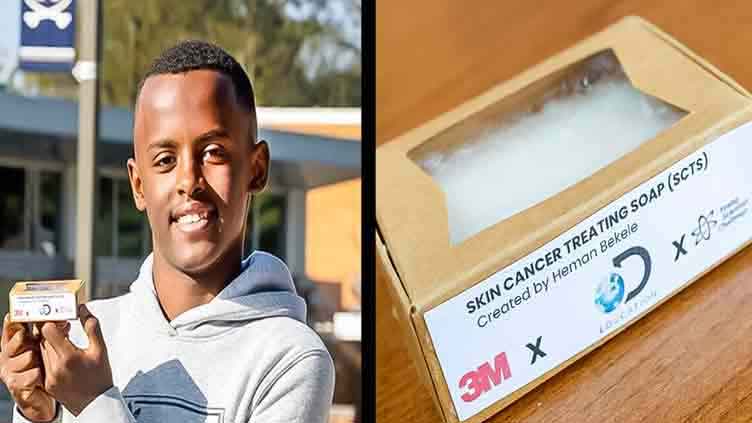
Heman named her creation “Melanoma Defense Soap”—a tribute to its purpose.
Her design wasn’t meant to replace medicine but to make prevention and early defense accessible.
The soap works by combining antioxidants, moisturizing agents, and natural enzymes that neutralize free radicals—unstable molecules known to cause DNA damage and accelerate aging and cancer development.
It’s not magic. It’s science made simple.
By transforming skincare into a form of early protection, Heman’s invention could bridge the gap between healthcare and everyday hygiene.
Recognition From TIME and Beyond
When TIME magazine named her Kid of the Year, it wasn’t just about the invention—it was about what it symbolized.
In an era where youth are often underestimated, Heman’s story became a beacon of possibility.
She showed that innovation doesn’t require a PhD, a lab full of scientists, or millions in funding. Sometimes, it just takes curiosity, courage, and compassion.
TIME’s editors described her work as “a remarkable blend of science and social impact.”
And that impact is only beginning.
Why Soap Could Be the Next Frontier in Health
It sounds almost too simple—but health experts say everyday products like soap could play a major role in preventive medicine.
Our skin is the body’s largest organ—and also the most exposed to environmental stress.
By infusing skincare with therapeutic compounds, scientists believe we can help protect against chronic conditions like inflammation, infection, and even some cancers.
What Heman has done is tap into that science with fresh, youthful creativity, reminding the world that health innovation doesn’t always come in a pill or syringe.
Sometimes, it comes in a bar.
The Power of Accessible Innovation
One of the most powerful parts of Heman’s project is her commitment to accessibility.
While major pharmaceutical products often sell for hundreds of dollars, her soap can be produced for just a few cents per bar.
That means it could reach communities in Africa, Asia, and Latin America, where sun exposure and lack of healthcare make skin cancer a growing threat.
She plans to work with nonprofit organizations and hospitals to distribute the soap widely once testing and development are complete.
“My dream,” she said, “is to make cancer prevention affordable for everyone—no matter where they live.”
The Heart Behind the Science
Heman’s passion for innovation was inspired by her parents, who immigrated from Ethiopia. Growing up, she witnessed how limited access to healthcare could devastate families.
That experience shaped her mission to blend science with social good.
Her mentors describe her as “a visionary who sees problems as puzzles to solve.”
And her humility remains striking. Despite international attention, she still spends weekends experimenting in her home kitchen—testing new versions of her formula, adjusting ingredients, and dreaming bigger each time.
From Soap to the Future of Medicine
While her current focus is on skin cancer, Heman hopes her research could pave the way for other dermatological innovations.
Imagine soap bars designed to deliver controlled doses of anti-aging compounds, wound-healing agents, or immune boosters.
If realized, it could transform everyday hygiene products into a powerful new form of preventive healthcare—especially for underserved populations.
And it all began with one girl, one question, and one bar of soap.
Lessons From a Young Innovator
There’s something deeply inspiring about Heman’s story—and it’s not just her age.
It’s her mindset.
She didn’t see the problem of cancer as “too big” to tackle. She saw it as a challenge worth trying.
She didn’t wait for permission, funding, or the perfect lab. She started with what she had—and changed what she could.
And maybe that’s the lesson for all of us: innovation doesn’t begin in a laboratory—it begins in belief.
Hope in Every Bubble
As the world applauds Heman’s achievement, scientists continue to study her soap’s properties, looking for ways to refine and scale production.
If proven effective in further testing, her creation could become one of the most cost-effective cancer-prevention tools ever developed.
But even now, its symbolic value is immeasurable.
It reminds us that genius can come from anywhere—and that hope often takes the simplest forms.
Like a teenager’s bar of soap.
Beyond Awards: The Movement She Sparked
Since her recognition, Heman has become an advocate for STEM education for young girls, especially in developing countries.
She mentors younger students, speaks at science fairs, and uses her platform to encourage curiosity over fear.
“You don’t have to be rich or famous to change the world,” she said. “You just have to care enough to start.”
That message has resonated globally, inspiring classrooms, organizations, and policymakers to invest more in youth-led science initiatives.
Because when young minds are given the tools to dream, they don’t just imagine a better world—they start building it.
The Future Looks Bright

At 14, Heman Bekele has already done what many adults spend a lifetime chasing: she’s created something that could save lives.
And she’s just getting started.
Her story is proof that age is not a barrier to brilliance, and that science, when guided by empathy, can reshape the future of humanity.
The world will be watching as her work evolves—but one thing is already clear:
From a single spark of curiosity, she’s lit a fire of inspiration that could burn for generations.