
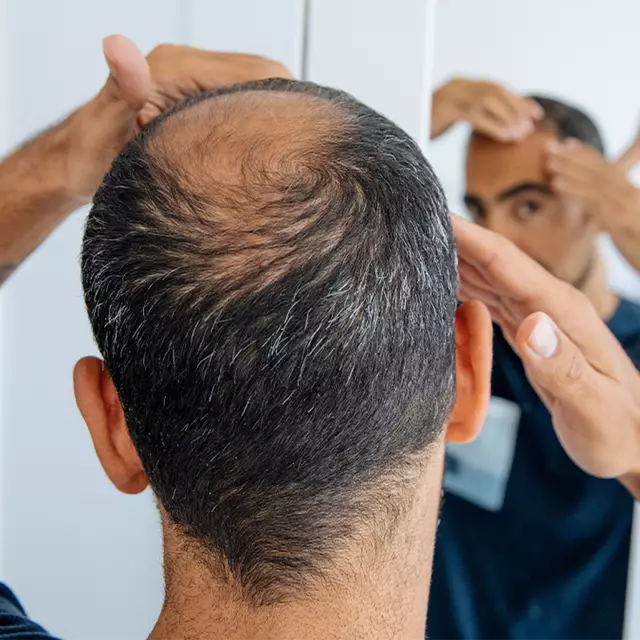
Table of Contents
- A Scientific Breakthrough or Just Another Promise?
- The Discovery That Shocked Dermatologists
- How the ‘Miracle’ Works
- From Bald to Bold: Real Results
- The Global Cost of Baldness
- What Makes This Serum Different?
- The Science Behind Hair Regeneration
- A Billion-Dollar Race Begins
- Skepticism Meets Hope
- The Emotional Impact of a Full Head of Hair
- The Future of Hair Restoration
- Potential Challenges Ahead
- From the Lab to the Bathroom Shelf
- Can Baldness Really Be “Cured”?
- What It Means for You
- The Broader Implications
- Investors Are Paying Attention
- A World Without Baldness
- Final Thought
A Scientific Breakthrough or Just Another Promise?
For decades, baldness has been the unsolved riddle of modern medicine.
Billions have been spent chasing a cure—lotions, lasers, pills, and even transplants—but nothing truly reversed hair loss. Until now.
A new experimental hair regrowth serum is being hailed as a “miracle in a bottle” after early lab tests showed it could stimulate hair growth within just 20 days. Scientists call it one of the most promising breakthroughs in dermatology in the last decade.
If the results hold up, it could change not only how we treat baldness—but how we understand human regeneration itself.
The Discovery That Shocked Dermatologists
Researchers at a leading biotechnology institute began experimenting with a compound originally designed to treat cellular inflammation. During testing, they noticed something unexpected:
areas of shaved skin on lab animals began to regrow hair—fast.
That single observation led to years of focused trials, culminating in the development of a serum that targets dormant hair follicles and reactivates them.
In simple terms: it doesn’t just prevent hair loss—it reverses it.
How the ‘Miracle’ Works
Unlike conventional treatments such as minoxidil or finasteride, which slow hair loss but rarely regrow thick hair, this serum acts directly on the dermal papilla cells, the tiny structures that control follicle growth.
The formula uses a blend of bioengineered peptides and stem-cell-derived growth factors that send regenerative signals deep into the scalp.
Once applied, the serum:
- Reawakens dormant follicles that stopped producing hair.
- Increases blood circulation to the scalp to feed new growth.
- Restores keratin production, giving rise to thicker, healthier strands.
Within 20 days, researchers observed visible results—fine baby hairs turning into full, pigmented strands.
From Bald to Bold: Real Results
In initial human trials, volunteers suffering from severe pattern baldness reported visible coverage within three weeks of use. By 60 days, some participants had up to 90% restoration in previously bald areas.
Dermatologists involved in the study described the transformation as “nothing short of astonishing.”
One participant said, “I’d stopped believing anything could work. Then, one morning, I looked in the mirror and saw tiny hairs coming back. It felt like I was watching time reverse.”
That’s the kind of emotional reaction this serum is creating—because it’s doing something that science once thought impossible.
The Global Cost of Baldness
Hair loss isn’t just cosmetic—it’s psychological.
More than one billion people worldwide experience some form of baldness or thinning hair. The global hair-care and restoration industry is worth over $10 billion annually, yet most products deliver modest or temporary results.
The emotional toll is immense. Studies show that people struggling with baldness often face reduced confidence, social anxiety, and even depression.
A cure that genuinely restores hair growth could have massive public-health implications, not just financial ones.
What Makes This Serum Different?
Many “miracle cures” for baldness have appeared over the years, only to fade away when the hype died. But scientists behind this breakthrough say the difference lies in science, not marketing.
The serum works by re-establishing the communication pathways between stem cells and the hair follicle microenvironment—essentially telling the scalp to behave like it did in youth.
It’s like resetting the biological clock of your skin.
Even more impressive: early data suggests that once hair grows back, it stays—as long as the follicle remains nourished and unscarred.
The Science Behind Hair Regeneration
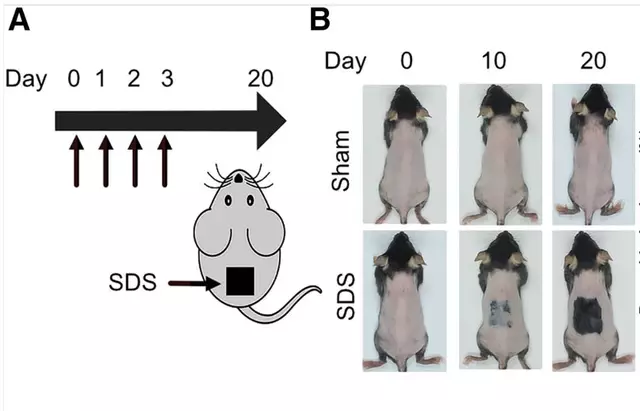
To understand how radical this is, you need to know how hair loss happens.
Each follicle follows a growth cycle—anagen (growth), catagen (transition), and telogen (rest). Over time, hormonal changes, genetics, and inflammation cause follicles to miniaturize and eventually “fall asleep.”
Traditional drugs keep existing follicles from dying. This serum wakes them up.
By introducing growth factors similar to those found in embryonic tissue, researchers are effectively re-teaching adult skin to regenerate. That discovery could spill over into wound healing, scar reduction, and even organ repair.
What began as a cosmetic pursuit could soon reshape regenerative medicine itself.
A Billion-Dollar Race Begins
Once news of the early trials leaked, major pharmaceutical and beauty companies reportedly began bidding to secure rights to the formula.
Insiders say it’s already being tested for large-scale production, with commercial release targeted within two years—pending full safety approval.
Industry analysts estimate the potential market value at $50 billion if the serum performs as expected.
Think about it: a single vial could replace transplants, pills, and years of costly maintenance.
But could it really live up to the hype?
Skepticism Meets Hope
Of course, the scientific community remains cautious.
Dermatologists warn that while early data is exciting, peer-reviewed clinical trials are essential before calling anything a “cure.”
Some experts point out that regrowing hair in small test groups isn’t the same as long-term success across diverse populations. Others emphasize the need to monitor hormonal side effects and allergic reactions.
Still, the consensus is clear: even partial success at this speed is unprecedented.
One senior researcher commented, “If this formula proves safe for widespread use, it could end baldness as we know it.”
The Emotional Impact of a Full Head of Hair
Hair is more than vanity—it’s identity.
Anthropologists have long noted that throughout history, hair symbolized youth, strength, and vitality. Losing it can feel like losing part of yourself.
That’s why this discovery has sparked not just medical interest but cultural fascination. For millions who’ve spent years hiding under hats or wigs, the possibility of real regrowth feels like reclaiming confidence, freedom, and self-esteem.
Wouldn’t you want to look in the mirror and see the version of yourself you thought was gone?
The Future of Hair Restoration
The excitement around this serum is pushing the entire field of biotech dermatology into a new era.
Already, scientists are exploring ways to pair the formula with nanotechnology delivery systems that ensure deeper scalp penetration and sustained results.
Others are testing whether it could work on beard or eyebrow regrowth, or even restore hair in burn victims whose follicles were destroyed.
Every discovery opens another door—and the doors keep multiplying.
Potential Challenges Ahead
Despite the optimism, large-scale approval will require addressing key questions:
- Can it regrow hair for all genetic types, including advanced male pattern baldness?
- Are results permanent without continuous use?
- Will costs make it accessible, or will it remain a luxury item?
These are the issues regulators and investors are now debating. But given the global demand, there’s little doubt production will move forward at record speed.
From the Lab to the Bathroom Shelf
Industry insiders predict a commercial version could appear by late 2026, possibly under partnerships with major cosmetic brands.
Early projections suggest retail pricing might start around $250 per treatment cycle—a fraction of the cost of a single transplant surgery.
The product will likely debut as a topical serum or foam, requiring once-daily application for the first month, then weekly maintenance.
If it works as promised, it could redefine how men and women treat hair loss forever.
Can Baldness Really Be “Cured”?
That’s the question everyone’s asking.
Strictly speaking, baldness is a symptom, not a disease—it’s the result of follicle dormancy. This serum doesn’t replace lost follicles; it reactivates them.
So, while scientists hesitate to use the word “cure,” what they’ve achieved is the closest thing yet to reversing the process completely.
It’s like bringing a forest back to life after decades of drought.
What It Means for You
If you’re one of the millions who’ve tried everything—vitamins, oils, expensive transplants—this development offers genuine hope.
The research proves that baldness is not destiny; it’s biology, and biology can be changed.
Dermatologists recommend keeping an eye on upcoming clinical data before jumping to conclusions, but the trend is undeniable: the age of true regeneration has begun.
The Broader Implications
Beyond hair, this breakthrough hints at something far larger:
the ability to reactivate dormant cells anywhere in the body.
Imagine applying the same principle to regenerate skin damaged by aging, or to rebuild muscle and tissue after injury.
The line between cosmetic treatment and medical revolution is starting to blur—and this serum might be the first major crossover.
Investors Are Paying Attention
Financial analysts are already calling the baldness market the “next biotech gold rush.”
Venture capital firms are funding startups focused on bio-restorative cosmetics, a sector predicted to grow 25% annually over the next decade.
That’s why this serum isn’t just a story about hair—it’s a story about money, innovation, and the future of human rejuvenation.
If the trials succeed, expect Wall Street to follow closely behind.
A World Without Baldness
Picture it: a world where losing your hair is no longer inevitable.
Where confidence doesn’t fade with your hairline.
That world may be closer than we think.
As one researcher put it, “For years, we’ve been patching the problem. Now, we might finally be solving it.”
And if history has taught us anything, it’s that every major scientific leap once sounded impossible—until it wasn’t.
Final Thought

Baldness has outsmarted medicine for centuries. But this time, science might have the upper hand.
A tiny bottle, a few drops a day, and twenty days later—hair returns.
If that doesn’t sound like a miracle, what does?
So the next time you run your hand over a thinning scalp, remember this moment. The era of accepting baldness may soon be over—and the age of true regrowth is about to begin.