

Table of Contents
- The Call That Should Have Been Impossible
- A Routine Day That Changed Everything
- The Pencil That Became a Lifeline
- Racing Against Time
- The Miracle in the Operating Room
- Awakening to a Second Life
- How Surgeons Reattached the Impossible
- The Psychology of Survival
- The Long Road of Rehabilitation
- A Medical Team That Refused to Quit
- Technology Meets Humanity
- A Story That Inspired the World
- Lessons in Grit and Gratitude
- The Science of Healing
- What This Means for the Future of Medicine
- A Second Chance at Life
- Hope for Every Survivor
- Final Thought
The Call That Should Have Been Impossible
When disaster strikes, most people freeze.
But one man—bleeding, alone, and missing both arms—did the unthinkable.
After a horrifying accident that severed both his arms, he somehow managed to grab a pencil with his teeth, dial 911, and save his own life.
That call wasn’t just an act of survival. It became the first link in a chain of medical miracles that would redefine what’s possible when determination meets human ingenuity.
A Routine Day That Changed Everything
It started like any ordinary day. He was at work, performing his usual tasks—something he’d done a thousand times before. But in a split second, everything changed. A powerful piece of machinery malfunctioned, and before he could react, both his arms were crushed and torn away.
The pain was unimaginable. The shock was worse. Most people would have collapsed in despair. But he didn’t.
Blood pouring, consciousness fading, he looked around and saw the one object that could save him—a pencil.
The Pencil That Became a Lifeline
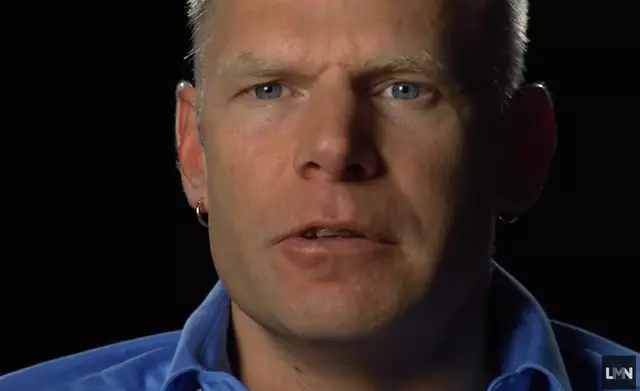
With his arms gone and strength draining fast, he did something that defied belief. Using his mouth, he picked up the pencil and painstakingly pressed each button to call 911.
Imagine the precision it took. The focus. The willpower.
One wrong move, and the line would have gone dead.
But the call went through. Emergency responders heard his trembling voice and immediately dispatched a rescue team.
When they arrived, what they found stunned them—he was still conscious, still trying to stay alive, and still refusing to give up.
Racing Against Time
Ambulance crews knew that time was everything. The human body can only survive so long after losing limbs. They worked frantically to stop the bleeding, wrap the severed arms, and keep them cold for possible reattachment.
Every minute mattered.
If they got him to the hospital fast enough, surgeons might have a chance.
It was a race against biology itself—and against the clock.
The Miracle in the Operating Room
At the hospital, a team of reconstructive surgeons prepared for one of the most complex procedures imaginable: reattaching both arms.
Each arm contains thousands of tiny nerve endings, arteries, and tendons. Even under ideal conditions, a single-arm reattachment can take 12 to 16 hours. This man needed both.
But the surgical team refused to back down.
They began meticulously aligning blood vessels and bone structures, reconnecting muscle tissue, and using microsurgical techniques to restore nerve pathways. The surgery stretched deep into the night—more than 15 hours of relentless precision.
When it was over, they didn’t just save his life.
They gave him back a chance to live it fully.
Awakening to a Second Life
When he woke up, bandaged and exhausted, the reality began to sink in. His arms—his own arms—were back.
He couldn’t move them yet. The road ahead would be long and brutal. But they were there. And that was everything.
Doctors explained that full recovery could take years. He would need physical therapy, nerve stimulation, and mental resilience to regain function. But his story had already defied every odd.
And when he lifted his reattached fingers for the first time, even slightly—it wasn’t just a twitch of movement. It was a victory over fate.
How Surgeons Reattached the Impossible
Arm reattachment surgery, or bilateral upper limb replantation, is among the most demanding procedures in modern medicine. It requires perfect timing, a sterile environment, and expert coordination between multiple surgical teams.
First, bones are stabilized with plates and screws.
Then arteries and veins are sutured under a microscope—some less than two millimeters wide.
Next come tendons and nerves, followed by skin closure.
But the true miracle happens afterward. When blood flow returns and the patient’s own cells begin healing, there’s a narrow window where the body either accepts or rejects the reattached limbs.
His body accepted them.
The Psychology of Survival
Survival isn’t just physical—it’s mental. Psychologists who study trauma call it post-traumatic growth, the phenomenon where people emerge from tragedy with newfound strength.
For this man, that growth began the moment he refused to die quietly.
“I had two options,” he reportedly told doctors later. “Give up, or do something—anything—to stay alive.”
That decision—made in seconds—saved him.
If you were in his place, would you have had the same clarity? Would you have thought of a pencil as a lifeline?
The Long Road of Rehabilitation
After months of hospitalization, the next chapter began: physical therapy. Every small movement—flexing a wrist, curling a finger—required intense concentration and pain tolerance.
Neural pathways had to be retrained. Muscles needed to remember what they once knew.
Doctors fitted him with special support braces to help stabilize the joints. Sessions lasted hours each day, focusing on improving circulation, rebuilding grip strength, and preventing scar tissue from freezing mobility.
It wasn’t just a fight for function—it was a fight for independence.
A Medical Team That Refused to Quit
Behind every recovery story is an army of people who make the impossible happen. His surgical team included orthopedic specialists, vascular surgeons, anesthesiologists, and rehabilitation experts—all working toward one goal: bringing motion back to lifeless arms.
One of the surgeons later said, “It wasn’t just science. It was faith—in medicine, and in him.”
The hospital where the operation took place has since reported the case as one of the most successful double-arm reattachments in modern history.
Technology Meets Humanity
Advances in microsurgery and nerve regeneration technology have transformed how doctors approach limb reattachment.
New imaging tools allow surgeons to map nerve connections before cutting. Robotic microscopes provide ultra-precise suturing at the micro level. And post-operative rehabilitation now includes electrical nerve stimulation to boost recovery speed.
But technology alone can’t explain what happened that day. It was also about willpower—a human refusing to surrender.
A Story That Inspired the World
When his story went public, it spread across social media like wildfire. People were moved not just by the medical miracle, but by the raw human courage behind it.
Comments flooded in:
“Unbelievable strength.”
“He’s proof that the human spirit can’t be broken.”
“This story made me cry and smile at the same time.”
He became a symbol of resilience—a reminder that even when life literally tears you apart, it’s still possible to rebuild.
Lessons in Grit and Gratitude
Stories like his remind us that survival isn’t about luck. It’s about small, stubborn acts of hope.
He could have closed his eyes and waited for the end. Instead, he picked up a pencil.
That decision, made in pain and chaos, created a ripple of inspiration that now reaches millions. It shows that no matter how impossible the situation seems, there’s always something—some small step—you can do next.
And sometimes, that’s all it takes.
The Science of Healing
Months after the surgery, doctors reported continued nerve regeneration in his hands and fingers. Physical therapy sessions showed gradual improvements in grip and sensation.
This kind of progress isn’t just rare—it’s extraordinary. Most patients who undergo bilateral arm reattachment recover partial motion at best. His progress continues to surprise experts.
Medical researchers now study his case to learn more about nerve plasticity, the body’s ability to rewire itself after trauma. What they’re discovering could help thousands of future patients facing limb loss.
What This Means for the Future of Medicine
This story isn’t just about one man—it’s a glimpse into the future of reconstructive medicine.
Doctors are now experimenting with stem cell therapy to accelerate nerve healing, 3D-printed tissue scaffolds to rebuild damaged muscle, and AI-assisted surgery to guide microsurgical movements.
The goal is clear: to make limb reattachment more successful, faster, and available to anyone, anywhere.
One day, the miracle that saved him may no longer be a miracle—it might be standard care.
A Second Chance at Life
Today, he’s back home, learning to live again. He can eat, write, and even lift light objects—simple actions that once seemed impossible.
Every movement is a reminder of that one impossible moment: the pencil, the call, the courage to survive.
He says he doesn’t remember much of the pain, but he remembers the determination. “I just knew I had to get help. Somehow.”
His words are humble, but his actions were heroic.
Hope for Every Survivor
Accidents happen every day. But stories like this one prove that survival isn’t just about what happens to you—it’s about how you respond.
When you lose everything, what’s left is choice.
And sometimes, that choice becomes your lifeline.
This man didn’t wait for hope to arrive—he created it. And because of that, he got a second chance not just to live, but to inspire millions to never give up.
Final Thought
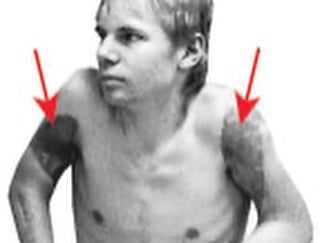
One pencil. One call. One life saved.
It’s easy to underestimate what humans are capable of—until you meet someone who reminds you.
He lost everything in a moment, but gained something priceless: proof that courage, when paired with science, can bring miracles to life.
So the next time you face something that feels impossible, remember this story.
If he could dial 911 with a pencil, what’s stopping you from taking your next step forward?