
Table of Contents
- A Sunny Backyard. A Branch. A Life Changed in an Instant.
- When Engineering Met Heartbreak — The Illusion of Control
- From Lab to Life: The Realities of Pediatric Neurorehabilitation
- Why High-Tech Rehab Often Falls Short
- A Year of Therapy, Hope, and Heartache: The Long Road of Recovery
- What This Means for Families — And for the Future of Care
- Can Technology Still Be Part of the Answer? Yes — If Designed Wisely
- When Life Doesn’t Offer a Reset — How Families Learn to Adapt
- Why This Story Matters — Beyond One Family’s Pain and Hope
- If You Were in Their Shoes — What Would You Do?
- Final Takeaways: What Their Story Teaches Us
A Sunny Backyard. A Branch. A Life Changed in an Instant.
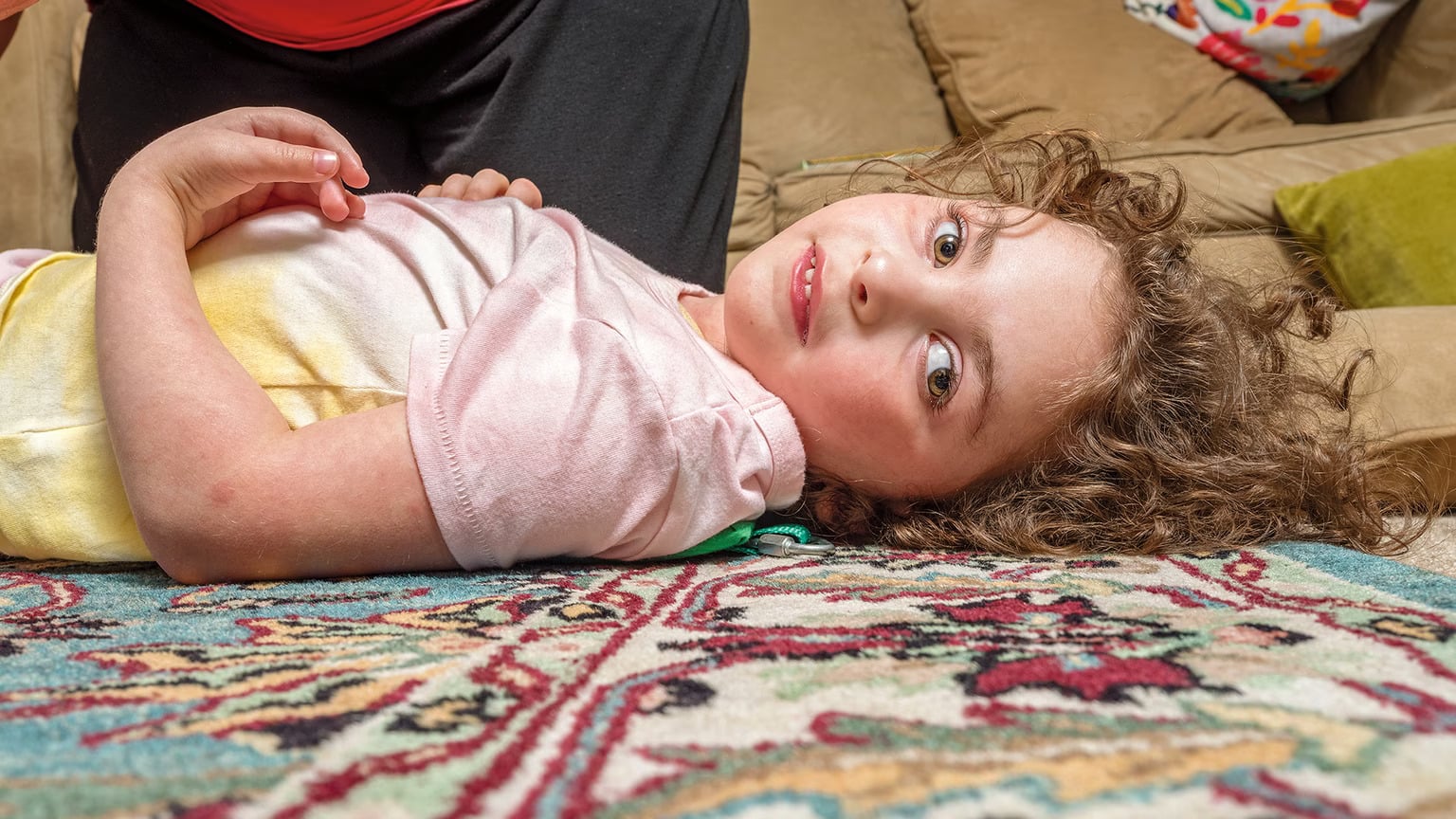
On a calm spring day in Austin, Texas, a little girl named Livie — full of energy, laughter, and childhood mischief — was playing under a pecan tree in her backyard. She was three, imaginative and fearless, mimicking doctors, dancing, singing.
Then a branch broke loose.
Thirty feet overhead.
A soft crack, a heavy whoosh.
And Livie was down.
No blood. No warning. Just the terrible, sudden silence of a body collapsing.
That single moment triggered a catastrophic traumatic brain injury (TBI). In the emergency room, medical staff saw the worst: a “blown pupil,” skull fractures, and swelling so severe it threatened to end her life.
For her parents — James and Lindsay Sulzer — both scientists, both used to solving problems with data and design — the world changed in an instant. Their daughter became the most urgent, personal project either of them had ever seen. But nothing in their careers had prepared them for this.
When Engineering Met Heartbreak — The Illusion of Control
James Sulzer wasn’t some random concerned dad. He was a rehab engineer — someone who designs robotic devices, exoskeletons, neuro-feedback machines, and other high-tech tools intended to help people recover from brain and nervous-system injuries.
In theory — or maybe in the abstract — he believed in technology. He built devices to restore movement after strokes. He worked on brain–computer interfaces. He stared down the challenge of neural repair with optimistic engineering confidence: identify the impairment, design the tool, fix the brain.
Until that day in the backyard. Suddenly, it wasn’t theory. It was real life. Real trauma. Real fear. Real loss.
When Livie emerged from her coma, she was alive — but not as the 3-year-old who once sang wildly and danced happily. Her speech was gone. Motor control was limited. Her body needed constant care. Her brain, once bursting with possibility, felt like a jumble of scrambled signals.
For James and Lindsay, engineering tools weren’t enough. The puppies of neural injuries were more complex than any blueprint.
From Lab to Life: The Realities of Pediatric Neurorehabilitation
Refusing to surrender to despair, the Sulzers began a journey combining science, love, and relentless trial — a path far beyond what typical rehabilitation protocols offer.
Their daughter became patient zero in a deeply personal research project, documented in a peer-reviewed paper titled Our Child’s TBI. The paper reads like part scientific report, part heartbreak memoir.
They tried everything:
- Electrodes on limbs and neck to detect tiny muscle twitches.
- A “muscle-signal–to–music” system: every faint activation made her favorite songs louder — a kind of biofeedback to encourage her brain to reconnect with her body.
- Suspension harnesses, standers, exercise regimens, stretching routines.
- Modified toys, adaptive devices, continuous monitoring.
Despite their efforts, results were slow. Too slow for modern medicine’s standards.
Within months, a painful realization sank in: Many of the fancy machines and gadgets hailed as “the future of rehab” weren’t necessarily the solution — at least, not alone.
Why High-Tech Rehab Often Falls Short
You might ask — if robotics and rehab engineering are so advanced, why didn’t they save Livie the way a doctor’s prescription might save a broken bone?
Because recovery after TBI isn’t like fixing a broken bone. It’s more like rebuilding a city after an earthquake — where every road, wire, and building may be cracked, miswired, or missing entirely.
Therapists who work with TBI patients know this: recovery depends not just on repetition and strength — but on motivation, emotional connection, trust, sensory feedback, consistency, and patience. Robots can assist with movement — but they can never replace empathy or the subtlety of human touch.
In their paper, the Sulzers laid it out plainly: before reaching for the shiny robot or the next gadget — ask the simple question: “Can this task be done with a mat, a table, and some toys?” Their “11 threshold questions” became a manifesto not against technology — but for responsible, human-centered design that respects the limits of machines.
Their approach forced the rehab-engineering community to reflect: are we designing for what’s technically possible — or what patients actually need?
A Year of Therapy, Hope, and Heartache: The Long Road of Recovery
By the time the first anniversary of the accident arrived, Livie’s condition remained serious:
- She could move a bit with assistance.
- She could “say yes” by pumping her arm, and “no” by stamping her foot.
- She could blink, track movement, show faint recognition.
- But many fundamental functions — walking, speaking, swallowing — were still out of reach.
Therapy was intense: dozens of hours per week, multiple interventions, near-constant care. Still, progress was agonizingly slow.
Yet it wasn’t just about physical recovery. Every flicker of improvement brought a wave of emotional impact — hope, despair, doubt, guilt, fear, and love — an emotional rollercoaster that reshaped the family’s entire life.
And in that journey, two lessons emerged:
- Sometimes, the simplest tools matter more than the flashiest ones. A mat, a toy, a table — combined with consistency and human care — can outperform expensive gadgets that are rarely used properly.
- Rehab success demands time, not convenience. Recovery isn’t linear. It’s long. It’s unpredictable. And often, it doesn’t fit neatly into insurance schedules, appointments, or clinical trial timelines.
What This Means for Families — And for the Future of Care
The Sulzers’ story isn’t just personal. It resonates for countless families facing TBI, disability, and long-term recovery — especially children.
Here’s what their experience reveals:
✅ Rehabilitation isn’t just medical — it’s human
The human touch, emotional support, consistency, and adaptability make the difference. Gadgets can help — but they don’t heal trauma.
✅ High-tech should complement, not replace, basic care
Before seeking the “next big thing,” exhausting simple, effective therapies may yield better results.
✅ Policymakers, insurers, and caregivers must rethink timelines
Brains heal slowly. Rehab needs to be continuous, long-term, and tailored — not bound by rigid insurance or institutional limits.
✅ Hope is personal — and sometimes messy
Recovery is rarely a straight line. Slow steps forward, regressions, plateaus — but each moment of progress can matter.
For families grappling with TBI, the Sulzers’ journey offers a map, not a guarantee. It’s a lesson in resilience, realism, and love.
Can Technology Still Be Part of the Answer? Yes — If Designed Wisely
The story doesn’t end with cynicism toward rehab engineering. Rather — it’s a call for smarter, human-centered design.
The Sulzers’ paper doesn’t reject technology. It redefines how it should be used. Their “11 threshold questions” challenge engineers to ask:
- Can the same result be achieved more cheaply or simply?
- Does the tool integrate smoothly with other therapies?
- Is it realistic to maintain daily?
- Does it respect the user’s comfort and dignity?
These questions are now taught in rehab-engineering labs around the world — and according to some experts, they may shape the next generation of assistive devices.
The future may still include exoskeletons, neural stimulators, VR rehab — but only if they serve humans, not replace them.
When Life Doesn’t Offer a Reset — How Families Learn to Adapt
Most tragic brain injuries don’t grant reset buttons. Instead, they demand adaptation, patience, and a willingness to rebuild slowly — often using tools not found in any lab or catalog:
- Daily routines customised to the patient’s needs
- Adaptive devices built from household items
- Creative therapy methods rooted in play, love, and persistence
- Emotional support networks spanning family, friends, therapists, caregivers
In such circumstances, technology becomes one tool among many — sometimes useful, sometimes irrelevant.
And in the Sulzers’ case, it wasn’t the hero. The real heroes were the basic tools, the devoted therapists, and the quiet consistency of human love and faith.
Why This Story Matters — Beyond One Family’s Pain and Hope
This is more than an article about a bad accident. It’s a reflection on medicine, technology, compassion, and what it means to care for the most vulnerable among us.
- It sheds light on how often high-tech solutions overshadow simple, human-centered care — and why that can be dangerous.
- It challenges assumptions about progress: sometimes, innovation isn’t about creating more complicated tools — but about asking the right questions, listening deeply to patients, and prioritizing usability, dignity, and human needs.
- It calls healthcare professionals, engineers, insurers, and policymakers to pay attention — to design with empathy, to fund long-term care, and to make room for slow progress.
Because some recoveries aren’t about returning to “normal.”
They’re about building a new normal — one brick at a time, with steady hands and hearts that won’t give up.
If You Were in Their Shoes — What Would You Do?
Imagine you’re a parent, a partner, a sibling — faced with the kind of injury that reduces everyday interactions to effortful challenges.
Would you:
- Chase the latest rehab gadget?
- Commit to months (or years) of slow therapy?
- Accept uncertainty as part of the process?
- Balance hope with realism?
Would you fight for every inch of progress… or silently mourn what’s lost?
The Sulzers chose both.
They fought.
They adapted.
They refused to accept “no.”
But they also accepted that recovery is messy, imperfect, and deeply personal.
And that honesty — more than any robot or device — may be the most powerful healer of all.
Final Takeaways: What Their Story Teaches Us
- Traumatic brain injuries in children require long-term, human-centered rehabilitation — not just gadgets.
- Therapies built around simple tools can often outperform complex machines when designed with empathy.
- Rehab engineering must be measured by usability, accessibility, and real-world impact — not just technological novelty.
- Families dealing with TBI deserve patience, support, and honest care — because recovery isn’t linear.
Sometimes the strongest machines aren’t built in labs. They’re built in living rooms.