
It began as a quiet murmur among worried farmers — aborted overseas orders, shrinking export checks, empty barns at grain elevators.
Then came the official words from the White House:
“We’re putting $12 billion on the table to help our farmers.”
Suddenly, hope soared.
Checks, not empty promises.
Relief, not worry.
But also questions — deep, uncomfortable ones.
Because this bailout isn’t just money.
It’s a statement.
A response to trade wars.
A gamble on an unpredictable future.
And a sign that farming in America might never look the same again.
Table of Contents
- Why the Bailout? A Sector Under Pressure
- Inside That $12 Billion: Who Gets the Money — And Who Gets Left Behind
- From Tariff Pain to Taxpayer Aid: The Irony Behind the Rescue
- What Farmers Say — Hope, Relief… and Concern for the Future
- The Broader Impact — From Food Prices to Economic Stability
- Is This the Start of a New Agricultural Era — or Just Another Cycle?
- What This Means for Everyday Americans — Not Just Farmers
- Before You Scroll Away — Ask Yourself This
Why the Bailout? A Sector Under Pressure
For months, American farmers — especially those growing soybeans, corn, wheat, cotton, and other row crops — have felt the squeeze.
- Exports to longstanding buyers like China have dropped sharply.
- Tariffs, trade tensions, and shifting global demand have made it harder to sell harvests.
- Rising input costs — seeds, fertilizer, fuel — cut into already razor-thin margins.
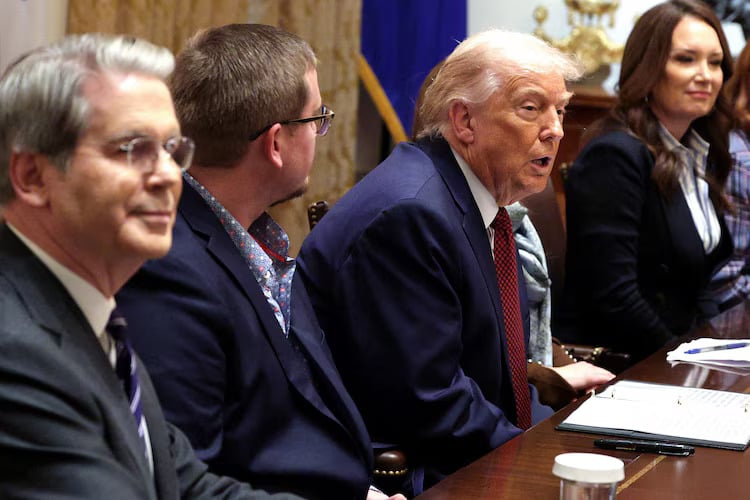
At the December 8, 2025 White House roundtable, those pressures were on full display.
So the president stepped in: $11 billion in one-time payments to row-crop farmers via a new “bridge payment” program, plus $1 billion for specialty crops and struggling smaller farms.
In his words: the funds will come from tariff revenues — the tens of billions collected from imports over the past years.
For many farmers, today’s bailout feels like tomorrow’s insurance.
Inside That $12 Billion: Who Gets the Money — And Who Gets Left Behind
On paper, it’s a massive package. But the devil, as always, lives in the details.
✅ What’s covered
- Row-crop producers (soybeans, corn, wheat, cotton, etc.) get the bulk: $11 billion.
- Specialty crop growers (fruits, vegetables, niche produce) get allocated $1 billion.
- Payments are one-time — bridge support, not long-term subsidies.
⚠️ What’s uncertain
- Many small farms and renters feel the squeeze hardest — but often lack the land equity or credit to weather downturns.
- Farmers themselves warn this may only be a short-term cushion, not a solution to deep-rooted trade and market issues.
- Critics ask: will repeated bailouts distort market incentives? Will farming become more reliant on government checks than on sustainable business planning?
So yes — the money helps. But it may also reshape the future of U.S. agriculture in ways we’re only beginning to see.
From Tariff Pain to Taxpayer Aid: The Irony Behind the Rescue
It’s a twist of fate few saw coming:
Policies that imposed high tariffs — intended to protect American industry and assert trade leverage — ended up hurting America’s farmers the most.
And now, the bailout draws from the same tariff revenues that helped trigger the crisis.
This creates a cycle few expected:
- Tariffs make U.S. exports less competitive.
- Farmers lose overseas buyers.
- Profitability collapses.
- Government steps in with a bailout funded by those same tariffs.
For many analysts, it raises bigger questions:
- Is this a sustainable model — or a recurring loop?
- Does it mask the deeper issues of international trade volatility, overreliance on foreign markets, and lack of farm diversification?
- Could taxpayer money end up underwriting systemic instability instead of long-term resilience?
In short: the $12 billion feels like a lifeline — but it may also be a warning sign for how fragile the system has become.
What Farmers Say — Hope, Relief… and Concern for the Future
In the White House roundtable, voices of relief echoed first.
“With this bridge payment, we’ll be able to farm another year.”
— Iowa farmer Cordt Holub.
Many thanked officials for responding quickly, noting that previous support — while helpful — came during deeper economic or pandemic pressures, not trade-driven market breakdowns.
Yet under the surface, uncertainty remains:
- Some farmers express worry that this aid is a temporary patch, not a plan.
- Younger farmers and those renting land say bailouts don’t address the root problem: volatile global demand and rising production costs.
- Larger, well-capitalized farms may benefit more — potentially accelerating consolidation and squeezing out small family farms.
For many, today’s check is a relief. But tomorrow? That’s still uncertain.
The Broader Impact — From Food Prices to Economic Stability
This bailout won’t just affect farms. Its ripples extend across the economy — and into the everyday lives of Americans.
🍞 Food & Grocery Prices
With farming under pressure, crop yields uncertain, and supply chains strained, food prices were already rising. Analysts warned of further spikes. But with support to keep farms operating, this bailout could help stabilize produce and grain supplies — perhaps calming grocery bills for a while.
🌾 Rural Economies & Communities
Small towns that rely on farming — equipment dealers, grain elevators, local services — were in danger of collapse if farms shuttered. The $12 billion may save not just farms, but entire communities.
📉 Trade Balance & Export Strategy
Rebuilding farmer capacity could help the U.S. regain its competitive edge — especially if trade negotiations stabilize. That might lead to regained soybean, corn, and grain exports.
But only if demand returns. Otherwise, the funds risk propping up oversupply and deepening dependency.
And finally…
🏛️ Fiscal Policy & Taxpayer Burden
More bailout programs mean bigger government spending.
More borrowing.
More pressure on public finances.
More debate — among lawmakers, economists, citizens — about when aid becomes incentive distortion.
Is This the Start of a New Agricultural Era — or Just Another Cycle?
The $12 billion farm aid is historic.
It could represent:
- A turning point toward short-term stabilization, or
- The beginning of a long-term restructuring of U.S. agriculture.
It might drive innovations:
- crop diversification
- sustainable farming
- domestic trade expansion
- investment in supply-chain resilience
Or it could feed a cycle of dependency, consolidation, and government intervention.
What’s clear: the next few years will matter more than any single bailout.
Farmers, investors, communities — they’re watching.
Because the trends this winter could shape their lives for decades.
What This Means for Everyday Americans — Not Just Farmers
You don’t need to own a farm to feel the effects of this bailout.
- Your grocery bill might stay steady instead of rising.
- Rural towns near you may survive instead of shuttering.
- The trade balance, export markets, and national economy could stabilize.
- But at the same time — you might see higher taxes, national debt, or political tension over the cost.
In short — this isn’t just farm policy.
It’s economic policy.
It’s trade policy.
It’s food security.
It’s about who we are as a country — and what we value.
Before You Scroll Away — Ask Yourself This
If you were a farmer, and your livelihood depended on volatile global markets, rising costs, and unpredictable trade policies…
Would you feel safer with a one-time bailout check — or with systemic reforms that stabilize demand and prices for years?
If you were a grocery store owner, and your customers complained about high food costs every month…
Would you want the government to keep stepping in — or would you rather see long-term changes that build sustainable price stability?
Because this $12 billion isn’t just emergency relief.
It’s a crossroad.
And the direction we pick now will shape the future of food — and security — for an entire generation.