
Table of Contents
The Defense Trump Chose to Make
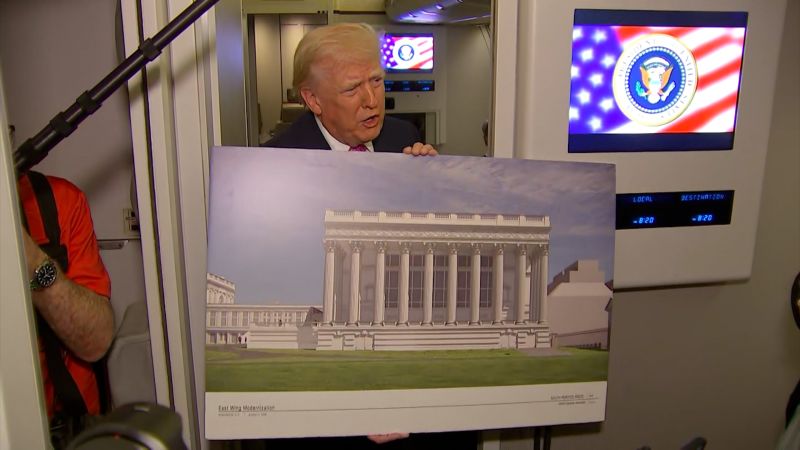
Trump’s defense of the demolition rests on a specific argument. He has said that after extensive study with top architects, the decision was made that the East Wing was too compromised by decades of changes to preserve in a meaningful way. According to coverage of his recent comments, Trump argued that much of the original character had long since been altered, including changes to its columns and an additional story added in the late 1940s. In his telling, the East Wing was not an untouchable historic jewel, but a much modified and relatively minor building standing in the way of a far grander, more functional replacement.
That argument is politically useful because it turns a demolition into a restoration of dignity rather than an act of destruction. If the East Wing can be framed as already diluted, then tearing it down becomes easier to sell. Trump has also used a familiar tactic in his public remarks by combining defensiveness with bravado. He did not merely say the project was necessary. He said the finished ballroom could be among the greatest in the world. That language matters because it reveals the deeper instinct behind the project. This is not just about adding space for events. It is about leaving behind something grand, visible, and unmistakably associated with his personal aesthetic.
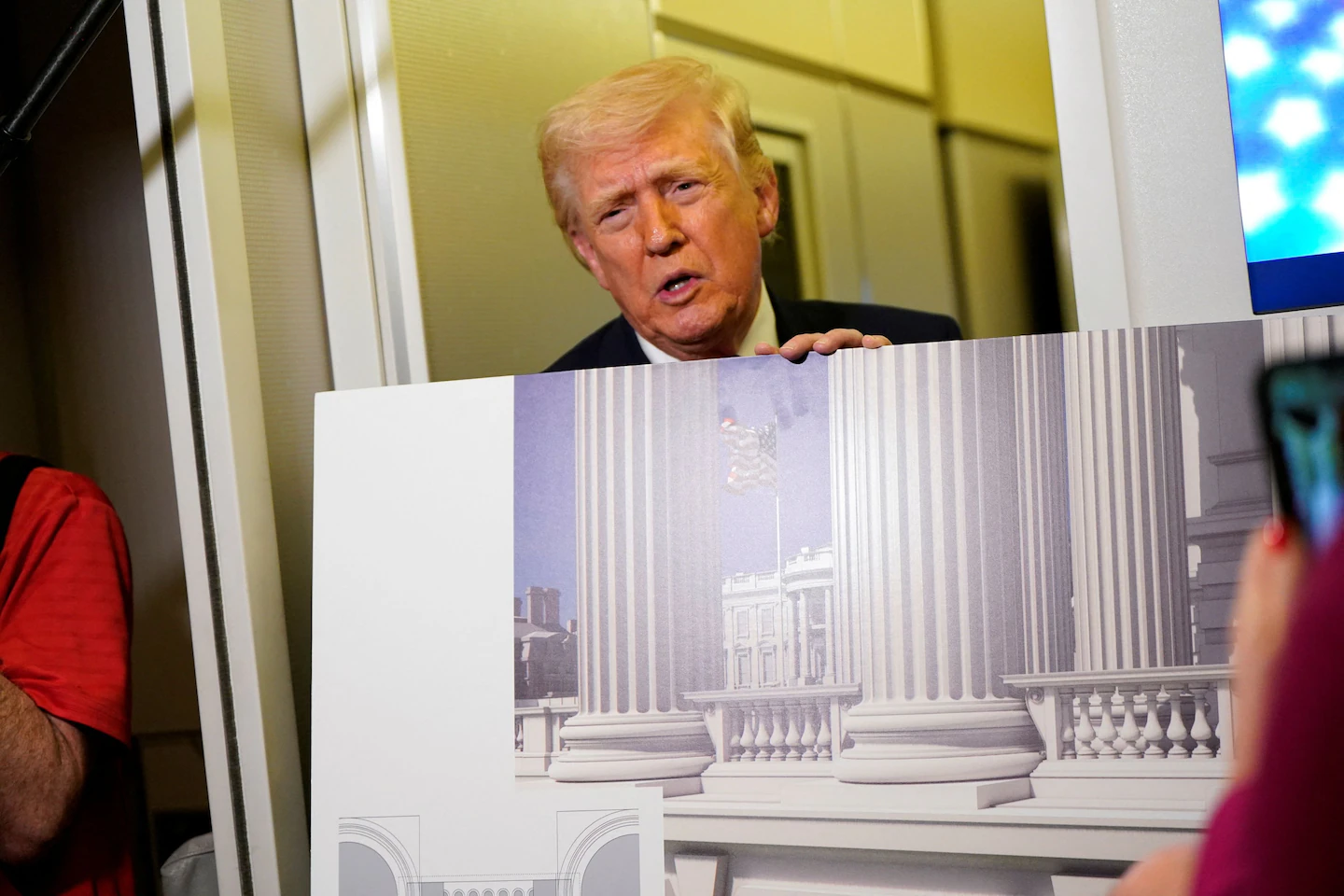
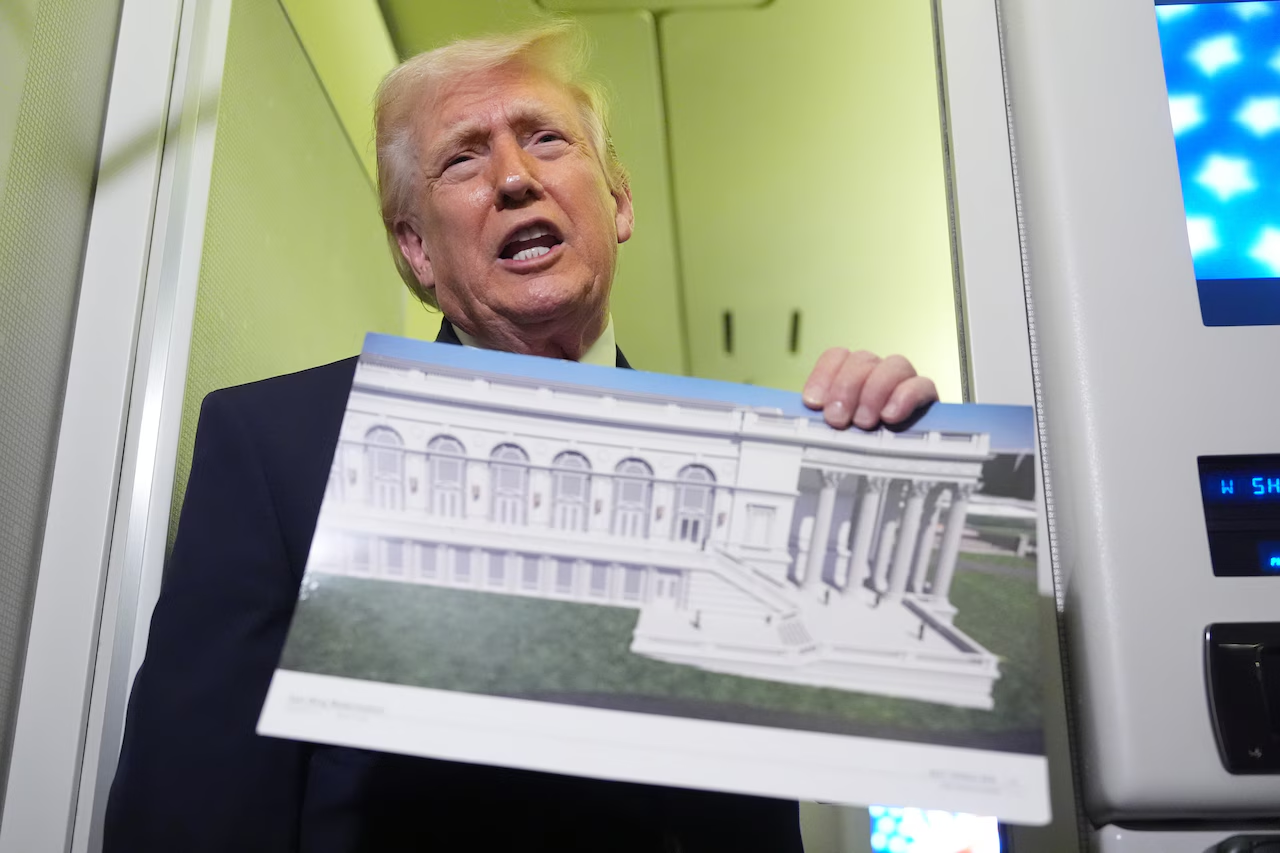
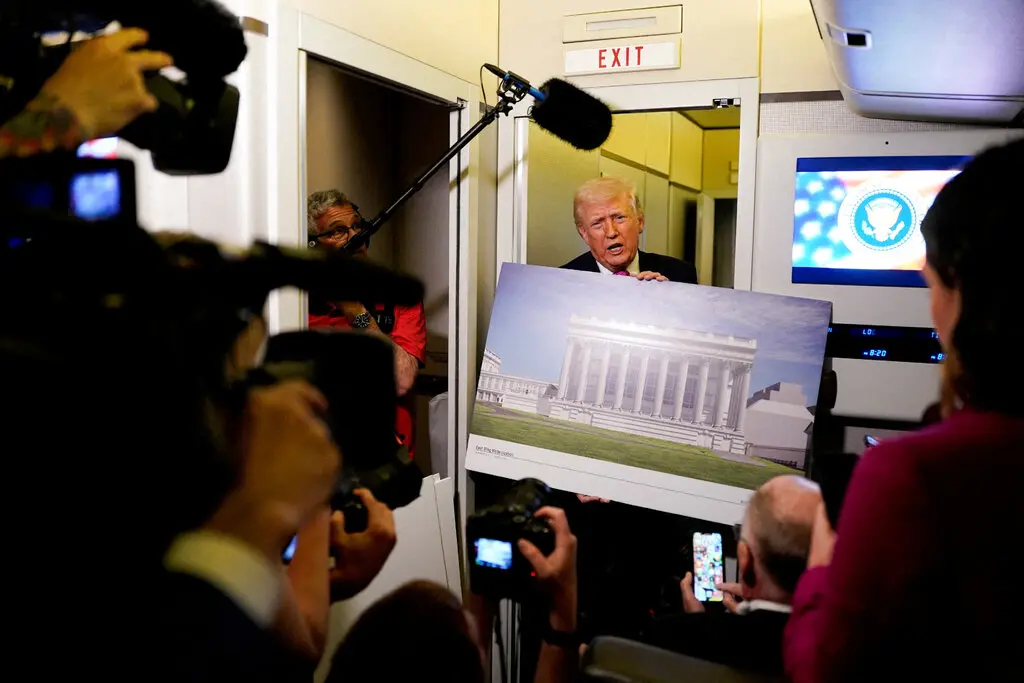
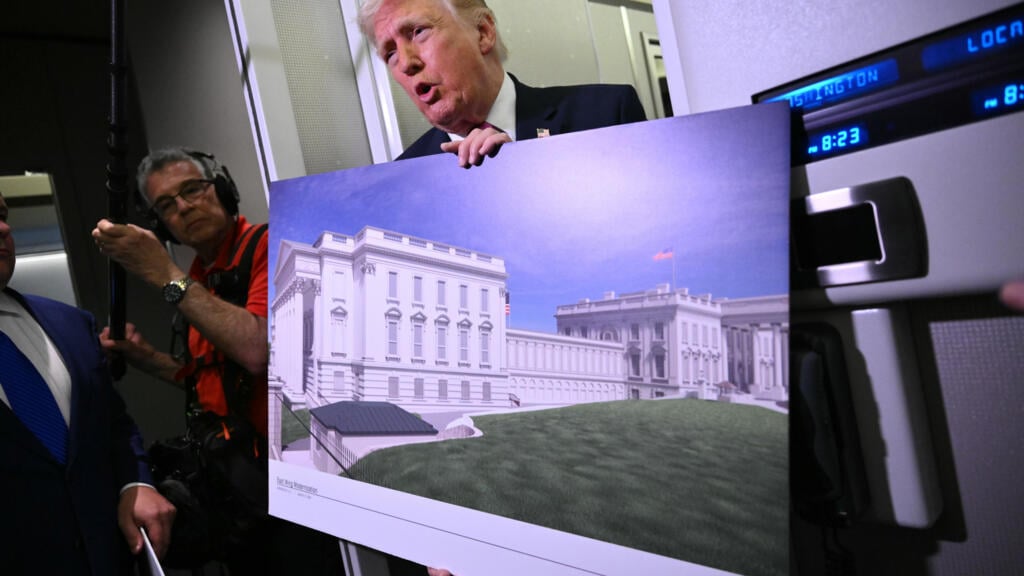
The paper renderings he displayed were part of that effort. They transformed the abstract controversy into a sales pitch. Instead of discussing preservation law or approval process details, Trump put the focus on imagery, scale, and aspiration. He was inviting the public to imagine the finished grandeur rather than dwell on the rubble already visible on the White House grounds. That is often how high profile development fights are won or lost: by shifting the public imagination from what has been removed to what is promised in its place.
What Has Actually Been Torn Down
Whatever the political framing, the physical reality is no longer theoretical. Reuters reported in January that the East Wing was being demolished as part of the ballroom project, and AP later published photos showing the wing demolished as Trump moved ahead with construction. That visual evidence has been crucial to the backlash because it undercut earlier assurances that the ballroom would not meaningfully interfere with the White House’s current structure. To critics, the demolition confirmed their suspicion that the project was always more invasive than its defenders initially suggested.
The East Wing has never carried the same symbolic weight as the White House residence itself, but it is still a recognized and historic part of the broader complex. Over time it housed offices, supported ceremonial operations, and formed part of the visual balance of the executive mansion. Even if altered over the decades, its destruction is not a minor change to a garden outbuilding. It is the removal of one of the best known components of the White House grounds. That is why the image of demolition equipment on site carried such force. It made the project feel less like renovation and more like rupture.
For preservationists, this is where the symbolic damage deepens. Historic integrity is not measured only by whether every brick remains in original condition. Historic sites accumulate value through continuity, memory, and relation to the larger whole. Even a much altered building can matter because of what it has been part of for generations. Trump’s case is that the East Wing was too transformed to be protected sentimentally. His opponents answer that this is precisely how fragile heritage gets rationalized away.
The Cost Keeps Rising and So Does the Scrutiny
One of the most striking features of the controversy is the project’s shifting price tag. Earlier reporting described the ballroom as a $300 million project, but more recent Reuters and Washington Post coverage place the cost at roughly $400 million. That increase alone has added fuel to the criticism, especially because the ballroom is being promoted during a period of broader public anxiety over prices, international conflict, and federal priorities. The cost is no longer just a construction fact. It has become part of the political message opponents are trying to drive home.
Trump and the White House have argued that the ballroom is being funded privately, not with taxpayer dollars, which is meant to blunt one of the strongest lines of attack. But that has not ended scrutiny. Critics have pointed to concerns about donors, approvals, and the implications of allowing wealthy private interests to bankroll a major alteration of the presidential residence. Reuters reported that the White House had been looking for additional donors and that the project prompted concerns over transparency and review procedures.
This is why the ballroom debate is not just about architecture or even expense. It is also about process. Who gets to redesign the White House? Under what rules? With what level of public oversight? And how should privately backed prestige projects at the center of American political life be judged? Even people who might like the idea of a more functional state event space can still be uneasy about the way this project has been advanced.
A Design That Has Become a Public Target
The backlash has not been limited to preservation concerns. The design itself has drawn widespread mockery. Coverage has highlighted criticism of features such as fake windows, blocked views, and a staircase that observers described as leading nowhere in early versions of the plan. These critiques matter because they shift the argument from values to competence. It is one thing to argue over whether a ballroom should exist. It is another to suggest that the ballroom, even on its own terms, is architecturally awkward or visually overblown.
Trump has tried to counter this by saying updated renderings improved the design, including removing some of the most mocked elements. That suggests the ridicule landed hard enough to require visible changes. It also reveals a recurring pattern in highly politicized architecture. Once a building becomes a national controversy, design details that might otherwise be niche concerns become symbols in themselves. A stairway, a window line, a blocked façade view, all begin to stand in for larger arguments about vanity, haste, and power.
The danger for Trump is that design criticism can be more damaging than ideological criticism because it reaches beyond his opponents. Someone who does not care much about preservation law may still laugh at a grand staircase to nowhere. Someone indifferent to donor process questions may still think the scale looks excessive. Once a project becomes visually easy to mock, defending it becomes much harder, no matter how forcefully its sponsor praises its magnificence.
Why Supporters Say the Ballroom Is Necessary
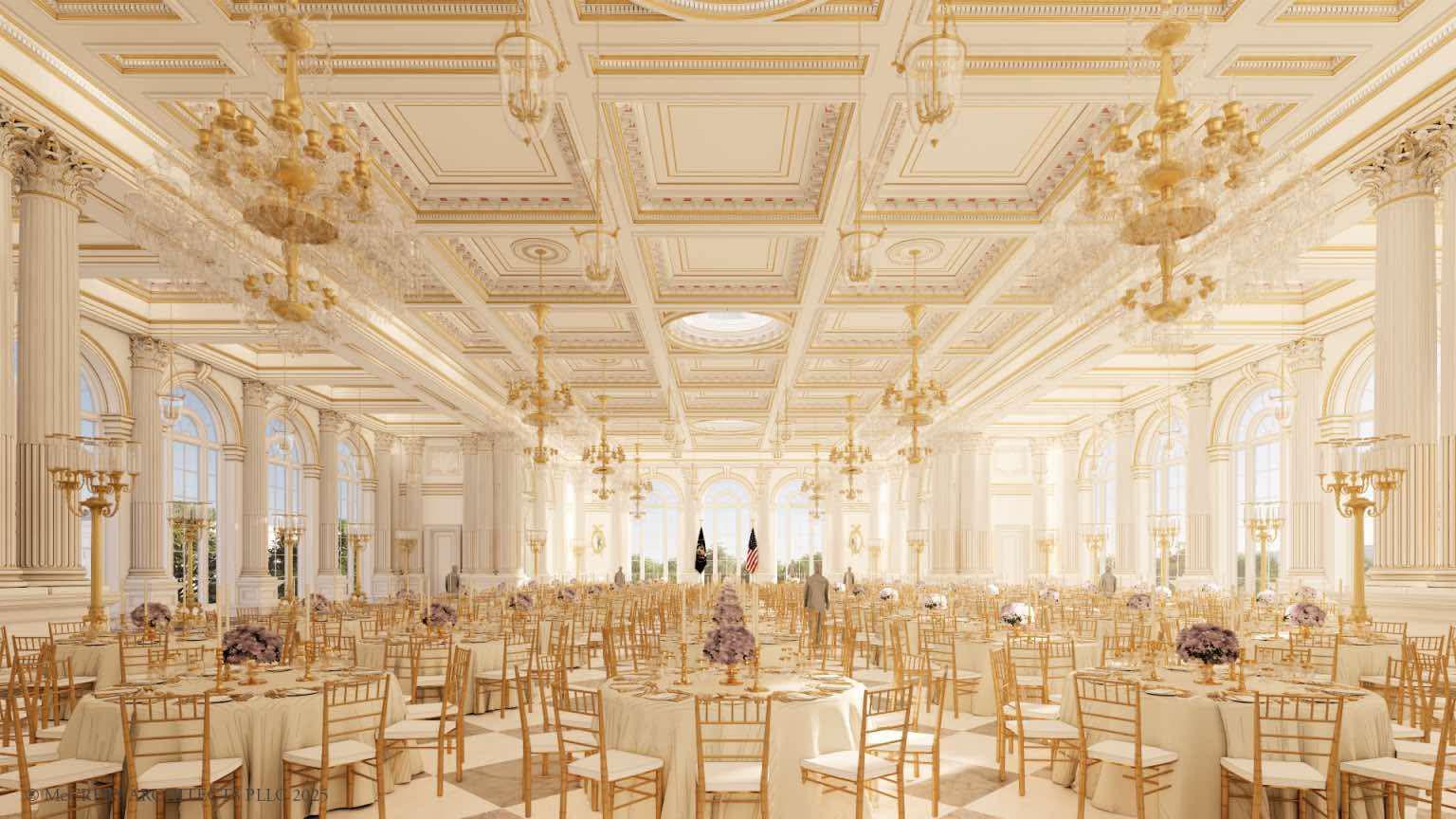
For Trump and his supporters, however, the ballroom remains defensible on practical as well as symbolic grounds. He has argued that the White House needs a better space for large events and has long complained that official receptions often rely on temporary tents and other makeshift arrangements. Reuters reported that the administration has pitched the ballroom as a needed improvement for hosting dignitaries and formal gatherings, while recent accounts also describe the project as tied to significant security enhancements, including an underground military complex beneath the ballroom site.
That security angle has added a new layer to the debate. Reuters reported this week that the ballroom project would include a massive military complex and upgraded hardened features. Trump himself has described the structure as incorporating bulletproof and drone resistant elements. If those claims are accurate, supporters can argue that the project is not just a vanity hall but part of a broader modernization of presidential event and protection infrastructure.
Still, even this defense is double edged. The more the administration emphasizes the hidden military and security dimensions of the project, the more critics ask whether a ballroom is being used as a public facing cover for a much larger and less transparent undertaking. What supporters frame as prudent modernization, opponents can frame as secrecy wrapped in gilded ceremony.
The White House as a Battleground of Meaning
What makes this story unusually potent is that the White House is not just another building. It is a national symbol, a living workplace, a museum of executive memory, and a stage set for American civic identity. Altering it at this scale means stepping directly into questions of who gets to shape the nation’s most visible architecture and what those choices say about power. Trump clearly sees the ballroom as a statement of strength, prestige, and permanence. His critics see it as an act of ego, a wrecking ball approach to public heritage, and a physical expression of excess.
This is why the political backlash has been so sharp. Democratic lawmakers and public critics have used the project to symbolize a broader indifference to public hardship, arguing that while many Americans worry about everyday costs, the president is consumed with building a lavish ceremonial hall on the White House grounds. Whether that line of attack sticks long term may depend less on the architecture itself than on what else is happening in the country while construction continues. But for now, the contrast has proven rhetorically powerful.
What This Fight May Come to Represent
The controversy over the East Wing demolition is unlikely to fade soon because it compresses several larger arguments into one tangible image. There is the argument over historical preservation. There is the argument over executive power and oversight. There is the argument over money, donors, and priorities. And there is the argument over political style itself, whether government symbols should be treated with restraint or remade according to a leader’s grand personal vision.
Trump’s own rhetoric suggests he wants the ballroom remembered as a triumph, a prestigious upgrade future presidents will be grateful to inherit. But because the project began with demolition, dispute, and a very public effort to justify what many people had just watched happen with their own eyes, it may never be judged purely on the beauty of the finished hall. It will also be judged on what had to be torn down, how it was approved, who paid for it, and what it revealed about the current presidency’s instinct for grandeur.
In that sense, the paper pictures Trump held up were more than design drawings. They were an attempt to persuade the country that replacement is better than preservation, that spectacle can quiet unease, and that one of the most famous addresses in the world should bend to a new vision because the finished result will justify the cost. Whether Americans accept that argument is still very much an open question.