
Table of Contents
The Legal Change That Opened the Floodgates
For years, Canada’s citizenship by descent rules were constrained by what the government calls the first generation limit. In simple terms, if a Canadian citizen was born or adopted abroad, they often could not automatically pass citizenship to a child who was also born abroad. That limit became the subject of legal and political challenge, and in late 2025 Canada passed Bill C-3 to change the law. The government says the new legislation extends access to citizenship to remaining Lost Canadians, their descendants, and people born or adopted abroad to a Canadian parent in the second or later generation before the law took effect.
The significance of that change is easy to miss until it is translated into family stories. A person whose Canadian connection runs through a parent was often already covered under older rules. But for those whose connection runs through a grandparent, great grandparent, or another ancestor in an otherwise unbroken line, the new framework may now create a path that did not exist before. Canada’s official guidance says the rule change removed the first generation limit in some situations, and that people who believe they became citizens because of Bill C-3 must apply for a citizenship certificate to confirm it officially.
That distinction matters. The new law does not mean everyone with a Canadian ancestor automatically has a passport waiting. Eligibility still depends on the details of the lineage, whether citizenship was retained through the chain, and whether there was a break such as renunciation or another legal interruption. But the shift is significant enough that immigration professionals now say multigenerational claims that once failed under the old rule may now succeed.
Why So Many Americans Are Suddenly Interested
The legal change alone does not explain the emotional intensity of this story. For many Americans, Canadian citizenship is not being pursued as an immediate relocation plan but as what applicants themselves often describe as a fallback, a backup, or a “just in case” option. Recent reporting on Americans pursuing citizenship by descent has featured people who feel politically exhausted, socially alienated, or anxious about the future and who now see Canadian citizenship as a form of insurance.
That mood seems to be reflected in application patterns. According to Canada’s official website, a person who thinks they became a citizen because of Bill C-3 needs a citizenship certificate to prove it. The current processing time for a citizenship certificate is about 10 months, according to Immigration, Refugees and Citizenship Canada. Separate March 2026 reporting based on IRCC figures says about 50,900 citizenship certificate applications were then waiting for a decision.
Those numbers do not by themselves prove a mass American exodus. But they do show that demand is substantial, and it fits with a broader pattern of increased record retrieval and ancestry research. Recent reporting citing the National Library and Archives of Québec said the archive received 100 requests from the United States for marriage, death, and baptismal records in February 2025, compared with 1,500 such requests in February 2026. That kind of jump suggests that many people are not merely talking about eligibility but actively trying to document it.
A Story About Politics, But Not Only Politics
It would be easy to frame this entirely as a political story about disillusioned Americans looking north. That explanation is part of the picture, but it is not the whole picture. Immigration professionals quoted in recent reports have emphasized that every U.S. election cycle brings some number of angry or anxious inquiries from Americans promising to move to Canada. Usually that interest peaks and fades quickly. This time, however, consultants say the demand has remained unusually steady since late 2024, which they describe as unprecedented in their experience.
Even so, not every application is driven by fear or politics. Many people are applying because citizenship by descent offers practical and emotional benefits that long predate the current political moment. Family reunification is one reason. Education is another. Employment mobility is another. And for many descendants of earlier waves of migration from Canada into New England and other parts of the United States, the appeal is more personal than ideological. Citizenship can feel like recognition of a family story that was never entirely erased, only blurred by time and law.
That helps explain why this issue has resonated so strongly in places where French Canadian, Acadian, or other Canadian family lines are common. In those communities, citizenship is not always experienced as a foreign status being acquired for the first time. Sometimes it feels more like a dormant inheritance being recovered.
The Meaning of “Lost Canadians”

One of the most important phrases in this debate is “Lost Canadians.” The Canadian government uses it to describe people who lost or never obtained citizenship because of older and now outdated rules. Bill C-3 was framed in part as a fairness measure to restore citizenship access to people excluded by those older provisions. That framing is crucial because it changes the moral tone of the debate. The law is not being sold only as an expansion. It is being presented as a correction.
The Ontario Superior Court of Justice had ruled in December 2023 that the first generation limit was unconstitutional for many people, and the Canadian government introduced interim measures in 2025 before eventually passing Bill C-3 later that year. Seen in that context, the wave of new applications is not simply opportunistic behavior triggered by headlines. It is also the delayed result of a legal system finally changing course after courts found the old rule discriminatory or constitutionally defective in important respects.
That is why defenders of the new law often stress equity. The point, in their telling, is not to create a special fast lane for Americans. It is to acknowledge that a Canadian parent, grandparent, or great grandparent may still matter under the law, and that people excluded under the previous rule should not stay excluded simply because the statute lagged behind constitutional reality.
Not Everyone in Canada Is Enthusiastic
Still, the backlash is real. Public discussion around the law has included complaints from some Canadians who argue that easing citizenship by descent for Americans or other descendants abroad may feel unfair when immigrants living and working in Canada often face long and complicated administrative processes of their own. That tension is especially sharp when Americans openly describe Canada as a Plan B rather than as a country they are immediately ready to live in, contribute to, or build a life inside.
This criticism taps into a deeper discomfort about what citizenship means. Is it primarily a legal inheritance, something that can pass through bloodlines across borders and generations? Or is it a status that should be rooted more firmly in residence, contribution, and present day connection? Bill C-3 answers that question in one direction, at least for some categories of descent. But the emotional debate does not end just because the legislation has passed.
Defenders of the law respond that citizenship by descent has always been part of Canada’s legal framework and that Bill C-3 simply makes the system more coherent and fair. Canada’s own explanation of the new rules emphasizes that some people in the second generation or later born abroad are now citizens in certain situations, and that for children born abroad after the law took effect, a Canadian parent born abroad can pass on citizenship if they can show three years of physical presence in Canada before the child’s birth or adoption. That structure suggests the government is trying to balance inherited status with a substantial connection going forward.
The Paperwork Reality Behind the Dream
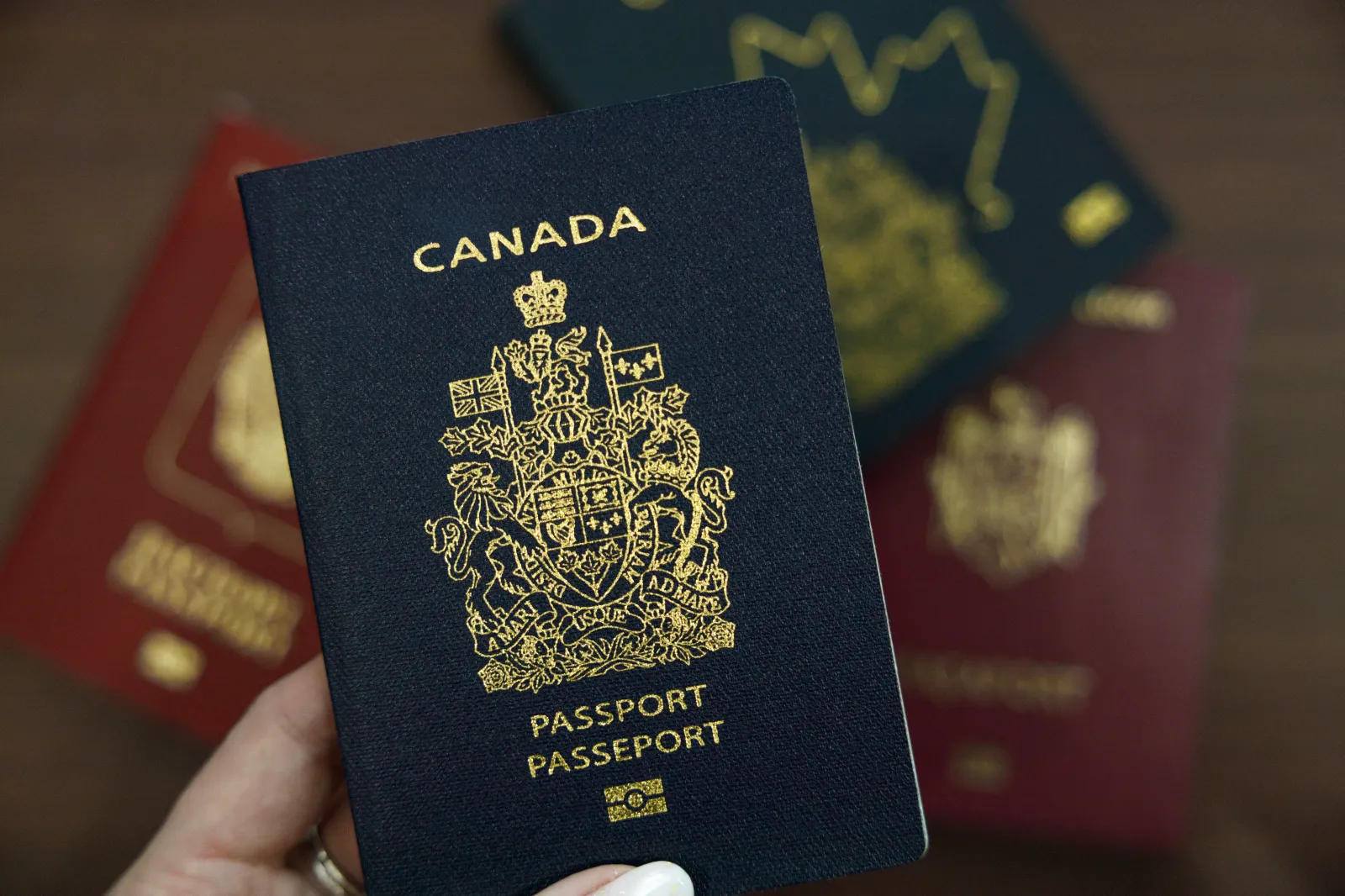
For all the romance surrounding ancestry, the path itself is deeply bureaucratic. A family story is not enough. Applicants must document each link in the chain. That can require birth certificates, marriage records, name change documents, baptism records, naturalization records, and proof that a Canadian ancestor held and passed on citizenship without interruption. In many cases, records must be gathered from multiple jurisdictions across decades.
That administrative burden helps explain the rush to archives. Once people realize they may qualify, the next question is almost always documentary rather than emotional. Can they prove it? Is there a gap in the line? Did a name change obscure the connection? Did an ancestor renounce citizenship or lose it under older rules? Those details can determine whether an inspiring family discovery becomes a legal reality or a dead end.
The waiting period adds another layer of tension. IRCC’s published processing time for a citizenship certificate is about 10 months, and officials note that times can vary depending on demand and complexity. In a moment when public interest is rising and more people are discovering they may qualify, that wait can feel like both a bottleneck and a test of patience.
More Than an Immigration Story
What makes this story so compelling is that it sits at the intersection of law, identity, and mood. On one level, it is an immigration and citizenship story driven by a statute change. On another, it is a story about how people respond to instability by searching backward into family history for a forward looking option. The image is striking. In order to imagine a safer future, many Americans are digging into baptismal ledgers, old family names, and ancestral towns.
Canada’s new citizenship rules do not guarantee a new life for everyone who applies. Many will discover that their lineage does not qualify, or that the paperwork is too incomplete, or that the waiting period is longer than expected. But the symbolic effect of Bill C-3 is already clear. It has made Canadian citizenship by descent feel newly reachable to a far wider group of people, and that alone has changed behavior.
In the end, the phrase “just in case” may be the clearest summary of this moment. It captures fear, caution, curiosity, and pragmatism all at once. For some Americans, citizenship is an exit strategy. For others, it is a reconnection with family history. For still others, it is simply an option they would rather have than wish they had. And as long as that feeling persists, the line of people searching old records for a Canadian ancestor is unlikely to shrink anytime soon.