
Table of Contents
A Larger‑Than‑Life Statue With Immediate Impact
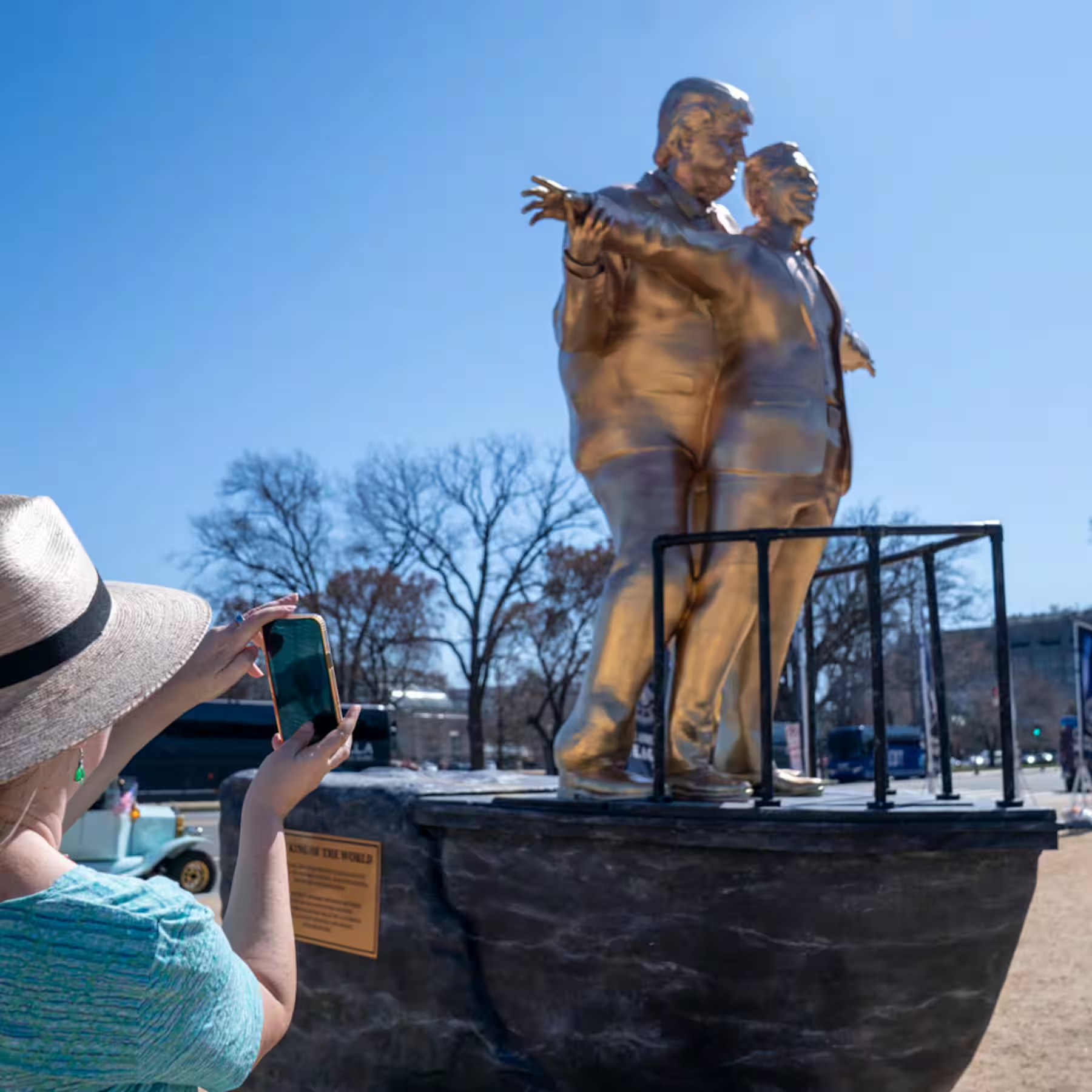
On March 10, 2026, visitors to the National Mall encountered an unexpected sight: a towering gold sculpture showing Trump and Epstein in a tableau famously associated with Titanic — a moment of grandeur and bravado just before tragedy strikes.
Unlike the usual historic memorials and monuments that line the Mall, this piece was clearly not an official installation. Instead, it was installed by The Secret Handshake, an anonymous protest art collective known for staging provocative works that challenge political figures and spark conversations about the relationships between wealth, power and ethics.
The sculpture’s title, “King of the World,” references the now‑infamous line from Titanic and reframes it as a biting satirical statement about public perception and celebrity power. It did not take long for the installation to attract both applause and condemnation from passersby and online audiences alike.
What the Statue Shows
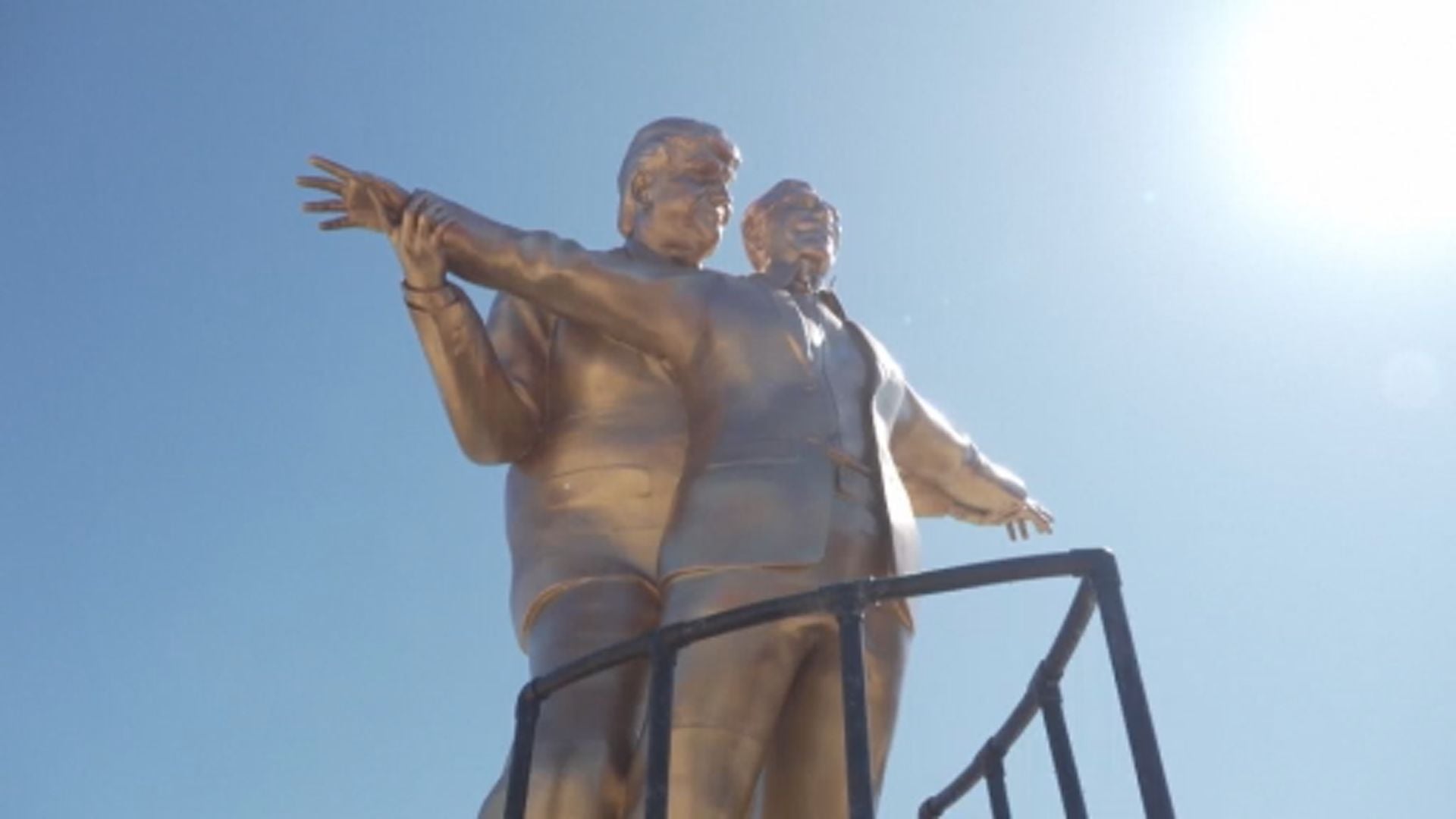
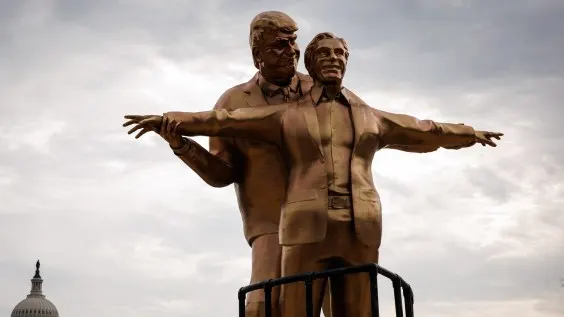
Placed near the west side of the U.S. Capitol grounds, the figure of Trump is depicted with a broad stance and arms spread behind that of Epstein — a visual echo of the romantic pose from Titanic in which the characters Jack and Rose stand at the ship’s prow.
A plaque at the statue’s base describes it in satirical terms, calling the fictional Titanic love story one built on “luxurious travel, raucous parties and secret nude sketches,” and then applying that imagery to Trump and Epstein’s real‑world association.
The plaque explicitly reads: “This monument honors the bond between Donald Trump and Jeffrey Epstein, a friendship seemingly built on luxurious travel, raucous parties and secret nude sketches.”
Seen this way, the artwork evokes laughter, disbelief, discomfort and curiosity — all of which are clearly part of the artists’ intention. It turns the National Mall into a stage for political art and commentary rather than only a place of official memorialization.
Anonymous and Intentional
The group behind this piece, The Secret Handshake, has made a name for itself by creating unconventional protest sculptures that blur the line between public art and political commentary. They typically operate anonymously, seeking to keep the focus on their message rather than their identities.
Earlier installations by the same collective include a sculpture titled Best Friends Forever — depicting Trump and Epstein holding hands — which appeared on the National Mall in September 2025 before being removed by authorities. That earlier work also stirred controversy and debate about artistic expression and political critique.
In the past, some of their pieces were installed with permits obtained through intermediaries, allowing them to remain in public view for a limited time before removal. For this new Titanic-inspired work, it’s not yet clear how long it will stand or what permits might have been used — a deliberate mystery that further fuels public intrigue.
From Laughter to Outrage
As often happens with provocative public art, reactions have been mixed. Many visitors to the National Mall snapped photographs, posted about it on social media and shared their responses on platforms like X and Instagram. Some described the statue as humorous and thought‑provoking, pointing to the striking visual contrast between iconic Hollywood imagery and real‑world public figures.
Others expressed discomfort or offense, saying the portrayal was in poor taste, glamorized problematic figures or distracted from more serious conversations. The fact that it appears on the National Mall — a site usually associated with solemn remembrance and national heritage — has made the installation feel especially striking or even irreverent to some observers.
Still others saw the artwork as a powerful political statement — a way for anonymous citizens to voice critique in a space that is otherwise dominated by official monuments and narratives. In an era of intense political polarization and debate over public memory, this kind of intervention highlights how public space can become a forum for dissent and public expression.
Dismissal and Condemnation
Government officials and spokespeople have not been silent about the statue. A White House spokesperson dismissed the installation as a politically biased stunt, arguing that focusing on such artwork detracts from substantive national issues. Some conservative voices called it an unfair caricature.
Public authorities like the National Park Service, which manages the National Mall, have a complicated role: balancing First Amendment protections of free expression with rules governing public space, safety and permits. In the past, similar installations were removed by the United States Park Police shortly after appearing, though some later returned in other locations with or without new permits.
Whether this latest piece will remain on display for a long period or be taken down quickly remains uncertain, but even if temporary, its presence forces a moment of public engagement and debate.
Pop Culture Meets Political Commentary

The Titanic reference itself is rich in symbolic meaning. In the 1997 James Cameron film, the scene at the bow of the ship — with characters Jack and Rose — represents freedom, youth, love and eventual tragedy. For the protest artists, choosing this imagery to depict Trump and Epstein transforms a romantic pop culture moment into a pointed critique about power, scandal, privilege, secrecy and betrayal.
By equating that iconic pose with figures whose real‑world history includes documented association and controversial encounters, the artists underscore themes of societal scrutiny and unresolved questions. The use of satirical art in public spaces can be a way to confront collective memory and challenge dominant narratives — something that has become increasingly common in civic discourse.
Previous Trump‑Epstein Installations
This latest Titanic installation is not the first time that Trump and Epstein have been the subject of public art in Washington. In September 2025, the same collective installed Best Friends Forever, a statue depicting the two figures holding hands near the Capitol. That piece was removed by authorities within 24 hours, though it was later reinstalled in other spaces.
The recurrence of such provocative works points to a pattern in how artists and activists are using public art to comment on unresolved questions around Trump’s association with Epstein, which has long been a subject of political scrutiny, media investigation and public debate.
What It All Means
In democratic societies, public spaces like the National Mall have historically been sites of both official memorials and protest. From civil rights marches to political demonstrations, these areas are stages for civic engagement and collective memory. This Titanic-inspired statue continues that tradition, using artistic creativity to invite discussion about history, power, narrative and accountability.
While it may be controversial, its presence reminds us that public art can function not only as decoration but as dialogue — a way of reflecting societal tensions, questioning authority and pushing viewers to think beyond surface impressions.
What Comes Next
As the statue continues to spark conversation and coverage, several outcomes are possible. It might be removed quickly by authorities, it might stay for a period as allowed under a permit, or it could reappear in another prominent public setting.
More importantly, no matter how long it stands, it has already succeeded in generating thought, debate and engagement — exactly the kinds of reactions that protest art seeks to provoke.
In an era where political tension and public discourse are deeply intertwined with cultural expression, installations like this one show that art continues to be an active player in how societies reflect on power, memory and shared values.
When Art Forces Us to Think
The appearance of the Trump‑Epstein Titanic statue on the National Mall is a vivid reminder that art is never neutral — especially in public spaces where it interacts with national symbols, collective memory and political identity. Whether viewers find it humorous, offensive, insightful or unsettling, its existence underscores that public dialogue often extends beyond speeches and headlines into the realm of symbolic creativity.