
Table of Contents
- A Night of Protest Inside the Capitol
- Trump’s Words Revived an Old Political Script
- Why Omar’s Response Resonated Beyond One Speech
- Tlaib’s Defiance Showed the Clash Was Also Cultural
- The Controversy Did Not Happen in Isolation
- Protest, Patriotism, and the Meaning of Congress
- Why the Fallout May Last Longer Than the News Cycle
- A Political Flashpoint That Exposed a Deeper National Question
A Night of Protest Inside the Capitol
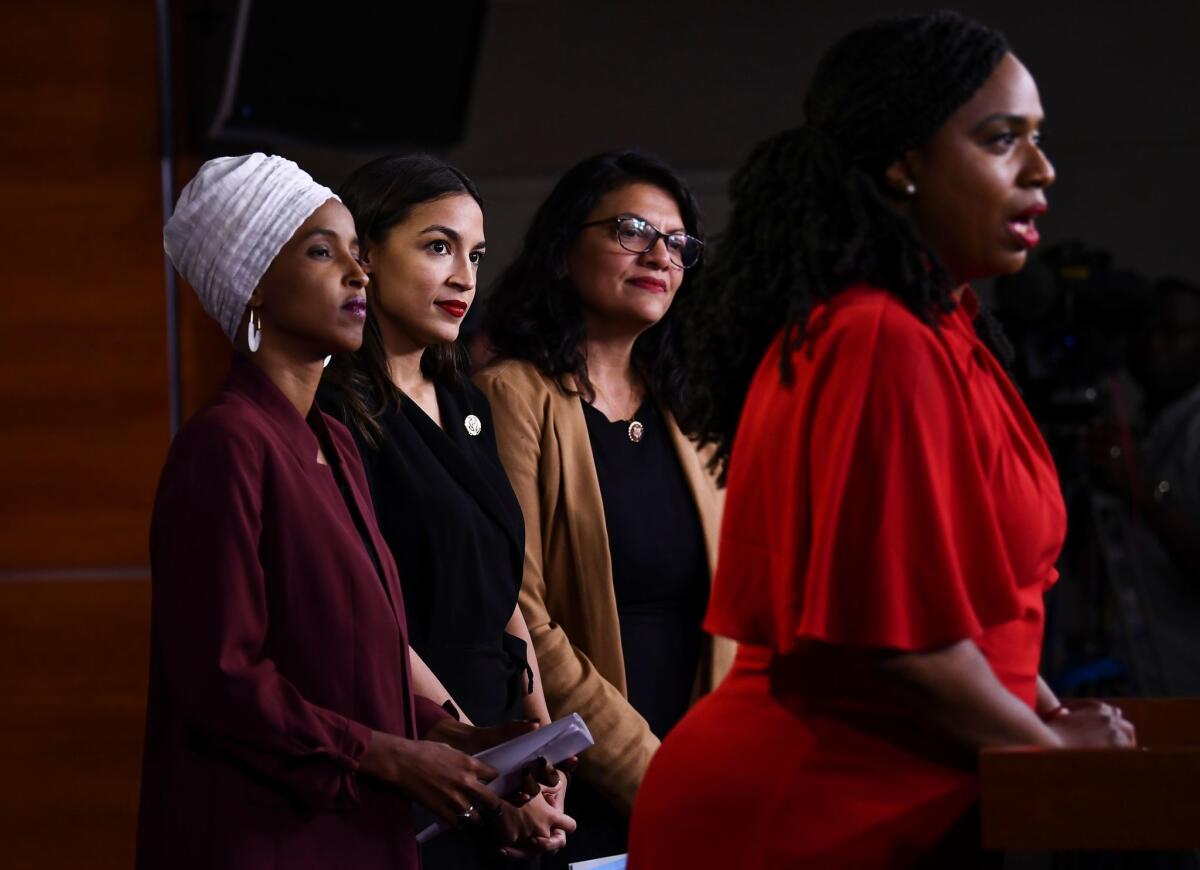
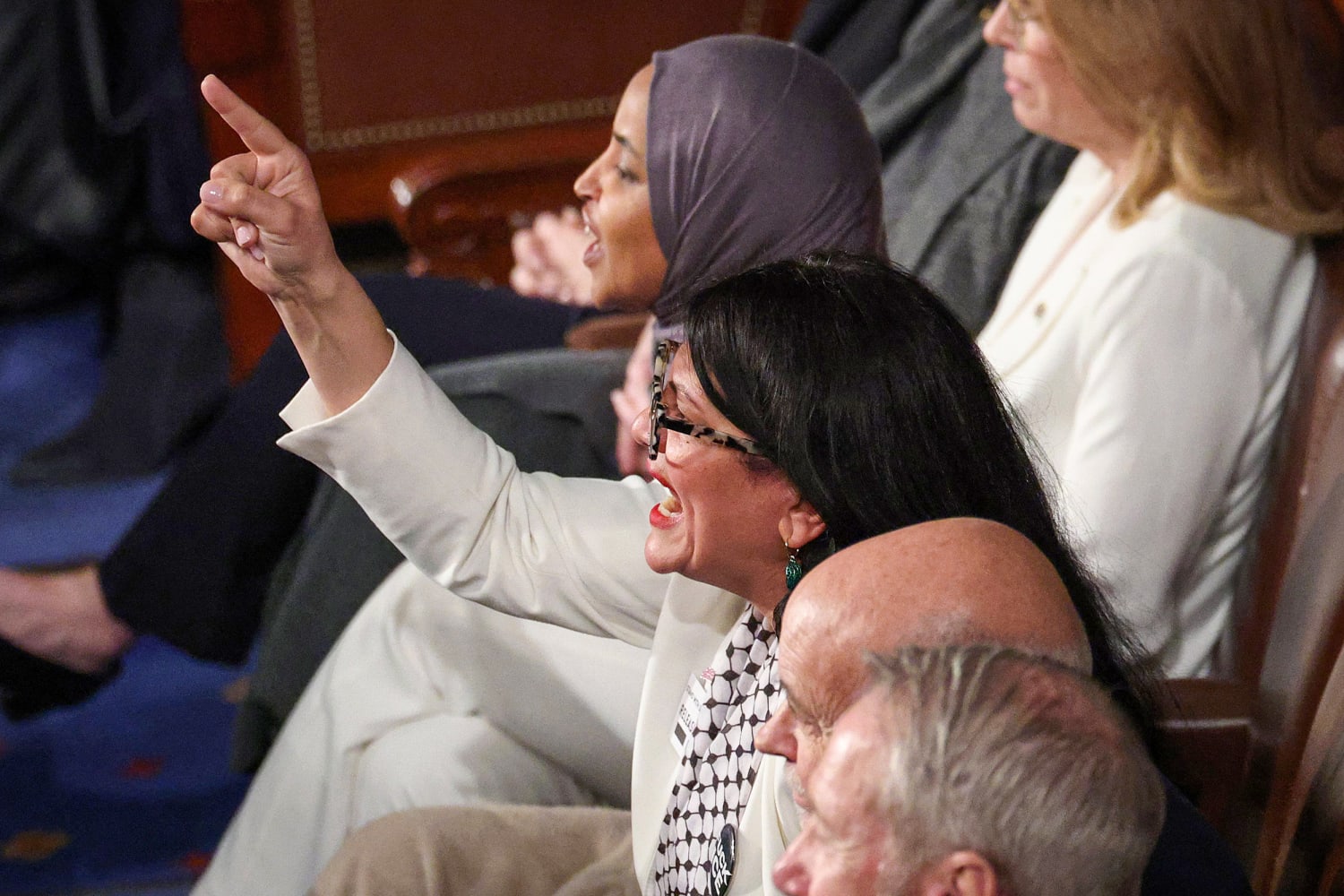
The confrontation began during Trump’s nearly two hour speech to a joint session of Congress on February 25. As the president praised his administration’s immigration crackdown and criticized so called sanctuary jurisdictions, Omar and Tlaib were among the Democratic lawmakers who interrupted with shouted protests. According to Al Jazeera’s report, the two lawmakers responded to Trump’s comments by shouting, “You have killed Americans!” Omar later said on social media that she wanted to remind Trump that his administration was responsible for the deaths of two of her constituents in Minnesota. Their protest was part of a broader night of visible Democratic resistance, which also included disruptions from other lawmakers, including Al Green, who was removed from the chamber after holding up a sign.
For Trump and his allies, the protest was framed as disrespectful and disorderly. For Omar and Tlaib, it was a moral response to policies they believe have cost lives. That divide is what made the exchange so combustible. It was not just about decorum. It was about whether protest inside Congress, particularly protest aimed at immigration enforcement, would be viewed as part of democratic accountability or portrayed as evidence of extremism. That framing mattered even more because Trump’s response did not focus only on their behavior. It quickly moved into language about expulsion, exclusion, and removal from the country itself.
Trump’s Words Revived an Old Political Script
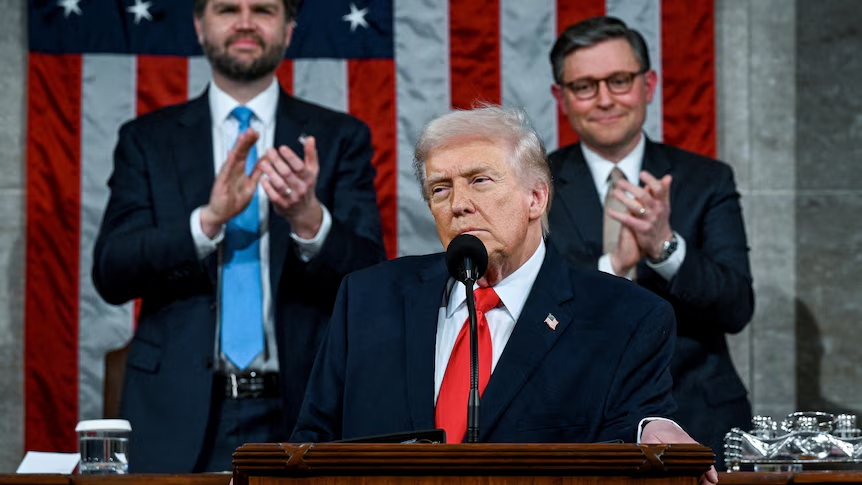
Late on February 26, Trump escalated the clash on Truth Social. In the post, he described Omar and Tlaib in inflammatory terms and said the United States should send them back “from where they came.” Al Jazeera reported the wording directly, and the phrase immediately drew attention because it closely resembled Trump’s 2019 attacks on Omar and other progressive congresswomen, when he praised a crowd chanting “send her back.” That earlier episode was widely condemned as racist and xenophobic because Omar is a naturalized U.S. citizen and Tlaib was born in Detroit, Michigan. The new comments therefore did not sound like an isolated outburst. They sounded like a recycled political script, one that treats minority critics as foreign no matter their citizenship or office.
That repetition is what made the moment especially significant. American politics has long had a pattern in which racial, ethnic, and religious minorities are subjected to extra tests of loyalty. When Trump used the same basic language again in 2026, it suggested that this rhetoric was not accidental or improvised. It was part of a familiar strategy that turns disagreement into a question of belonging. In that way, the issue became larger than Omar and Tlaib themselves. It raised the question of whether some lawmakers are allowed to oppose a president as Americans, while others are treated as outsiders the moment they do.
Why Omar’s Response Resonated Beyond One Speech
Omar’s explanation after the protest gave the exchange a sharper emotional and political edge. She said she had to remind Trump that his administration was responsible for killing two of her constituents. That was not rhetorical abstraction. Reuters and the Associated Press have both reported on the deaths of U.S. citizens Renee Good and Alex Pretti in Minneapolis during federal immigration enforcement operations in January, events that fueled outrage in Minnesota and prompted the state to sue the federal government for access to evidence. Those shootings became symbols of how aggressive enforcement had collided with local communities, and Omar’s protest connected Trump’s speech directly to that human cost.
This context matters because it explains why Omar and Tlaib were not merely heckling for effect. They were protesting from within an escalating national conflict over immigration raids, federal force, and accountability. Omar, who represents Minnesota’s 5th Congressional District, was speaking from a district deeply affected by those events. Her criticism drew strength from the fact that this was not a speculative policy disagreement. It involved deaths that had already happened, lawsuits that were already underway, and communities already in mourning and protest. That is part of why the moment landed so hard. It compressed national policy, local grief, and congressional dissent into a single televised exchange.
Tlaib’s Defiance Showed the Clash Was Also Cultural
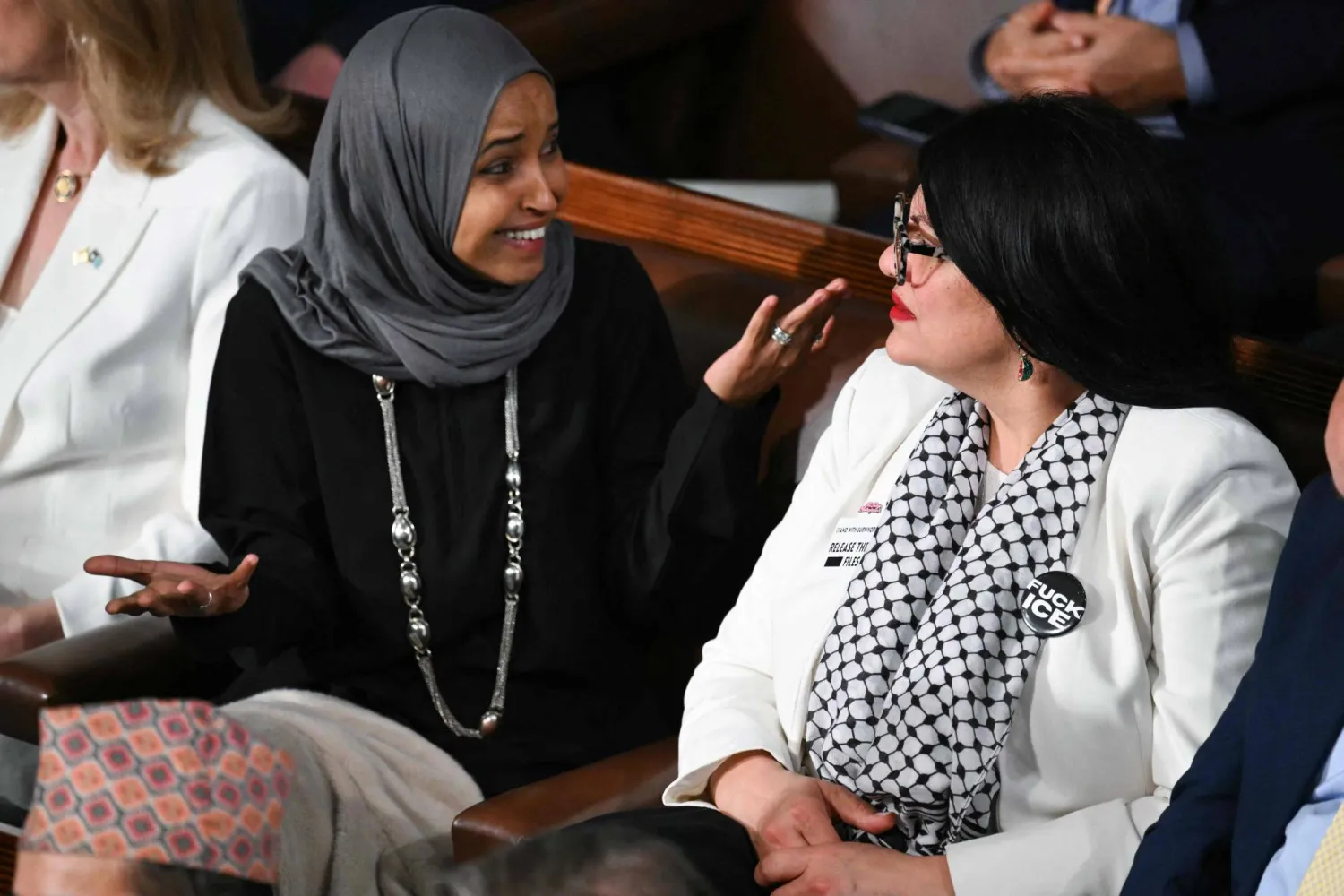
Rashida Tlaib’s response pointed to another layer of the controversy. After Trump’s post, she wrote that he could not handle “two Muslimas talking back and correcting him,” and referred to him using the Arabic word “majnoon,” meaning mad or possessed. Al Jazeera reported that response, and it quickly circulated because it turned Trump’s attack back on him with open defiance rather than retreat. Tlaib’s statement also made explicit what many observers already saw. This was not simply about partisan disagreement. It was about gender, religion, and the visibility of Muslim women in American power.
That is why the moment resonated far beyond Congress. The symbolism was unavoidable. Two Muslim congresswomen interrupted a president defending immigration crackdowns, and he answered not just with criticism but with language of expulsion. Tlaib’s response underscored that this was about whose voice is allowed to sound authoritative in American politics. Her post effectively said that what provoked Trump was not just opposition, but opposition from women he has often framed as culturally suspect. In a polarized environment, that turned a dispute over speech into a wider argument over identity and national legitimacy.
The Controversy Did Not Happen in Isolation
Trump’s attack on Omar and Tlaib landed in a political climate already charged by another racial controversy. Earlier in February, Reuters and the AP reported that Trump’s Truth Social account shared a racist video depicting Barack and Michelle Obama as apes before the post was removed amid backlash. Trump later said he would not apologize. That incident intensified criticism of his rhetoric by reminding the public that his inflammatory language around race and belonging was not confined to one episode or one target. When he then turned on Omar and Tlaib, many critics saw continuity rather than coincidence.
For that reason, the story became about more than whether a protest broke congressional etiquette. It became about a broader style of politics in which insult, racial coding, and claims of national contamination are deployed together. That style has always carried political power because it taps into fear and grievance. But it also carries a cost. It makes democratic conflict feel less like disagreement among fellow citizens and more like a struggle over who counts as American enough to speak. That is a dangerous shift, because once opponents are cast as foreign or removable, debate itself starts to erode.
Protest, Patriotism, and the Meaning of Congress
The House chamber is one of the most symbolically loaded spaces in American democracy. Protest there is always controversial because it tests the line between respect for institutions and the urgency of moral objection. Yet Congress has never been a place free of disruption. From walkouts to shouted objections to visible signs of dissent, lawmakers have long used dramatic gestures when they believe ordinary procedure cannot capture the stakes of a crisis. What made Omar and Tlaib’s protest remarkable was not that it happened, but that it was answered with rhetoric implying they should be removed from the nation altogether.
That response raises a deeper issue. In a democracy, dissent is supposed to be proof of political participation, not evidence of foreignness. Members of Congress are elected precisely to confront, resist, and challenge executive power when they believe it is harming the people they represent. If those actions are recast as signs that lawmakers do not belong in the country, then patriotism itself gets narrowed into obedience. That is one reason the Omar and Tlaib episode drew so much attention. It spotlighted a conflict over whether criticism of the president can still be understood as an act of democratic duty.
Why the Fallout May Last Longer Than the News Cycle
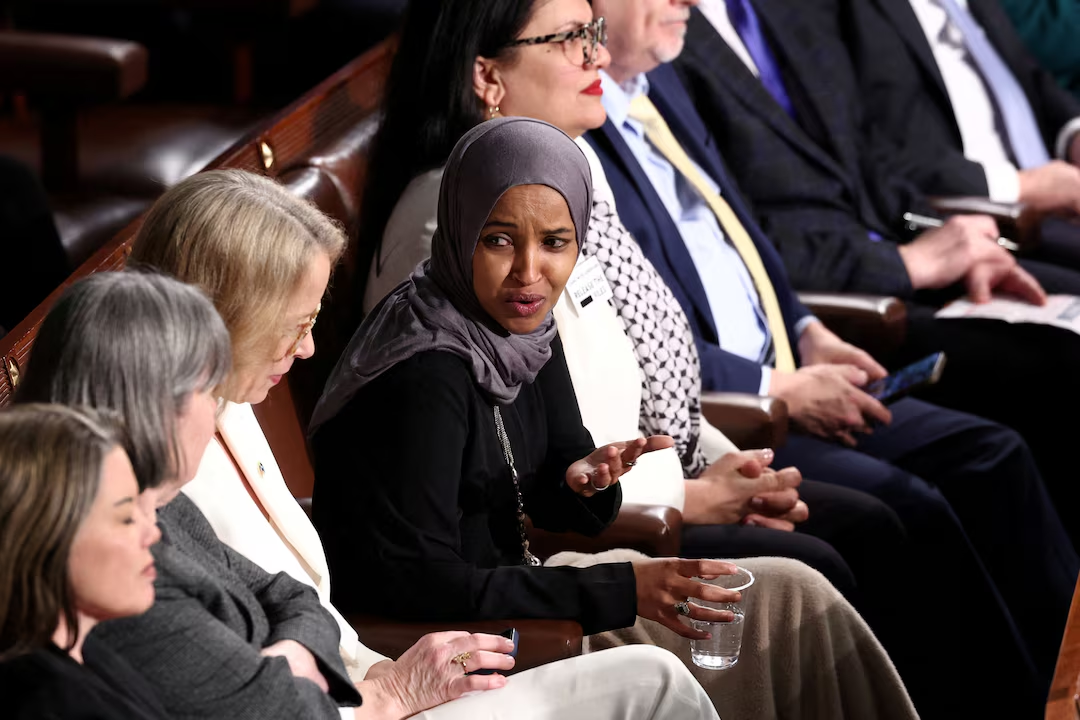
The immediate headlines focused on Trump’s post and the responses from Omar and Tlaib. But the longer significance of the episode lies in how it may shape future political behavior. For Trump’s supporters, the confrontation likely reinforced his image as a leader willing to attack opponents without restraint. For his critics, it deepened concerns that he continues to normalize language that targets racial, ethnic, and religious minorities as fundamentally less American. Because the dispute touched immigration, race, religion, policing, and congressional norms all at once, it carried unusual staying power.
It also arrived during a moment of growing unrest over federal immigration enforcement. Reuters and AP have documented broad protests in Minnesota and across the United States tied to deaths during immigration operations and broader resistance to Trump’s policies. In that sense, the Omar Tlaib clash was not a standalone media storm. It was part of a larger national mood in which immigration and executive power have become central arenas of protest. The language used in one social media post may therefore continue echoing because it touched conflicts that are already active in streets, courts, and communities.
A Political Flashpoint That Exposed a Deeper National Question
In the end, the story was never only about one protest during one speech. It was about what happens when elected officials challenge presidential power and are met not simply with rebuttal, but with language suggesting they should be expelled from the nation they serve. That move carries enormous symbolic force, especially when directed at two Muslim women in Congress, one born in the United States and one a naturalized citizen who has already endured years of xenophobic attacks. It transforms a democratic dispute into an argument about who belongs.
That is why the Omar and Tlaib controversy may endure. It condensed many of the defining tensions of this political era into one scene: protest versus decorum, immigration versus enforcement, citizenship versus exclusion, and dissent versus loyalty. Trump’s critics see in it a warning about the corrosion of democratic norms. His supporters may see a president refusing to tolerate disruption. But regardless of where people stand politically, the episode leaves behind a difficult national question. In a democracy built on representation, how far can leaders go in treating elected opponents as outsiders before the idea of shared citizenship itself begins to crack?