
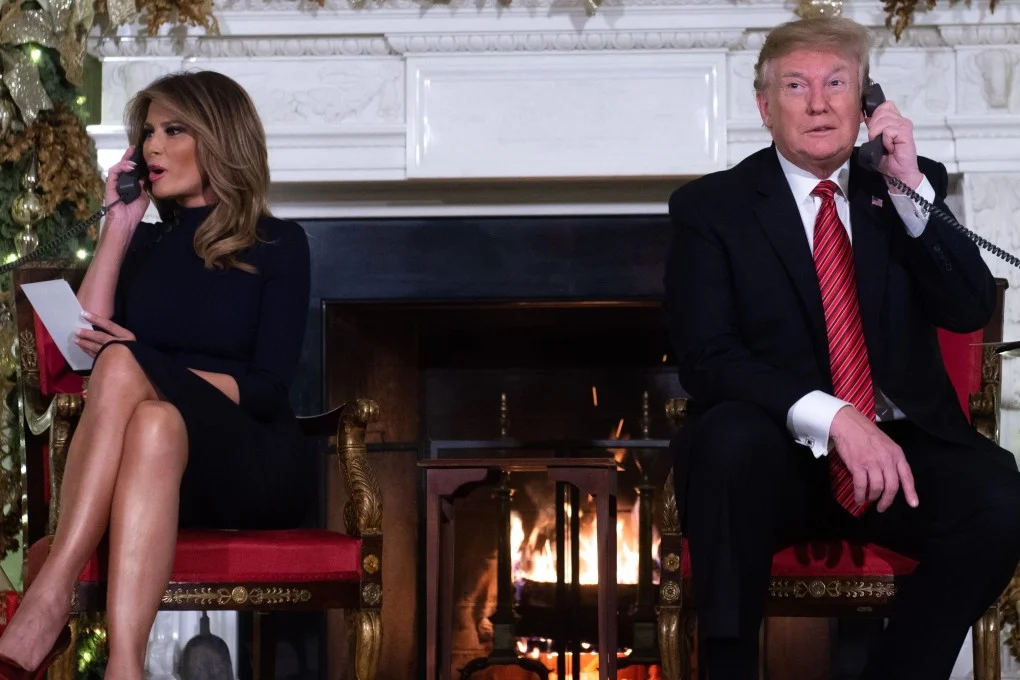
During the annual NORAD Santa Tracker calls, a holiday tradition that allows children across North America to speak with military personnel and track Santa’s progress on Christmas Eve, an unexpected comment from former President Donald Trump captured attention. When a 10-year-old child called in to check on Santa’s whereabouts, Trump responded with a lighthearted yet controversial remark: “I made sure a bad Santa is not infiltrating the United States.” The comment, intended as a playful joke, has sparked debate, with some finding it humorous and others raising questions about the political implications behind the statement.
While the NORAD Santa Tracker has long been a time for families to enjoy a wholesome, apolitical tradition, this incident reveals the fine line between fun and political discourse in today’s climate. Trump’s unexpected comment has sparked both laughter and concern, with reactions divided across political lines. Was it a simple holiday quip, or does it reflect something deeper about the current state of American politics? This article examines the context of Trump’s comment, the reactions it garnered, and what it means for the future of public events like the NORAD Santa Tracker.
Table of Contents
- The Tradition of NORAD Santa Tracker: A Holiday Staple
- Trump’s “Bad Santa” Comment: A Moment of Humor or a Political Statement?
- The Political Implications: Should Politics Be Part of Holiday Traditions?
- Reactions to Trump’s Involvement: Divided Responses
- The Future of Political Figures in Public Celebrations
- Conclusion: Holiday Traditions in a Politicized World
The Tradition of NORAD Santa Tracker: A Holiday Staple
The NORAD Santa Tracker is a beloved holiday tradition that has been captivating children for decades. What started in 1955 as a misdialed phone number has evolved into an annual event where military personnel, volunteering their time, take calls from children to provide updates on Santa’s journey. This event is meant to be a celebration of the holiday spirit, allowing families to connect with the magic of Christmas and share in the excitement of Santa’s travels.
For many years, the NORAD Santa Tracker has been a politically neutral event, with no overt political statements or affiliations. It’s an event where the focus is on spreading joy and encouraging holiday cheer, rather than on political discourse. However, in recent years, particularly with the rise of political polarization, even the most innocent traditions have been pulled into the political spotlight. Trump’s involvement in this year’s NORAD calls—though not unprecedented—has shown just how easily political figures can influence public celebrations, even in spaces that were once considered free from political debate.
Trump’s “Bad Santa” Comment: A Moment of Humor or a Political Statement?

When Trump answered the phone during the NORAD Santa Tracker event, the 10-year-old child asked about Santa’s progress. Trump responded in his usual candid manner, saying, “I made sure a bad Santa is not infiltrating the United States.” While many may have found this to be a lighthearted comment aimed at spreading holiday cheer, others saw it as an opportunity for Trump to subtly inject his political rhetoric into an otherwise innocent tradition.
The phrase “bad Santa” has been used in various contexts, from the popular holiday movie Bad Santa to references of figures who are seen as undesirable. In this case, Trump’s use of the term could be interpreted in multiple ways. Some viewed it as a harmless joke, reflecting Trump’s characteristic blunt humor. Others, however, saw it as a veiled attack on political opponents, with “bad Santa” symbolizing anyone who did not align with Trump’s values or political agenda.
The comment quickly garnered attention, with critics pointing out that it was an inappropriate remark for a holiday tradition meant to bring joy to children. On the other hand, Trump’s supporters argued that the comment was just a playful remark and that those criticizing him were reading too much into the situation. The fact that a casual interaction between the former president and a child became a source of controversy speaks to the current political climate in which even the most innocent comments are scrutinized.
The Political Implications: Should Politics Be Part of Holiday Traditions?
Trump’s comment raises an important question: Should political figures use holiday traditions as a platform for political expression, or should these events remain apolitical? In the case of the NORAD Santa Tracker, the line between fun and politics has become increasingly blurred. The NORAD calls have always been about spreading holiday cheer, not political messages. Yet, as seen with Trump’s comment, it’s becoming more difficult to separate politics from public events, even those traditionally seen as neutral.
For some, the idea of political figures participating in holiday events is not problematic. In fact, some argue that the involvement of political leaders in public celebrations is simply part of their role. They point to other examples where presidents and public figures have engaged with holiday traditions, such as delivering Christmas addresses or participating in Thanksgiving ceremonies. These moments are seen as opportunities for political figures to connect with the public in a more personal, approachable way.
However, for others, Trump’s comment highlights the dangers of allowing politics to infiltrate spaces that are meant to be free from partisanship. Holiday traditions, they argue, should be about unity, not division. By making political statements—even in jest—at events like the NORAD Santa Tracker, political figures risk turning moments of joy into opportunities for conflict. The challenge, then, is finding a way to maintain the spirit of these traditions while acknowledging the political realities of the modern world.
Reactions to Trump’s Involvement: Divided Responses

The reactions to Trump’s involvement in the NORAD Santa Tracker calls have been divided, with supporters and critics weighing in on both sides. For some, the comment was a humorous moment in the spirit of holiday cheer. They appreciated Trump’s attempt to engage with the child on a lighthearted level, and they saw his remark as just another example of his unconventional style.
On the other hand, critics of Trump’s comment argued that it was inappropriate and politically charged. They pointed out that the NORAD Santa Tracker was never meant to be a platform for political messages, and they felt that Trump’s joke was a reminder of the increasing politicization of even the most sacred holiday traditions. For many, the comment symbolized a broader trend in which political figures are increasingly using public events for self-promotion, rather than simply participating in the traditions themselves.
The controversy surrounding Trump’s comment also underscores the deepening divisions in American society. In an age of heightened political polarization, even the most innocent holiday traditions can become battlegrounds for political ideologies. Whether it’s a comment about “bad Santa” or a holiday greeting, every interaction can be interpreted through a political lens.
The Future of Political Figures in Public Celebrations
Looking ahead, Trump’s involvement in the NORAD Santa Tracker calls may signal a shift in how political figures engage with public traditions. As politics continues to play a more prominent role in everyday life, public events like the NORAD Santa Tracker may no longer be able to remain neutral. Whether this trend continues depends largely on how the public reacts to future instances of political figures engaging in holiday traditions.
One possibility is that political leaders may become more involved in holiday events, using them as platforms for political messaging. In an increasingly connected world, it’s not surprising that even the most festive traditions are being politicized. However, there is also the potential for a backlash against this trend, with calls for politicians to stay out of public celebrations and focus on their official duties rather than using the holidays for political gain.
Ultimately, the question is whether the public will allow political figures to take part in these traditions or whether there will be a pushback to keep such events free from politics. The future of holiday traditions like the NORAD Santa Tracker depends on how society chooses to balance the joy of these celebrations with the complexities of the political world.
Conclusion: Holiday Traditions in a Politicized World

Trump’s surprise comment on the NORAD Santa Tracker calls serves as a reminder of the ways in which politics and holiday traditions are increasingly intertwined. While some saw his comment as a playful addition to the festive occasion, others viewed it as another example of how politics has permeated even the most apolitical spaces. The controversy surrounding Trump’s remark reflects a broader trend in which every public event, no matter how innocuous, is viewed through a political lens.
As we move forward, the future of holiday traditions like the NORAD Santa Tracker may depend on how society chooses to navigate the growing intersection of politics and public life. Will these events remain neutral spaces for joy and celebration, or will they continue to serve as platforms for political expression? The answer will likely depend on the direction of the country’s political climate and how Americans choose to engage with their leaders in moments of shared holiday cheer.