

Table of Contents
The Government’s UFO Files
For decades, the U.S. government has been tight-lipped about the existence of UFOs and extraterrestrial life. The secrecy surrounding UFOs began in the mid-20th century, especially following the 1947 Roswell incident, which has remained one of the most famous UFO-related events in history. The U.S. military initially reported that a “flying disc” had crashed near Roswell, only to retract that statement and claim it was merely a weather balloon.
This shift in the government’s narrative sparked widespread speculation about what the U.S. government might be hiding. Over the years, UFO enthusiasts, former military personnel, and whistleblowers have called for greater transparency regarding what the government knows about UFOs. Despite this, the U.S. has maintained a policy of limited disclosure, often dismissing UFO sightings as misidentified military aircraft or natural phenomena.
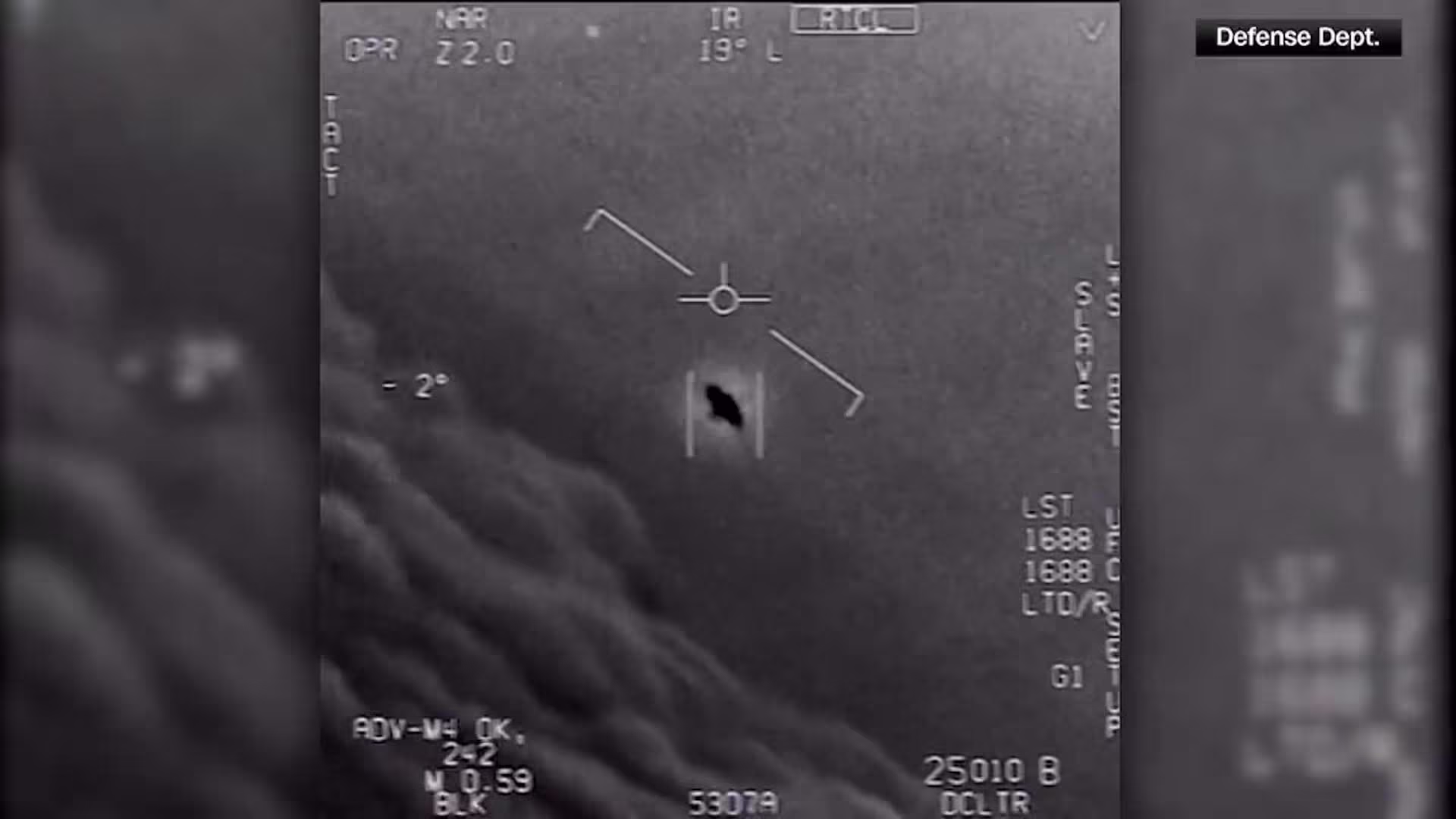
However, recent events have begun to change the narrative. In 2020, the U.S. Department of Defense declassified several videos showing unidentified aerial phenomena (UAP), raising further questions about the nature of these objects. The Pentagon’s admission that it had been studying UAPs as part of a secret program only added to the growing pressure for more openness.
A Bipartisan Push for Transparency

In a surprising twist, two polar opposites in American politics—Donald Trump, the former Republican president, and Chuck Schumer, a prominent Democratic senator—have united over the need for the release of UFO files. The unlikely partnership comes as both men recognize the growing public interest in UFOs and the demand for transparency.
Trump, known for his unconventional approach to governance, has frequently expressed interest in the UFO phenomenon, even suggesting during his presidency that he had been briefed on the subject but could not reveal any information. Schumer, a long-time advocate for government transparency, has similarly pushed for greater openness on the topic of UFOs, believing that the American public deserves to know the truth about extraterrestrial phenomena.
Their collaboration on this issue is a rare example of bipartisan agreement in an era of intense political division. While their motivations may differ—Trump is often driven by a desire to make headlines and Schumer by his commitment to public service—their shared goal of releasing UFO files signals a unified stance in favor of greater government transparency.
Why Now? The Changing Attitudes Toward UFOs
The push for UFO disclosure comes at a time when public attitudes toward the phenomenon are changing. In the past, UFOs were often dismissed as the stuff of conspiracy theories or fringe science. However, recent developments have challenged these long-held beliefs. The release of government documents, such as the Pentagon’s UAP report in June 2021, has led to a shift in how UFOs are perceived. Once considered a taboo subject, UFOs are now being taken more seriously by both lawmakers and the general public.
Part of this shift can be attributed to the growing body of evidence suggesting that UFOs are not simply figments of imagination or misidentifications of natural phenomena. The U.S. government’s acknowledgment of unexplained aerial phenomena has lent credibility to the idea that UFOs are, in fact, real—and possibly of extraterrestrial origin.
With mounting evidence and shifting public sentiment, both Trump and Schumer are tapping into a moment of heightened interest and curiosity. Their push for the release of UFO files comes as more and more Americans express a desire for answers. According to recent polls, a significant portion of the public believes that the government is withholding information about UFOs, and they want greater transparency.
The Potential Impact of Releasing UFO Files

The potential release of UFO files holds significant implications for both the public and the government. For years, UFO sightings and encounters have been surrounded by secrecy, leading to a sense of distrust between the government and the public. By declassifying and releasing these files, the government could begin to rebuild public trust and provide much-needed transparency on an issue that has long been shrouded in mystery.
The release of UFO files could also have far-reaching implications for national security. As the U.S. government investigates UFOs, questions arise about the potential threats they may pose. Some experts believe that UFOs could represent foreign adversaries testing advanced technology, while others suggest that they may be extraterrestrial in nature. Regardless of their origin, the implications for national security are profound, and greater transparency could lead to a reevaluation of how the U.S. approaches UFOs from a defense and intelligence perspective.
Beyond national security, the release of UFO files could spark a broader societal shift. If the government were to confirm the existence of extraterrestrial life, it would have significant ramifications for science, religion, and human understanding of our place in the universe. The questions that would arise from such a discovery are immense, and society would need to grapple with the profound implications of encountering intelligent life beyond Earth.
What Other Lawmakers Are Saying
While Trump and Schumer have led the charge on the release of UFO files, they are not alone in their calls for transparency. Other lawmakers have also expressed interest in pursuing a more open approach to UFO investigations. Senators and representatives from both sides of the political aisle have called for hearings, investigations, and public disclosures regarding the U.S. government’s knowledge of UFOs.
For example, Representative Tim Burchett (R-TN) has been a vocal advocate for UFO transparency, pushing for the declassification of all U.S. government UFO-related materials. He has argued that the American people have a right to know what the government knows about UFOs, especially given the potential national security implications.
On the Democratic side, lawmakers like Senator Kirsten Gillibrand (D-NY) have pushed for greater disclosure, advocating for hearings and investigations into the military’s encounters with UAPs. Gillibrand’s efforts have been part of a broader push within the Senate to address the growing interest in UFOs and ensure that the U.S. government remains transparent on the issue.
While bipartisan support for UFO disclosure is still in its early stages, the momentum behind these efforts is growing. The combination of public interest, political support, and mounting evidence suggests that the push for UFO transparency is not just a fleeting moment but a significant movement in American politics.
What’s Next? The Future of UFO Transparency
As Trump and Schumer continue to press for the release of UFO files, the next steps will be crucial in determining the future of UFO transparency in the U.S. While the push for declassification has garnered significant attention, it is unclear how quickly the government will act on these calls. The process of releasing classified information can be slow and complex, with national security concerns often complicating the decision-making process.
However, the growing public pressure for transparency may expedite the process. With both political parties now acknowledging the importance of releasing UFO files, the U.S. government may be more inclined to take action. The next few years could see significant developments in UFO disclosure, including potential hearings, investigations, and the public release of government documents.
Ultimately, the push for UFO transparency is about more than just curiosity. It is about holding the government accountable for its actions and ensuring that the American public has access to information that affects their understanding of the world—and the universe—around them.
A New Era of UFO Transparency
Trump and Schumer’s rare collaboration on the release of UFO files marks a turning point in the public’s relationship with the U.S. government’s UFO investigations. Their bipartisan support for transparency signals a new era in which the U.S. government may be more forthcoming about what it knows regarding extraterrestrial phenomena. Whether the release of these files will lead to groundbreaking revelations about UFOs remains to be seen, but one thing is clear: the conversation around UFOs is no longer limited to fringe groups and conspiracy theorists—it has become a central issue in American politics.
The future of UFO transparency will be shaped by ongoing political support, public demand for information, and the complex process of declassifying sensitive materials. As the investigation continues, the world waits to see what the U.S. government will reveal—and how this new era of transparency will reshape our understanding of the unknown.