
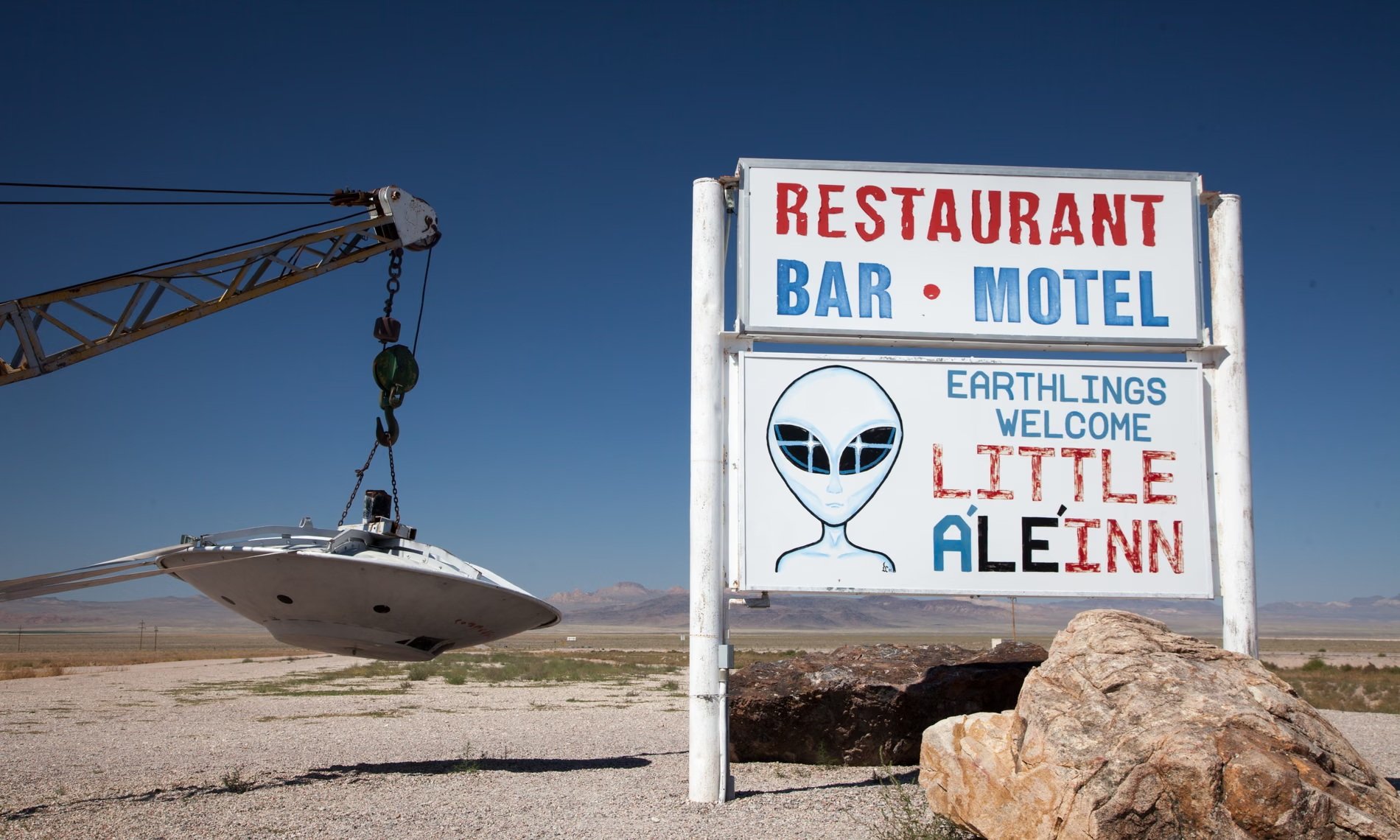
What if the next investment alert didn’t come in a ticker or a newsletter — but from the sky above your home? In June 2021, the U.S. intelligence community dropped a bombshell: things in our airspace we can’t identify.
Imagine you’re flying or travelling or simply standing on your porch at dusk — and you realise you don’t know what’s above you. That moment? It can change strategy, security and even your sense of safety.
Table of Contents
- Mystery in the Air: What the Government Found
- Why You Should Care — Because It Impacts More Than UFO Fans
- The Hidden Angle: Aviation Safety & Your Routine
- The Finance Playbook: From Mystery to Market
- What We Still Don’t Know— And Why the Mystery Matters
- Travel Alert: The “Where-We-Go-Next” Question
- Home-Improvement Upgrade: From Basement Cameras to Sky-Aware Systems
- The Broader Implication: Finance, Tech, Health — All Linked
- What Happens Next — And How to Position Yourself
- Final Thought
Mystery in the Air: What the Government Found
On June 25, 2021, the report titled Preliminary Assessment: Unidentified Aerial Phenomena was published by Office of the Director of National Intelligence (ODNI).
It reviewed 144 incidents by U.S. military sources between 2004 and 2021.
Here’s what stood out:
- Most of these objects were observed on multiple sensors — radar, infrared, visual.
- Some displayed unusual flight behaviours: hovering against wind, moving at high speed without clear propulsion, diving or submerging.
- The report did not conclude they were extraterrestrial — but it didn’t rule it out either.
- The big takeaway: We don’t have enough data yet — the dataset is limited and reporting inconsistent.
This changes how we view “airspace” — not just for travel, but for home security, investment in surveillance tech, and risk management.
Why You Should Care — Because It Impacts More Than UFO Fans
You might be thinking: “This is cool for sci-fi, but what does it mean for me?” Quite a lot.
Home Improvement & Security
If objects are appearing and moving in ways we can’t yet explain, the concept of airspace security changes. Cameras, motion sensors, drones—even sunshine security panoramas become thinking tools.
Do you ever consider what surveillance around your home should cover? If someone — or something — can move in unexplained ways, then the upgrade for your home-security tech becomes not just optional, but strategic.
Travel & Aviation Risks
If UAP (unidentified aerial phenomena) are showing up near military training zones or in civilian airspace, then travel plans might need a layer of risk assessment. Weather zones, restricted airspace, drone intrusion—all become variables.
Have you wondered what happens when you fly above remote terrain? Or if your route crosses a military training corridor? The Anna Paula security mindset demands you think like an air-space manager, not just a flyer.
Finance & Tech Investments
When government reports hint at “objects exhibiting unusual capability”, industries pay attention: aerospace, defence, civilian drone tech, sensor markets. If you track investment opportunities, the data-collection, sensor-fusion, automation opportunities swell.
So maybe your next investment article shouldn’t just read “tech stocks” — maybe it reads “aerial-phenomena tech and home-flight-risk sensors”. If you were drafting a blog on “top-10 home-improvement technologies for 2025”, you might include airspace monitoring as a category now.
The Hidden Angle: Aviation Safety & Your Routine

Here’s a scenario: You’re flying (commercial or private), the aircraft hits a zone where something unidentified enters your radar – or worse, your cockpit laser-or camera pick-up. Maybe it’s a balloon, maybe a drone, maybe something else. The report flagged safety-of-flight as a key concern.
Ask yourself: When I book a trip, do I check air-traffic overlays or alert zones? Probably not. But this report suggests you maybe should.
And at home, you do the same: Do I know what flies above my property? Probably not. Yet that may affect insurance, perhaps even property value if a zone becomes “drone-populated” or surveillance-heavy.
The Finance Playbook: From Mystery to Market
Let’s dig into actionable thinking:
- Sensor-technology companies: If the government acknowledges phenomena it can’t yet explain, then demand for advanced radar, optical-tracking, data-fusion will increase. Think: startups or public companies working on LIDAR, multi-sensor arrays, AI for anomaly detection.
- Home-security upgrades: If airspace intrusion becomes a thing, then home-improvement budgets may shift more toward “air-space aware” systems — drone roofs, extra roof-cameras, motion sensors tied to high-altitude detection.
- Travel-insurance plus tech: Travelers might pay more attention to “airspace risk” zones — remote flying, light aircraft, drones, military corridors. That may open up new insurance-product niches or consumer tech apps.
- Real-estate value implications: Properties directly under or adjacent to military flight zones or unexplained-phenomena hotspots may face value shifts — either negative (risk) or positive (novelty/interest).
If this happened to you, would you adapt your investment strategy? Would you upgrade your home security?
What We Still Don’t Know— And Why the Mystery Matters
The report makes it clear: limited data, scattershot reporting, and sensor-design not optimized for UAP detection.
It lacked full transparency — around 70 pages remained classified.
Why does this matter? Because whenever data scarcity meets public interest, narratives fill the gap — and that creates risk, opportunity and flux. Think of how a property market reacts when there’s rumored contamination under a site: the unknown becomes the driver.
If you’re someone mapping wellness (home), travel, finance — you’d be wise to treat the unknowns as variables, not curiosities.
Travel Alert: The “Where-We-Go-Next” Question
Picture this: you book a private flight or helicopter tour. The pilot points out a “restricted airspace” or curtain of radar-“noise.” What is that noise? Maybe they don’t know.
This is increasingly material for savvy travellers: UAVs, near-space flights, military training zones. The UAP report signals we’re living in an era where the classical “clear sky” is less clear than we thought.
Your action? Map your routes. Ask about restricted zones. Consider travel insurance that covers non-standard aerial risk.
And think: What if your next vacation included a “flight above unknown air phenomena” zone? Would you take it? Why or why not?
Home-Improvement Upgrade: From Basement Cameras to Sky-Aware Systems
Until recently your “home improvement” list maybe read: new kitchen, smart thermostat, better WiFi. But what if it now needs: “smart air-space monitor, drone detection array, integrated sky-alert system”?
We aren’t saying your neighbourhood is under live invasion. But the 2021 report moved UAP from sci-fi tabloid to recognized safety & security variable. That elevates home-improvement thinking.
Consider:
- Roof sensors that detect aerial objects crossing property lines.
- Integration of home-security with aerial-alert apps (your phone buzzes “object detected above your property”).
- Insurance discounts for homes with advanced sky-monitoring.
You may ask: “Does this cost more than I’d spend?” Possibly. But when your “investment” is your family’s safety plus home value, the calculus changes. And the UAP report nudges that calculus.
The Broader Implication: Finance, Tech, Health — All Linked
This isn’t just about flying saucers or weird videos on YouTube. It touches:
- Finance: Where will capital flow when governments admit unexplained aerial activity?
- Technology: What sensor-and-AI systems will emerge to meet this new frontier?
- Health & safety: What happens to pilot stress, to public trust in air-transport, to accident-risk models when “unidentified” becomes real?
- Travel behaviour: Will tourists avoid certain flight-corridors? Will private-air companies integrate UAP-risk into pricing?
It’s a ripple effect. The night-sky mystery isn’t distant from your daily decision-making — it echoes into your home budget, your travel itinerary, your investment portfolio.
What Happens Next — And How to Position Yourself
The 2021 report was a milestone — but it’s only the beginning. The mandate: standardise reporting, collect more data, invest in research.
Here’s how you might stay ahead:
- Watch for sensor-tech IPOs or startups gaining traction in anomaly-detection.
- Consider home-security advisors who include aerial-intrusion in assessments.
- Map your travel routes for restricted airspace or unexplained-phenomena hotspots.
- Treat “unknown air-object risk” as a scenario in your risk-management plan.
And ask: What are they not telling us yet? Because the gap is where opportunity lives.
Final Thought

When governments officially admit “we don’t know what’s flying in our skies”, your radar should go up — not just for UFO headlines, but for home security upgrades, travel-risk recalibrations, and investment pivots.
In our next article we’ll dive into the top five sensor technologies transforming how homeowners monitor the sky above them — including budgets, ROI comparisons and case-studies you can apply tomorrow. Stay tuned.