
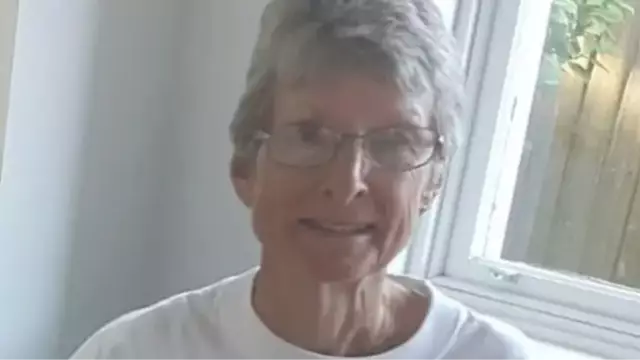
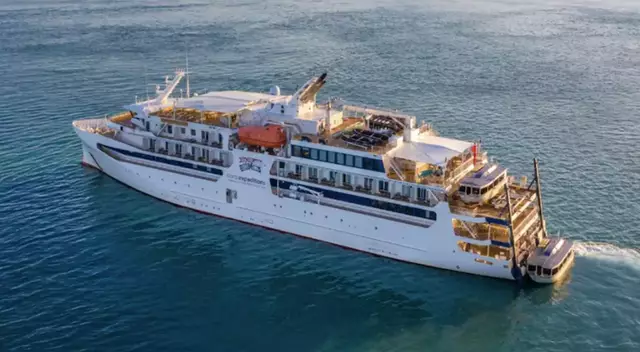
In October 2025, 80-year-old Suzanne Rees joined the luxury 60-day circumnavigation voyage on the Coral Adventurer, operated by Coral Expeditions. The ship called at Lizard Island on Australia’s remote Great Barrier Reef.
She disembarked with other passengers for a guided hike up the lookout known as Cook’s Look. The day was exceptionally hot. She reportedly felt ill. She was told to descend alone. The ship left without her.
By the next morning her body was found off the hiking trail.
This place was meant to be paradise—but in that paradise, the chain of care broke.
Table of Contents
- Travel: When Luxury Doesn’t Equal Safety
- Health & Aging: Risks That Travel Doesn’t Erase
- Home Improvement & Home Security: The Overlooked Parallel
- Finance & Investment: Travel Isn’t Just Leisure—It’s Risk Management
- The Legal & Corporate Accountability Angle
- Travel Planning Revisited: Checklist for the Smart Traveller
- The Aftermath & What Comes Next
- Final Thoughts
Travel: When Luxury Doesn’t Equal Safety
Here’s the irony: the trip cost dramatically—luxury cabins priced at $86,400 per person.
Yet despite the price tag, standard safety checks failed: the passenger list wasn’t properly accounted for, the excursion wasn’t monitored closely, and the ship left before noticing the absence.
If this happened to you—your ‘dream holiday’—how would you react? Would you demand accountability, or chalk it up as “bad luck”?
And what’s the trigger for your own travel-planning checklist now? Because this isn’t just about cruises; it’s about thinking ‘what if’—what if the unexpected turns into the worst-case scenario?
Health & Aging: Risks That Travel Doesn’t Erase
Suzanne was described as “healthy and active”, a gardener and bushwalker—not someone frail.
But age, heat, remote terrain, solo descent—all created a risk matrix. She was asked to walk down unescorted in the heat. Then the ship left.
We often think of travel as rejuvenation—but there are latent health-risks: dehydration, heat exhaustion, terrain mis-judgment, solo excursions.
When we make plans for older relatives, or ourselves, do we factor in these variables? Would you be comfortable hiking alone knowing the ship might depart without you?
Home Improvement & Home Security: The Overlooked Parallel
You may ask: “What does a cruise-ship tragedy have to do with my home?”
Everything. Because the concept of ‘environmental safety’ is identical. At sea or at home:
- Are you counted, accounted for? In a home-security sense: do family members/emergency contacts know your plans?
- Is the environment properly monitored? For the cruise, the monitoring failed. At home, how many times do we neglect safety audits?
- Are you in a zone you understand? Remote island, remote home—both may lack access to fast help.
This tragedy prompts us to ask: does our home environment include contingency plans when we’re ‘off the grid’, travelling, or working remotely?
It’s a prompt: upgrade your home-improvement checklist to include not just aesthetics —but safety, remote monitoring, communication backup. Because the same oversight happened on a high-end cruise.
Finance & Investment: Travel Isn’t Just Leisure—It’s Risk Management
Spending big doesn’t automatically remove risk. The passengers paid luxury rates, yet basic safety procedures failed.
In investment terms: high cost ≠ high protection.
So when you invest in travel, home improvement, or health upgrades—are you just chasing luxury, or are you budgeting for risk mitigation?
• Travel insurance: does it cover when the provider fails you?
• Home improvement: are you investing in features that protect your asset and your life?
• Health budget: do you set aside for potential remote-travel care or evacuation?
If you think of your next big purchase as also a risk strategy, not just a dream, you shift from “spend & enjoy” to “spend & secure”.
The Legal & Corporate Accountability Angle
The ship operator cancelled the remainder of the voyage, offered refunds, and is now under investigation by multiple Australian authorities (police, maritime safety, workplace safety).
The daughter called it a “failure of care and common sense.”
In your personal or business contexts: when you delegate oversight (to a travel operator, a home-service contractor, a health provider), you still carry the ultimate responsibility if something goes wrong.
Are you checking their protocols? Their contingency systems? Their history?
Because if they fail, your loss is more than money—it’s safety, well-being, sometimes life.
And this story prompts you: next time you sign up for “luxury” or “premium”, ask: what’s the safety plan? What happens if the operator fails?
Travel Planning Revisited: Checklist for the Smart Traveller
Here are targeted lessons you can apply:
- Know exactly onshore excursion timings, head-count procedures, emergency plans.
- For older travellers, ensure escorted return, buddy system, heat/humidity contingencies.
- Choose operators with track record in remote-terrain safety (not just scenic value).
- Check insurance covers operator failure (not just illness or weather).
- Plan your exit strategy: what happens if you can’t return at scheduled time?
Ask yourself if you’d be comfortable with no headcount on your next touring group. If not—demand better.
The Aftermath & What Comes Next
Investigations will determine whether the procedures failed—whether the cruise line left prematurely without her, whether the hike was properly guided, whether the heat/terrain risks were managed.
For you as a reader: this means it’s time to revisit your travel, health, home and finance strategies. Because changes in remote-travel safety ripple into how we think about all environments.
One open question remains: how many other premium travel providers assume safety, but do not deliver it? And by choosing one, are you exposing yourself to a hidden risk?
Final Thoughts

The story of Suzanne Rees is deeply tragic—but it also serves as a caution for all of us. A luxury journey, a remote island, a mis-step in protocol—and life is lost.
It forces us to ask: in our homes, our travels, our portfolios—are we assuming safety, or designing for it?
In our next article, we’ll explore “Top 10 Travel Tech & Home Security Systems That Protect When Standard Protocols Fail”—including gear, insurance checklists and service-providers you can trust. Stay tuned.