
Table of Contents
- A Championship Moment That Rewrote History
- The Weight of a Historic Rivalry
- How the United States Built This Moment
- Canada’s Expectations and Pressure
- Key Moments That Defined the Game
- Goaltending and Defense as the Difference
- The Emotional Impact on Players and Fans
- What This Win Means for USA Hockey
- Canada’s Response and the Future of the Rivalry
- A Gold Medal That Redefined the Era
A Championship Moment That Rewrote History
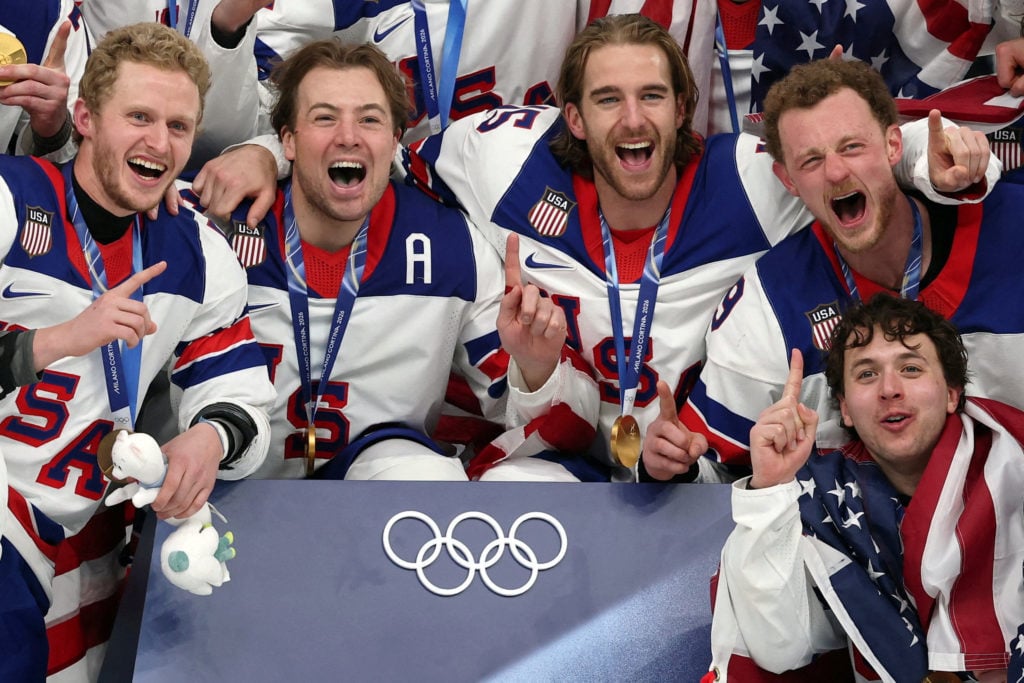
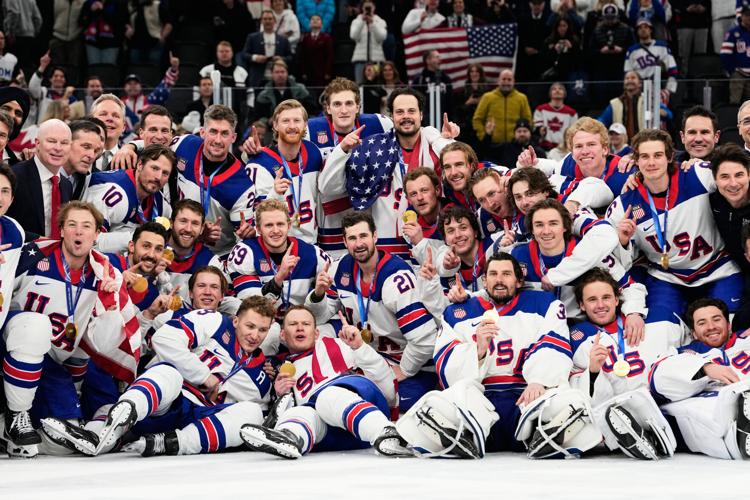
When the final buzzer sounded and the United States secured victory over Canada, the world of ice hockey paused to absorb the significance of what had just occurred. This was not simply another gold medal match. It was a moment that carried decades of history, rivalry, and unfinished business.
For the United States, the win represented a long awaited return to the top of men’s hockey on the sport’s biggest stage. For Canada, it marked a rare and painful defeat in a competition it has long dominated. The matchup delivered intensity, skill, and drama, but its meaning extended far beyond the final score.
This victory instantly entered the canon of great hockey moments.
The Weight of a Historic Rivalry
Few rivalries in sports match the emotional and cultural intensity of USA versus Canada in hockey. For Canada, hockey is more than a game. It is a national identity. For the United States, defeating Canada has often symbolized legitimacy, progress, and arrival on equal footing.
Every encounter between these two nations carries the weight of past championships, heartbreaks, and iconic performances. This gold medal game was no exception. Both teams entered knowing that the outcome would shape narratives for years to come.
The rivalry transformed the match into something larger than sport. It became a referendum on dominance, development, and national pride.
How the United States Built This Moment
The American victory did not happen overnight. It was the result of years of investment in youth development, coaching, and international competition. USA Hockey has steadily expanded its pipeline, producing players capable of competing with the world’s best.
This team reflected that evolution. Speed, discipline, and tactical awareness defined their approach. Rather than relying on individual brilliance alone, the United States executed a structured game plan that emphasized depth and resilience.
Their performance demonstrated how far American men’s hockey has come on the global stage.
Canada’s Expectations and Pressure
For Canada, entering the gold medal match came with enormous pressure. Success is expected, not hoped for. Anything less than gold is often viewed as failure.
This expectation can be both motivating and suffocating. The Canadian roster featured elite talent and experience, but the burden of legacy loomed large. Every mistake felt amplified. Every missed opportunity carried historical weight.
Despite their effort and skill, Canada found itself facing an opponent unwilling to yield.
Key Moments That Defined the Game
The game unfolded with intensity from the opening faceoff. Physical play, rapid transitions, and disciplined defense defined the early stages. Neither side gave ground easily.
Momentum swung on pivotal moments. A critical goal, a timely save, or a defensive stand shifted the balance. The United States capitalized on opportunities with precision, while limiting Canada’s chances through structured play.
These moments did not merely change the score. They altered belief. As the game progressed, confidence grew on one bench while doubt crept into the other.
Goaltending and Defense as the Difference
Championship games are often decided by goaltending, and this contest was no exception. The American netminder delivered a performance defined by calm under pressure and technical excellence.
Canada generated chances, but many were neutralized by disciplined defensive positioning and timely saves. Shots that might have changed the outcome were turned away, frustrating Canada’s attack.
Defense, often overshadowed by scoring, emerged as the backbone of the American victory.
The Emotional Impact on Players and Fans
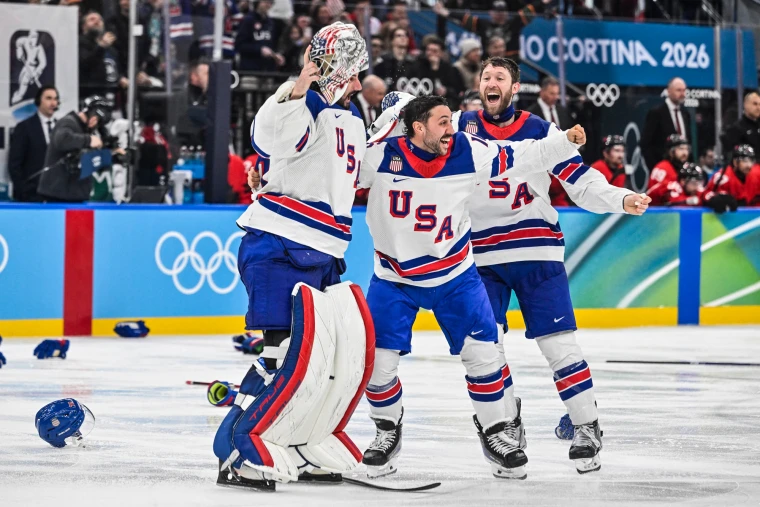
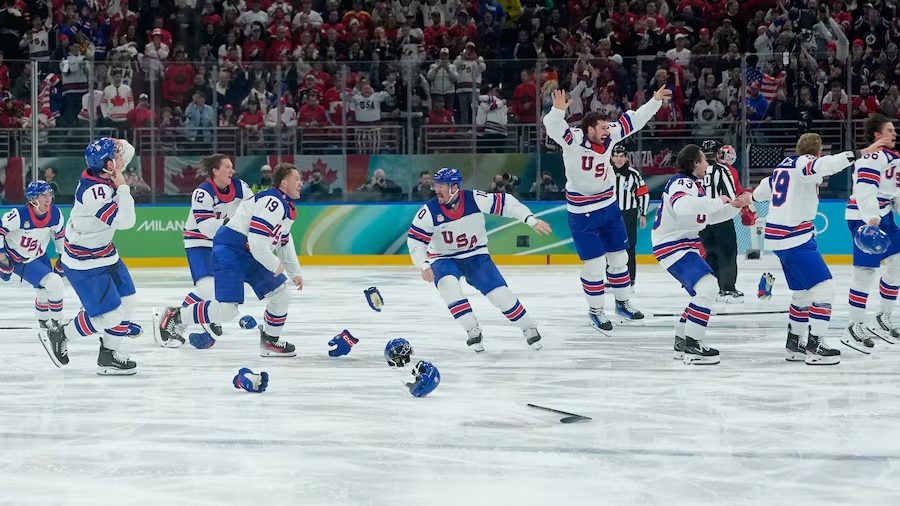
As the final seconds ticked away, emotion spilled onto the ice. American players celebrated not only a gold medal, but the culmination of years of effort and belief.
For fans, the moment carried deep resonance. Many remembered previous near misses and long droughts. This victory felt earned, not accidental.
Canadian fans, meanwhile, processed disappointment with pride and reflection. Loss in such a rivalry cuts deeply, but it also fuels future resolve.
What This Win Means for USA Hockey
This gold medal reshapes how the world views American men’s hockey. No longer seen as an occasional challenger, the United States now stands as a proven champion capable of beating the sport’s most dominant nation.
The win validates development programs and inspires the next generation of players. Young athletes watching this game saw proof that reaching the pinnacle is possible.
Momentum from this victory will influence recruitment, funding, and international confidence for years.
Canada’s Response and the Future of the Rivalry
For Canada, defeat invites reflection rather than retreat. History shows that Canadian hockey responds to setbacks with adaptation and renewal.
This loss may spark changes in strategy, development emphasis, or team composition. It will also intensify future meetings between these rivals.
The rivalry itself emerges stronger. Each chapter adds meaning to the next encounter, ensuring that future clashes will carry even greater anticipation.
A Gold Medal That Redefined the Era
The United States defeating Canada for men’s hockey gold represents more than a single tournament victory. It signals a shift in competitive balance and a new chapter in international hockey.
This moment will be replayed, analyzed, and remembered not only for the scoreline, but for what it symbolized. Persistence rewarded. Preparation proven. A rivalry renewed.
As the sport moves forward, this game stands as a reminder that history is not fixed. It is rewritten by those willing to challenge expectations and seize the moment when it matters most.