
Table of Contents
Venezuela’s Oil Industry Struggles
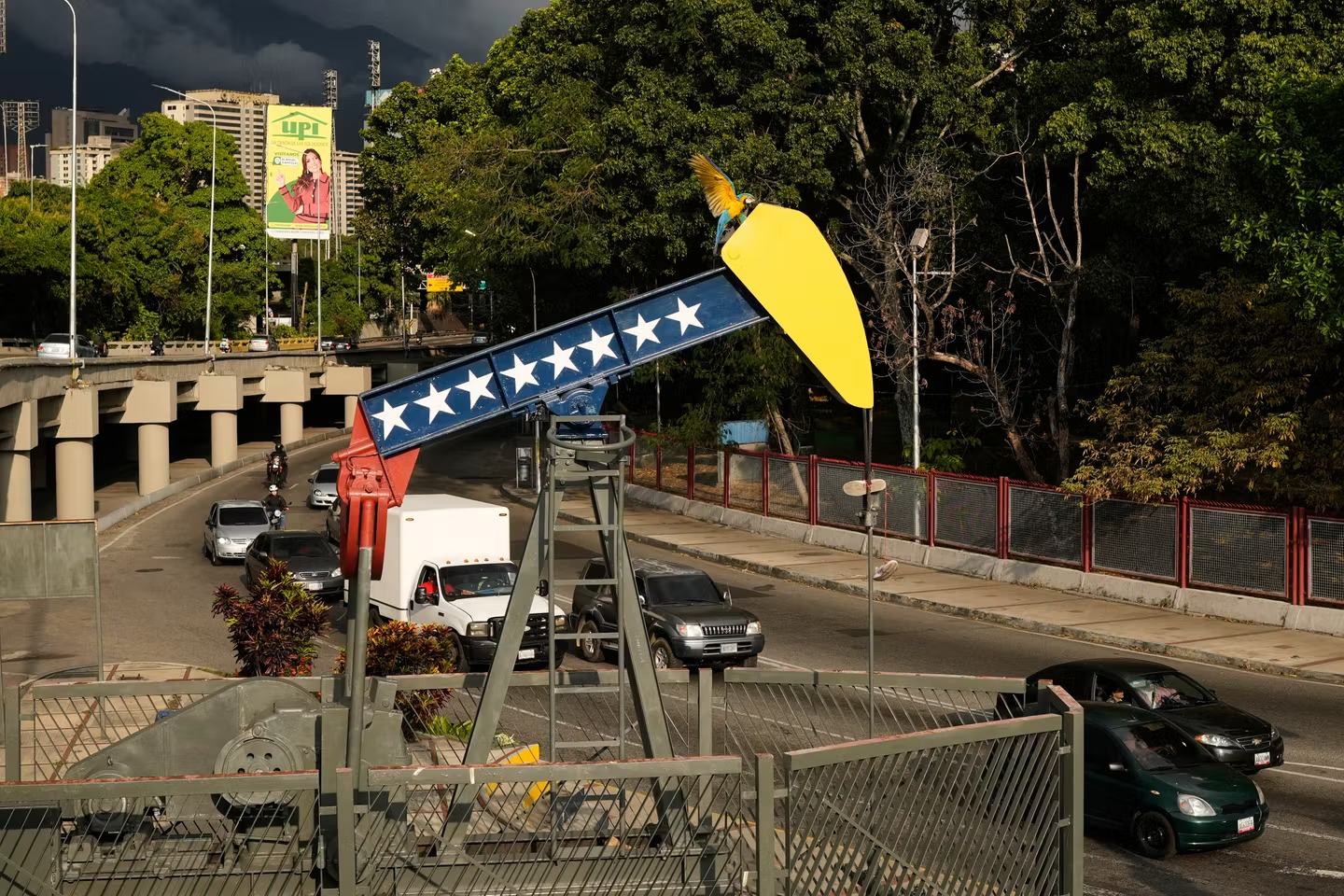
Venezuela has long been one of the largest oil reserves in the world. The country’s oil industry once provided the backbone of its economy, with oil exports accounting for over 90% of its total revenue. However, in recent years, Venezuela’s oil industry has faced severe challenges. Economic mismanagement, international sanctions, political instability, and a lack of investment have all taken a toll on the country’s oil production capabilities.
The country’s oil production has plummeted from 3 million barrels per day in the 1990s to around 500,000 barrels per day today, making Venezuela’s oil industry a shadow of its former self. Despite its vast reserves, Venezuela has struggled to get its oil to market due to infrastructure issues and the crippling effect of U.S. sanctions aimed at curbing the government’s power.
What Happened and Why It Matters
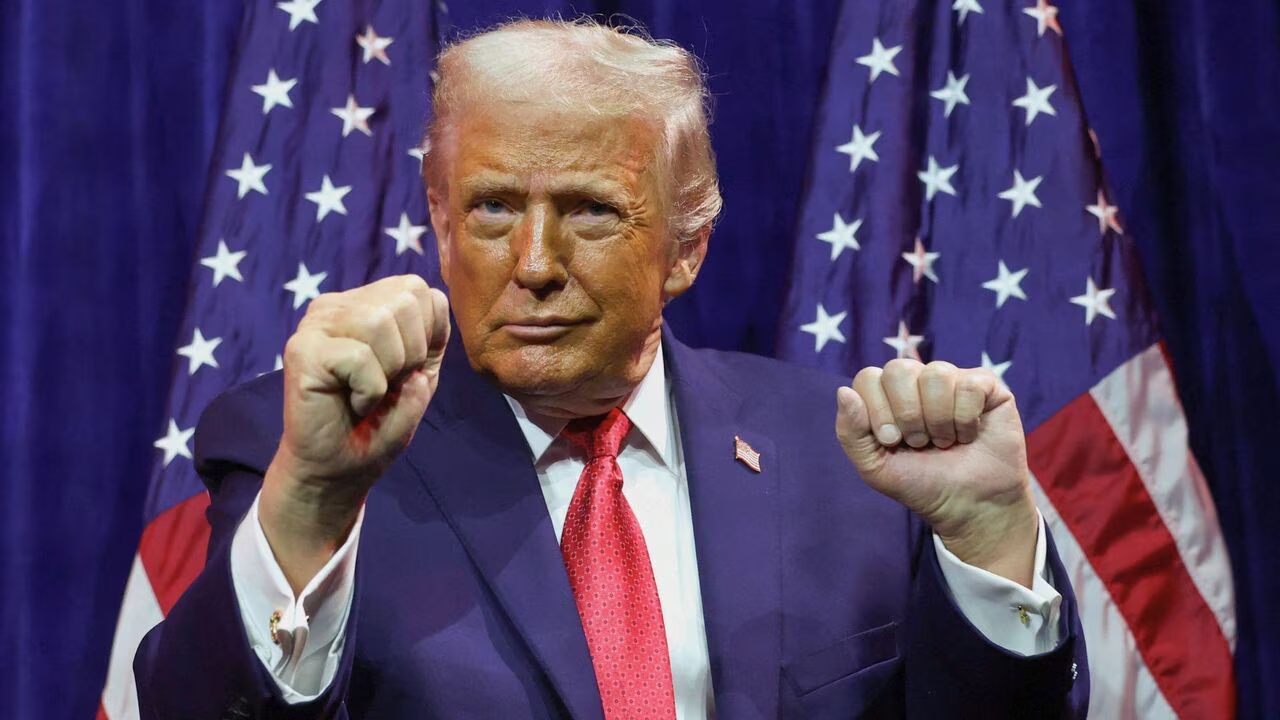
In a move that stunned many in the international community, Donald Trump claimed that Venezuela had agreed to send between 30 and 50 million barrels of oil to the U.S. This announcement is part of a broader shift in U.S. foreign policy toward Venezuela, signaling a potential thaw in relations after years of tension under the Trump administration. The deal was seen as a way for Venezuela to shore up its struggling economy while offering a temporary reprieve from the crushing sanctions that have severely hindered its oil industry.
Trump’s announcement was a direct response to Venezuela’s ongoing economic crisis, which has seen hyperinflation, widespread poverty, and mass migration. By providing oil to the U.S., Venezuela may gain much-needed financial support and international credibility. However, the deal also raises questions about the long-term consequences for Venezuela’s political future and the potential impact on global energy prices.
A Shift in Power Dynamics

Trump’s announcement has the potential to dramatically reshape the geopolitical landscape in Latin America. U.S.-Venezuela relations have been hostile for years, with Venezuela’s socialist government under President Nicolás Maduro facing intense criticism from Washington. The U.S. has imposed economic sanctions, aimed at weakening Maduro’s regime and forcing him to relinquish power. These sanctions have severely crippled Venezuela’s economy, particularly its oil sector.
The decision to secure oil from Venezuela marks a shift in U.S. strategy. It signals a potential easing of tensions between the two countries, especially as the U.S. looks to strengthen its energy security amid global uncertainties. Venezuela, in turn, may see this deal as an opportunity to regain some level of economic stability and alleviate the pressure from U.S. sanctions.
However, the move could also have far-reaching consequences in the region. Latin American countries, including Cuba and Nicaragua, have long been allies of Venezuela, and any rapprochement between the U.S. and Venezuela could alter the balance of power in the region. Additionally, countries like Russia and China, which have been major supporters of Venezuela in recent years, may view this shift in U.S. policy with concern.
Supply and Demand Shifts

One of the most immediate impacts of this deal will be on global oil prices and the balance of supply and demand. As one of the largest oil reserves in the world, Venezuela’s oil has long been a valuable asset on the global market. However, due to political and economic challenges, Venezuela has not been able to fully tap into its reserves.
With the announcement that Venezuela will send 30-50 million barrels to the U.S., there is a potential for global oil supply to increase. This could have a significant effect on oil prices, especially in the context of rising demand from emerging economies and supply chain disruptions caused by geopolitical tensions, such as the war in Ukraine.
For the U.S., securing access to Venezuelan oil could provide a temporary relief to its own supply needs. In recent years, the U.S. has relied on oil imports from countries like Saudi Arabia, Canada, and Mexico. By tapping into Venezuela’s vast reserves, the U.S. could diversify its sources of oil and strengthen its energy security. However, this deal also raises questions about the long-term stability of the oil market and how it will be impacted by shifting global alliances.
A Lifeline or a Short-Term Fix?
For Venezuela, the agreement to send oil to the U.S. presents an opportunity for much-needed economic relief. The country’s oil industry has been plagued by underinvestment, corruption, and the effects of U.S. sanctions, leading to a dramatic decline in production. By exporting oil to the U.S., Venezuela may be able to bring in foreign currency, invest in infrastructure, and provide some relief to its struggling economy.
However, this deal may only offer a short-term fix. Venezuela’s long-term economic recovery will depend on its ability to rebuild its oil sector, attract investment, and stabilize its political environment. While the U.S. may be willing to engage with Venezuela on energy issues, it is unlikely that the relationship will fully thaw until there are significant political reforms within the country. The deal also highlights the need for Venezuela to diversify its economy and reduce its dependence on oil as its sole economic lifeline.
Will This Deal Undermine U.S. Foreign Policy?
While the deal has been welcomed by some as a pragmatic solution to Venezuela’s economic woes, it has also sparked controversy. Critics argue that engaging with Venezuela in this way undermines U.S. foreign policy goals in Latin America, particularly the goal of promoting democracy and human rights.
For years, the U.S. has supported opposition leaders in Venezuela, calling for the removal of President Nicolás Maduro. Some argue that the U.S. should not reward a regime that is accused of widespread human rights abuses and corruption. Others believe that any engagement with Venezuela should be conditional on political reforms and a commitment to free elections.
The decision to secure oil from Venezuela could also send a mixed message to other authoritarian regimes, such as those in Cuba and Nicaragua, who may interpret this shift as a sign that the U.S. is willing to negotiate with governments that do not meet democratic standards. As such, this deal could have far-reaching implications for U.S. foreign policy in Latin America and beyond.
A New Era?
Looking ahead, the deal between Venezuela and the U.S. could signal the beginning of a new chapter in bilateral relations. If the arrangement is successful, it could open the door for further economic cooperation and a potential easing of sanctions. However, this would require significant political changes in Venezuela, including greater transparency and respect for human rights.
For now, the oil deal remains a controversial but pragmatic decision aimed at securing energy resources and addressing Venezuela’s economic crisis. As both countries navigate this complex relationship, the global community will be watching closely to see how this agreement shapes the future of U.S.-Venezuela relations and its impact on global energy markets.
Closing
Trump’s announcement that Venezuela will send 30-50 million barrels of oil to the U.S. has set the stage for a potentially transformative shift in both U.S.-Venezuela relations and the global energy landscape. While the deal offers immediate economic relief for Venezuela, it also raises important questions about the long-term implications for U.S. foreign policy, global oil markets, and Venezuela’s political future.
As the deal unfolds, it will be important to monitor its effects on both countries and the broader geopolitical environment. Whether this agreement marks the beginning of a new era in U.S.-Venezuela relations, or whether it is a short-term fix to a larger set of issues, remains to be seen.