
Table of Contents
A National Outpouring of Relief and Celebration
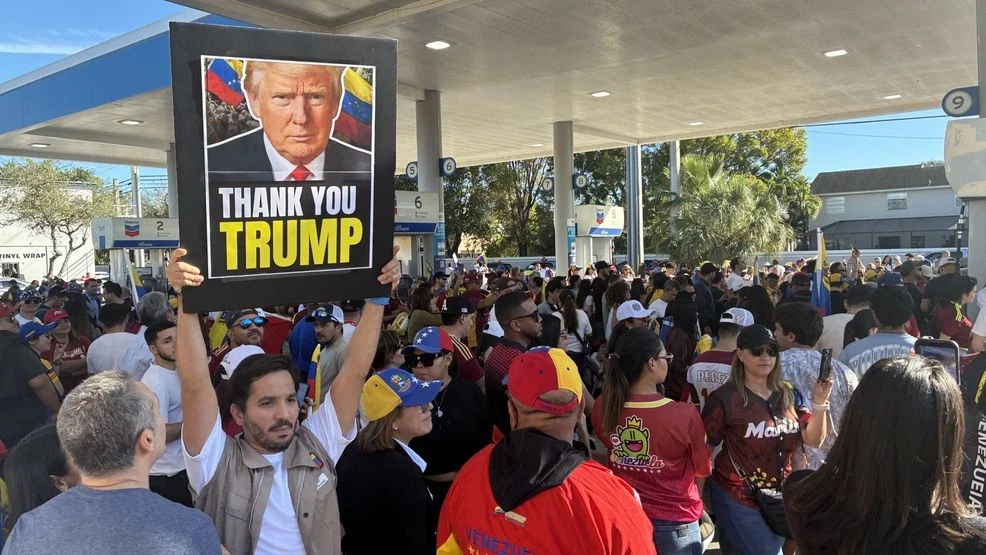
The announcement that U.S. forces had successfully captured Maduro spread like wildfire across the country. Venezuela’s social media networks exploded with images of people celebrating in the streets, waving flags, dancing, and singing. For many, the news was almost too good to be true—after years of oppressive rule, the possibility of a new Venezuela was finally within reach.
Venezuelans from all walks of life, regardless of their political affiliations, united in the streets of Caracas, Maracaibo, and other major cities, celebrating the symbolic end of an era. For some, the celebrations were personal, as they reflected on the toll that Maduro’s regime had taken on their families and communities. For others, it was a collective outburst of joy, a sense of solidarity among the people that had been crushed for so long.
The streets became a sea of people waving flags, holding up signs that read “Viva Venezuela Libre,” and chanting slogans of freedom and justice. The jubilant mood was contagious, with entire neighborhoods participating in the spontaneous celebrations. The mood was electrified with optimism, as many felt that the long-awaited day of change had finally arrived.
The Role of the U.S. Forces and International Reactions:

The role of U.S. forces in Maduro’s reported capture added an additional layer of complexity to the situation. While the U.S. has been a vocal critic of Maduro for years, imposing heavy sanctions on his government in an attempt to undermine his rule, the idea of direct intervention stirred a mix of emotions both domestically and abroad. In Venezuela, the news was seen by many as a moment of liberation from the tyrannical regime that had oppressed them for so long.
Internationally, the U.S. government’s involvement was met with a mix of praise and skepticism. Some world leaders expressed support for the capture, viewing it as a necessary step toward restoring democracy in Venezuela. Others, however, questioned the legality and ethics of foreign military intervention in sovereign nations, particularly given the complexities of the Venezuelan political landscape.
For some, the capture of Maduro was seen as a necessary catalyst for the country’s political transformation, while others feared that it could escalate tensions in the region. The question of what comes next for Venezuela—whether a peaceful transition of power will take place or whether the country will descend into further chaos—remains a topic of heated debate.
The People’s Sentiments: A Renewed Hope for Change

The jubilant celebrations in Venezuela are indicative of the deep yearning for change within the country. The Venezuelan people have endured years of suffering, and the capture of Maduro symbolizes the potential for a brighter future. While many are cautious about what comes next, there is an undeniable sense of hope and renewal.
Venezuelans have long been yearning for freedom from corruption, economic mismanagement, and authoritarian rule. The celebrations in the streets are not just about the fall of a single man, but about the fall of a regime that has plagued the country for over a decade. For many, it is a reminder that no dictator, no matter how entrenched in power, is invincible.
Looking Ahead: What’s Next for Venezuela?

While the celebrations were nothing short of historic, the challenges that lie ahead for Venezuela remain formidable. The fall of Maduro does not automatically guarantee a smooth transition to a better future. Venezuela’s political and economic systems are in dire need of restructuring, and the international community’s support will be crucial in ensuring that the country moves toward a more democratic and prosperous future.
The question now is what kind of Venezuela will emerge from the ashes of Maduro’s regime. Will it be a nation that embraces democratic reforms, justice, and peace? Or will it fall into further disarray, as power struggles and political conflicts unfold in the wake of Maduro’s downfall?
The international community will have a critical role to play in helping Venezuela rebuild. It is essential for foreign governments, organizations, and institutions to support the Venezuelan people during this uncertain time, ensuring that the country can transition to a more stable, peaceful, and prosperous future.
Conclusion: A Symbol of Freedom and Resilience
The celebrations in Venezuela following the news of Nicolás Maduro’s reported capture by U.S. forces represent a turning point in the country’s long struggle for freedom. For millions of Venezuelans, the event symbolizes the possibility of a future where they are no longer bound by the chains of tyranny. It is a moment of liberation, a symbol of the people’s resilience in the face of overwhelming odds.
However, the road ahead remains uncertain. Venezuela’s political landscape is complex, and the challenges of rebuilding the country will not be easy. But for now, the people of Venezuela are celebrating their hard-won victory—one step closer to a brighter future. Whether the country can capitalize on this moment of hope and transform itself remains to be seen, but the joy in the streets offers a glimpse of what is possible when a people rise up in pursuit of freedom.