

Table of Contents
- A Major Shift In Virginia Gun Policy
- What Changes On July 1
- Firearm Industry Accountability
- The Assault Weapon Restriction
- High-Capacity Magazine Limits
- Vehicle Storage Rules
- Supporters Say The Laws Will Save Lives
- Opponents Call It Political Overreach
- Virginia Enters A National Debate
- What Residents Should Watch Next
- A Defining Moment For Virginia
A Major Shift In Virginia Gun Policy
Virginia is preparing for one of its most closely watched changes in gun policy as several new firearm laws are set to take effect in July. The legislation has already triggered strong reactions from both gun safety advocates and gun rights supporters, turning the state into another major battleground in America’s long-running debate over firearms, public safety, and constitutional rights.
Attorney General Jay Jones spoke Monday about Virginia’s new firearm accountability law, known as HB21 and SB27. The law sets standards of conduct for firearm dealers and requires members of the firearm industry to maintain control over the sale of firearms. Supporters argue the measure is designed to reduce harmful practices and hold industry members responsible when their conduct contributes to violence.
Jones framed the law as a response to the human cost of gun violence. He said gun violence affects families, communities, and the future, leaving empty seats at dinner tables and devastating neighborhoods. His comments reflected the emotional force behind the legislation and the belief among supporters that the state must do more than react after shootings happen.
But opponents see the new laws very differently. Gun rights advocates argue that the measures go too far, restrict commonly owned firearms, and violate the Second Amendment. For them, the laws are not a safety breakthrough but a political move that targets lawful gun owners.
What Changes On July 1

Starting July 1, Virginia will enforce new restrictions affecting assault weapons, high-capacity magazines, firearm industry accountability, and the storage of guns in unattended vehicles.
One of the most closely watched changes makes it illegal, with exceptions, for anyone to buy, sell, import, manufacture, or transfer an assault weapon. Another law makes it a crime, also with exceptions, to import, sell, barter, transfer, or buy a high-capacity magazine capable of holding more than 15 rounds of ammunition.
A separate law deals with guns left in vehicles. Under the new rule, it becomes a crime to leave a firearm unattended in a vehicle unless it is out of sight and locked inside a container.
Together, these laws represent a major shift in Virginia’s approach to firearm regulation. Supporters say the changes are designed to prevent mass violence, reduce illegal gun access, and encourage responsible firearm storage. Critics say the laws punish law-abiding gun owners while doing little to stop criminals who already ignore the law.
The debate is not just about technical firearm definitions. It is about what kind of public safety strategy Virginia should follow and how far the state can go before gun owners say their rights have been infringed.
Firearm Industry Accountability
The firearm industry accountability law is one of the most significant parts of the new package. According to the Office of the Attorney General, the legislation is intended to hold firearm industry members accountable for harmful practices.
The law sets expectations for responsible conduct by firearm dealers and industry participants. It requires those involved in selling firearms to maintain control over the sale process and avoid practices that could contribute to public harm.
Supporters argue that this kind of accountability is necessary because guns do not move into communities by accident. They pass through manufacturers, distributors, dealers, and purchasers. When that system fails, firearms can end up in dangerous hands.
The idea behind the law is that industry members should not be able to ignore suspicious conduct, careless sales, or irresponsible practices. If a dealer or industry participant contributes to harm by failing to follow responsible standards, the law gives authorities a way to respond.
Critics argue that the measure unfairly targets the firearm industry and may expose businesses to lawsuits or enforcement actions for crimes committed by others. They say lawful sellers should not be blamed for the actions of criminals.
That disagreement is why this law is expected to remain controversial long after it takes effect.
The Assault Weapon Restriction

The assault weapon restriction is likely to draw the most public attention. Supporters of the law argue that firearms designed to fire many rounds quickly have been used in mass casualty attacks and do not belong in public spaces such as schools, grocery stores, and houses of worship.
Governor Abigail Spanberger said firearms designed to inflict mass casualties do not belong in the streets, schools, grocery stores, or places of worship. She also said such weapons put law enforcement officers in an impossible position.
Those comments reflect the argument made by many gun safety advocates: that certain weapons and firearm features increase the danger during mass shootings and make it harder for police and civilians to survive an attack.
Gun rights advocates strongly reject that view. They argue that many firearms affected by assault weapon laws are commonly owned by Americans for self-defense, sport shooting, and other lawful purposes. They also argue that the phrase assault weapon can be politically loaded and confusing because it often refers to semi-automatic firearms based on features rather than whether the weapon functions like a military machine gun.
For opponents, the concern is not only about one category of guns. It is about the precedent. If the state can ban the purchase or transfer of one widely owned firearm type, they fear more restrictions may follow.
High-Capacity Magazine Limits
Another new law targets high-capacity magazines that can hold more than 15 rounds of ammunition. Supporters say limiting magazine capacity can reduce the number of rounds a shooter can fire before needing to reload, potentially giving victims or law enforcement critical moments to act.
This argument often appears in debates after mass shootings. Gun safety advocates say large magazines make attacks deadlier because they allow shooters to fire repeatedly without interruption. They believe reducing magazine capacity is a practical way to lower the risk of mass casualty events.
Opponents say the limit is arbitrary and affects responsible gun owners who use standard magazines for self-defense. They argue that many commonly sold firearms come with magazines that exceed 15 rounds and that limiting capacity may leave law-abiding people at a disadvantage during emergencies.
The disagreement shows how differently each side views risk. Supporters focus on the potential for public harm when high-capacity magazines are used in attacks. Opponents focus on the rights and defensive needs of individual gun owners.
That conflict has made magazine limits one of the most emotionally charged pieces of firearm legislation across the country.
Vehicle Storage Rules
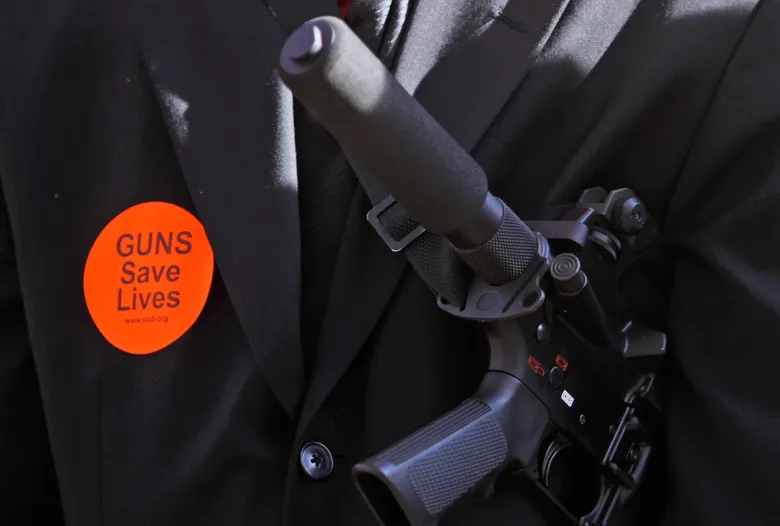
The new vehicle storage law takes aim at a different problem: guns stolen from cars. Under the rule, it becomes a crime to leave a gun unattended in a vehicle unless it is out of sight and locked in a container.
Supporters say this is a common-sense measure. They argue that unsecured guns in vehicles can be stolen and later used in crimes, turning a careless storage decision into a public safety threat.
The law does not appear to ban people from having guns in vehicles. Instead, it requires a higher level of responsibility when the owner leaves the firearm unattended. The goal is to prevent firearms from being visible, accessible, and easy to steal.
Critics may see the measure as another burden on lawful gun owners, especially those who carry firearms regularly and may need to secure them when entering places where guns are not allowed.
Still, among the new laws, vehicle storage may be one of the easier measures for the public to understand. A gun left in plain view can attract theft. A locked container reduces that risk.
The real debate is whether criminal penalties are the right tool to enforce responsible storage.
Supporters Say The Laws Will Save Lives
Supporters of Virginia’s new laws say the state is taking a meaningful step toward reducing gun violence. They see the legislation as part of a larger effort to prevent shootings before they happen.
For them, accountability matters at every stage: how guns are sold, what kinds of weapons can be transferred, how many rounds a magazine can hold, and whether firearms are stored safely when left in vehicles.
Attorney General Jay Jones emphasized the toll of gun violence on families and neighborhoods. His message was not only legal but emotional. The argument is that every shooting leaves behind grief, trauma, fear, and lasting damage.
Supporters believe the new laws give Virginia more tools to respond to those realities. They argue that gun violence is not inevitable and that policy can reduce risk.
They also believe the firearm industry should not be treated as untouchable. If other industries can be held accountable for harmful practices, they argue, firearm sellers and industry members should also meet responsible standards.
Opponents Call It Political Overreach

Gun rights advocates have strongly criticized the new laws, saying they violate the Second Amendment and will affect common firearms owned by many Virginians.
Philip Van Cleave of the Virginia Citizens Defense League argued that the Founding Fathers wanted Americans to be able to protect themselves and that the Second Amendment should not be infringed. He described the new changes as political posturing and said he saw no advantage to them.
That reaction reflects the broader gun rights position: criminals do not obey gun laws, so new restrictions mainly burden people who already follow the law. Opponents argue that lawmakers should focus on violent offenders rather than restricting firearms or magazines owned by ordinary citizens.
They also worry that the laws will be difficult to understand and enforce. When gun laws rely on technical definitions, firearm owners may fear accidentally violating rules they do not fully understand.
For gun rights groups, the fight is about more than one state law. It is about defending a constitutional right they believe is constantly under pressure.
Virginia Enters A National Debate
Virginia’s new laws place the state inside a larger national battle over guns. Across the United States, Democratic-led states have pushed for restrictions on assault weapons, high-capacity magazines, ghost guns, unsafe storage, and firearm industry practices. Republican-led states have often moved in the opposite direction, expanding concealed carry rights and loosening restrictions.
This divide shows how deeply firearms are tied to politics, identity, public safety, and personal freedom in America.
Supporters of stronger gun laws often point to mass shootings, school violence, and daily gun deaths as evidence that action is needed. Opponents point to the Constitution, self-defense, rural culture, and distrust of government power.
Virginia has shifted politically in recent years, making its gun policy especially important to watch. Changes in state leadership can quickly change the direction of firearm regulation. That is why these July laws are not only local news. They are part of a national policy fight.
What Residents Should Watch Next

As the laws take effect, Virginians can expect continued debate, possible legal challenges, and questions about enforcement.
Gun owners will likely seek clarity on what is allowed, what is restricted, and which exceptions apply. Firearm dealers may need to review their practices to ensure they comply with new accountability standards. Law enforcement agencies may also face questions about how the rules will be applied in real situations.
The political fight is unlikely to end on July 1. In fact, the effective date may only begin the next phase. Supporters will look for evidence that the laws reduce harm. Opponents will look for cases that show confusion, overreach, or constitutional problems.
The courts may eventually play a major role in deciding how far Virginia’s new gun laws can go. Until then, the laws will become part of daily life for gun owners, dealers, law enforcement, and communities across the state.
A Defining Moment For Virginia
Virginia’s new gun laws mark a defining moment in the state’s firearm debate. Supporters say the legislation will make communities safer by holding the gun industry accountable, limiting access to weapons designed for mass harm, restricting high-capacity magazines, and requiring safer storage in vehicles.
Opponents say the laws are unconstitutional, politically motivated, and unfair to law-abiding gun owners. They argue that public safety cannot be improved by restricting the rights of people who legally own firearms.
Both sides see the stakes as urgent. One side sees empty seats at dinner tables and communities wounded by gun violence. The other sees a constitutional right being narrowed by lawmakers who do not understand or respect gun ownership.
That is why the July rollout will be watched so closely. The laws are not just legal changes on paper. They represent two competing visions of safety in America.
For supporters, safety means stronger rules before tragedy happens. For opponents, safety means preserving the right to defend oneself without government overreach.
Virginia is now testing where that balance should be drawn. The answer will shape not only firearm policy in the state, but also the broader national debate over guns, rights, responsibility, and public safety.