
Table of Contents
- A Classroom Slide That Sparked A Major Debate
- Who Is Jessica Adams?
- The Graphic At The Center Of The Case
- How The Complaint Moved Forward
- Indiana’s Intellectual Diversity Law
- What Happened After The Investigation
- Adams Says She Felt Tricked
- Academic Groups Raise Concerns
- Why This Case Became A Flashpoint
- The DEI Backdrop
- What This Means For Classrooms
- A Firing That Leaves Bigger Questions
A Classroom Slide That Sparked A Major Debate
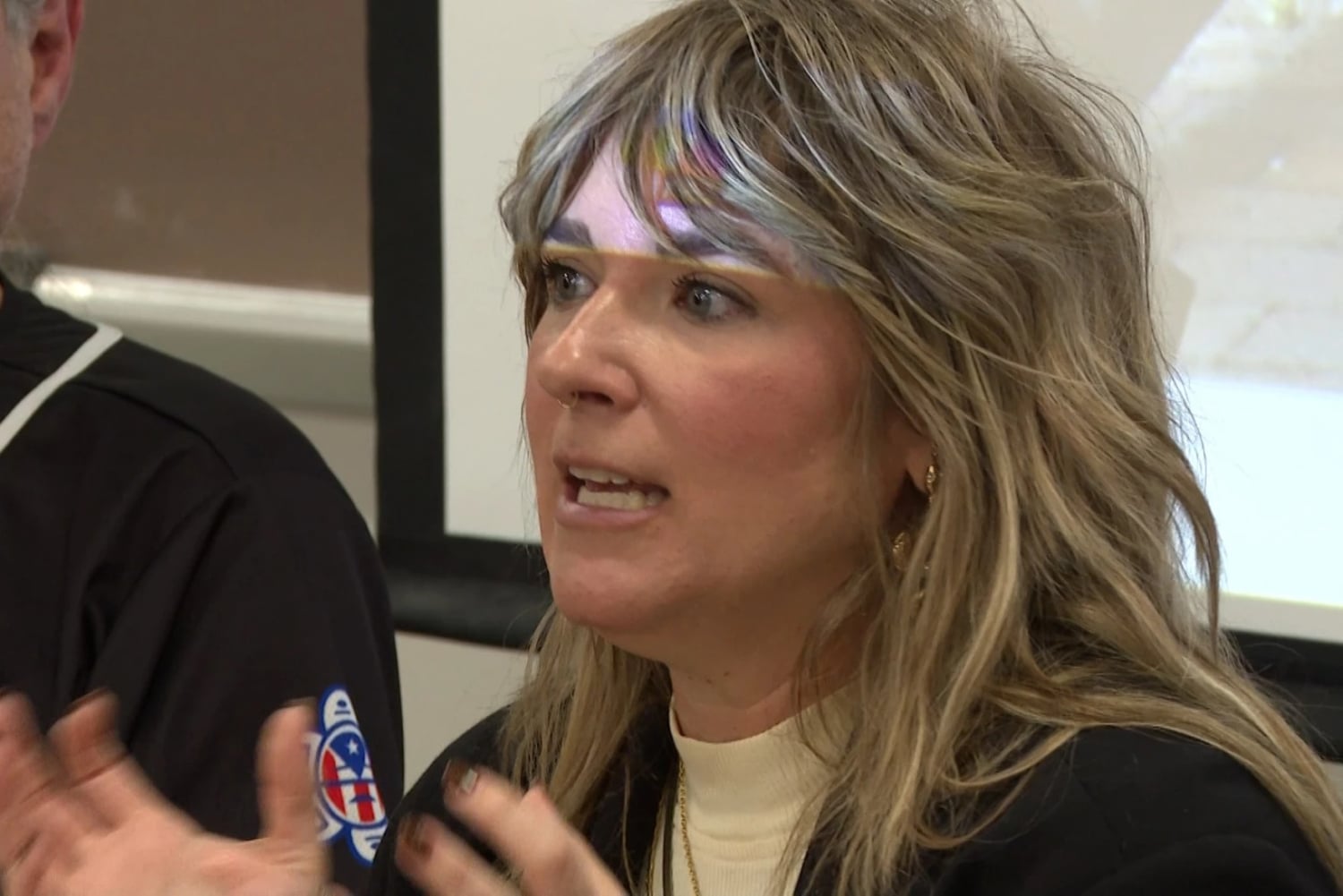
A classroom lecture at Indiana University has turned into a national flashpoint after a social work lecturer lost her job following a complaint over a slide that connected the Make America Great Again slogan to a broader academic discussion about covert white supremacy.
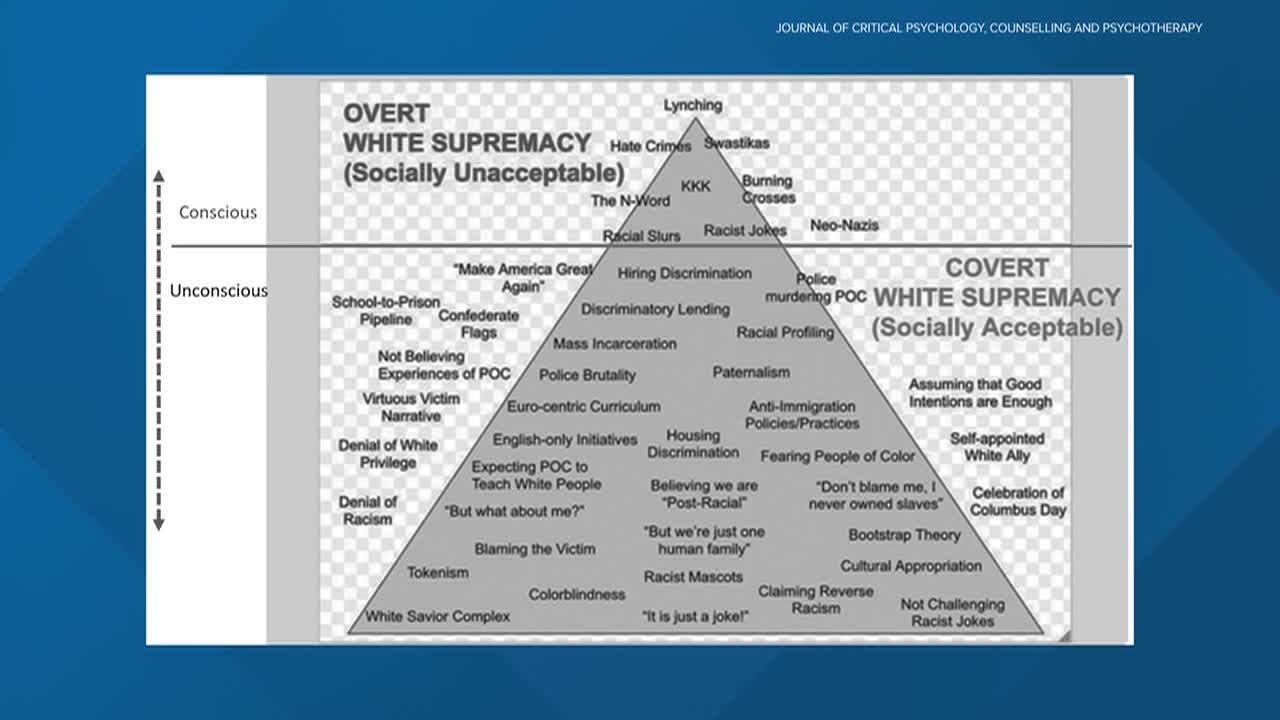
Jessica Adams, a lecturer in social work, was teaching a graduate seminar titled “Diversity, Human Rights and Social Justice” when the incident took place in September 2025. During the class, she showed students a graphic known as the “Pyramid of White Supremacy.” The image, created by the Safehouse Progressive Alliance for Nonviolence, places overt racist violence at the top and more socially accepted behaviors at the bottom.
The graphic listed MAGA among examples of covert white supremacy, alongside topics such as red-lining, racial micro-aggressions, and the celebration of Columbus Day. That classroom moment later triggered a complaint, an internal investigation, classroom monitoring, and finally a decision not to renew Adams’ contract.
The case has now become one of the most visible disputes involving Indiana’s 2024 intellectual diversity law, Senate Enrolled Act 202. Supporters of the law say it protects free inquiry and viewpoint diversity. Critics argue it may chill classroom conversations about race, inequality, politics, and social justice.
Who Is Jessica Adams?
Jessica Adams worked as a social work lecturer at Indiana University. Her class, based on the title provided in reports, focused on diversity, human rights, and social justice. Those subjects often include difficult conversations about race, power, discrimination, identity, and public policy.
Instructors in fields such as social work are frequently expected to teach students about inequality and the systems that shape people’s lives. That can include discussions that are uncomfortable or politically sensitive. Adams’ defenders argue that the slide appeared in an academic context and was connected to course material.
But critics saw the inclusion of MAGA in the graphic as politically biased. To them, listing a major political slogan inside a chart about white supremacy crossed a line from teaching into ideological framing.
That tension is at the center of the case. Was the slide part of a legitimate academic discussion, or did it fail to foster the type of intellectual diversity now required under Indiana law? The university’s handling of Adams’ case has placed that question directly in the public spotlight.
The Graphic At The Center Of The Case
The “Pyramid of White Supremacy” is the graphic that triggered the complaint. It is designed to show how extreme acts of racism can be supported by less visible or more normalized beliefs and behaviors. At the top are overt acts, including hate crimes and lynching. At the bottom are behaviors described as covert or socially acceptable forms of white supremacy.
According to the article provided, MAGA appeared near the base of the pyramid as one of those covert examples. That placement became the most controversial part of the classroom material.
For some students and observers, the slide may have looked like an academic tool meant to spark discussion. For others, it may have appeared to label supporters of a political movement as connected to white supremacy. The distinction matters because universities are supposed to be places where ideas can be examined, challenged, and debated.
The controversy also reveals how one classroom image can carry different meanings depending on who views it. In a social justice class, the lecturer may see the graphic as a framework for discussion. A student may see it as a political accusation. A university may see it as a potential violation of state requirements. That is how one slide became much bigger than one class.
How The Complaint Moved Forward
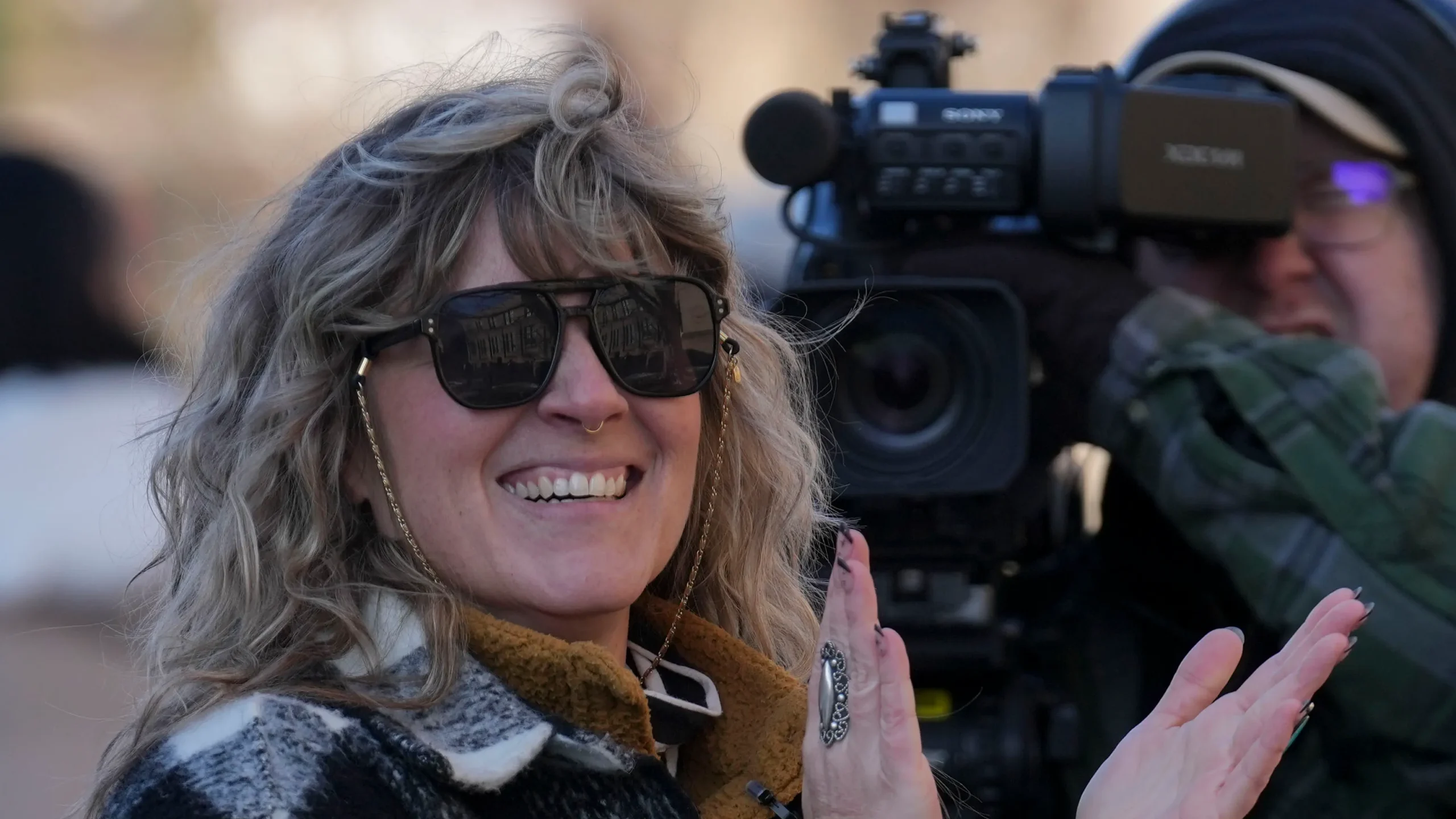
One of the most striking parts of the case is how the complaint reached university leadership. According to the report, the student did not file the complaint through Indiana University’s internal process. Instead, the student contacted Republican U.S. Sen. Jim Banks, an ally of President Trump.
The senator’s office then forwarded the complaint to the School of Social Work dean. After that, an internal investigation began.
That path has become a major concern for critics of the university’s handling of the situation. They question why a classroom concern moved through a senator’s office before landing with university administrators. They also question whether political pressure influenced the investigation.
Supporters of Adams argue that this kind of process could discourage faculty from teaching controversial subjects. If professors worry that a student complaint might quickly move from the classroom to a political office, they may avoid difficult topics altogether.
Supporters of the complaint may see the situation differently. They may argue that students have the right to challenge classroom material they believe is one-sided, especially under a law designed to protect intellectual diversity.
Indiana’s Intellectual Diversity Law
The case is tied to Indiana’s 2024 intellectual diversity law, Senate Enrolled Act 202. The law allows students to report faculty they believe are not supporting free inquiry, free expression, and intellectual diversity.
On paper, the goal is to make sure public university classrooms do not become spaces where only one political or ideological view is welcomed. The law reflects a broader national debate about whether higher education is politically balanced and whether students with unpopular views feel free to speak.
But critics say laws like this can have the opposite effect. Instead of encouraging more discussion, they argue, it may make professors more cautious. Faculty may avoid topics involving race, gender, politics, inequality, or history because those subjects can easily lead to complaints.
Adams’ case has become a test of how the law works in practice. If a lecturer uses an existing academic graphic in a class about social justice, can that be treated as a failure to encourage intellectual diversity? Or should the classroom context protect the instructor’s decision to present controversial material?
That question is now at the heart of the controversy.
What Happened After The Investigation

After the complaint was forwarded to the university, Adams was removed from the class. When she returned in January 2026, university observers were reportedly placed in her sessions to monitor compliance with SEA 202.
That monitoring has become another major point of debate. For critics, placing observers in a classroom can feel like surveillance. It may change the way an instructor teaches and the way students participate. Some may become more careful about what they say, especially in a class built around sensitive social issues.
The university later formalized the decision not to renew Adams’ contract in a May 22 letter from Chancellor Latha Ramchand. According to the report, an improvement plan issued before the non-renewal cited other concerns, including time management and course organization, rather than only the MAGA graphic.
That detail complicates the story. The university may argue that the non-renewal was based on broader performance concerns. Adams and her supporters may argue that the classroom slide and the political complaint created the path toward her losing her job.
Adams Says She Felt Tricked
Adams has said she felt “very tricked” after believing the dean was supporting her, only to later see her own class materials used as evidence in the review.
According to the report, Adams said she would not have voluntarily provided her materials if she had known they would be used against her. That statement has become an emotional part of the story because it suggests a breakdown of trust between faculty and administration.
In academic workplaces, instructors often share syllabi, slides, and teaching materials with department leaders. That is usually part of normal professional review. But in a politically sensitive investigation, those same materials can become evidence.
Adams is appealing both the initial sanction and the decision not to renew her contract. Civil liberties groups are also backing her, according to the report.
Her appeal may focus not only on the content of the slide, but also on the process used to investigate her. The process may become just as important as the classroom material itself.
Academic Groups Raise Concerns
The American Association of University Professors has criticized Indiana University’s handling of the case. Scholars at Risk, an international academic advocacy group, also raised concerns about the process.
According to the report, Scholars at Risk noted that the same administrator who initiated the complaint served as a content expert during the investigation. The group argued that this created a conflict of interest that tainted the process.
That criticism matters because academic freedom disputes often turn on procedure. Universities can investigate complaints, but the process must be fair, consistent, and free from conflicts that could influence the outcome.
If the person who helped initiate a complaint also helps evaluate the academic content involved in the complaint, critics may question whether the review was neutral.
The university’s defenders may argue that administrators must assess whether faculty are following policy. But critics say that when political pressure is involved, universities must be especially careful to protect academic independence.
Why This Case Became A Flashpoint
Adams’ firing is not just a workplace dispute. It has become a symbol in a larger fight over what can be taught in public universities.
The subjects at the center of the case are explosive: race, white supremacy, MAGA, political identity, classroom speech, and state control over higher education. Each of those topics already carries national tension. Combined in one case, they created a controversy almost guaranteed to spread.
For conservatives who support intellectual diversity laws, the case may be seen as proof that students need protection from politically loaded instruction. They may argue that public university classrooms should not present a political movement as connected to white supremacy without strong balance and debate.
For civil liberties advocates and academic freedom groups, the case may be seen as a warning that professors can be punished for teaching controversial material. They may argue that classrooms, especially graduate seminars, must allow difficult discussions without fear of political retaliation.
Both sides claim to be defending free expression. The disagreement is over whose expression is most at risk.
The DEI Backdrop
The report also places Adams’ case inside a larger national debate over diversity, equity, and inclusion. Across the United States, many public institutions have faced new pressure over DEI programs, classroom content, and race-based training.
Critics of DEI argue that such programs can promote political bias, ideological conformity, or unfair treatment based on identity. Supporters argue that DEI work helps institutions address inequality, discrimination, and barriers faced by marginalized communities.
Adams was teaching a class centered on diversity, human rights, and social justice. That subject matter already sits inside the broader DEI debate. The MAGA slide controversy made the class a focal point in a much larger conflict over what public universities should teach and how far states should go in regulating classroom content.
This is why the case is being watched beyond Indiana. Other states have passed or considered similar laws affecting higher education. The outcome of Adams’ appeal could influence how faculty across the country think about politically sensitive teaching materials.
What This Means For Classrooms
The biggest question now is how cases like this will affect future classroom discussions. Professors may become more cautious when discussing topics tied to race, politics, gender, history, or inequality. Students may become more willing to report instructors when they believe a class is politically one-sided.
In theory, more reporting could lead to more balanced classrooms. But it could also lead to fear, silence, and self-censorship.
Graduate classes in social work, law, education, public health, and sociology often require students to analyze social structures and power. Those conversations can be uncomfortable. They can also be essential to the subject being taught.
If faculty avoid controversial materials entirely, students may miss important debates. If faculty present controversial materials without room for critique, students may feel pushed toward one viewpoint. The challenge is finding a classroom model that allows difficult material without turning education into political enforcement.
That balance is exactly what the Adams case is forcing Indiana University, and perhaps other public universities, to confront.
A Firing That Leaves Bigger Questions
Jessica Adams’ non-renewal has become more than a personnel decision. It has become a public test of Indiana’s intellectual diversity law, a warning sign for academic freedom advocates, and a rallying point for those who believe universities need stronger viewpoint balance.
The university may argue that its decision was based on policy compliance and broader performance concerns. Adams and her supporters argue that her teaching and academic freedom were unfairly targeted after a politically sensitive complaint.
What happens next may depend on her appeal and on how much pressure civil liberties groups, academic organizations, students, and the public place on the university.
For now, one slide in one graduate classroom has opened a much larger debate. It asks whether controversial academic materials should be protected, challenged, monitored, or punished. It asks whether intellectual diversity laws encourage open debate or create fear among faculty. And it asks whether universities can remain places of difficult inquiry when classroom disputes quickly become political battles.
The case is not only about MAGA, one lecturer, or one Indiana classroom. It is about the future of how race, politics, and power are taught in public universities, and who gets to decide where education ends and ideology begins.