
Table of Contents
- A Family Hidden from the World
- The Encounter That Started It All
- Shock, Sympathy, and the Internet’s Obsession
- Who Are the Whittakers?
- The Roots of Isolation
- Mark Laita’s Mission: Empathy Through the Lens
- The Price of Going Viral
- Science, Genetics, and Controversy
- Poverty, Stigma, and the American Divide
- The Whittakers Today
- Beyond the Headline
A Family Hidden from the World
In the quiet backroads of West Virginia, far from the bright lights of modern America, lives a family whose story has fascinated—and unsettled—the world.
Known as the Whittakers, they have been called “America’s most inbred family,” a label that’s as controversial as it is tragic. Their lives, captured on film by photographer Mark Laita through his Soft White Underbelly project, reveal a portrait of poverty, isolation, and resilience that few outsiders could ever imagine.
But beyond the headlines and viral videos lies something deeper—a reflection of what happens when society forgets its most vulnerable corners.
The Encounter That Started It All
Photographer and documentarian Mark Laita first met the Whittakers in 2004, while exploring Appalachia’s poorest regions for a photo series on forgotten America. But it wasn’t until he returned years later, with a camera and YouTube channel, that their story exploded across the internet.
What he found stunned even him.
In a small, rundown home in the hills of Raleigh County, West Virginia, generations of the same family had lived for decades—often without access to education, healthcare, or even running water. Their isolation was so deep that local neighbors rarely interacted with them, and many of the family members exhibited physical and cognitive challenges likely linked to generations of inbreeding.
When Laita’s footage went online, viewers couldn’t look away. The video was haunting yet humanizing, attracting millions of views and sparking global conversation about poverty, genetics, and empathy.
Would you be curious enough to visit them—or too afraid of what you might see?
Shock, Sympathy, and the Internet’s Obsession
Within days, the Whittakers became an internet phenomenon. Comments flooded in—some compassionate, others cruel. People called them “the real-life Deliverance family,” while others praised Laita for showing the human side of extreme isolation.
What’s clear is that the public’s reaction revealed more about us than about them.
Why are we drawn to such stories of human suffering? Is it curiosity, compassion, or something darker?
Who Are the Whittakers?
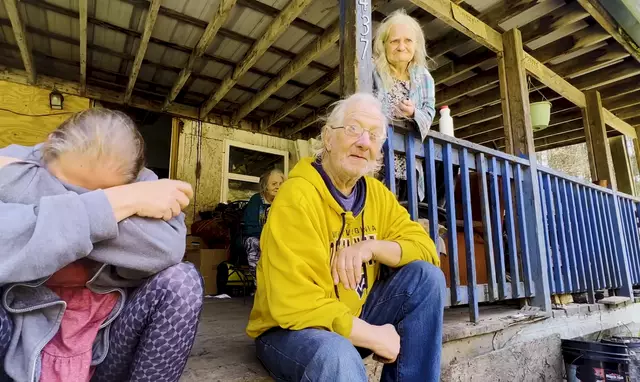
The Whittakers are part of a multigenerational family living in Odd, West Virginia, an isolated Appalachian community. Most of them never attended formal school and have limited ability to read or write.
Laita described their communication as a mix of words, grunts, and gestures, shaped by years of seclusion. Yet behind their unconventional behavior lies an undeniable bond—they protect and care for each other fiercely.
One brother, Ray, became a focal point of sympathy online after he was filmed barking to communicate—a habit developed over years of psychological and social isolation. The footage disturbed millions, but it also revealed the raw humanity of a family shaped by circumstance, not choice.
When asked if he felt exploited by the attention, Mark Laita insisted his goal was not to shame but to document, to make the invisible visible.
The Roots of Isolation
To understand the Whittakers’ story, you must understand Appalachia.
The Appalachian region—stretching from southern New York to Alabama—has long struggled with poverty, lack of infrastructure, and social neglect. Coal mining once sustained the area, but when the industry collapsed, so did the local economy.
Generations of families, like the Whittakers, found themselves trapped in cycles of isolation, far from opportunity. In such communities, limited education and mobility led to closed social circles, and over time, even genetic isolation.
But labeling the Whittakers only as “inbred” misses the larger truth: they’re products of a broken system, one that abandoned rural America decades ago.
Would things be different if someone had reached them sooner?
Mark Laita’s Mission: Empathy Through the Lens
Laita’s Soft White Underbelly channel is known for its unflinching look at society’s margins—from addicts and homeless individuals to victims of abuse. Yet the Whittakers’ story stands out as perhaps his most powerful and disturbing work.
In his interviews, he approaches the family with respect and compassion, providing food, clothing, and financial assistance. “They didn’t ask for this life,” he said in one interview. “They were born into circumstances beyond their control.”
That statement reframes everything. Instead of seeing the Whittakers as a curiosity, we begin to see them as a mirror—reflecting the consequences of generational poverty, neglect, and survival without support.
When was the last time we truly looked at those who live beyond society’s reach?
The Price of Going Viral
Viral fame brought both blessings and burdens for the Whittakers.
Donations poured in from viewers around the world, enough to help repair their home and provide basic necessities. Yet with visibility came exploitation—trolls, trespassers, and unwanted attention from strangers hoping to film them.
Local police even had to warn visitors to respect their privacy. For a family that had lived most of their lives unseen, the sudden spotlight was both overwhelming and invasive.
Mark Laita continues to visit and support them, trying to ensure that the attention translates into tangible help, not harm.
But the question lingers: when the cameras leave, what happens next?
Science, Genetics, and Controversy
From a scientific perspective, inbreeding increases the likelihood of genetic disorders due to recessive gene pairing. Symptoms can include developmental delays, reduced fertility, and distinct facial or physical features—many of which are visible in the Whittakers’ videos.
Yet reducing their story to a biological anomaly dehumanizes the people behind it. Genetic isolation is only one layer of a much deeper narrative—one rooted in social inequality, poor healthcare access, and generational neglect.
Anthropologists studying similar communities emphasize that understanding, not judgment, is key to breaking cycles of isolation. The Whittakers’ story, then, is not about inbreeding—it’s about the human need for connection in a world that forgot them.
Would you blame genetics—or a system that left them behind?
Poverty, Stigma, and the American Divide
The Whittakers’ life also shines a light on America’s urban-rural divide. While tech cities boom with billionaires, rural families like the Whittakers still live without basic necessities—electricity, plumbing, or medical care.
Their home, with its patched walls and dirt floors, isn’t just a symbol of poverty—it’s a warning about how deep the cracks in society run.
The U.S. Census Bureau estimates that nearly 16% of rural Americans live below the poverty line, yet these stories rarely make headlines—unless they shock us.
Maybe it’s time we stop gawking at poverty and start asking why it still exists in the richest country on Earth.
The Whittakers Today
Thanks to ongoing support from Laita’s audience, the Whittakers have seen improvements in their living conditions. They’ve received donations, repairs, and food assistance. But challenges persist—healthcare, education, and integration remain uphill battles.
Laita’s updates show moments of warmth and humor, proof that beneath the viral label of “America’s most inbred family” lies a family that laughs, loves, and endures.
Their resilience is undeniable. They have survived isolation, ridicule, and poverty—and in doing so, they’ve forced the world to look at what it tried to ignore.
Beyond the Headline
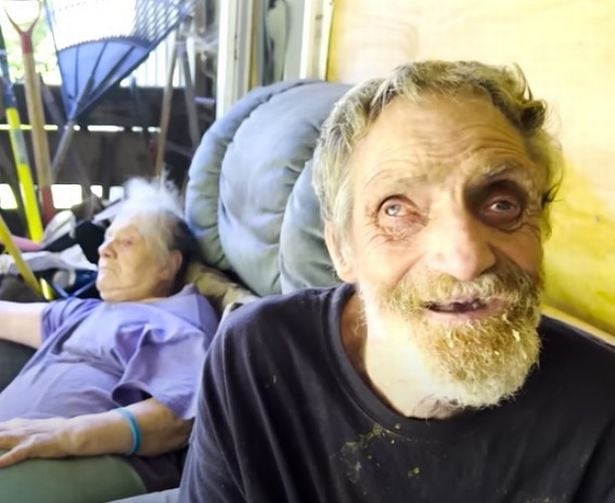
The Whittakers’ story isn’t just about genetics—it’s about human endurance, systemic failure, and the universal desire for dignity.
Yes, their lives are shocking. But shock can be a catalyst for empathy—and empathy can spark change.
If one photographer’s visit can inspire millions to talk about forgotten communities, imagine what collective action could do.
Would you turn away—or help build a bridge back to humanity for families like the Whittakers?