

Table of Contents
- Context Behind Wyoming’s Historic Move
- What the New Legislation Does
- Implications for Reproductive Rights Nationwide
- The Role of Public Opinion and Activism
- Challenges Still Ahead
- The Impact on Wyoming’s Healthcare System
- What This Means for Women in Wyoming
- Conclusion: A Step Forward for Reproductive Rights
Context Behind Wyoming’s Historic Move
Wyoming, traditionally a conservative state, has found itself at a crossroads regarding reproductive rights. In the wake of recent Supreme Court decisions, many states have moved to either restrict or safeguard abortion access. Wyoming was initially among the states to pass restrictive abortion measures, but the pendulum began to shift as the effects of those policies became increasingly evident. With mounting pressure from advocacy groups and public opinion, lawmakers began to reconsider their stance, leading to the landmark vote that passed the new abortion protection law.
This change didn’t happen overnight. Activists, health professionals, and local citizens have been pushing for more robust protections for abortion access, arguing that women should have the right to make choices about their bodies without government interference. Wyoming’s new law is a direct response to these calls for action and signals a significant shift in the state’s political and social environment.
What the New Legislation Does
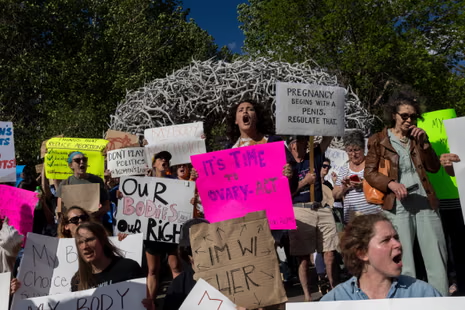
The newly passed legislation in Wyoming offers critical protections for abortion services. It ensures that women can access the procedure within the state without fear of legal consequences, regardless of what happens at the federal level. It also provides resources for healthcare providers who offer abortion services, ensuring they are not targeted or criminalized for performing such procedures.
One of the most important features of the law is that it safeguards access to abortion in cases of medical necessity, such as protecting the life of the mother or when the fetus is diagnosed with conditions incompatible with life. These provisions help ensure that women will not be forced to make impossible decisions when facing challenging medical circumstances.
Moreover, the law allocates funding to reproductive health clinics, allowing them to continue to operate and provide services to women, especially those in rural areas where access to healthcare is already limited. The move is expected to have a positive impact on not only the state’s healthcare system but also its economy, as it could draw women from neighboring states where abortion access is more restricted.
Implications for Reproductive Rights Nationwide
Wyoming’s bold move comes at a crucial time for reproductive rights in the United States. The federal landscape has seen significant shifts with various rulings that have restricted abortion access in certain states, making it even more vital for states like Wyoming to take proactive steps to protect women’s health and rights. By passing this law, Wyoming has joined a growing list of states that are taking matters into their own hands when it comes to safeguarding abortion access.
The law is also a direct challenge to states that have passed more restrictive abortion laws, drawing a clear line in the sand between states that value bodily autonomy and those that seek to restrict it. As more states move in the direction of abortion protection, it could lead to a national reevaluation of abortion laws and spark debates on the need for federal legislation that guarantees reproductive rights across the country.
The Role of Public Opinion and Activism

Wyoming’s decision to pass this law was not solely driven by political elites but by grassroots activism and public opinion. Over the past several years, public opinion on abortion has evolved, with many people — including those in traditionally conservative areas — coming to view access to abortion as a necessary healthcare service. Advocates for reproductive rights in Wyoming organized rallies, petitions, and public campaigns that emphasized the importance of protecting women’s health and ensuring they have access to necessary services.
Organizations such as the Wyoming Women’s Foundation and local chapters of Planned Parenthood have been instrumental in pushing for this legislative change, alongside countless local activists who have dedicated their time and resources to making their voices heard. This public push reflects a larger trend across the country, where activists have worked tirelessly to ensure that abortion remains safe, legal, and accessible for all women.
Challenges Still Ahead
Despite this victory, challenges remain for Wyoming’s abortion law. Opponents of the legislation argue that it will encourage more women to seek abortions within the state, which they believe could lead to moral and societal consequences. These opponents are likely to challenge the law in court, particularly given the increasingly conservative nature of the U.S. judicial system. Legal battles could stretch out for years, potentially leading to further delays in ensuring that the protections offered by this law are fully realized.
Additionally, while the law does provide protections for abortion access, there is still work to be done in ensuring that all women, especially those in underserved communities, have access to the services they need. Wyoming’s vast rural landscape presents challenges for women who may need to travel long distances to access clinics, which is a significant barrier for low-income women and those without access to reliable transportation.
The Impact on Wyoming’s Healthcare System

As Wyoming implements this new law, the state’s healthcare system will need to adjust to the changes. Healthcare providers who offer reproductive services will be required to navigate the legal complexities of providing abortion services while ensuring compliance with the law. This may involve increased training for medical staff, as well as the development of new protocols to ensure that patients’ rights are upheld.
The state also faces the challenge of ensuring that its healthcare system can handle the potential influx of women seeking abortions from other states. This could place added pressure on already strained resources, particularly in rural areas where healthcare facilities are often underfunded and understaffed. However, if handled correctly, this law could present an opportunity for Wyoming to strengthen its healthcare system by expanding access to reproductive services and training medical professionals in this crucial area of healthcare.
What This Means for Women in Wyoming
For women in Wyoming, the passage of this law is a significant win. It guarantees access to a vital healthcare service and provides a much-needed sense of security for women who may have been worried about losing access to abortion services due to national political trends. It is a direct affirmation that women’s health matters and that the state is willing to protect and support women’s rights.
The law also sends a powerful message to other states that are considering similar measures: Wyoming is standing up for women, and its example may inspire other states to follow suit in protecting reproductive rights.
Conclusion: A Step Forward for Reproductive Rights
Wyoming’s decision to pass a law protecting abortion access is a significant step forward for reproductive rights in the United States. It is a testament to the power of grassroots activism and public opinion, and it sets a strong example for other states looking to protect women’s health. While challenges remain, this victory is a crucial moment in the ongoing fight for reproductive justice. As the landscape of abortion access continues to evolve, Wyoming’s leadership could spark a larger movement that ensures women’s rights are protected nationwide.