

Table of Contents
- The Numbers Behind the Trend
- The Rising Cost of Living and Its Effect on Young Adults
- Financial Benefits and the Growing Trend of Financial Independence
- How the Pandemic Accelerated the Trend
- The Social Implications of the Trend
- The Impact on the Housing Market
- Discretionary Spending: The Perks of Staying Home
- Why This Trend Could Continue for Years to Come
- The Changing Definition of Adulthood
- A New Approach to Independence
The Numbers Behind the Trend
According to a study from Morgan Stanley, the percentage of young adults living with their parents hasn’t significantly changed since 2020. While many of these young adults cite saving money as the primary reason for staying home, a deeper look reveals that their financial choices are not solely driven by necessity. In fact, many are using the money saved on rent and utilities to fund discretionary spending on luxury items like travel, entertainment, and even high-end goods. This shift in priorities indicates that while living at home may be financially motivated, it also reflects the evolving desires and lifestyle choices of the younger generation. The pressure to move out and achieve financial independence has not completely dissipated, but the rising cost of living—especially in housing—has made it harder for many to afford their own place.
The Rising Cost of Living and Its Effect on Young Adults

The primary reason young adults are choosing to stay at home is the increasing cost of living, particularly rental prices. According to recent data, the national median rent stands at $2,007 per month, making it increasingly difficult for individuals in their twenties to afford their own apartments. In contrast, many of the young adults still living at home are paying minimal rent to their parents, with nearly half of those still under their roof contributing less than $500 per month. This stark contrast—saving four times as much by living with parents—has encouraged young people to stay in a more comfortable living arrangement for longer, while still being able to enjoy disposable income for non-essential purchases.
The soaring rental costs in major cities, such as New York, Los Angeles, and San Francisco, have exacerbated this issue, as many young professionals simply cannot afford to live in the cities where they work. The result is a growing number of young adults either delaying moving out or not moving out at all, which has far-reaching consequences on everything from housing markets to consumer behavior.
Financial Benefits and the Growing Trend of Financial Independence
While staying at home provides significant financial benefits, it also has profound psychological and social effects. Some experts argue that the longer young adults remain living with their parents, the harder it becomes to leave and truly achieve financial independence. While this delayed transition into adulthood may offer some individuals a cushion during uncertain times, it can also mean that young adults are postponing critical milestones like buying a home, starting a family, or establishing their own independent financial future.
Despite these concerns, the ability to save large sums of money is undeniably attractive to young people. As financial burdens such as student loans and living expenses continue to rise, the option to live at home has allowed many to build savings that would otherwise be impossible. These savings then go toward fun, non-essential spending, which provides young adults with greater freedom to experience life in ways that were previously unavailable to them. Traveling abroad, dining out frequently, or buying expensive tech gadgets may have been unattainable on a tighter budget—living at home has made these experiences more achievable.
How the Pandemic Accelerated the Trend

The pandemic served as a catalyst for this trend, as lockdowns and widespread economic uncertainty made it more difficult for many young adults to find steady work or maintain a living situation independent of their parents. During the height of the pandemic in 2020, 49.5 percent of young adults aged 18 to 29 returned to live with their parents. While many were expected to leave once the crisis subsided, the reality is that for many, the financial strain caused by the pandemic had lasting effects. In fact, the number of young adults living with their parents has remained high, even in the years since the pandemic’s peak.
As the U.S. economy slowly recovers from the recession brought on by the pandemic, housing and rental prices remain stubbornly high, and many young people are finding it difficult to break free from the financial cushion their parents provide. For some, it’s a temporary solution; for others, it’s become a permanent way of life.
The Social Implications of the Trend
While young adults may have more financial freedom when living at home, there are social and emotional implications to consider. Living with parents can create tension, as adult children are often expected to contribute in various ways to household chores, or there may be clashes about independence and privacy. Some young adults may find themselves struggling to assert their independence or develop a sense of self outside of their parents’ household.
This living arrangement can also affect relationships with peers, who may view staying at home for extended periods as a sign of dependence or lack of ambition. In a society where independence and self-sufficiency are highly valued, this trend challenges traditional ideas of what it means to be an adult. The rise of “boomerang kids” has caused some to question whether the trend signals a broader shift in generational attitudes toward work, independence, and financial stability.
The Impact on the Housing Market
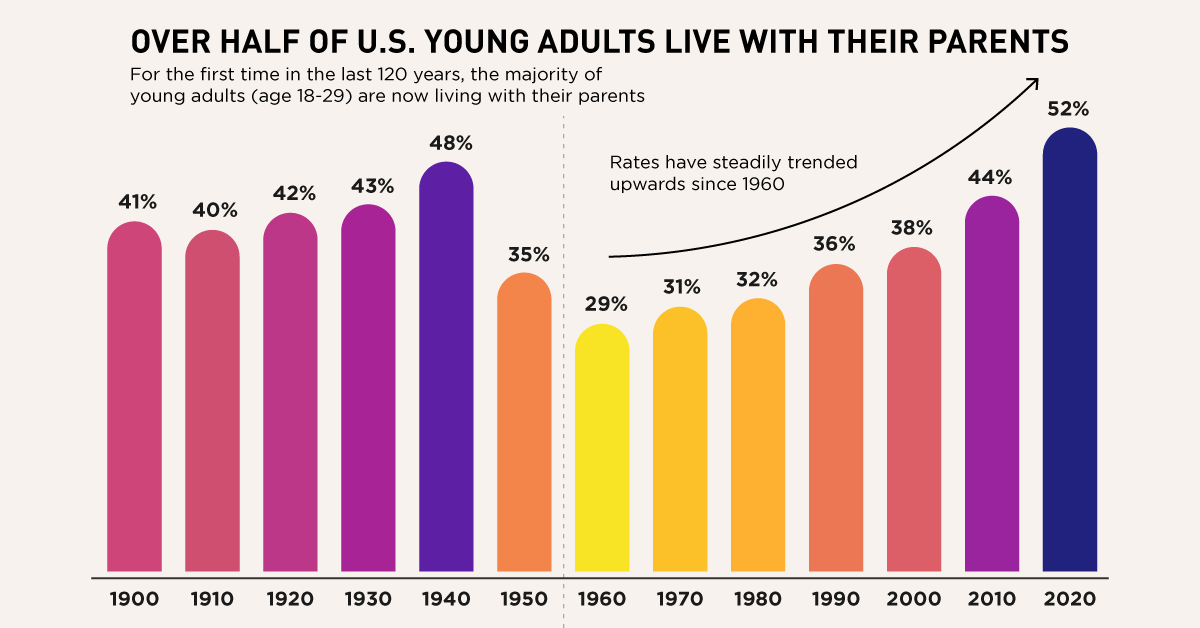
The growing trend of young adults staying at home is having a noticeable impact on the housing market. As fewer young people are moving out on their own, demand for rental properties, particularly in high-cost areas, remains lower than anticipated. This has contributed to a slowdown in housing markets, as fewer individuals are looking to rent or buy homes, especially in urban centers where rental prices are the highest.
Many real estate agents and developers are beginning to adjust their strategies, focusing on properties that appeal to older renters or individuals looking for shared housing options, as opposed to those seeking traditional one-bedroom apartments. This shift in housing trends could change the landscape of urban living, particularly in large cities where young adults have traditionally been a significant part of the rental market.
Discretionary Spending: The Perks of Staying Home
While living at home offers financial advantages, it also changes the way young adults spend their money. Instead of spending on rent, utilities, and groceries, many young adults now have the freedom to focus on leisure and lifestyle. As a result, discretionary spending on travel, luxury goods, entertainment, and experiences has soared. Many young adults are able to travel abroad or purchase high-end fashion items that they would not have been able to afford if they were paying for their own apartment.
This shift in spending has caused a ripple effect throughout industries such as travel, retail, and entertainment. Young people are spending more on experiences and non-essential items, which has allowed businesses in these sectors to thrive during a period when other industries, particularly housing and real estate, have seen slower growth. These industries are seeing a boom in sales and service consumption from a generation that is living with their parents but still enjoying the perks of disposable income.
Why This Trend Could Continue for Years to Come

As rental prices continue to rise and the cost of living remains high, this trend of young adults living with their parents could persist for years to come. Many young people may choose to delay leaving home until they have saved enough money to afford rent or mortgage payments, which could be a process that takes much longer than previous generations experienced. The trend may also continue as housing affordability remains a significant issue in major cities like New York, Los Angeles, and San Francisco.
Furthermore, as the gig economy and remote work become increasingly prominent, young adults may have greater flexibility in terms of where they live. Some may continue to work from home for long periods of time, allowing them to stay with parents while still maintaining successful careers and enjoying the benefits of living in a familiar environment. For many, staying at home could offer the flexibility and freedom they desire without the financial strain that comes with living independently.
The Changing Definition of Adulthood
Ultimately, the trend of young adults living with their parents for longer periods reflects a broader shift in how we define adulthood. Traditionally, adulthood was marked by milestones such as moving out of your parents’ house, getting a job, and living independently. But for many young people today, these milestones are being delayed or redefined due to financial and social factors. Living at home may no longer be viewed as a sign of failure or immaturity but as a sensible and strategic decision in an environment where financial independence is increasingly difficult to achieve.
As we look to the future, it’s clear that this shift will continue to shape the way young people navigate their careers, relationships, and personal goals. The trend of living with parents is a reflection of changing social and economic realities, and it may continue to play a central role in how adulthood is understood for years to come.
A New Approach to Independence
While young adults may still face challenges in achieving full independence, the ability to stay at home and save money has provided many with opportunities they would not have had otherwise. As housing prices continue to soar and social attitudes toward financial independence evolve, the trend of living with parents is likely to remain a fixture of modern life. The longer-term effects on the housing market, lifestyle choices, and generational attitudes are yet to be fully realized, but one thing is clear: adulthood is being redefined for the younger generation, and financial independence may look very different in the years to come.