
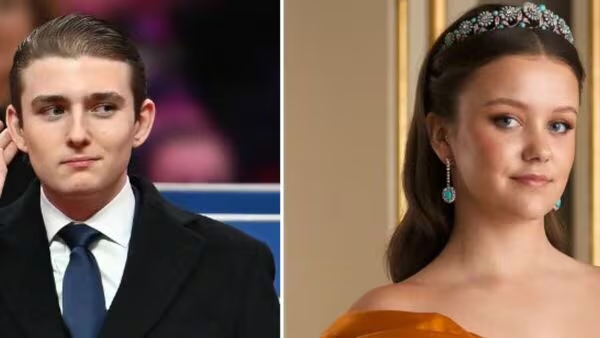
It started the way many modern political “moments” start: with a post designed to be outrageous enough to travel. A viral message on X (formerly Twitter) floated a mock “diplomatic solution” to America’s long-running fascination with Greenland—Barron Trump, the youngest son of Donald Trump, should marry Denmark’s Princess Isabella, and Greenland should be offered as the “dowry.” Within hours, the idea escaped its original context and mutated into a full-blown online spectacle, bouncing between meme pages, political accounts, and news coverage that tried to capture the same thing everyone was watching in real time: satire turning into headline fuel.
Table of Contents
- The hook was ancient, even if the platform was new.
- Why Greenland is the perfect stage for a meme that wants to look like geopolitics.
- The “dowry” line is what made it go nuclear.
- The post’s virality wasn’t purely random
- Then the cycle that always follows went into motion
- The names mattered
- But beneath the spectacle sits a deeper question
- The backlash was predictable, but still instructive.
- In some corners, the meme didn’t just spread.
- The strangest part is how the meme revived an old geopolitical conversation without needing new facts.
- There’s a reason this kind of story thrives in the “infotainment” era.
- What gets lost in the viral version is that Greenland’s future is not decided by outsiders’ fantasies.
- The “dowry joke” also exposed something uncomfortable about modern online humor.
- And yet, the meme’s success reveals a very modern truth.
- This is why the story mattered enough for multiple outlets to cover it.
- The lasting takeaway isn’t the punchline.
- What happens next is the part worth watching.
The hook was ancient, even if the platform was new.
The post leaned on a historical echo—royal marriages used to be tools of diplomacy, consolidating alliances and, sometimes, territory. That reference was part of the joke’s power. It sounded absurd in 2026, but it also sounded familiar enough to feel like a twisted history lesson. Some commenters even pointed to examples of dowries in European royal history to make the gag feel “plausible,” which is exactly how internet irony gains momentum: people begin roleplaying seriousness until the room can’t tell what’s performance and what’s belief.
Why Greenland is the perfect stage for a meme that wants to look like geopolitics.
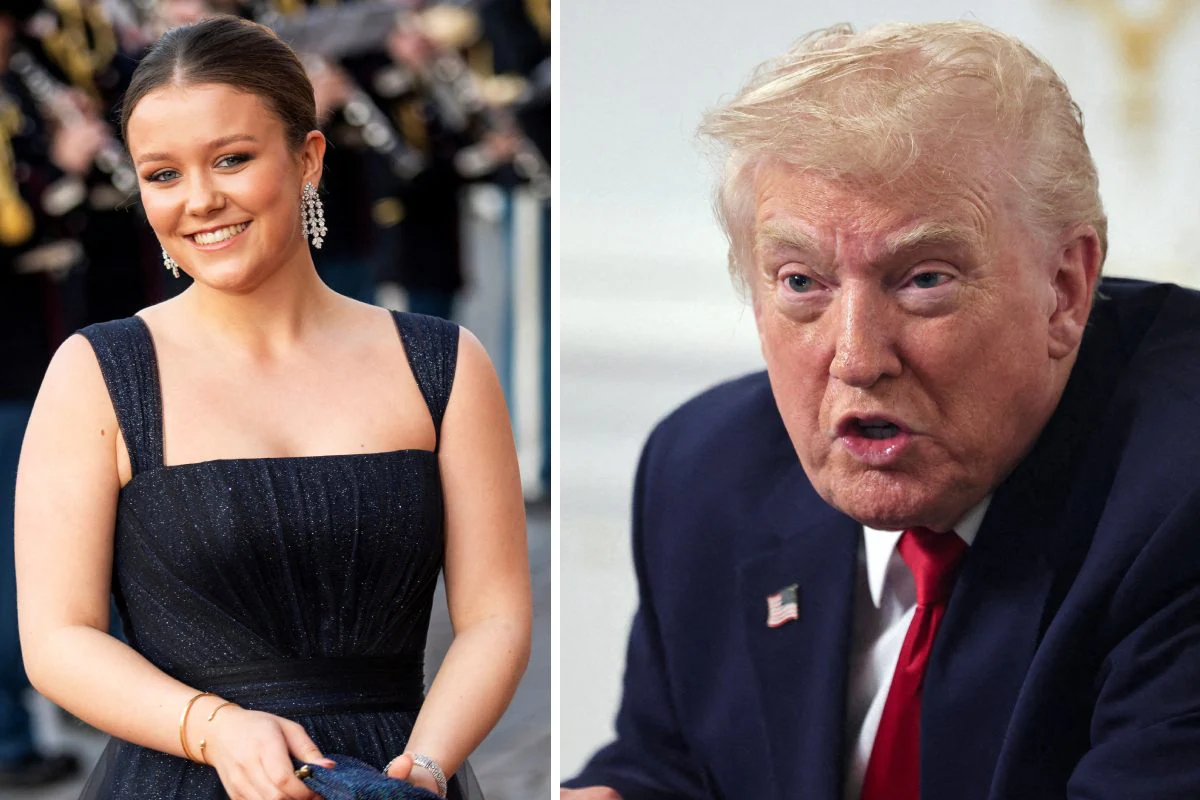
Greenland is not just a giant patch of ice on a map. It is an autonomous territory within the Kingdom of Denmark, sitting in one of the most strategically discussed regions on Earth. It holds military and shipping significance, and it has repeatedly appeared in American political conversation—most famously when Donald Trump, during his first term, publicly entertained the idea of acquiring it. Denmark and Greenland officials rejected that notion, but the cultural residue never fully disappeared. The meme tapped into that leftover tension: a real geopolitical story that already sounded unbelievable to many people.
The “dowry” line is what made it go nuclear.
The joke didn’t just propose marriage. It proposed a transaction. That’s what made it inflammatory, comedic, and instantly shareable in the same breath. It framed a whole territory—where real people live, vote, and debate their own future—as if it were property to be handed over to settle a diplomatic craving. And because “dowry” is a loaded concept across cultures, it carried an extra jolt: the idea of women, marriage, and land being used as bargaining chips—an old-world power dynamic dragged into a modern culture war.
First, it offered an easy laugh—political content that doesn’t require reading a policy paper. Second, it gave partisans a fantasy: “winning” Greenland without war, money, or negotiation, just by outsmarting everyone with a clever scheme. Third, it invited outrage from the other side, which is the most reliable fuel for continued circulation. The faster people argued about whether it was disgusting, hilarious, or “actually smart,” the more the algorithm rewarded it.
Then the cycle that always follows went into motion

Once the joke reached a certain size, it began to be treated as “a thing people are talking about,” which is a subtle but crucial shift. At that stage, coverage becomes less about endorsing the idea and more about documenting the phenomenon. That’s how memes harden into narratives. Livemint described it as a satirical post that sparked mixed reactions online, highlighting how sharply divided responses became as people debated the premise.
The names mattered
Barron Trump has long existed as a kind of political silhouette in public conversation: famous, mostly private, and therefore constantly projected onto. Princess Isabella, meanwhile, represents the enduring fascination with monarchy—an institution modern democracies claim to have outgrown but never stop watching. Put those two symbols in one sentence, attach a massive territory to the plot, and you get a ready-made story engine that doesn’t need facts to keep running. Coverage repeatedly identified the princess in question as Denmark’s Princess Isabella, which gave the story a concrete target and made it easier to share.
But beneath the spectacle sits a deeper question
Greenland is not empty. It’s home to communities, culture, and political debates about autonomy and identity. Yet in meme logic, a territory becomes a token—something you “win” in a game. That’s what made the “dowry” framing so revealing. It showed how quickly online discourse can flatten complex realities into a single punchline, and how that flattening becomes contagious when the joke is emotionally satisfying to the people sharing it.
The backlash was predictable, but still instructive.
Some people read the post as pure satire and laughed it off as internet theater. Others saw it as demeaning, especially because it treated a young woman as a diplomatic device and treated Greenland like merchandise. And others—most concerningly—treated it as a clever workaround, the kind of comment that blurs the line between comedic play and political desire. Reports noted how the idea ricocheted through online spaces with intense reactions, with some users leaning into “historic marriage alliances” as if the post were a genuine policy brainstorm.
In some corners, the meme didn’t just spread.
One reason this story drew attention is that it wasn’t confined to a small comedy niche. It moved through political communities where Greenland has symbolic value as “strategic territory America should have,” and where trolling often doubles as signaling. The Daily Beast, for example, framed it as a MAGA-adjacent frenzy, describing how the “arranged marriage” idea was floated and then amplified as a kind of cultural performance around Greenland discourse.
The strangest part is how the meme revived an old geopolitical conversation without needing new facts.
Nothing had changed about Greenland’s legal status. No official announcement had been made. No real negotiation was on the table. And yet the meme reactivated the same arguments that surface whenever Greenland is mentioned: sovereignty, strategic control, national pride, and the idea that big powers can “buy” what they want. That’s the internet’s unique force: it can reheat history and make it feel like breaking news again.
There’s a reason this kind of story thrives in the “infotainment” era.
Traditional news is often hard to emotionally process because it comes in fragments: a quote here, a policy move there, a diplomatic statement elsewhere. Memes provide a single dramatic frame that audiences can instantly understand. This one had everything: a prince-like figure, a princess, a kingdom, a territory, and a transactional twist that feels scandalous. It’s basically a fairy tale—except the moral is about power.
One of the most important realities underneath the noise is that Greenland’s political trajectory involves Greenlanders and Denmark, not internet scripts. That reality is exactly what memes struggle to hold, because it doesn’t fit into a single joke. But it matters—especially when the meme begins to influence broader perceptions of what is “normal” to suggest about other people’s land.
The “dowry joke” also exposed something uncomfortable about modern online humor.
The post’s punchline works because it borrows from a time when marriages were contracts, women were traded as alliances, and territory was transferred like property. People shared it because it was outrageous—and it was outrageous because it echoed a real historical ugliness. That doesn’t mean everyone who shared it endorses those values. But it does show how easy it is for the internet to use regressive symbolism as entertainment, especially when political rivalries are involved.
And yet, the meme’s success reveals a very modern truth.
In previous eras, satire lived in clearer containers—cartoons, late-night monologues, opinion pages. Today it lives in the same feed as real policy, real war footage, real diplomacy, and real tragedy. The content format is identical, which means the brain often treats it as equally “real” after repeated exposure. That’s how “just kidding” becomes “but seriously,” and how “it’s a joke” becomes “it’s an idea.”
This is why the story mattered enough for multiple outlets to cover it.
Because the coverage wasn’t truly about a marriage rumor. It was about how social media can manufacture a geopolitical narrative out of thin air, and how quickly audiences will join in, adding details, “history,” and moral arguments until the fiction feels like a debate that must be answered. Livemint highlighted the mixed reactions and the viral nature of the dowry framing, while other reports emphasized how it exploded across platforms.
The lasting takeaway isn’t the punchline.
A single post can turn into a global conversation when it collides with an existing tension, uses recognizable symbols, and offers audiences a simple emotional action: laugh, rage, or cheer. Greenland became the stage because it already lived in geopolitical imagination. Barron and Princess Isabella became the characters because famous names function like magnets. And the “dowry” twist made the story feel wicked enough to share.
What happens next is the part worth watching.
Not whether the meme returns, but whether this kind of content continues to blur the difference between joking about power and practicing power. Because today, the internet doesn’t just reflect politics. It rehearses it—over and over—until someone decides the rehearsal should be real.