
Table of Contents
- The earthquake that shattered Izmir
- Ridvan Celik’s decision to go
- Why his size mattered in the rubble
- A different image of heroism
- The wider rescue operation in Izmir
- Why this story went viral
- What his story says about disability and public perception
- The danger of turning a rescuer into a symbol alone
- A lesson in how communities survive catastrophe
- What this means beyond Izmir
The earthquake that shattered Izmir
The disaster that brought Celik to national attention was the 2020 Aegean Sea earthquake, a 7.0 magnitude event that struck on October 30, 2020, in the Eastern Aegean Sea near the Greek island of Samos but caused especially severe destruction in the Turkish city of Izmir. Scientific and reporting summaries describe it as the most lethal seismic event of that year worldwide, with structural collapses concentrated in parts of Izmir where residential and commercial buildings suffered major damage. More than 700 structures were seriously damaged or destroyed, and around 15,000 people were left homeless in the aftermath.
In the early hours after the quake, rescue operations expanded rapidly. Turkish authorities mobilized ambulances, emergency rescue teams, aircraft, food support teams, and specialist crews, while search and rescue workers combed through at least 17 collapsed buildings. More than 100 people were pulled out alive during the emergency phase, including children rescued after being trapped for dozens of hours. The effort required not only machinery and official coordination but also human adaptability, because collapsed urban structures create extremely unstable voids, tight crevices, and partially accessible pockets where survivors may remain trapped.
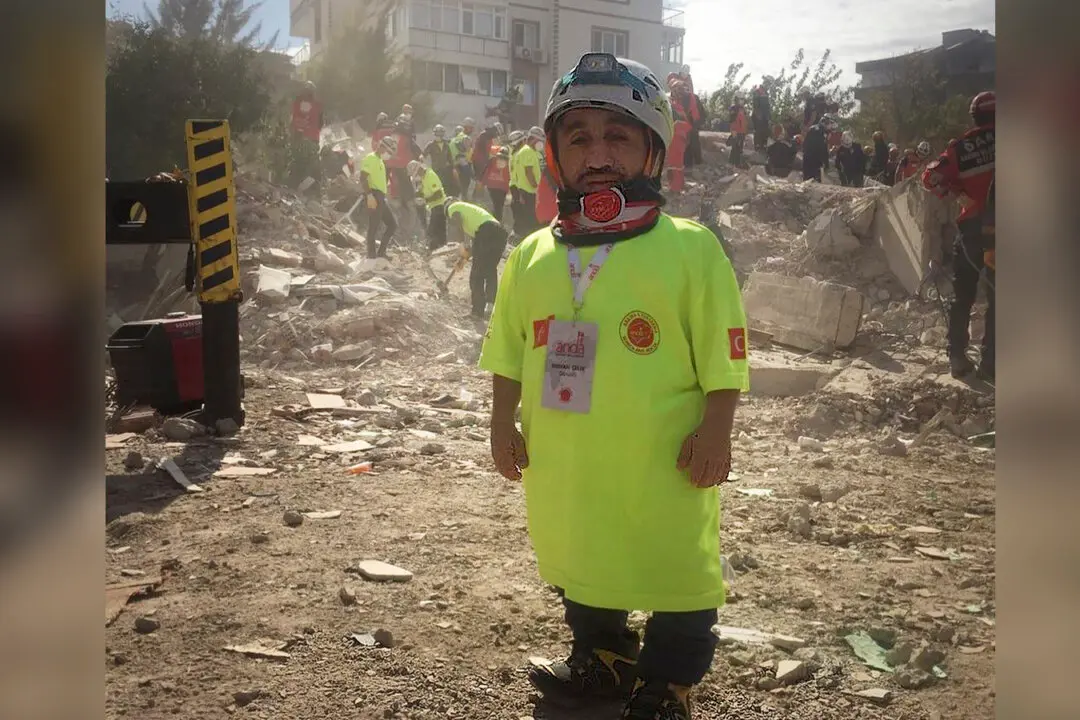
This is where Celik’s story became extraordinary. In most settings, being only around three feet tall would draw attention because of physical difference. In the aftermath of a building collapse, however, it could also mean access. A body that can slip through spaces too narrow for others is not merely unusual. In the right circumstances, it becomes a rescue tool.
Ridvan Celik’s decision to go
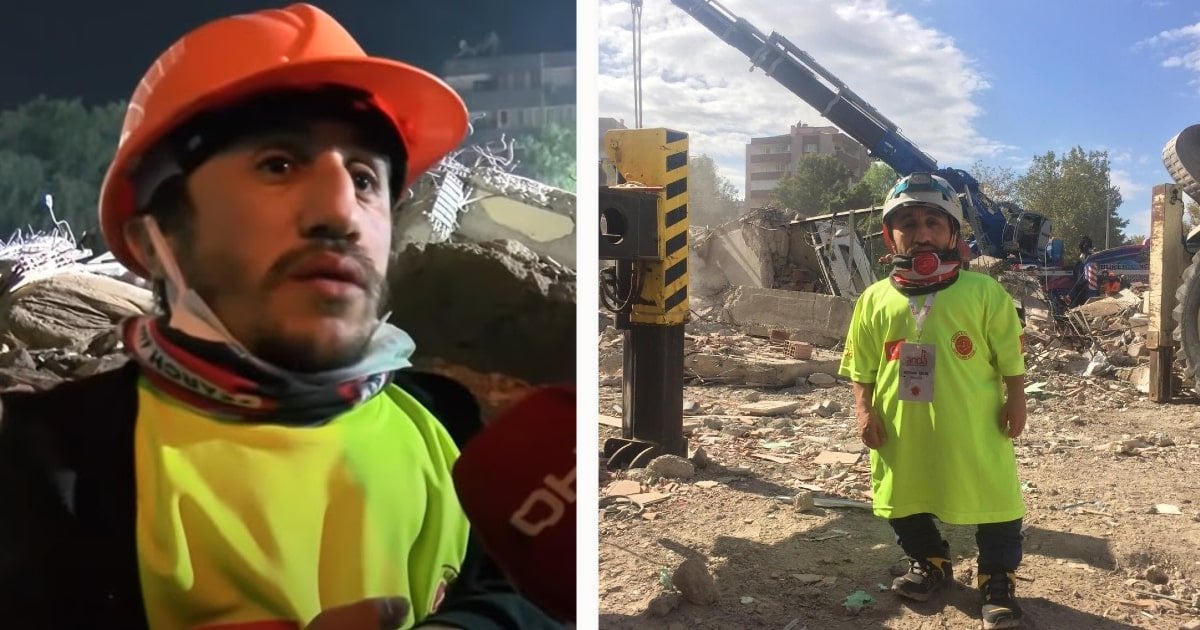
According to multiple reports that circulated after the quake, Ridvan Celik did not wait for formal recruitment or an invitation from authorities. After hearing about the disaster, he bought his own ticket and traveled from Istanbul to Izmir so he could join the rescue effort. In statements quoted by later coverage, he said he was moved by thoughts of children and parents trapped beneath the rubble and by memories of the devastating 1999 earthquake in Turkey, which had left a deep mark on national consciousness.
That detail matters because it transforms the story from one of accidental heroism into one of chosen duty. Celik was not simply present when the quake happened. He made the decision to go toward devastation. He inserted himself into a zone of instability, grief, and physical danger because he believed he could help. In a world where viral stories often depend on surprise, this one rests on intention. He recognized that his body, often seen by others through the lens of disability, might allow him to do something profoundly useful.
There is also something quietly powerful about the way he framed his motivation. He did not present himself as a symbol or try to turn the moment into inspiration theater. He spoke in practical, emotional terms about children, parents, and memory. Those are the words of someone responding to human suffering, not chasing attention.
Why his size mattered in the rubble
Collapsed buildings are among the most difficult rescue environments imaginable. Search teams must move quickly enough to save lives but carefully enough to avoid triggering further collapse. Standard equipment can clear large debris, but the final access to trapped survivors often depends on navigating unstable channels under broken slabs, twisted metal, shattered walls, and dust filled voids. In those conditions, a rescuer’s physical size can determine whether entry is even possible.
Reports on Celik’s role emphasized that he used his three foot frame to crawl through spaces where other rescuers could not fit. That does not mean he worked alone or replaced conventional rescue teams. Rather, he became part of a larger system in which different bodies, skills, and tasks contributed to the same objective. His ability to reach tight spaces gave rescue crews another option in situations where seconds mattered and physical access was limited.
This is one reason his story resonated so strongly. It challenged assumptions about usefulness and strength. Public imagination often associates rescue work with size, power, and brute endurance. Celik’s role suggested something more nuanced. In disaster response, being effective is not always about being the biggest or strongest person on site. Sometimes it is about fitting where others cannot, staying calm in confined danger, and turning what society sees as a disadvantage into a precise operational advantage.
A different image of heroism
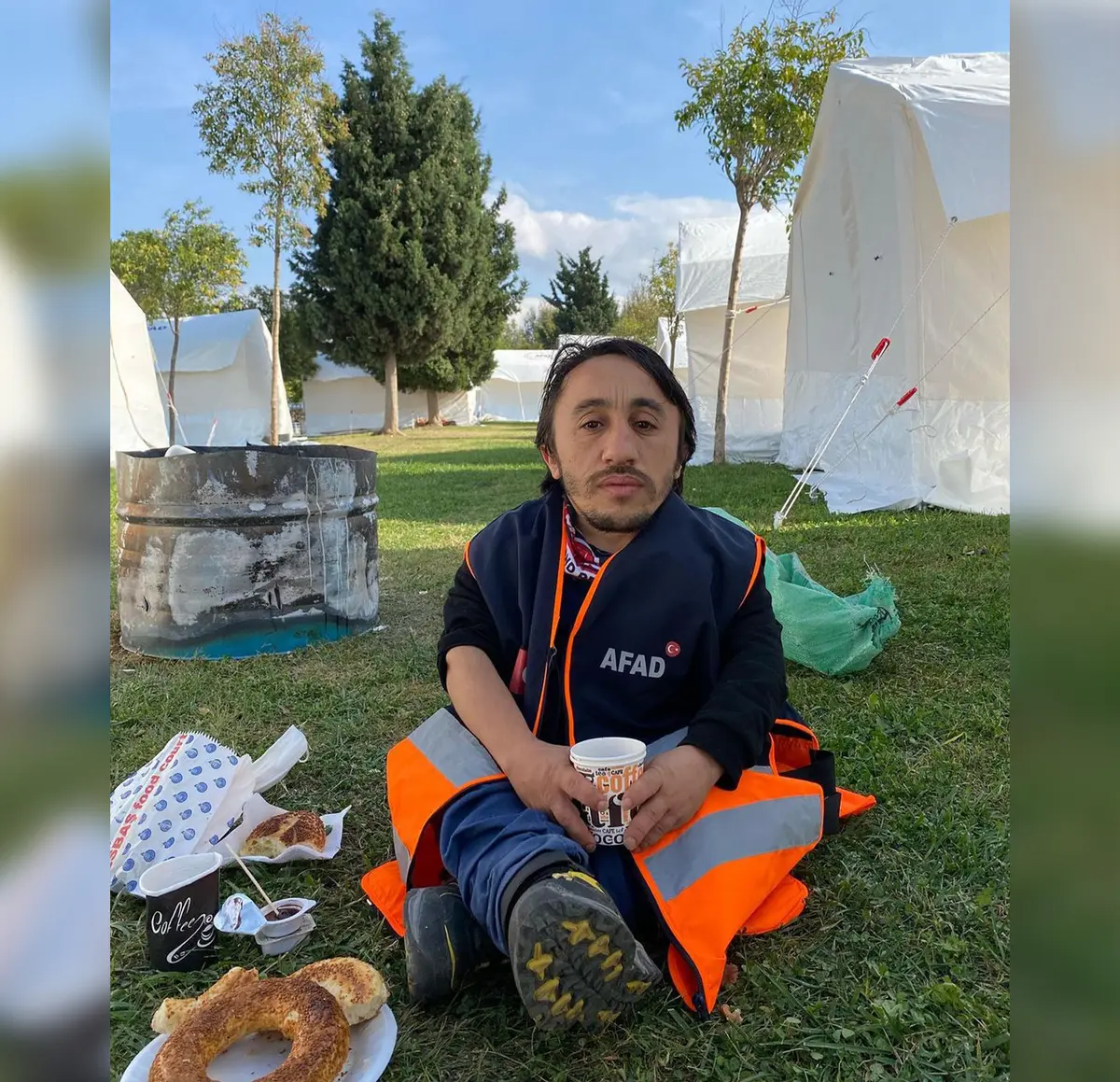
Modern media loves dramatic hero narratives, especially after disasters. Firefighters, paramedics, soldiers, and volunteers are often framed as larger than life figures, and sometimes rightly so. But Celik’s story introduced a different image of heroism. He was not celebrated because he matched the traditional look of a rescuer. He was celebrated because he broke it.
That difference matters. It expands the public understanding of who can be essential in crisis. Heroism is often described in universal language, but visual culture still tends to favor certain bodies and certain archetypes. Celik’s visibility disrupted that pattern. He showed that rescue work can depend on people whose bodies do not fit conventional expectations, and that courage is not validated by appearance.
At the same time, his story should not be reduced to feel good symbolism. The danger he entered was real. Earthquake wreckage is unstable, suffocating, and unpredictable. A narrow opening is not just an opportunity. It is also a trap if aftershocks or secondary collapses occur. So while the public was moved by the inspirational arc of the story, the reality behind it was severe. Celik was not just making a statement about inclusion. He was risking his life in an active disaster zone.
The wider rescue operation in Izmir
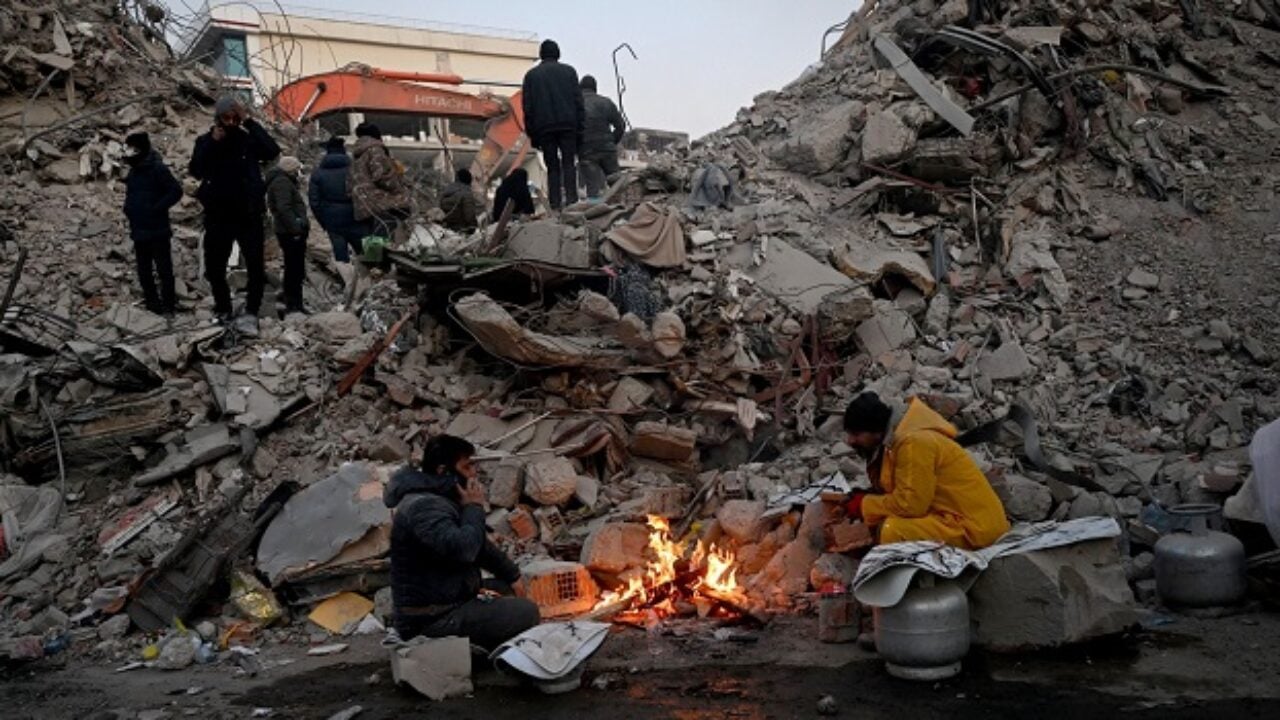
To understand the significance of Celik’s contribution, it helps to place it in the scale of the overall response. Thousands of personnel were involved in the Izmir rescue effort, including emergency medical teams, disaster response units, food relief groups, and dog teams. Search operations continued through the night and into the following days, with authorities announcing multiple successful rescues from collapsed apartment blocks. Some survivors were found after more than 60 hours under debris, evidence of how crucial persistence was in the immediate aftermath.
In disasters like this, the line between hope and despair shifts hour by hour. Rescuers work in exhausting, noisy, and emotionally punishing conditions, often digging toward faint sounds or uncertain signals. Every successful extraction renews urgency. Every silence deepens dread. Within that environment, a volunteer like Celik becomes part of the emotional architecture of rescue as well as the physical one. He represented determination, adaptability, and refusal to stand aside while others suffered.
The rescue effort also unfolded against Turkey’s long and painful history with earthquakes. The country has experienced repeated deadly seismic events, including the 1999 Izmit earthquake, which killed around 17,000 people and remains one of the defining disasters in modern Turkish memory. That history shaped how many volunteers and responders understood the Izmir disaster. Celik himself referenced those older memories in explaining why he went.
Stories go viral for many reasons, but the strongest ones usually contain a contradiction that stops people in their tracks. In Celik’s case, the contradiction was immediate and emotionally compelling. Society often frames dwarfism through limitation, marginalization, or pity. Yet here was a man with dwarfism entering spaces that able bodied rescuers could not, not in spite of his body but because of it.
That reversal made the story memorable. It did not erase the realities of disability or prejudice, but it did show that context changes meaning. Traits dismissed in one environment can become decisive in another. In the ruined geometry of earthquake debris, Celik’s body was not a symbol of fragility. It was an instrument of access.
The story also traveled because it carried moral clarity. There was catastrophe, danger, and human need. There was a volunteer responding without hesitation. And there was a recognizable emotional core: someone using what he had to save people he had never met. In an age crowded with cynical content, that kind of sincerity cuts through.
What his story says about disability and public perception
One of the most powerful dimensions of Celik’s story is what it reveals about public attitudes toward disability. Too often, people with disabilities are discussed only in terms of accommodation, dependence, or exclusion. Those realities are important, but they can narrow how society imagines capability. Celik’s role in Izmir offered a different frame. It showed that disabled people are not merely recipients of care in disaster settings. They can also be providers of aid, knowledge, and specialized contribution.
That does not mean disability should be romanticized. Nor should every disabled person be expected to prove extraordinary usefulness in order to be valued. But stories like this matter because they push back against one dimensional thinking. Celik was not inspirational because he existed. He was inspirational because he acted with courage and because his action exposed how shallow society’s assumptions can be.
There is also a lesson here for emergency planning. Inclusive disaster response is often discussed in terms of protecting vulnerable populations, which is necessary. But inclusion can also mean recognizing that communities contain people with varied bodies, skills, and perspectives who may strengthen the response itself. Celik’s contribution was highly specific, but it points to a broader truth: resilience grows when systems stop assuming that one type of body defines usefulness.
The danger of turning a rescuer into a symbol alone
Whenever an unusual rescue story captures public imagination, there is a risk that the person involved becomes flattened into a symbol. Celik can be framed too easily as “the 3 foot rescuer” and nothing more. That kind of shorthand is catchy, but it can strip away the seriousness of both the disaster and the work.
He was not helping in a controlled or theatrical environment. He was operating inside the aftermath of a lethal earthquake that left hundreds dead, more than a thousand injured, and thousands displaced. Buildings had collapsed. Families were waiting for news. Survivors were trapped in dust, darkness, and fear. Any account of his actions needs to preserve that context.
His story is powerful precisely because it combines human distinctiveness with civic responsibility. He did not become important because he was different. He became important because he chose to serve in a moment when service was dangerous and desperately needed.
A lesson in how communities survive catastrophe
Natural disasters often expose both the weaknesses and strengths of a society at once. They reveal poor construction, uneven preparedness, and the devastating speed with which ordinary life can collapse. But they also reveal what people do for one another when systems are stretched to their limits. The Izmir earthquake response included thousands of workers and volunteers, each playing a role that may never become globally known. Celik’s story stands out, but it belongs to that larger mosaic of response.
What his example adds to that mosaic is a reminder that human value in crisis is not always obvious in advance. Communities survive not only because of standard plans and official hierarchies, but because individuals bring unexpected capabilities into extraordinary circumstances. Sometimes survival depends on machinery and logistics. Sometimes it depends on one person who can fit through a gap.
That reality gives the story lasting force. It is not merely a tale of personal bravery. It is also a lesson about how communities should think about usefulness, preparedness, and solidarity.
What this means beyond Izmir
Years after the earthquake, Celik’s actions still resonate because they touch on something larger than a single rescue operation. They ask readers to reconsider what strength looks like. They challenge lazy assumptions about disability. And they remind us that in disasters, the line between helplessness and help is not always drawn where people expect.
The Izmir earthquake was a tragedy measured in lives lost, buildings destroyed, and families shattered. Nothing about a heroic rescue story should soften that reality. But within catastrophe, acts like Celik’s matter because they show how people resist despair. They show that even in rubble, something affirmative can emerge: courage, ingenuity, and the refusal to stand aside.
In the end, the story of Ridvan Celik is not compelling because he was three feet tall. It is compelling because he understood that, in that terrible moment, his size could become someone else’s chance. That is the kind of transformation disaster sometimes demands from ordinary people. It is also the kind that the world does not easily forget.