
Table of Contents
- A Court Ruling With Immediate National Consequences
- Why RFK Jr’s Committee Shakeup Became So Controversial
- The Judge’s View of Process and Scientific Integrity
- Why Childhood Vaccine Recommendations Became a Flashpoint
- The Role of the American Academy of Pediatrics and Other Plaintiffs
- The Administration’s Defense and Its Appeal Plan
- Why the Postponed ACIP Meeting Matters So Much
- The Broader Fight Over Expertise in America
- What the Ruling Means for Parents and Public Health
- A Legal Defeat With Lasting Political Consequences
A Court Ruling With Immediate National Consequences
The importance of Judge Murphy’s decision lies not only in the legal language of the order, but in its immediate practical consequences. By putting a hold on decisions made by the CDC’s vaccine advisory committee, the judge effectively stopped one of the most consequential mechanisms through which federal immunization policy is shaped.
That matters because the CDC’s Advisory Committee on Immunization Practices, often referred to as ACIP, is not some obscure internal panel with minor influence. Its recommendations affect how vaccines are used across the country, what doctors advise, what insurers cover, how states structure guidance, and what parents hear from pediatricians about routine immunizations. In many ways, it sits near the nerve center of the American vaccine policy framework.
So when a judge interrupts that process, the effect is immediate and broad. Planned meetings were postponed. Controversial new questions about vaccine schedules were suddenly thrown into legal uncertainty. And the administration’s larger effort to redesign federal vaccine advice hit a wall.
This is why the ruling was described as a major blow rather than a technical setback. It did not simply slow down an internal administrative change. It blocked a core instrument the administration had been using to reshape the national vaccine conversation.
Why RFK Jr’s Committee Shakeup Became So Controversial
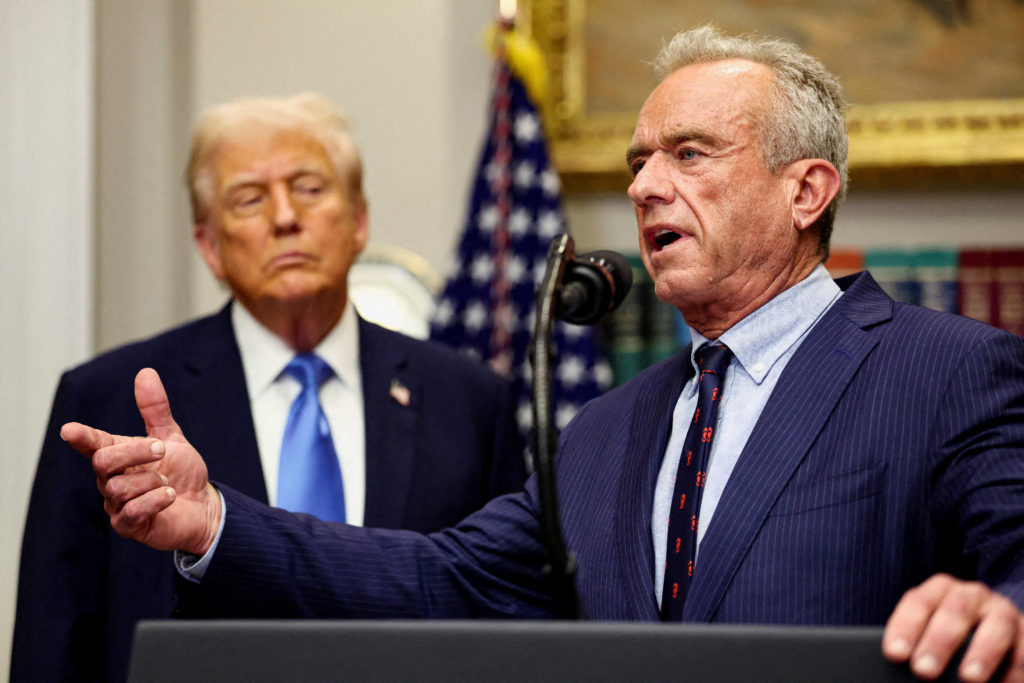
At the heart of the case was Robert F. Kennedy Jr.’s decision to fire the entire existing CDC vaccine advisory committee and replace it with new members, many of whom had also been critical of vaccines or of prevailing vaccine policy approaches. That move alarmed a wide range of public health groups, pediatricians, and infectious disease experts, who argued that the administration was not merely changing personnel but attempting to fundamentally alter the scientific character of the advisory process.
Committee appointments matter because expertise matters. In highly technical fields like immunization policy, the people around the table influence not only the outcome of votes, but the quality of the questions asked, the interpretation of data, and the level of trust the public places in the final recommendations.
Kennedy and his allies framed the shakeup as a needed reform. They argued that new voices were necessary and that replacing the committee would help restore public trust. But critics saw something very different. To them, the purge looked like an effort to swap out a scientifically grounded advisory body and replace it with one more aligned with ideological skepticism toward established vaccine practice.
That is what made the legal challenge so important. The plaintiffs were not simply complaining about a difference in policy preference. They were arguing that the process itself had been corrupted.
The Judge’s View of Process and Scientific Integrity
Judge Murphy’s ruling appears to have rested heavily on the idea that government cannot discard established scientific procedure without consequence. His conclusion that the administration acted in an arbitrary and capricious way signaled more than disagreement with the result. It suggested that the method itself violated core standards of lawful governance.
That distinction matters. Courts often avoid substituting their own scientific judgments for those of agencies. But they do step in when agencies abandon accepted procedures, fail to justify dramatic changes, or act in ways that undermine the rational basis of their own decisions. In this case, the judge concluded that the administration had disregarded longstanding, respected methods for shaping vaccine policy.
This is where the ruling becomes especially significant. It suggests that even in politically polarized times, there are still legal limits on how far an administration can go in remaking public health systems through abrupt personnel changes and contested reinterpretations of data.
The judge’s language about undermining the integrity of government action also goes to the emotional core of the case. Vaccine policy depends not only on evidence, but on public trust. If the process appears manipulated, that trust becomes harder to sustain.
Why Childhood Vaccine Recommendations Became a Flashpoint

Among the most controversial aspects of the broader vaccine overhaul was the effort to reduce the number of federally recommended vaccinations for children. That possibility alarmed many pediatricians and health organizations because childhood immunization schedules are among the most carefully structured components of preventive medicine in the United States.
These schedules are not assembled casually. They are built through years of research, surveillance, safety review, effectiveness data, and public health modeling. Changing them is not impossible, but doing so responsibly requires extraordinary care, substantial evidence, and broad scientific confidence.
The administration’s critics argued that the new committee was moving too quickly and with too much ideological baggage. Supporters of the changes argued that they reflected different interpretations of vaccine data and a willingness to challenge entrenched assumptions.
But for many physicians and public health advocates, the danger was obvious. Once the federal government appears ready to weaken routine childhood vaccine recommendations, the effects can travel far beyond a single policy memo. Confusion spreads among parents. Hesitancy rises. Local health providers must navigate mixed messages. And diseases once kept under control can become harder to manage.
That is why the ruling was celebrated so quickly by pediatric organizations. It was seen not as an abstract institutional win, but as protection against disruption in a system that directly affects children and families.
The Role of the American Academy of Pediatrics and Other Plaintiffs
The lawsuit was brought by powerful and credible health organizations, including the American Academy of Pediatrics. Their involvement gave the case additional weight because it signaled that opposition to the administration’s actions was not coming only from partisan critics or bureaucratic rivals. It was coming from front line medical communities whose daily work depends on stable, trusted immunization guidance.
Pediatricians occupy a unique place in vaccine debates. They are often the physicians parents know best, the ones administering routine shots, answering worried questions, and translating national policy into individual care. When they warn that a federal process is being destabilized, the concern carries practical urgency.
The plaintiffs framed the ruling as a victory not just for doctors, but for children, communities, and evidence based medicine. That language reflects the broader stakes of the case. Vaccine policy is not just about expert committees. It is about whether the medical advice given in exam rooms across the country remains connected to a legitimate and scientifically rigorous federal process.
This is one reason the case resonated so strongly. It was not only a legal battle over appointments. It was a fight over whether the nation’s immunization infrastructure could be abruptly redirected by political force.
The Administration’s Defense and Its Appeal Plan
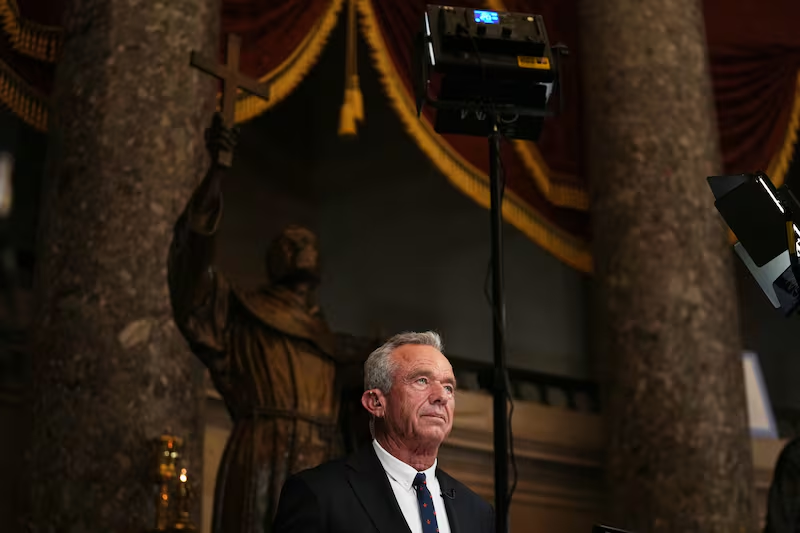
The Trump administration, through its legal team and health department spokespeople, argued that the committee changes were rooted in alternative interpretations of vaccine data rather than bad faith or lawlessness. In that telling, the administration was not destroying science, but challenging consensus and opening the door to a different reading of evidence.
That is a familiar argument in modern political conflict. Leaders accused of attacking institutions often respond by saying they are actually democratizing them, broadening debate, or freeing the system from captured expertise. Kennedy’s defense of the committee reshuffle seemed to follow that model. He presented the new direction as one that could restore confidence rather than erode it.
But the court did not accept that framing, at least for now. And the administration’s quick promise to appeal shows that this fight is far from over. It is likely to continue through higher courts, where judges may again confront the question of how much deference executive officials deserve when changing scientific advisory structures.
The administration’s rhetoric about the decision also suggests this case will remain politically charged. Rather than treating the ruling as a technical disagreement, officials cast it as another example of judicial interference with the administration’s right to govern.
Why the Postponed ACIP Meeting Matters So Much
One of the clearest signs of the ruling’s force was the postponement of the CDC vaccine committee meeting that had been scheduled for Wednesday and Thursday. That meeting was expected to explore fresh questions about COVID 19 vaccines and possibly reshape how federal vaccine policy is made.
The cancellation matters because these meetings are where policy begins to become operational. Debates are aired, evidence is reviewed, votes are cast, and national guidance starts to take shape. By stopping the meeting, the ruling did not just symbolically challenge the administration. It disrupted its timeline.
This is important in political terms because momentum matters. Administrations often try to move quickly when reshaping policy, especially in controversial areas. Speed can make opposition harder to organize and allow new norms to settle before institutions push back. The judge’s intervention broke that momentum.
In public health terms, the postponement also preserves a form of stability, at least temporarily. Instead of allowing a newly controversial committee to start producing major changes, the ruling paused the process and forced the administration to defend its path in court before going further.
The Broader Fight Over Expertise in America
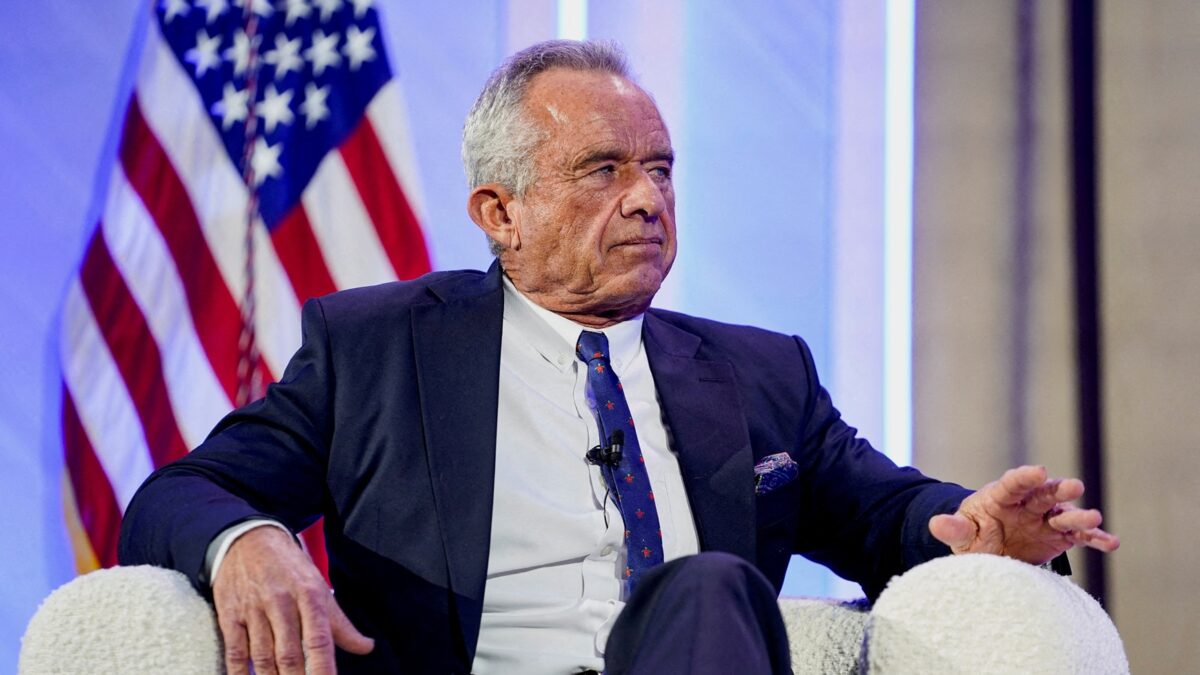
This ruling arrives in a much larger national argument about expertise, scientific institutions, and public trust. Vaccine policy has become one of the clearest battlegrounds in that struggle. On one side are those who argue that public health agencies must be challenged because they have lost credibility with large parts of the population. On the other are those who argue that undermining established scientific processes will only deepen confusion and harm.
The Kennedy committee shakeup sat exactly in that fault line. His supporters saw disruption as necessary. His opponents saw disruption as reckless. The court, at least in this moment, sided with the view that process, continuity, and established methods still matter.
That does not end the broader cultural argument. In many ways, it intensifies it. Because once courts become the venue for deciding whether public health systems are being lawfully run, the debate is no longer just scientific or political. It becomes constitutional and administrative as well.
This is part of what makes the case so significant. It is not just about one committee or one set of vaccine recommendations. It is about whether institutions that depend on scientific legitimacy can survive direct political remaking without losing the trust that makes them functional in the first place.
What the Ruling Means for Parents and Public Health
For many parents, the legal fight may feel distant or technical. But its consequences are very close to daily life. Parents depend on pediatricians, schools, and federal guidance to help make sense of vaccine schedules and health risks. When those systems appear unstable or politicized, anxiety grows.
The ruling offers a temporary signal of continuity. It suggests that major changes to vaccine recommendations cannot be imposed overnight without scrutiny. That may reassure families who worry that national policy is being reshaped too quickly or without adequate evidence.
For public health officials, the ruling is also a reminder that scientific institutions are strongest when their processes are seen as legitimate. Even people who disagree with specific recommendations are more likely to accept outcomes when they believe the process was careful, transparent, and expert driven.
That is why the court’s emphasis on integrity matters so much. Public health does not function on authority alone. It functions on confidence in how decisions are made.
A Legal Defeat With Lasting Political Consequences
Judge Brian Murphy’s decision to halt the Trump administration’s vaccine overhaul is likely to be remembered as a pivotal moment in the fight over who controls federal immunization policy and how far political leaders can go in remaking scientific institutions. It was not a final word. The administration plans to appeal, the legal fight will continue, and the broader cultural conflict around vaccines is far from over. But the ruling drew a clear line.
It said that even powerful officials cannot discard established scientific structures without justification. It said that public health committees cannot be transformed through abrupt purges and ideological realignment without inviting judicial scrutiny. And it said that when the government undermines the integrity of its own methods, courts may step in.
In the end, this case is about much more than one secretary, one judge, or one postponed meeting. It is about whether the nation’s vaccine system remains anchored in rigorous and trusted scientific process, or whether it becomes another arena where ideology outruns evidence. For now, the court has answered that question with unusual force. The administration’s overhaul has been stopped, the committee’s authority has been frozen, and one of the most aggressive attempts to rewrite federal vaccine policy has run directly into the limits of law.