
Table of Contents
- A Bible Reading That Became Bigger Than a Bible Reading
- Why the Chosen Passage Matters So Much
- The Pope Feud Changed the Optics
- The AI Image Controversy Made Things Worse
- A White House Increasingly Comfortable With Public Christianity
- The Debate Over Faith in Public Office Is Not New
- Why Supporters Find the Moment Powerful
- Why Critics See a More Troubling Message
- What This Means for the Political Future
A Bible Reading That Became Bigger Than a Bible Reading
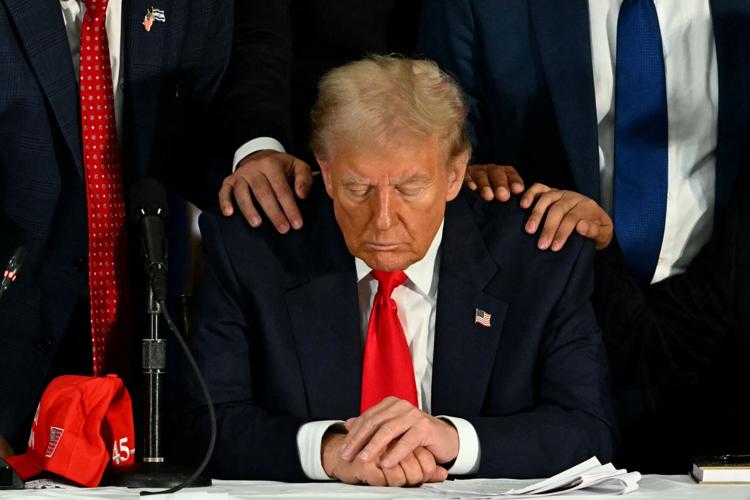
The event itself is part of a broader public initiative called “America Reads The Bible,” a weeklong reading marathon in Washington, D.C. Coverage of the event says it runs from April 18 through April 25 and includes hundreds of participants reading Scripture from Genesis to Revelation, with Trump’s message presented as one of the marquee moments. Organizers and supportive outlets have described his participation as historic, while stressing that he will be joined by senior administration figures including Secretary of State Marco Rubio, Defense Secretary Pete Hegseth, and White House chief of staff Susie Wiles.
That alone would have made the story notable. A sitting president delivering a public Bible reading from the Oval Office is not a routine piece of White House programming. Yet the reason this moment has drawn so much more scrutiny is that it arrives in the middle of a political and cultural storm. The administration has increasingly woven overt Christian symbolism into official messaging, and this reading is being viewed not simply as personal faith in public, but as part of a broader project to place Christianity closer to the center of state power and national identity.
Why the Chosen Passage Matters So Much
According to organizers, Trump is set to read 2 Chronicles 7:11-22, with special emphasis on verse 14, one of the best-known passages in modern American Christian political culture. The verse calls on people to humble themselves, pray, seek God, turn from wickedness, and receive healing for their land. For decades, it has been invoked at prayer events, national repentance campaigns, and conservative Christian gatherings as a call for spiritual renewal tied directly to the fate of the nation. Fox News reporting on the event quoted organizer Bunni Pounds saying the passage was deliberately reserved for Trump because of its symbolic significance.
That significance is not merely religious. The verse has long been used in political settings as a framework for national restoration, especially among Evangelical Christians who see the United States as a country with a special covenantal or providential role. Recent reporting has noted that the verse has circulated in high-profile political and religious moments for years, including after Trump’s 2016 election and in other public mobilizations on the American right. In other words, Trump is not simply reading a random chapter of the Bible. He is stepping into a passage already loaded with political and spiritual meaning.
The Pope Feud Changed the Optics
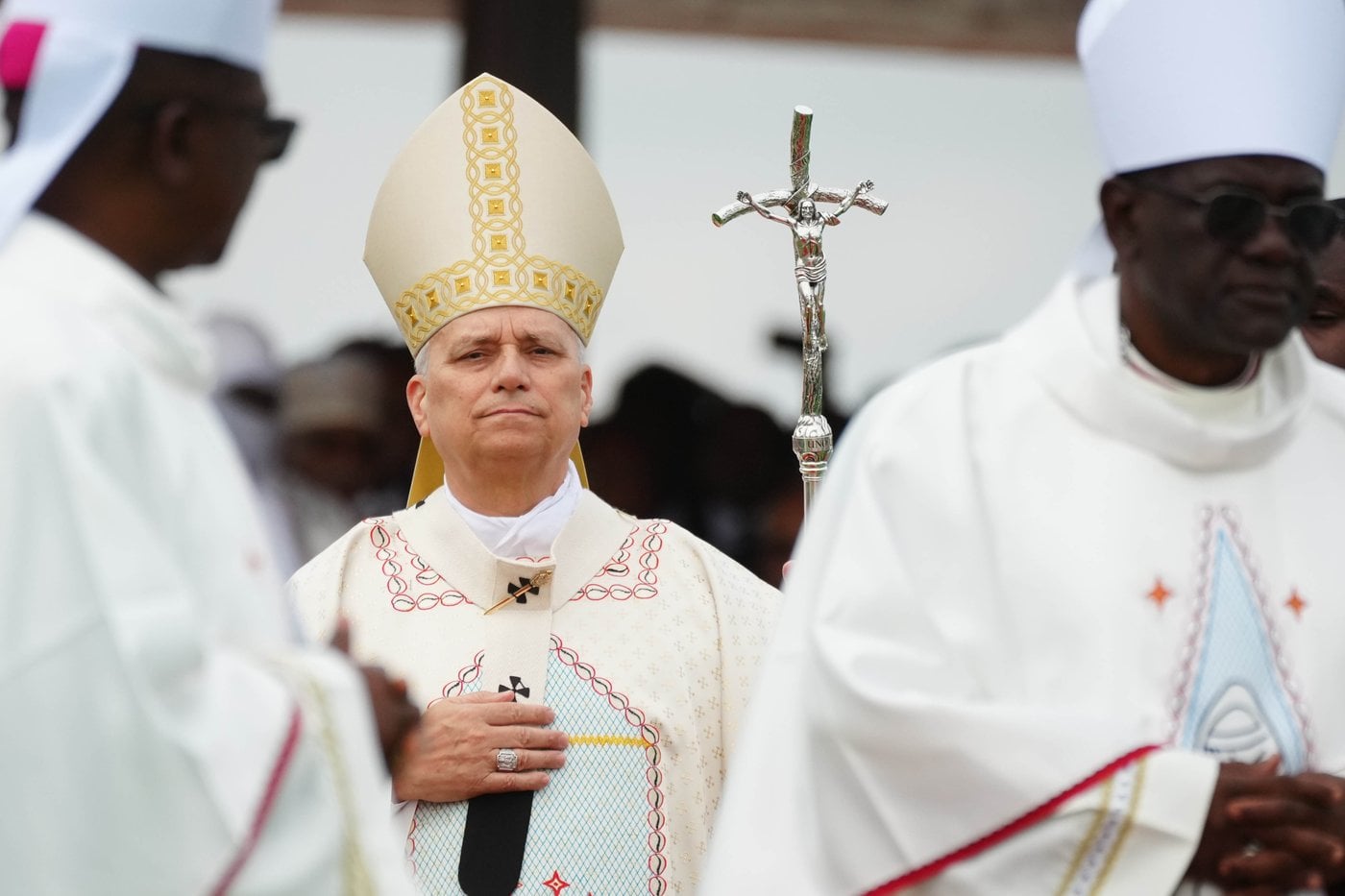
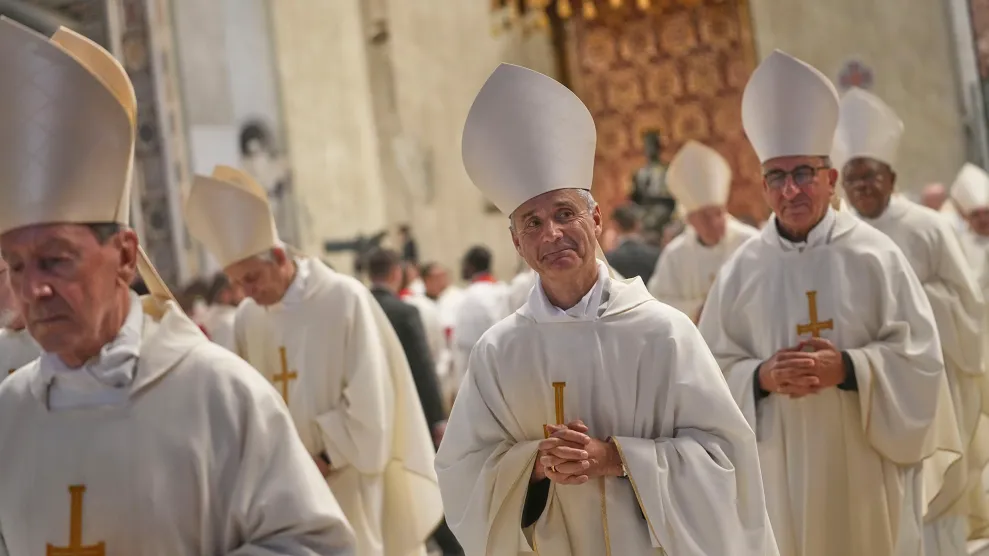
Under ordinary circumstances, that symbolism might have been the main story. Instead, it has been overshadowed and amplified by Trump’s recent clash with Pope Leo over the Iran war. Multiple recent reports describe Pope Leo criticizing the conflict and urging a message of peace, while Trump responded harshly and dismissed the pontiff’s stance. The feud quickly escalated into a public confrontation over war, morality, and authority, drawing attention not just because it involved a president and a pope, but because it exposed a deeper divide between political nationalism and religious conscience.
That matters because the Bible reading now looks less like a standalone act of faith and more like an act of image management, assertion, or both. Whether that is fair or not, the timing makes such interpretations unavoidable. Trump is appearing in a highly visible Christian setting at the very moment critics are accusing him of using religion selectively, aggressively, and for political gain. Supporters may see boldness and conviction. Detractors see theatrical piety arriving just as religious criticism of his conduct has intensified.
The AI Image Controversy Made Things Worse
The other major factor shaping this moment is the backlash Trump received after posting and then deleting an AI-generated image that depicted him in overtly religious imagery. Reporting from the past two days says the image prompted criticism from some Christian supporters as well as broader ridicule, with even some aligned religious conservatives calling it offensive or blasphemous. News coverage describes the incident as one of the clearest examples yet of Trump testing the limits of symbolic religious politics among his own base.
That controversy altered the atmosphere around the Bible reading in a profound way. Had the AI image never existed, the event might have been framed primarily as a ceremonial expression of Christian identity. But after the post and deletion, every new act involving religious symbolism is being filtered through fresh suspicion. Critics argue that the administration is trying to recover from one religious controversy by staging another, more disciplined performance of reverence. Supporters argue the opposite, that the reading shows Trump remains unshaken in his willingness to put faith at the center of public life.
A White House Increasingly Comfortable With Public Christianity
This single event also reflects a larger pattern that has been developing since Trump returned to office. Recent reporting has described the White House asking Americans to pray regularly, federal agencies hosting prayer services, and official government messaging using Bible verses and Christian imagery. The pattern is not subtle. Rather than treating religion as a private source of inspiration for public service, the administration has increasingly made Christian symbolism part of official presentation and political storytelling.
The Pentagon has also been part of that shift. Defense Secretary Pete Hegseth has drawn attention for regularly invoking Scripture and for inviting religious figures with highly controversial views into official settings. Reporting has highlighted that Hegseth recently brought in pastor Douglas Wilson for a Pentagon prayer service, drawing criticism because of Wilson’s extreme positions on women, homosexuality, and Christian rule. The result is a growing perception that public faith expression inside the administration is not just devotional, but ideological.
The Debate Over Faith in Public Office Is Not New
It is important, though, not to flatten the entire issue into a simple church-state clash. American presidents have long spoken openly about faith, quoted Scripture, and framed national moments in moral or religious language. From Jimmy Carter to George W. Bush and beyond, presidents have often brought personal religious conviction into public leadership. What makes the present moment different, according to scholars cited in recent coverage, is not merely that religion is visible, but that one religious framework is increasingly being presented as normative for the country as a whole.
That distinction is essential. Public expressions of faith by leaders are familiar in American history. What alarms critics is the sense that Christianity, particularly a specific nationalist and conservative form of it, is being folded directly into the machinery of governance. In that reading, the Oval Office Bible message is not just an example of presidential religiosity. It is one more signal that the administration sees Christian language not as one voice among many in a plural nation, but as a governing identity marker for the state itself.
Why Supporters Find the Moment Powerful
For Trump’s supporters, especially religious conservatives, that is precisely the appeal. The event offers a sharp visual and emotional contrast to what they see as a secular, hostile, or morally adrift political culture. A president reading Scripture from the Oval Office, surrounded by cabinet officials and framed as part of a national Bible-reading effort, sends a message that public authority can still openly honor Christianity. For many in that audience, this is not alarming. It is reassuring.
The choice of 2 Chronicles reinforces that appeal because it speaks the language of repentance, blessing, judgment, and national restoration. It suggests that political decline is inseparable from spiritual decline, and that national healing requires moral turning as much as policy change. This framing has deep roots in American Evangelical public life, which is why the reading resonates so strongly with the constituency most likely to cheer it. It presents Trump not just as a politician using religious imagery, but as a vessel for a larger narrative about the nation’s fate.
Why Critics See a More Troubling Message
Critics, however, see a different picture. To them, the reading lands in a context filled with warning signs: a public feud with a pope over war, controversial AI depictions of the president in sacred imagery, and a wider pattern of blurring religious devotion with executive authority. In that context, the Bible reading looks less like faith and more like power draped in faith’s language. The concern is not that a president has beliefs, but that the presidency is being used to elevate one religious vision as a civic standard.
There is also the issue of authenticity. Trump’s critics have long argued that he deploys religious language instrumentally, especially when it suits his political needs. The current sequence of events only strengthens that suspicion for many observers. First came the feud with Pope Leo. Then came the AI-image backlash. Now comes a solemn reading from the Oval Office. Even without proving intent, the sequence practically invites questions about whether this is spiritual witness, strategic optics, or a carefully packaged blend of both.
What This Means for the Political Future
The deeper significance of this moment lies in what it says about the future of religion in American politics. Trump is not inventing the relationship between Christianity and public life, but he is intensifying it in a way that feels more explicit, more symbolic, and more confrontational. By stepping into a nationally visible Bible event during a week of religious controversy, he is making a wager that public Christianity remains a potent force, even when it arrives wrapped in conflict and provocation.
That wager may succeed with much of his base. But it also carries risks, especially among Catholics and other believers uneasy with the tone of his conflict with Pope Leo or disturbed by the AI religious imagery. Recent reporting suggests that even some voters who remain politically aligned with Trump are increasingly uncomfortable with how casually sacred symbols are being pulled into his political orbit. That discomfort may not produce an immediate break, but it highlights the limits of how far symbolic religious politics can go before some believers begin to recoil.
In the end, Trump’s planned Bible reading is about far more than a few verses read on camera. It is about how faith is being staged, interpreted, and contested in modern American power. It is about the collision between devotion and branding, between public religion and political spectacle, between genuine belief and strategic performance. That is why this event has drawn such intense attention before it has even happened. The words may come from Scripture, but the argument surrounding them is unmistakably about the nation itself and who gets to speak for its soul.