
Table of Contents
- How Cell Towers May Be Harming Trees
- Decade-Long Study Tracks Unusual Tree Damage Near Cell Towers
- Trees as Indicators of Environmental Stress: A New Role
- How RF-EMFs May Be Affecting Urban Trees
- A Growing Global Concern: Similar Patterns Emerging Worldwide
- The Environmental Cost of Mobile Technology Expansion
- The Lack of Regulatory Oversight: A Growing Problem
- The Precautionary Principle: Rethinking Technology’s Environmental Impact
- A Wake-Up Call for Sustainable Development
How Cell Towers May Be Harming Trees
In an era where mobile connectivity is integral to daily life, cell phone towers have become a ubiquitous feature of modern landscapes, standing tall in cities, suburbs, and rural areas. However, as society celebrates the convenience of wireless technology, a growing body of scientific research is raising concerning questions about the environmental toll of this infrastructure. A recent study spanning over a decade has shed light on an unsettling discovery: trees located near cell phone towers are showing signs of damage that defy traditional explanations like disease, pests, or pollution. Could the radiofrequency electromagnetic fields (RF-EMFs) emitted by these towers be the culprits?
Decade-Long Study Tracks Unusual Tree Damage Near Cell Towers
Between 2006 and 2015, a comprehensive study conducted in the German cities of Bamberg and Hallstadt investigated the potential environmental impact of mobile phone base stations, particularly focusing on urban trees. Over the course of this decade-long study, researchers mapped electromagnetic radiation in public spaces, measuring RF-EMF levels at various points around the cities. The study included 120 trees: 60 visibly damaged trees, 30 randomly selected trees, and 30 trees located in areas with minimal RF-EMF exposure. The results were striking.
The trees situated closest to the mobile phone towers exhibited consistent, one-sided damage. Damage included thinning crowns, discolored leaves, and stunted growth—symptoms that appeared on the side of the tree facing the nearest cell tower. The opposite side of the same trees, however, remained unaffected, suggesting a direct connection between the RF-EMF exposure and the observed damage. This directional effect raised the possibility that mobile phone towers may be causing chronic harm to urban vegetation.
Trees as Indicators of Environmental Stress: A New Role
Trees have long been recognized as indicators of environmental stress, and this study demonstrated that their fixed position makes them particularly useful for observing long-term changes caused by sustained environmental factors. Unlike animals, trees cannot move to escape harmful influences, which makes their reaction to external stressors—such as electromagnetic radiation—more apparent. The asymmetry observed in tree damage, with one side showing signs of decline while the other remained healthy, provided compelling evidence that RF-EMFs may be contributing to this environmental degradation.
Moreover, trees’ ability to remain in one location for decades means they can provide a clear record of environmental changes. In this case, the damage observed on trees near mobile phone towers could be directly attributed to RF-EMFs, as no other conventional stressors—such as pollution, pests, or drought—could explain the patterns of damage.
How RF-EMFs May Be Affecting Urban Trees
The findings from the Bamberg and Hallstadt study suggest that RF-EMFs emitted by mobile phone towers may be having a detrimental effect on urban trees. These fields, which are present in varying degrees of intensity depending on proximity to the towers, may be interfering with the trees’ physiological processes. For instance, RF-EMFs can potentially disrupt the cellular structure of plants, hinder photosynthesis, and affect the overall growth of trees.
The study also highlighted the role of exposure levels. Trees closest to the mobile phone towers, where RF-EMF levels were highest, showed the most severe damage. This correlation between RF-EMF exposure and tree health supports the hypothesis that electromagnetic radiation could be a significant contributing factor to the observed tree decline. While this is still a subject of ongoing research, the evidence is compelling enough to warrant further investigation into the environmental impact of mobile phone towers.
A Growing Global Concern: Similar Patterns Emerging Worldwide
The findings from Germany are not isolated. Researchers in other parts of the world, including Spain, the United States, and the Netherlands, have reported similar patterns of tree damage in areas near mobile phone towers. These findings suggest that what began as a localized study may in fact be indicative of a larger, global environmental issue. In Spain, ecologist Alfonso Balmori documented similar tree damage along tree-lined boulevards near cell towers. In the U.S. and the Netherlands, reports have emerged of trees showing signs of asymmetrical damage, with the side facing the antenna deteriorating while the other side remains healthy.
The consistent occurrence of these symptoms across different continents and ecosystems suggests that the environmental impact of RF-EMFs may be more widespread than previously thought. Trees, being immobile and long-lived, provide a clear and observable sign of the environmental stress caused by radiofrequency radiation. As such, they may be serving as an early warning system for broader ecological issues related to mobile phone tower infrastructure.
The Environmental Cost of Mobile Technology Expansion
As mobile technology continues to evolve and the demand for wireless connectivity grows, the expansion of cell phone towers is only expected to increase. With the rollout of 5G networks and the densification of antenna arrays, the amount of RF-EMF exposure in urban and suburban environments will likely intensify. While these advancements in connectivity promise faster internet speeds and improved communication, they also raise questions about the hidden environmental costs of such infrastructure.
The damage to trees near mobile phone towers could be just the tip of the iceberg. If long-lived, resilient trees are showing signs of decline due to chronic RF-EMF exposure, it’s possible that other, more vulnerable components of the ecosystem—such as pollinators, small mammals, or sensitive plant species—could be affected as well. The implications of this environmental degradation could extend beyond aesthetics, affecting biodiversity, urban green spaces, and the ecological functions that these trees provide, such as air purification, temperature regulation, and carbon sequestration.
The Lack of Regulatory Oversight: A Growing Problem
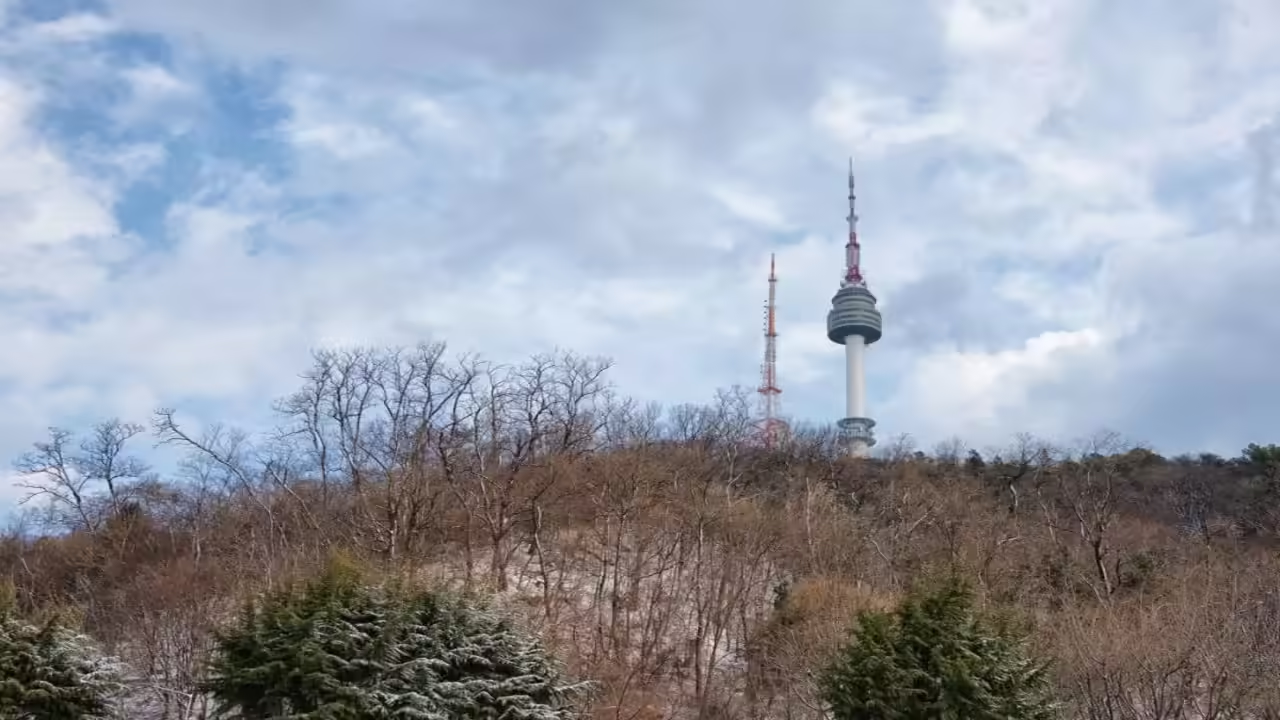
One of the key issues highlighted by the study is the lack of regulatory oversight regarding the environmental impact of mobile phone towers. Current safety standards, such as those provided by the International Commission on Non-Ionizing Radiation Protection (ICNIRP), primarily focus on protecting human health from the thermal effects of RF-EMFs. These standards do not account for the non-thermal effects of electromagnetic radiation on plant and animal life, which may explain why the damage to trees has largely gone unnoticed by policymakers.
The existing regulatory frameworks were designed to protect humans from acute, short-term exposure, not long-term, low-level radiation exposure to the environment. As mobile technology infrastructure continues to expand, this gap in regulation is becoming increasingly problematic. The damage to trees observed in studies like the one in Germany is a clear indication that the current safety models may be insufficient to protect the broader ecosystem.
The Precautionary Principle: Rethinking Technology’s Environmental Impact
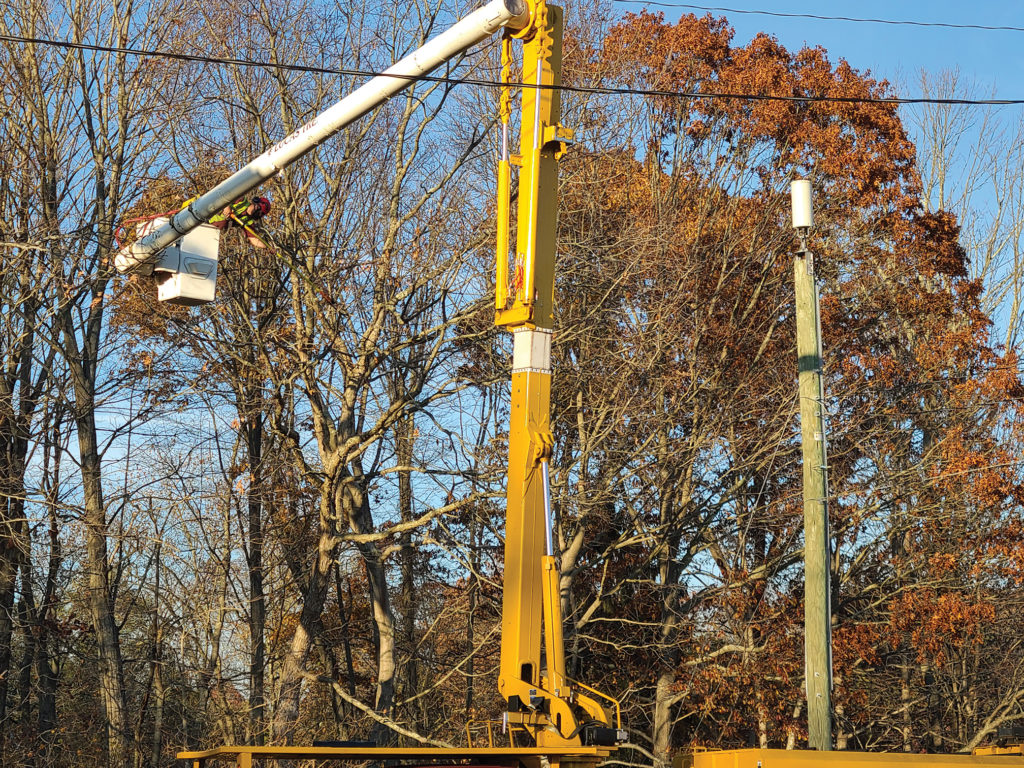
Given the mounting evidence of tree damage near mobile phone towers, many experts are calling for a more precautionary approach to the deployment of wireless infrastructure. The precautionary principle—taking preventive action in the face of potential harm, even if all the scientific evidence is not yet available—could be applied more rigorously in the context of electromagnetic radiation exposure.
As 5G networks roll out and the density of mobile phone towers increases, there is a need for more comprehensive environmental impact assessments. These assessments should not only consider the impact on human health but also take into account the effects on plants, animals, and ecosystems. It is essential that urban planners, telecommunications companies, and policymakers work together to find solutions that balance technological advancement with environmental protection.
A Wake-Up Call for Sustainable Development
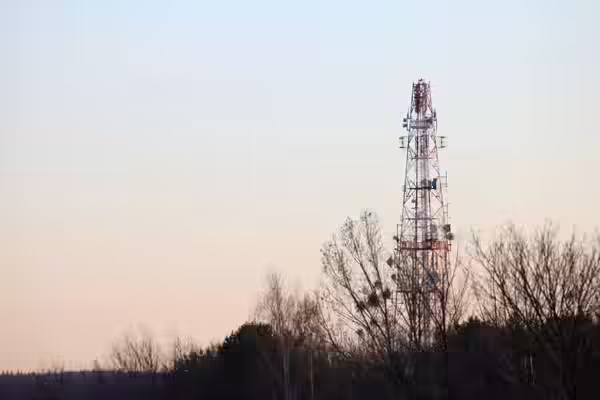
The discovery of tree damage near mobile phone towers serves as a wake-up call for the need to rethink how we approach technological progress in an increasingly connected world. While mobile phone towers provide critical infrastructure for modern communication, the environmental cost of this infrastructure must be carefully considered. The decline of trees near cell towers may be just one visible symptom of a larger, global issue that requires urgent attention.
To ensure that technological progress does not come at the expense of the environment, it is essential to update safety standards, conduct thorough environmental impact assessments, and apply the precautionary principle to the development of mobile networks. By taking proactive steps to protect the environment, we can ensure that the benefits of connectivity do not come at an irreversible cost to the ecosystems that sustain us.