

Table of Contents
- What Is Andes Hantavirus?
- How the Canadian Case Was Discovered
- Why the Antarctic Cruise Ship Became a Public Health Concern
- Public Health Officials Move Quickly to Contain Risks
- Why Person-to-Person Transmission Matters So Much
- Symptoms and What Canadians Are Being Told to Watch For
- How Rare Is This Situation in Canada?
- Why Global Health Surveillance Has Changed Forever
- Could Climate and Tourism Increase Future Risks?
- What Happens Next?
What Is Andes Hantavirus?
Hantaviruses are a family of viruses typically carried by rodents. Humans usually become infected through contact with infected rodent urine, droppings, or saliva, often by inhaling contaminated particles in enclosed spaces.
Most hantavirus infections are not known to spread directly between people. However, the Andes strain is different.
First identified in South America, particularly in Argentina and Chile, Andes hantavirus is one of the only hantavirus strains scientifically confirmed to allow person-to-person transmission under certain circumstances. That distinction alone makes it particularly concerning for infectious disease experts.
Symptoms often begin with fever, headaches, muscle aches, nausea, and fatigue. In severe cases, the disease can progress into hantavirus pulmonary syndrome, a dangerous respiratory condition that can become life-threatening.
Although infections remain rare globally, mortality rates for severe hantavirus cases can be significant, especially if diagnosis and treatment are delayed.
This is why health authorities acted quickly after the Canadian traveler developed symptoms following the Antarctic cruise exposure.
How the Canadian Case Was Discovered

According to British Columbia Provincial Health Officer Dr. Bonnie Henry, the Yukon resident was among four Canadians isolating after potential exposure aboard the cruise ship. The group had reportedly been identified as higher-risk contacts connected to the confirmed hantavirus situation.
While isolating in British Columbia, the patient began developing mild symptoms including fever and headache. Officials said the symptoms appeared approximately two days before the patient and their partner were transferred to a hospital in Victoria for evaluation and testing.
Initial testing produced what authorities described as a “presumptive positive” result. Confirmatory analysis was then performed at Canada’s National Microbiology Laboratory in Winnipeg, which officially verified the infection.
Health authorities later confirmed the patient’s partner tested negative for the virus.
The rapid movement from presumptive testing to national confirmation highlights how seriously Canadian health agencies treated the situation, particularly because the Andes strain has the potential for person-to-person spread.
Why the Antarctic Cruise Ship Became a Public Health Concern
Cruise ships have increasingly become a focus of infectious disease monitoring over the past decade, especially following global outbreaks linked to close-contact travel environments.
In this case, the concern stemmed from shared indoor spaces, prolonged passenger interaction, and the unusual nature of the Andes strain itself.
The World Health Organization reportedly identified the virus involved as the Andes strain earlier in the week, triggering heightened monitoring procedures for passengers who may have had close exposure to infected individuals aboard the vessel.
Unlike common respiratory illnesses that can spread rapidly through casual contact, Andes hantavirus transmission between humans is believed to require relatively close and prolonged interaction. Even so, health officials moved cautiously given the rarity of the situation in Canada.
The Antarctic cruise connection also added an unusual international dimension to the story. Antarctica is often viewed as one of the world’s most isolated and controlled tourism destinations, yet global travel networks can still create pathways for infectious diseases to move between continents within days.
This reality has become increasingly important in modern public health planning.
Public Health Officials Move Quickly to Contain Risks
After the confirmed case emerged, Canadian public health authorities immediately expanded monitoring efforts.
Officials said nine Canadians considered to have experienced higher-risk exposure were placed into isolation and continue to be monitored closely. These individuals are reportedly located in British Columbia, Alberta, and Ontario.
Additionally, another 27 people across Canada are being monitored after sharing flights with a confirmed hantavirus patient. However, health authorities clarified that most airline passengers are not considered close contacts because seating arrangements significantly reduce exposure risk.
Even so, the response demonstrates how aggressively health agencies now pursue contact tracing following lessons learned from recent global pandemics.
Dr. Joss Reimer, Canada’s chief public health officer, publicly thanked healthcare workers and public health teams in British Columbia for their rapid response and praised travelers for cooperating with isolation measures.
So far, no additional confirmed cases have been identified.
Still, authorities continue urging caution while investigations remain ongoing.
Why Person-to-Person Transmission Matters So Much
One of the main reasons this story captured widespread attention is because most people familiar with hantavirus understand it primarily as a rodent-borne illness.
The Andes strain changes that conversation entirely.
While human-to-human transmission appears relatively uncommon compared to airborne viruses like influenza or COVID-19, even limited transmission capability significantly alters how public health authorities respond.
Traditional hantavirus prevention usually focuses on avoiding rodent exposure, cleaning contaminated spaces carefully, and improving sanitation practices. Andes hantavirus, however, introduces additional concerns involving close personal interaction and household exposure.
Scientists believe transmission may occur through prolonged close contact with infected individuals, especially during later stages of illness.
This creates additional challenges for hospitals, family members, travel groups, and public health officials attempting to contain possible spread.
The rarity of such cases also means many healthcare systems outside South America have limited firsthand experience managing Andes hantavirus situations.
Symptoms and What Canadians Are Being Told to Watch For

Health officials continue emphasizing that public risk remains low, but they are also educating Canadians about potential symptoms and warning signs.
Early symptoms of hantavirus infection can resemble common viral illnesses. Fever, fatigue, headaches, chills, nausea, dizziness, and muscle aches are frequently reported during initial stages.
As the illness progresses, some patients may develop coughing, breathing difficulty, and fluid buildup in the lungs. Severe cases can rapidly become medical emergencies.
Because these early symptoms overlap with many other illnesses, identifying hantavirus can sometimes be difficult without known exposure history.
This is one reason the Antarctic cruise connection proved important in the Canadian case. Once exposure concerns were identified, healthcare teams could quickly isolate and test symptomatic travelers.
Experts stress that most Canadians face extremely low risk of contracting hantavirus under normal circumstances. The current situation is being treated carefully largely because of the unusual Andes strain and the international travel exposure involved.
How Rare Is This Situation in Canada?
Canada has recorded hantavirus cases before, but they are typically linked to different strains carried by rodents in North America. Those infections are usually associated with environmental exposure rather than person-to-person transmission.
The confirmation of Andes hantavirus represents a uniquely rare public health event.
Experts note that the Andes strain is most commonly associated with parts of Argentina and Chile. Cases outside South America are uncommon and often tied to travel-related exposure.
This rarity partly explains why the story generated significant media coverage despite involving only a single confirmed infection.
Infectious disease specialists often pay close attention to unusual imported cases because they can reveal vulnerabilities in travel screening, disease surveillance, or international monitoring systems.
The case also serves as a reminder of how interconnected modern travel has become. A virus associated primarily with South America can now trigger monitoring operations across Canada within days.
Why Global Health Surveillance Has Changed Forever
Situations like this highlight how dramatically public health systems have evolved in recent years.
Following global experiences with COVID-19, governments and health agencies have invested heavily in faster testing systems, contact tracing procedures, international reporting coordination, and surveillance capabilities.
Today, even a single rare infection linked to international travel can trigger rapid national response protocols involving laboratories, hospitals, airlines, border authorities, and global health organizations.
Some critics argue modern public health systems occasionally overreact to low-risk situations. Others believe aggressive monitoring is necessary to prevent larger outbreaks before they begin.
The Andes hantavirus case demonstrates this balancing act perfectly.
Officials are trying to avoid public panic while simultaneously treating the situation seriously enough to contain any potential transmission risks early.
That delicate communication challenge has become one of the defining features of modern infectious disease management.
Could Climate and Tourism Increase Future Risks?
Although this case appears directly tied to travel exposure rather than environmental spread within Canada, experts increasingly warn that changing global conditions may alter disease patterns in the future.
Climate shifts, expanding tourism, ecological disruption, and increased human interaction with wildlife habitats can all influence how infectious diseases emerge and spread.
Adventure tourism, including Antarctic cruises, has grown significantly in popularity over the past decade. More travelers visiting remote ecosystems means greater interaction with environments and pathogens that many people previously never encountered.
At the same time, global transportation networks allow infected travelers to cross continents rapidly before symptoms fully develop.
Public health experts therefore believe rare imported cases like this may become more common over time, even if widespread outbreaks remain unlikely.
This is one reason governments continue investing heavily in disease surveillance systems capable of identifying unusual cases quickly.
What Happens Next?
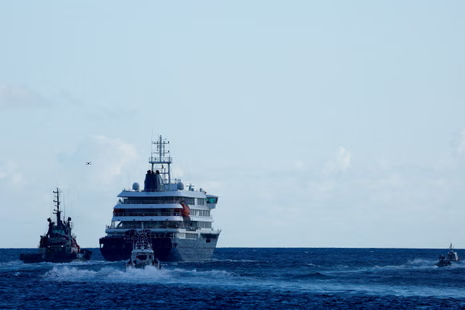
For now, Canadian health authorities continue monitoring exposed individuals while emphasizing that the overall threat to the general public remains low.
The confirmed patient reportedly developed only mild symptoms initially, and officials have not announced any evidence of widespread transmission connected to the case.
Still, the incident has already become a major reminder of how unpredictable infectious disease events can be in a highly connected world.
A rare virus strain associated primarily with South America, identified aboard an Antarctic cruise ship, has now led to hospital assessments, isolation orders, and nationwide monitoring operations across Canada.
That reality alone demonstrates how modern public health emergencies no longer remain confined by geography.
The first confirmed Andes hantavirus case in Canada may ultimately remain an isolated event. But it also underscores a much larger truth about the future of global health: rare diseases once considered distant or regional can now appear almost anywhere, often with little warning.
As scientists continue studying emerging infectious diseases and governments strengthen surveillance systems, situations like this are likely to become increasingly important test cases for how quickly countries can detect, contain, and communicate complex health threats in real time.