
Table of Contents
- When Tragedy Strikes at a High School Event
- The Fatal Incident
- The Trial Begins
- Prosecution’s Case: Murder Allegations
- Defense Perspective: Self-Defense Argument
- National Attention and Social Context
- The Courtroom: Proceedings and Witness Testimony
- Victim and Family Perspective
- Verdict and Sentencing
- Broader Implications for School Safety
- Reflecting on Youth, Violence, and Justice
When Tragedy Strikes at a High School Event
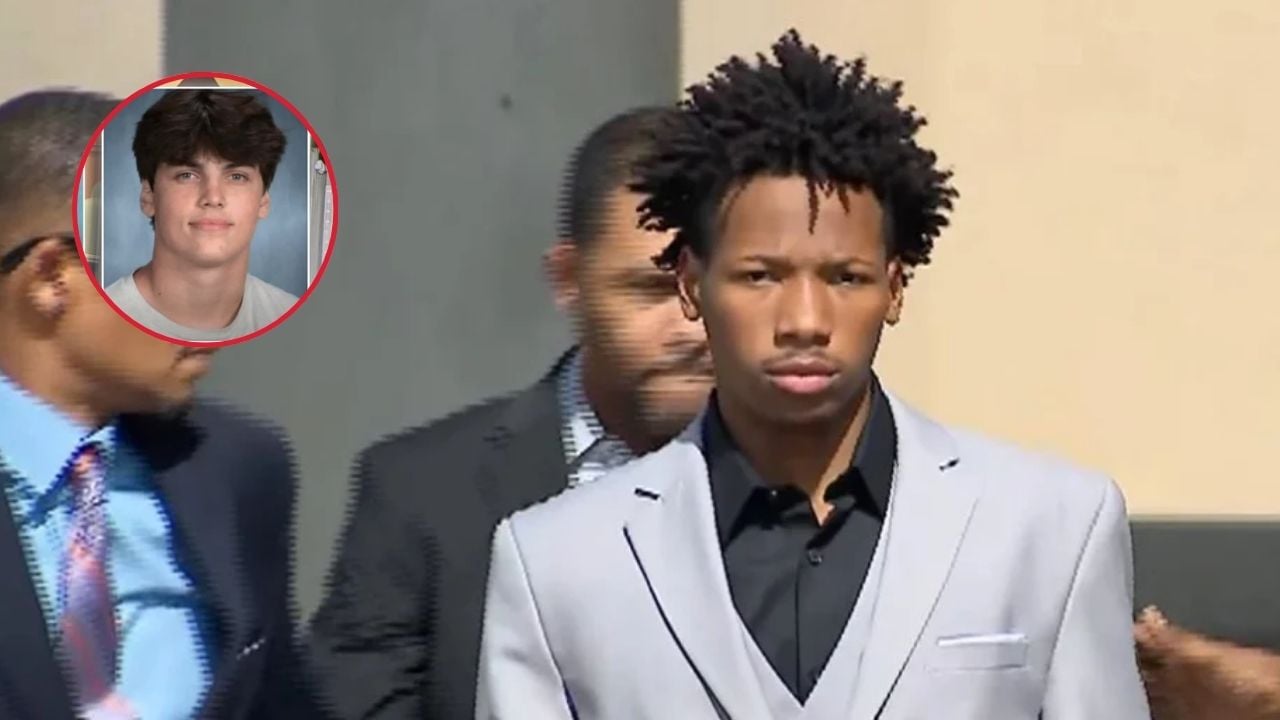
In a closely watched trial in McKinney, Texas, the death of 17-year-old Austin Metcalf at a local track meet last year resulted in a Texas jury swiftly convicting Karmelo Anthony of murder. The case, which drew national attention for its intensity and controversial circumstances, unfolded at Frisco Centennial and Memorial High Schools, highlighting deep societal questions about self-defense, youth responsibility, and race in America.
The fatal encounter, which occurred at Kuykendall Stadium on April 2, 2025, has raised lasting debates over school safety, bullying, and the limits of self-defense. Anthony, 19 at the time of sentencing, was given 35 years in prison. While the legal process has concluded, the ethical and social implications of the case continue to reverberate across Texas and beyond. This article explores the events leading up to the stabbing, the trial, and the broader discussions surrounding school violence and youth behavior.
The Fatal Incident

According to the Frisco police arrest report, the altercation took place under a Memorial High bleacher tent during the track meet. Anthony, a Centennial High student, had sought shelter from the rain beneath the tent of the opposing team. A dispute arose when Metcalf and other students asked him to move, which escalated into a physical confrontation.
Witnesses report that Anthony pulled a knife from his backpack during the encounter. He allegedly told Metcalf, “Touch me and see what happens,” before Metcalf placed his hands on Anthony. In response, Anthony stabbed Metcalf in the chest and fled the scene. Despite the quick response of his twin brother and first responders, Metcalf succumbed to his injuries on site.
Anthony immediately admitted to police that he had stabbed Metcalf, stating, “I was protecting myself. He put his hands on me.” While he claimed self-defense, prosecutors framed the stabbing as an unprovoked and unjustified act of violence.
The Trial Begins
The murder trial began with high tension and national scrutiny. Jury selection revealed that no Black jurors were ultimately seated, drawing commentary about representation and fairness in the legal process. Cameras were prohibited in the courtroom, and public seating was limited.
During the trial, prosecutors and defense attorneys presented sharply contrasting narratives. Prosecutors argued that Anthony intentionally provoked Metcalf and escalated the situation by using a knife, framing the act as cold-blooded murder. Defense attorneys countered that Anthony acted in fear, using the knife to defend himself after being shoved, emphasizing the teen’s perception of immediate threat.
Prosecution’s Case: Murder Allegations
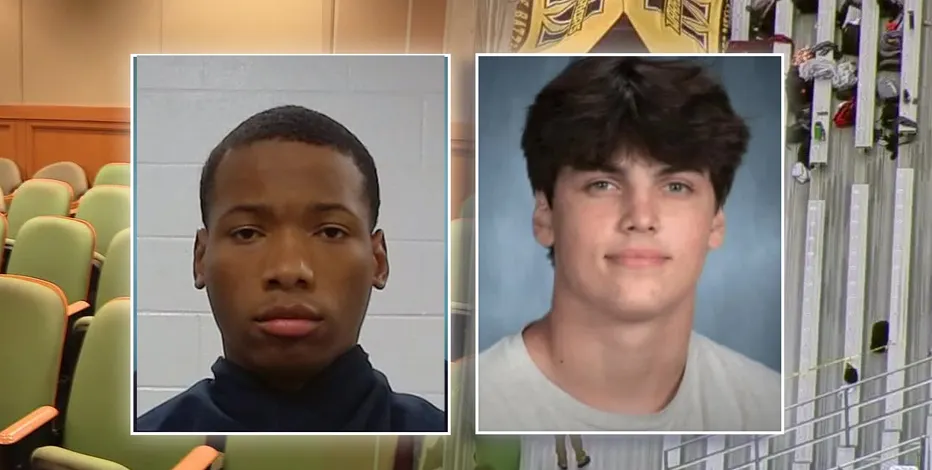
Prosecutor Bill Wirskye described the incident as “senseless” and “unprovoked,” asserting that race or self-defense was not a factor. According to the prosecution, Anthony’s presence under another school’s tent led to verbal taunting, physical confrontation, and ultimately, the fatal stabbing.
The prosecution called 21 witnesses, including coaches, athletes, and police officers. Surveillance footage was presented, though from a distance, it offered only limited clarity. Several teen athletes testified that Anthony refused to move and taunted Metcalf, portraying a deliberate escalation of the encounter. The prosecution argued that the fatal outcome could have been avoided had Anthony not armed himself and chosen confrontation over de-escalation.
Defense Perspective: Self-Defense Argument
Defense attorney Mike Howard framed Anthony’s actions as defensive. According to witnesses and police testimony, Anthony sought shelter from rain beneath the bleacher tent. When Metcalf allegedly shoved him, Anthony reacted out of fear, using the knife to protect himself.
The defense did not call Anthony to testify, instead relying on witness statements and expert testimony to establish context. Howard emphasized the importance of understanding the teen’s perspective in a sudden, frightening encounter, highlighting that small pocket knives were technically legal, though prohibited on school grounds.
National Attention and Social Context
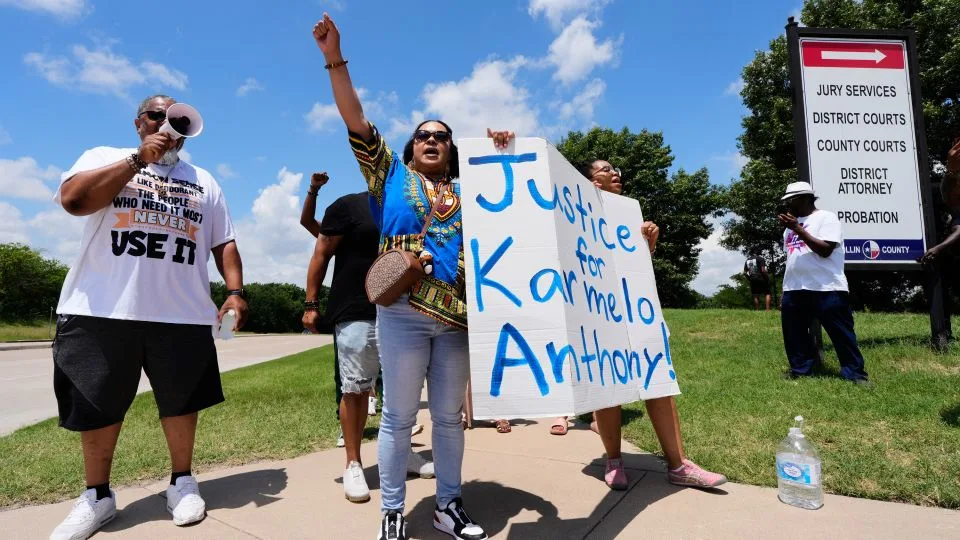
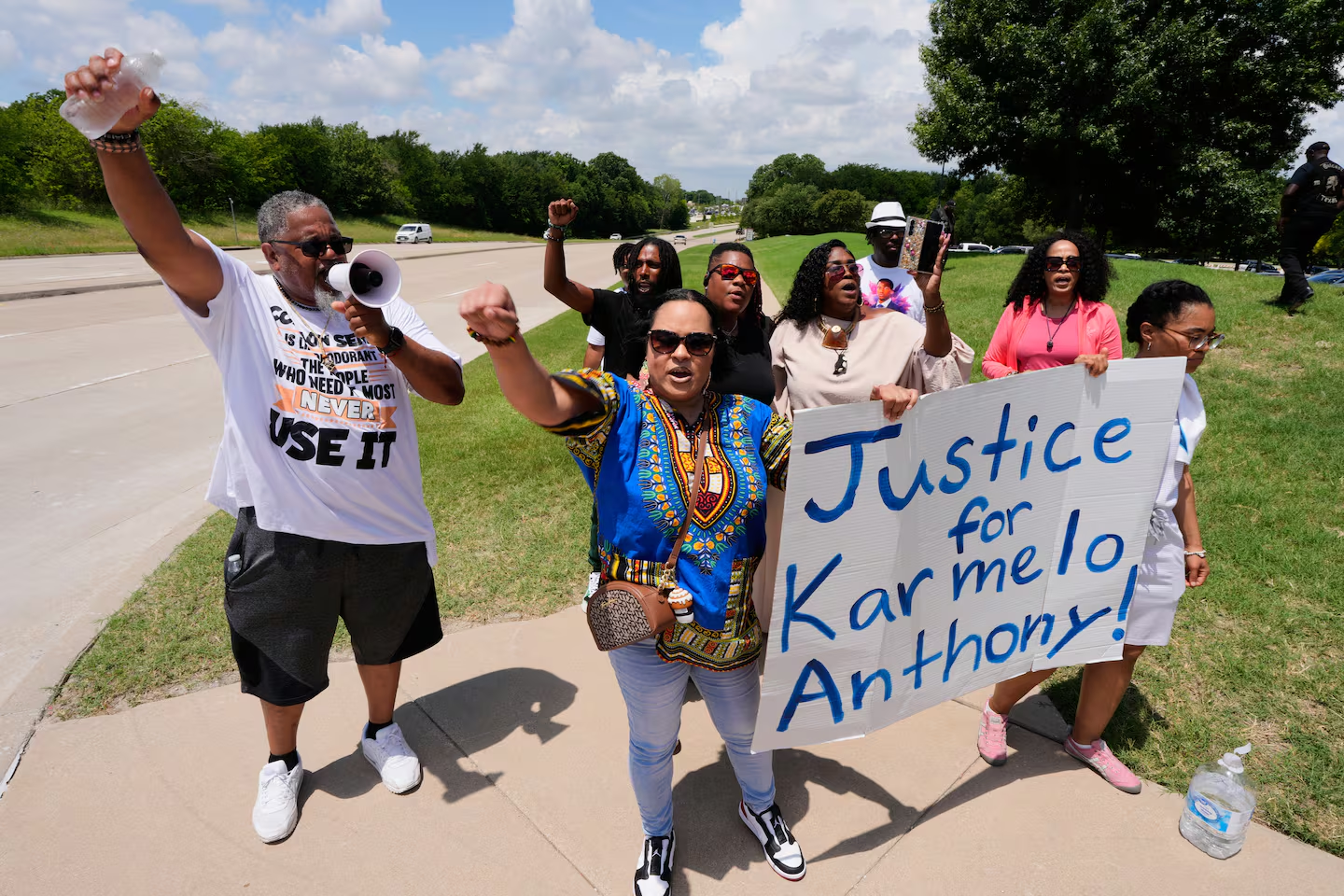
The case quickly became a flashpoint for discussions about youth, race, and legal protections. Anthony, a Black teenager, and Metcalf, a White teenager, sparked debates over potential racial dynamics, school safety, and media framing. Supporters raised nearly $625,000 for Anthony’s defense through a GiveSendGo fundraiser, while Metcalf’s family raised just under $600,000 on GoFundMe, reflecting the polarized public response.
Activist groups and far-right influencers gathered outside the Collin County courthouse during the trial. Some compared Anthony to Kyle Rittenhouse, the teen acquitted in 2021, emphasizing arguments around equal application of self-defense rights. The controversy illustrated the national tension over how juvenile violence, race, and self-defense are perceived and discussed in public discourse.
The Courtroom: Proceedings and Witness Testimony
Trial proceedings unfolded over multiple days. Jury deliberations followed the presentation of evidence, including surveillance video, witness testimony, and police statements. Teen athletes described Anthony’s refusal to leave the tent and Metcalf’s subsequent actions leading to the stabbing.
Frisco police detective Beau Riley testified on the legal status of small knives, clarifying that while they were prohibited on school property, they were not inherently illegal. This detail allowed the jury to focus on intent and circumstances rather than simple possession, shaping considerations of culpability and self-defense claims.
Victim and Family Perspective
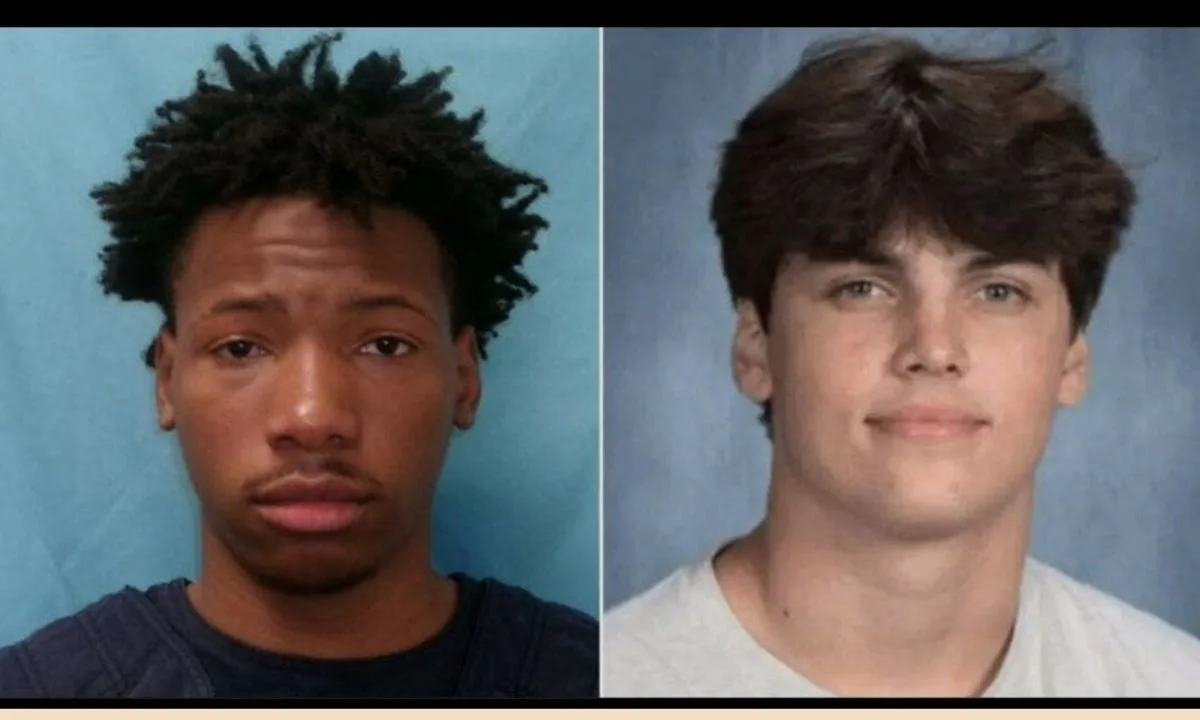
Austin Metcalf’s family publicly mourned the loss of a promising young student-athlete. Metcalf’s father highlighted his son’s achievements, including leadership on the football field and academic excellence. “He was a bright young man with a great future ahead of him,” he wrote. The emotional impact on his family and the broader community underscores the tragic human cost of the incident, reminding the public of the stakes involved in youth violence.
The Metcalf family’s response included calls for justice, while also honoring their son’s legacy and accomplishments. The story resonated beyond Texas, prompting nationwide discussions about teen conflict, school safety, and accountability.
Verdict and Sentencing
On Tuesday, the jury returned a swift verdict, finding Anthony guilty of murder. The conviction carried a 35-year sentence. The court considered arguments about self-defense but ultimately concluded that the act was not justified. The outcome reinforces legal principles around intent and proportionality, particularly in cases involving deadly force at school events.
Anthony’s mother, Kala Hayes, expressed concern over threats received by her family, emphasizing the importance of due process. She highlighted the value of fair trial and the need to protect minors navigating the legal system while under intense public scrutiny.
Broader Implications for School Safety
This case raises significant questions for school administrators, policymakers, and communities. It underscores the potential dangers of confrontations during school events, particularly when weapons are present. Schools nationwide may need to evaluate emergency preparedness, conflict resolution training, and security measures to prevent similar tragedies.
Educators and parents are reminded of the importance of monitoring student interactions and fostering environments where conflict is addressed safely before it escalates to violence. The trial has sparked conversations about legal consequences, risk awareness, and the responsibilities of young individuals in potentially life-threatening scenarios.
Reflecting on Youth, Violence, and Justice
The Texas track meet stabbing trial illustrates a complex intersection of youth decision-making, legal frameworks, and social dynamics. While Anthony’s youth and fear are central to understanding his actions, the jury’s decision emphasizes accountability and the rule of law.
Communities are left to grapple with difficult questions: How should schools protect students from weapons and conflict? What are the limits of self-defense for minors? How do race and public perception influence justice? These discussions, prompted by the case, have broader societal implications for understanding youth, safety, and fairness in legal systems.
As Texas communities continue to process the events and their ramifications, the story serves as a cautionary tale and a prompt for dialogue about prevention, ethics, and legal responsibility. The trial reminds society that school-related violence, even when rare, carries consequences that affect families, peers, and entire communities.