

Table of Contents
- The Billionaire Who Wants to Outrun Time
- The Shocking Truth About Plastic in the Human Body
- The Biohacker’s Mission: “Project Blueprint”
- How Do You “Detox” Plastic from the Human Body?
- The Data-Driven Detox
- The Plastic Problem We Can’t Ignore
- The Bigger Picture: The Cost of Modern Convenience
- Can the Rich Actually Buy Clean Bodies?
- The Science Catches Up
- The Mental Side of the Experiment
- What His Critics Are Missing
- The Future of Detox: Technology Meets Biology
- Final Thoughts: A Mirror for Our Plastic Age
The Billionaire Who Wants to Outrun Time
When most people think of detoxing, they imagine green juices and yoga retreats.
But for Bryan Johnson, the multimillionaire tech entrepreneur turned biohacker, detoxing means something far more extreme — purging his body of plastic.
Yes, plastic. The same stuff that wraps our food, coats our coffee cups, and fills the oceans may also be filling our bloodstreams. And Johnson, whose mission is to achieve biological immortality, has decided he’s not letting that happen.
“We are swimming in plastic,” he told his followers. “Now it’s time to get it out.”
The Shocking Truth About Plastic in the Human Body
To understand Johnson’s obsession, you have to face a disturbing reality: microplastics are everywhere.
Recent studies have found plastic particles in human lungs, blood, and even placentas. Scientists estimate that the average person consumes a credit card’s worth of plastic every week through food, air, and water.
And no one really knows what long-term damage that causes.
Toxins like bisphenol A (BPA) and phthalates, found in everyday packaging and cosmetics, have been linked to hormonal imbalances, infertility, obesity, and even cancer.
So when Bryan Johnson says he wants to detox his body of plastic, he’s not just being eccentric — he’s making a point that affects all of us.
The Biohacker’s Mission: “Project Blueprint”

Bryan Johnson isn’t new to radical experiments.
After selling his payments company Braintree to PayPal for $800 million, he poured his fortune into Project Blueprint — a $2 million-a-year quest to make his 46-year-old body function like an 18-year-old’s.
His daily life is a mix of science fiction and strict discipline:
- 111 supplements every day.
- Laser light therapy on his skin and organs.
- Sleep tracking, calorie restriction, and blood tests almost daily.
- And now — a full-scale detox protocol to remove microplastics from his body.
He’s been called everything from visionary to obsessive. But one thing is certain: his results have the world’s attention.
How Do You “Detox” Plastic from the Human Body?
Here’s where things get fascinating — and controversial.
Johnson’s team of doctors and researchers designed a custom detox program aimed at flushing out environmental toxins.
It includes:
- Chlorella and spirulina — algae known to bind with heavy metals and toxins.
- Sauna therapy, to promote sweating and toxin release through the skin.
- Infrared light exposure, believed to enhance cellular repair.
- Activated charcoal and zeolite, compounds thought to absorb microplastics in the digestive tract.
But does it really work?
Scientists remain divided. While detox programs can reduce certain toxins, there’s no conclusive evidence yet that they can eliminate microplastics entirely.
Still, Johnson isn’t waiting for proof — he’s creating it.
The Data-Driven Detox
Unlike typical wellness influencers, Johnson backs every decision with data.
He tracks biomarkers in real time, from blood toxin levels to inflammatory markers, monitoring how his detox affects his system.
The goal? To prove that with the right technology and discipline, humans can reverse the chemical aging caused by modern life.
His results are shared publicly on his website, turning his body into a living laboratory — and his followers into witnesses of what could be the future of personal health.
The Plastic Problem We Can’t Ignore
While Johnson’s methods may sound extreme, his core message is anything but.
Plastic pollution is not just an environmental crisis — it’s a public health emergency.
Studies suggest that over 80% of the world’s tap water contains microplastic contamination, and seafood often carries invisible plastic fragments up the food chain.
If you’ve ever used bottled water, eaten takeout, or microwaved food in plastic containers, you’ve likely ingested microplastics too.
And unlike natural toxins, these don’t biodegrade — they accumulate inside the body.
The question isn’t whether we have plastic in us — it’s how much, and what it’s doing to us.
The Bigger Picture: The Cost of Modern Convenience
Plastic made modern life possible — cheap packaging, medical supplies, electronics, you name it.
But that convenience came with a hidden cost: chemical overload.
Plastics contain additives like BPA, PVC, and PFAS — so-called “forever chemicals” that don’t break down and may disrupt everything from hormones to brain function.
In one study, high microplastic exposure correlated with increased oxidative stress, which accelerates aging and damages cells.
In other words, the materials that made us “modern” may also be quietly making us sick.
Can the Rich Actually Buy Clean Bodies?
Critics argue that Johnson’s detox is the latest example of “luxury wellness” — an expensive solution to a universal problem.
Not everyone can afford to spend millions on blood tests, personal doctors, and cryogenic chambers.
But that’s exactly what makes his experiment interesting.
If he succeeds, his data could lead to affordable detox technologies — from supplements to wearable filters — that could help the general public one day.
So while his personal quest may seem self-centered, its outcomes might benefit humanity as a whole.
Would you call that vanity — or vision?
The Science Catches Up
In recent years, scientists have started exploring ways to remove microplastics from human systems.
Researchers are studying enzymes and bacteria that can digest plastic molecules, while others are experimenting with nanotechnology-based filters for drinking water.
Johnson’s data, paired with these emerging solutions, could inform future therapies for toxin accumulation, inflammation, and premature aging.
As he often says,
“Longevity isn’t about living forever — it’s about living better.”
The Mental Side of the Experiment
It’s easy to focus on the physical side of Johnson’s journey, but there’s also a profound psychological dimension to it.
He has publicly admitted that his drive for perfection stems from overcoming depression and burnout after his first business success.
For him, biohacking is as much about control as it is about health — controlling what goes into his body, what leaves it, and how long it lasts.
That raises a deeper question: is he escaping death, or simply redefining what it means to live?
What His Critics Are Missing
Johnson’s critics often paint him as eccentric — a rich man afraid of aging.
But that misses the point. His journey is less about immortality and more about exposing the toxicity of modern living.
He’s forcing society to confront an uncomfortable truth:
If our air, food, and water are poisoned by plastic, then “healthy living” isn’t just a choice — it’s a privilege.
By turning his body into a science experiment, Johnson is sparking global conversations about environmental health, scientific ethics, and the future of human evolution.
The Future of Detox: Technology Meets Biology
Imagine a world where your smartwatch not only tracks your steps but also monitors your toxin levels — or where AI-driven detox programs automatically adjust your diet to eliminate specific chemicals from your system.
That’s not far from what Bryan Johnson envisions.
His goal is to merge data science, biotechnology, and personal optimization into a single ecosystem — one where humans can detect and reverse biological harm in real time.
What sounds like science fiction today might be your morning routine tomorrow.
Final Thoughts: A Mirror for Our Plastic Age
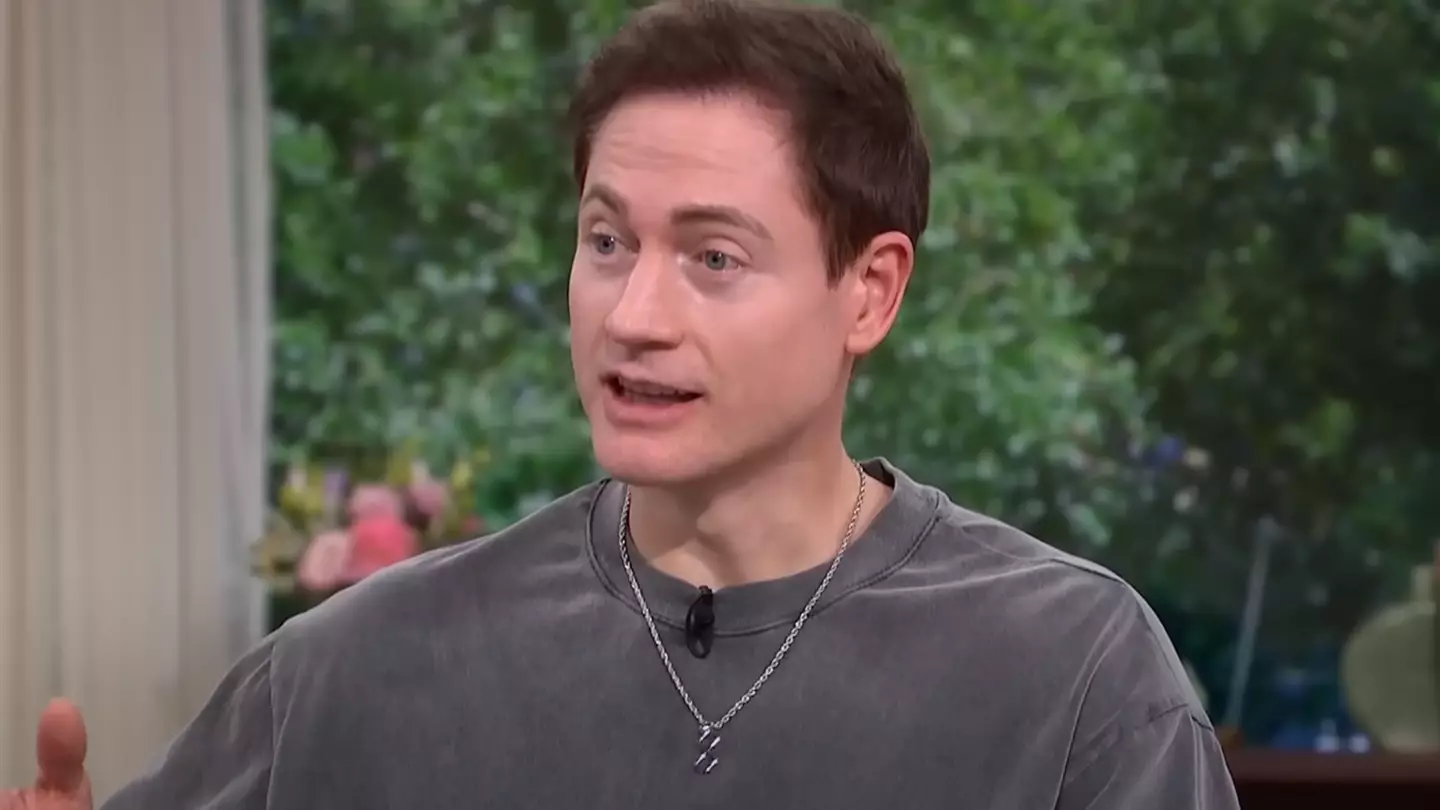
Whether you admire or mock him, Bryan Johnson is holding up a mirror to all of us.
We live in a world built on synthetic convenience — from plastic bottles to fast fashion to processed food — and every bit of it leaves a trace inside us.
Johnson’s detox is not just a rich man’s obsession. It’s a warning and a challenge.
If the man who can afford the cleanest food, air, and supplements still can’t escape plastic… what chance do the rest of us have?
Maybe it’s time we all start thinking like biohackers — not to live forever, but to live consciously.
Because the future of health won’t be about avoiding death.
It’ll be about detoxing from the world we’ve created.