
Table of Contents
- A Simple Complaint That Changed Everything
- Leaving Stability Behind for Something Greater
- A Difficult Beginning
- A Story That Touched Millions
- More Than Just Fried Rice
- A Bond Strengthened by Loss
- The Daily Reality Behind the Viral Moment
- A Different Definition of Success
- Why This Story Resonates So Deeply
- The Broader Meaning Behind the Moment
- A Story That Continues to Grow
- What This Means for the Future
A Simple Complaint That Changed Everything
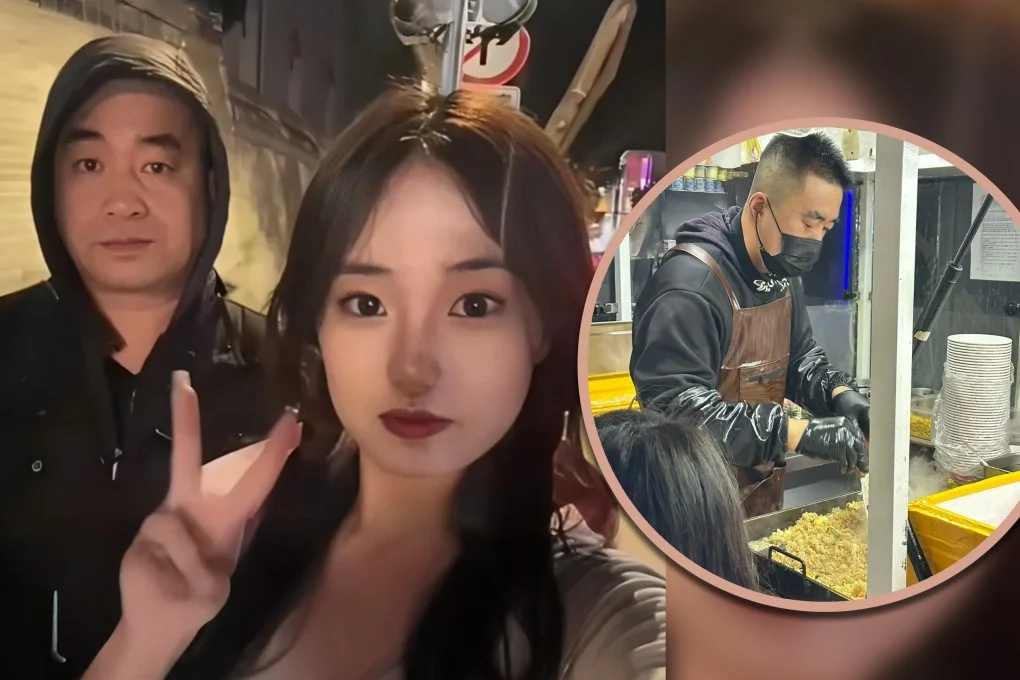
The story began in a way that feels familiar to many students. Li Bingdi, a second-year student at Jilin Normal University in northeastern China, had been struggling with the food available at her school. She described it as lacking hygiene and, more importantly, missing what she called the “taste of home.” For many young people living away from their families for the first time, this feeling is not unusual. Food becomes more than nutrition. It becomes memory, comfort, and identity.
But for her father, this complaint was not something to brush aside. Instead of offering reassurance from a distance or suggesting she adapt, he made a decision that would completely change both of their lives. He chose to act.
At the time, he was working at a barbecue restaurant in Tianjin, a city located roughly 900 kilometers away from his daughter’s university. It was a stable job, one that provided him with income and routine. Leaving it behind was not a small decision. It meant stepping into uncertainty, giving up financial security, and starting over in a completely different place.
Yet, for him, the calculation was simple. His daughter was struggling, and he wanted to help in the most direct way possible.
Leaving Stability Behind for Something Greater

Quitting a job is often associated with risk, especially when there is no guaranteed alternative waiting on the other side. For Li’s father, this decision was not driven by ambition or personal gain. It was driven by care.
After resigning from his position, he did not immediately set up his stall. Instead, he took another step that reveals how serious he was about this mission. He traveled to southern China to learn how to cook dishes beyond his existing skills. Specifically, he focused on mastering fried rice and noodles, simple yet beloved meals that could be prepared quickly and sold at an affordable price.
This phase of preparation is easy to overlook, but it is one of the most important parts of the story. It shows that his decision was not impulsive. He was not just reacting emotionally. He was planning, learning, and equipping himself with the tools he needed to succeed.
Only after gaining confidence in his cooking did he move closer to his daughter’s university and rent a small stall near the school gates.
A Difficult Beginning
Like many small businesses, his venture did not start with immediate success. On the first day, he sold only seven portions of fried rice. The profit was minimal, barely enough to justify the effort he had put in.
In fact, his daughter earned more money that same day through her part-time work as a tutor than he did from running the stall. This detail highlights the reality of starting from scratch. Even with determination and purpose, success is never guaranteed.
For Li Bingdi, watching her father struggle was difficult. She understood the sacrifice he had made and felt a mix of gratitude and concern. This was not just a business to her. It was her father standing in the cold, working long hours, trying to build something from nothing.
It was at this point that she decided to share their story online.
A Story That Touched Millions
When Li posted about her father on social media, she did not expect the reaction that followed. She simply wanted to support him, to let others know that his food was clean and made with care, and to ask for advice on how he could improve his business.
What happened next was something neither of them could have predicted.
Within a short time, the story began to spread. Students, teachers, and even local residents became aware of the father who had traveled hundreds of kilometers just to cook for his daughter. The emotional weight of the story resonated deeply.
The very next day, long lines formed at his stall. People came not only to eat but also to support him. Some customers even ordered more food than they needed, simply as a way of contributing to his success.
This shift marked a turning point. What had started as a struggling business suddenly became a thriving one, powered not just by food but by human connection.
More Than Just Fried Rice
At the center of this story is food, but the meaning goes far beyond what is served on the plate. Customers quickly realized that they were not just buying fried rice or noodles. They were participating in something larger.
One online observer captured this sentiment perfectly by saying that the father was not only providing food but also offering the pure love of a parent. Another pointed out that the dishes must be hygienic because his own daughter was eating them.
These comments reflect a deeper truth. In a world where food safety and authenticity can sometimes be questioned, this stall represented something rare. It represented trust.
Every portion served carried a story. Every plate was a reminder of why the stall existed in the first place.
A Bond Strengthened by Loss

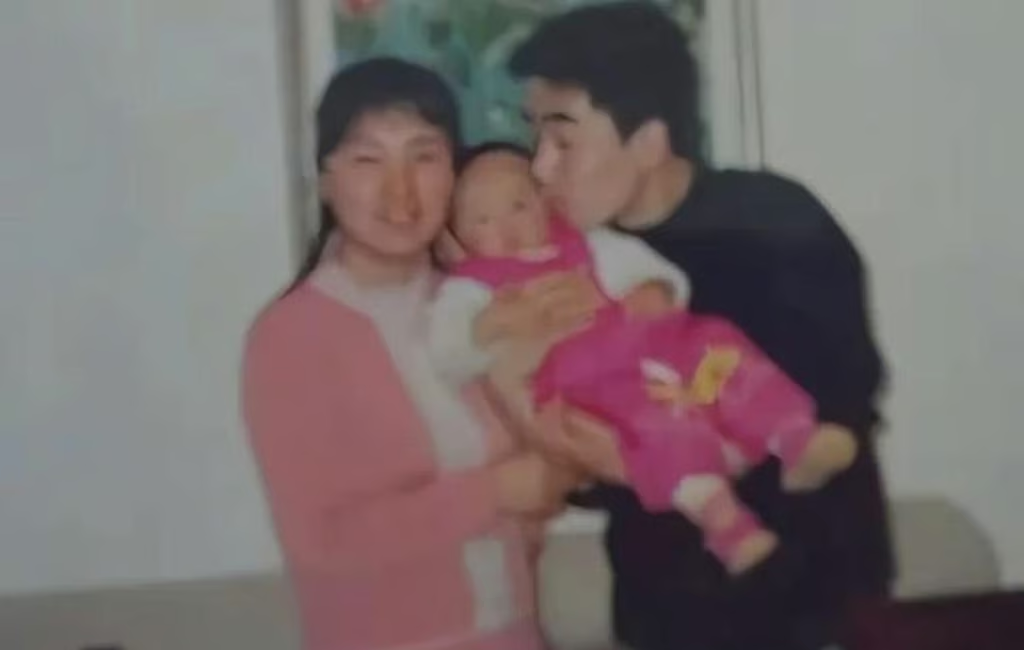
The emotional depth of the story becomes even clearer when considering the family’s history. Li Bingdi and her father have relied heavily on each other since the death of her mother from leukemia several years ago.
This loss created a bond that goes beyond the typical parent-child relationship. They became each other’s support system, navigating life together through both challenges and milestones.
When Li was choosing a university, unsure of where to go, her father made a promise. He told her that wherever she chose to study, he would follow.
At the time, it might have sounded like a comforting statement, something meant to reassure rather than a literal commitment. But years later, he fulfilled that promise in the most tangible way possible.
The Daily Reality Behind the Viral Moment
While the story has gained widespread attention, the daily reality of running the stall is far from easy. Li’s father spends long hours cooking, often in challenging weather conditions. At one point, he mentioned feeling cold while working, a reminder of the physical demands of his decision.
However, as business improved and the stall became busier, his perspective shifted. The workload increased, but so did his sense of purpose. According to his daughter, he now feels warmth not just from the activity but from the meaning behind it.
Li herself has become an active part of the operation, helping her father during her spare time. This collaboration has added another layer to their relationship, turning their bond into a shared effort.
A Different Definition of Success
One of the most striking aspects of the story is the father’s attitude toward success. He has made it clear that he is not aiming to make large profits. His goal is much simpler. He wants to earn a living while staying close to his daughter.
In a world that often equates success with financial gain, this perspective stands out. It challenges conventional ideas about what it means to achieve something meaningful.
For him, success is not measured in revenue but in presence. It is about being there, providing support, and maintaining a connection that might otherwise be weakened by distance.
Why This Story Resonates So Deeply
The reason this story has captured so much attention lies in its universality. While the details are specific to one family, the emotions behind it are widely shared.
Many people understand what it feels like to miss home. Many parents understand the desire to protect and care for their children, even when they are grown. This story brings those feelings to the surface in a way that feels both personal and relatable.
It also highlights a contrast between modern life and traditional values. In an increasingly fast-paced world, where people are often separated by work, education, and opportunity, this father chose connection over convenience.
That choice is what makes the story powerful.
The Broader Meaning Behind the Moment
Beyond its emotional impact, the story raises broader questions about family, sacrifice, and priorities. It invites reflection on what people are willing to give up for those they love and how those decisions shape their lives.
It also serves as a reminder that meaningful actions do not always come from grand gestures. Sometimes, they come from quiet decisions made in everyday moments.
The father did not set out to become a viral sensation. He simply wanted to make sure his daughter could eat food that reminded her of home.
Yet, in doing so, he created something much larger than himself.
A Story That Continues to Grow
As his business continues to thrive, the story is still unfolding. The stall has become more than just a place to eat. It has become a symbol of dedication and care, attracting people who are inspired not just by the food but by the story behind it.
For Li Bingdi, the experience has transformed her understanding of her father’s love. She describes it not as something distant or overwhelming but as something warm and constant, like the sun.
This description captures the essence of the story. It is not about dramatic declarations or extraordinary circumstances. It is about consistency, presence, and the quiet ways in which love shows itself over time.
What This Means for the Future
Looking ahead, the story leaves a lasting impression that goes beyond the immediate moment. It challenges readers to reconsider their own priorities and relationships.
In a time where distance and busyness often define daily life, it offers a different perspective. It suggests that sometimes, the most meaningful choice is to move closer, to be present, and to act on the small things that matter.
For this father and daughter, a simple complaint about food led to a journey that redefined their lives. For everyone watching, it serves as a reminder that love is not just something we feel. It is something we do.