
Table of Contents
- A Classroom Visit With Larger Political Meaning
- Why Child Care Was the Perfect Stage
- Their Relationship Did Not Start in the Bronx
- Obama’s Presence Sends a Signal Even Without an Endorsement
- Mamdani’s Balancing Act With National Figures
- Why New York Makes This So Important
- The Quiet Message About Governance
- What This Meeting May Mean Going Forward
A Classroom Visit With Larger Political Meaning
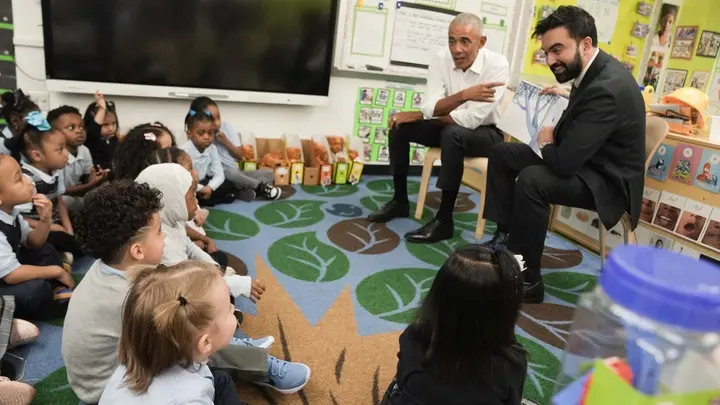
At first glance, it might be tempting to dismiss the meeting as a soft-focus photo opportunity. Politicians read to children all the time. Former presidents appear at community events constantly. Yet timing changes everything in politics, and this meeting arrived at a moment when Mamdani is still early enough in office to be defining what his administration stands for, while prominent Democrats across the country are still deciding how closely to align themselves with him. That is what gave the visit its weight. This was not a campaign rally, not a policy rollout, and not a formal endorsement. It was something subtler and, in some ways, more revealing: a quiet public acknowledgment that Mamdani is now important enough to warrant Obama’s time.
The symbolism becomes even stronger when viewed against Mamdani’s political profile. AP described him as a democratic socialist who recently passed his 100th day in office and came in on a platform focused heavily on affordability and support for working-class New Yorkers. For national Democrats, that makes him both fascinating and risky. He represents energy, youth, and ideological clarity to supporters. To skeptics, he represents a test case that could either validate a new progressive governing model or hand opponents a powerful cautionary tale. Obama’s willingness to appear with him, even in a limited setting, suggests that Mamdani’s experiment in governing New York is being watched far beyond City Hall.
Why Child Care Was the Perfect Stage
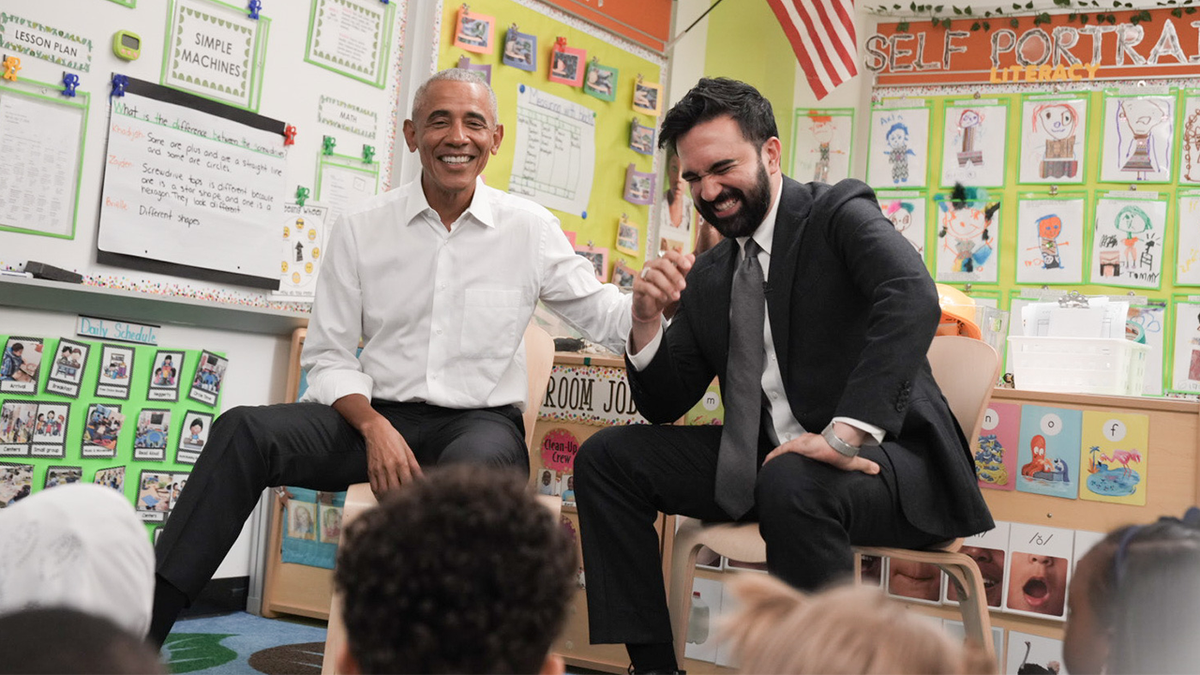
The location was not accidental. Child care is one of the clearest examples of the kind of government Mamdani says he wants to build. His administration has made expansion of universal child care a central part of its affordability agenda, and the city has already announced significant progress toward that goal. On April 10, the mayor’s office said Mamdani had made “sweeping progress” toward universal, accessible child care in his first 100 days. Earlier, on March 3, Governor Kathy Hochul and Mamdani announced a first milestone in a plan to deliver free child care for two-year-olds in New York City, including 2,000 2-K seats starting this fall in selected communities. Chalkbeat reported that the state committed $73 million for the first year, with a plan to expand to 12,000 seats citywide by fall 2027.
That context is crucial because it means the Obama meeting was rooted in an actual governing priority rather than generic feel-good imagery. Mamdani has argued that child care should be treated as a public good, not a luxury or private burden. A preschool classroom therefore serves as a kind of visual shorthand for his broader political theory. If government can meaningfully lower the cost of living and widen access to care and education, then it can reshape family life in tangible ways. Obama reading to children beside him in that setting gave the message added resonance, even without a speech or press conference.
Their Relationship Did Not Start in the Bronx
Although this was their first face-to-face meeting, reporting indicates that Obama and Mamdani had already been in contact before. CNN’s report, mirrored through AOL, said the two spoke by phone before Election Day in November. According to that account, Obama told Mamdani that many people would be watching to see how effectively a democratic socialist could run the nation’s largest city, and how many critics would be waiting to pounce if things went wrong. The same report said Obama advised him to prioritize making strong hires, a classic piece of governing advice that reflects the difference between winning office and exercising power.
That earlier conversation adds depth to the Bronx event. It suggests Obama’s interest in Mamdani has been more than casual, and that the former president understands the mayor as a political case study with national implications. There is a difference between admiring someone from afar and taking the time to counsel them on the mechanics of governing. If the report is accurate, Obama was already framing Mamdani’s mayoralty as something the country would watch closely, especially because of the ideological label attached to him. That framing still hangs over the meeting now. Every milestone, stumble, hire, budget fight, and policy rollout in New York becomes part of the larger question Obama reportedly raised months ago: can a democratic socialist run America’s biggest city successfully?
Obama’s Presence Sends a Signal Even Without an Endorsement
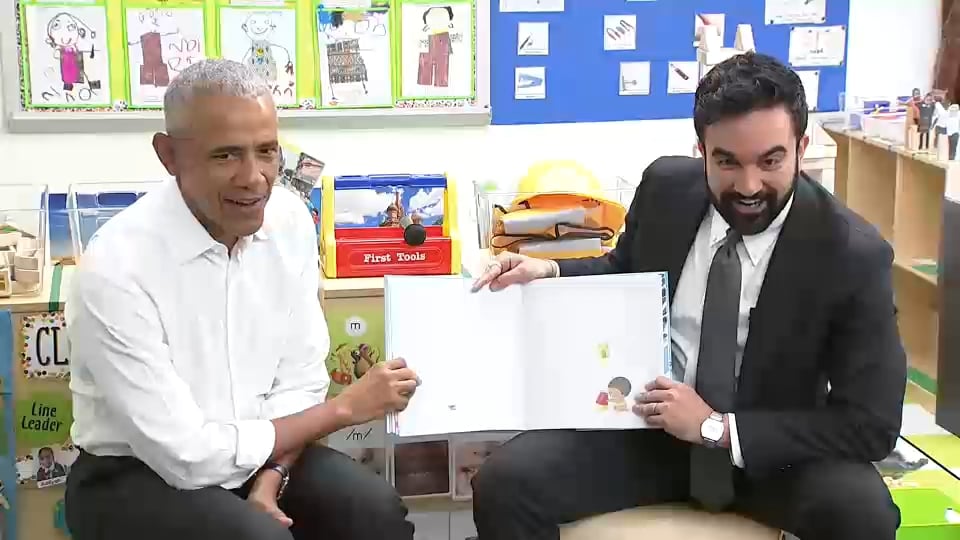
One of the more interesting aspects of the story is what did not happen. There was no formal endorsement announcement. Neither Obama nor Mamdani took questions from reporters, according to CNN’s account. AP similarly described the event as low-key and focused on the children. That silence matters because it leaves space for interpretation. Obama did not need to say Mamdani represents the future of the Democratic Party for observers to wonder whether the appearance implied as much. Politics often works through choreography as much as statements, and a former president choosing to spend time with a sitting mayor in a classroom can communicate support, curiosity, encouragement, or all three at once.
That is especially true because Obama remains a figure with unusual symbolic power inside the Democratic coalition. He is viewed by many moderates as pragmatic and disciplined, while still retaining credibility with large parts of the party base. If he had wanted to keep visible distance from Mamdani, he could have done so easily. Instead, he appeared with him publicly in a setting designed around one of Mamdani’s signature issues. That does not erase ideological differences or guarantee future political partnership, but it does place Mamdani inside a more nationally recognized Democratic frame.
Mamdani’s Balancing Act With National Figures
The meeting also stands out because Mamdani has been trying to balance relationships across a strikingly wide political range. AP noted that he has already met twice with President Donald Trump to discuss New York-related issues, despite major ideological differences. Those meetings were described as seemingly collegial at the time. But that relationship has shown obvious strain in recent days, especially after Trump attacked Mamdani’s tax agenda on social media. CBS New York reported on April 17 that Trump said Mamdani was “DESTROYING New York” over the proposed pied-à-terre tax, a surcharge on second homes in the city valued over $5 million. Business Insider reported the tax proposal, backed by both Mamdani and Hochul, is intended to raise roughly $500 million annually and help address the city’s budget pressures while funding priorities such as free child care.
This context makes the Obama meeting look even more significant. Mamdani is not operating in a narrow local lane. He is engaging with a Republican president who criticizes him, a Democratic former president who appears willing to advise him, and a national press corps eager to turn every move into a broader ideological verdict. That is a difficult balance for any mayor, let alone one governing under the bright lights of New York and carrying the democratic socialist label everywhere he goes. The Bronx classroom scene may have looked gentle, but it unfolded inside a much more combative political reality.
Why New York Makes This So Important
New York City has always functioned as more than a city in American politics. It is a proving ground, a cautionary tale, a media stage, and a symbol all at once. To govern New York is to be tested in public every day on issues that other cities wrestle with too: affordability, education, public safety, inequality, housing, labor, and infrastructure. When the mayor is someone as ideologically distinct as Mamdani, the city becomes an even more visible laboratory. Supporters hope he can show that expansive public investment and a more openly left-wing framework can deliver results. Opponents hope his agenda fails loudly enough to discredit the model.
That is why even a small meeting with Obama attracts outsized attention. It is not really about a book reading. It is about whether Mamdani is becoming normalized as a serious Democratic governing figure rather than remaining a curiosity or factional favorite. Obama’s presence does not settle that question, but it nudges it. It says, at minimum, that Mamdani is someone worth engaging with at a national level. And in politics, especially in a city where image and status are never trivial, that kind of validation can matter almost as much as formal institutional support.
The Quiet Message About Governance
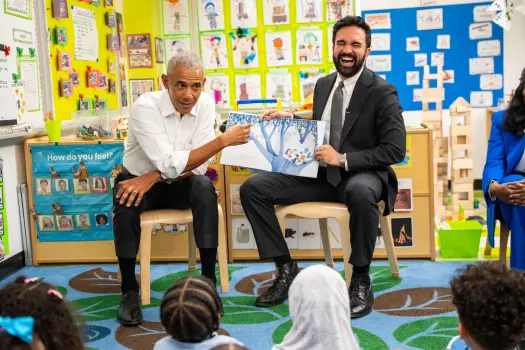
There is also a quieter lesson embedded in the story. The reported advice Obama gave Mamdani before the election was about staffing and the seriousness of governing. That is not glamorous advice, but it is often the most important. The difference between running and governing is one of the oldest political lessons there is. Campaigns thrive on rhetoric, identity, movement, and contrast. Governments survive on appointments, competence, discipline, and execution. The fact that this thread runs through the coverage helps explain why the meeting mattered more than a simple photo opportunity. It connected Mamdani’s ambitious public vision to the harder, less romantic work of administration.
That tension is likely to define Mamdani’s next phase in office. Expanding child care, managing the city’s budget, handling business backlash to new taxes, and navigating relationships with Albany and Washington all require more than ideological clarity. They require durable governing skill. In that sense, Obama’s appearance in the Bronx did not just flatter Mamdani. It also underscored the expectations around him. Attention from major national figures can elevate a mayor, but it can also sharpen the consequences if results fall short.
What This Meeting May Mean Going Forward
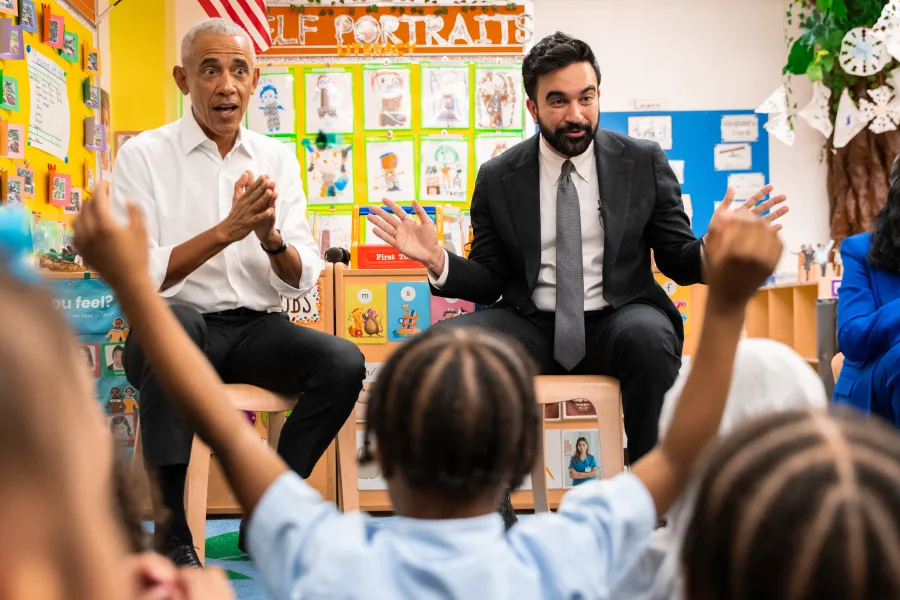
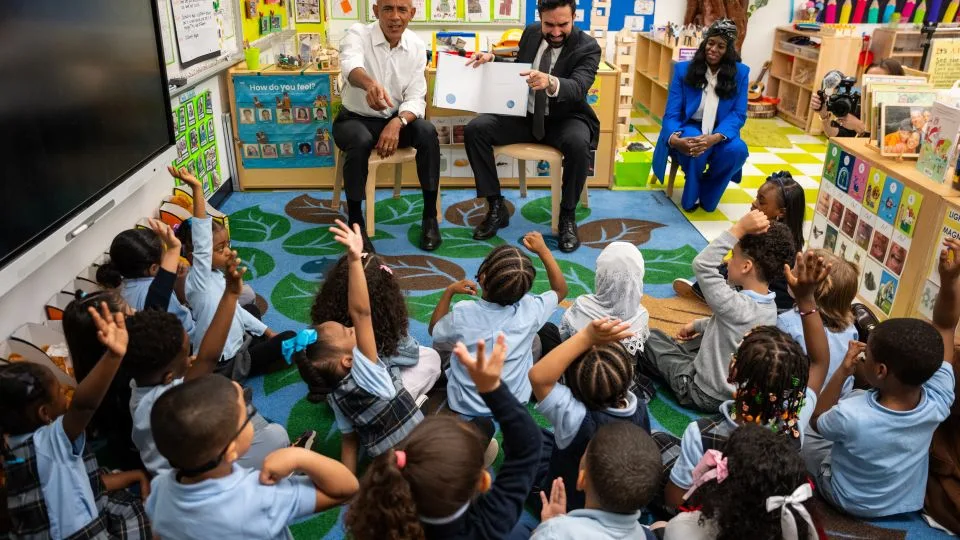
In the end, the Bronx visit was powerful precisely because it was so understated. No speeches. No formal alliance. No long policy briefing on camera. Just a former president, a mayor, and a room full of children. Yet politics often reveals itself most clearly in these apparently soft moments, where public values, personal relationships, and strategic symbolism overlap. Obama’s presence lent Mamdani stature. Mamdani’s setting gave Obama a way to engage without overcommitting. And the issue at the center, universal child care, tied the whole event to a concrete governing project rather than empty spectacle.
For Mamdani, that may be the real value of the meeting. It placed him in conversation with one of the Democratic Party’s most influential figures while keeping the focus on a policy area that fits his brand and his promise to New Yorkers. For Obama, it offered a chance to encourage a rising mayor without wading into full-scale factional politics. For the broader Democratic world, it served as a reminder that New York’s new mayor is not being watched as a local curiosity. He is being measured as a national test. And in that sense, the image of Obama and Mamdani reading to children in the Bronx may turn out to have been about much more than literacy or early childhood education. It was a quiet snapshot of a larger question the party has not yet answered: what kind of future does it want to build, and who is allowed to lead it?